Kirjahaku
Etsi kirjoja tekijän nimen, kirjan nimen tai ISBN:n perusteella.
1000 tulosta hakusanalla Ray Ellis
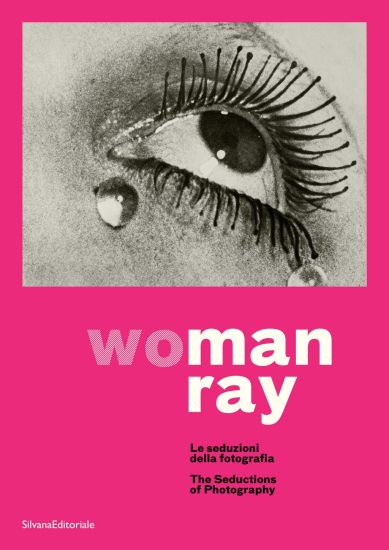
Man Ray, surrealist master and exponent of the Dada movement, managed to reinvent not only the photographic language, but also the representation of the body and face, as well as the genres of the nude and the portrait themselves. This book brings together around 200 photographs produced from the 1920s right up to his death in 1976, all featuring female subjects.Through rayographs, solarisations and double exposures, the female body undergoes a continual metamorphosis of forms and meanings, becoming an abstract form, an object of seduction, classical memory or realistic portrait, in endless playful and refined variations. Among the protagonists of his shots are Lee Miller, Berenice Abbott, Dora Maar and Juliet, a lifelong companion, to whom is dedicated the amazing The Fifty Faces of Juliet portfolio (1943-1944). But these women were, in turn, great artists: as evidence is presented here a corpus of works dating back to the time - between the 1930s and '40s - of their most direct association with Man Ray and with the environment of the Dada avant-garde and Parisian surrealism. This volume offers a wide survey of one of the most exuberant periods of the 20th century, with authentic masterpieces of photographic art such as the Electricité portfolios (1931) and the very rare Les mannequins. Résurrection des mannequins (1938). Text in English and Italian.
Man Ray
SILVANA
2023
nidottu
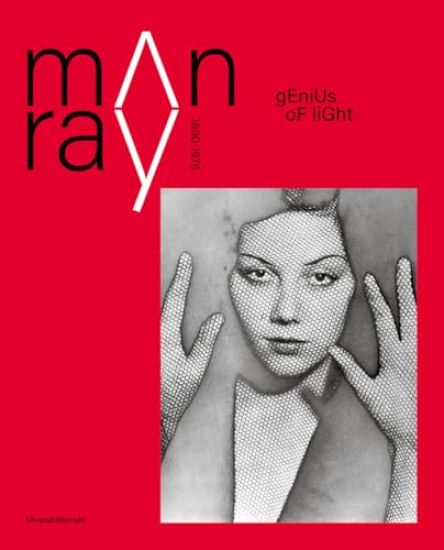
Man Ray (1890-1976) occupies a prominent place in 20th century art history. A versatile artist, he was a pioneer of modern art. His polymorphic work crosses all fields visuals: photography, assemblage, sculpture, painting, drawing, film... Man Ray arrived from New York in Paris in July 1921. Born in Philadelphia in 1890, of Jewish parents of Russian origin, Emmanuel Radintsky took a two-syllable pseudonym: “Man”, man (short for Manny, his childhood nickname) and “Ray”, the ray of light. Painter, draftsman, assembler of objects, in New York he frequents intellectual and artistic circles, discovers the European avant-gardes with his first wife who makes him discover French literature... He became friends with Marcel Duchamp, with whom he collaborates for artistic creations. This friendship will last all their lives. In connection with the movement European Dada, they publish the only issue of New York Dada, which attracted very little attention. Disappointed and disillusioned, Man Ray concludes that “Dada cannot live in New York”. He only has one objective: to join Duchamp who has just returned to Paris...
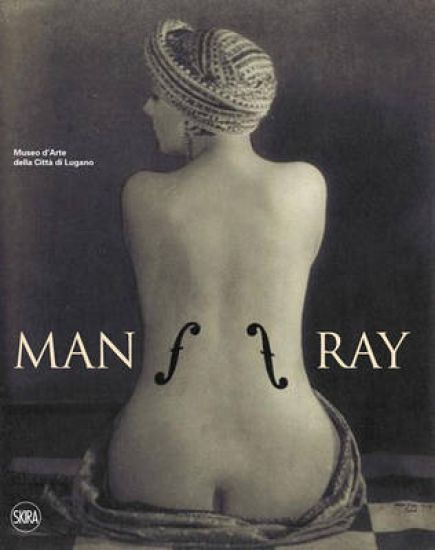
This is an exciting monograph dedicated to an extraordinary figure and one of last century's most famous and influential artists. Man Ray (1890-1976) was a photographer, painter, and creator of objects, experimental films and images which were at times enigmatic. This catalogue, which presents more than 200 works and compares and contrasts images with biographical details, enables the reader to grasp the creative process involved in each work and reveals the mechanisms and motivating sources of the artist's inexhaustible imagination.
X-Ray Astronomy
Kluwer Academic Publishers
1974
sidottu
It was about fourteen years ago that some of us became intrigued with the idea of searching the sky for X-ray and gamma-ray sources other than the Sun, the only celestial emitter of high-energy photons known at that time. It was, of course, clear that an effort in this direction would not have been successful unless there occurred, somewhere in space, processes capable of producing high-energy photons much more efficiently than the processes responsible for the radiative emission of the Sun or of ordinary stars. The possible existence of such processes became the subject of much study and discussion. As an important part of this activity, I wish to recall a one-day conference on X-ray astronomy held at the Smithsonian Astrophysical Observatory in 1960. The theoretical predictions did not provide much encouragement. While several 'unusual' celestial objects were pin-pointed as possible, or even likely, sources of X-rays, it did not look as if any of them would be strong enough to be observable with instru mentation not too far beyond the state of the art. Fortunately, we did not allow our selves to be dissuaded. As far as I am personally concerned, I must admit that my main motivation for pressing forward was a deep-seated faith in the boundless re sourcefulness of nature, which so often leaves the most daring imagination of man far behind.
X-Ray Astronomy
Kluwer Academic Publishers
1974
nidottu
It was about fourteen years ago that some of us became intrigued with the idea of searching the sky for X-ray and gamma-ray sources other than the Sun, the only celestial emitter of high-energy photons known at that time. It was, of course, clear that an effort in this direction would not have been successful unless there occurred, somewhere in space, processes capable of producing high-energy photons much more efficiently than the processes responsible for the radiative emission of the Sun or of ordinary stars. The possible existence of such processes became the subject of much study and discussion. As an important part of this activity, I wish to recall a one-day conference on X-ray astronomy held at the Smithsonian Astrophysical Observatory in 1960. The theoretical predictions did not provide much encouragement. While several 'unusual' celestial objects were pin-pointed as possible, or even likely, sources of X-rays, it did not look as if any of them would be strong enough to be observable with instru mentation not too far beyond the state of the art. Fortunately, we did not allow our selves to be dissuaded. As far as I am personally concerned, I must admit that my main motivation for pressing forward was a deep-seated faith in the boundless re sourcefulness of nature, which so often leaves the most daring imagination of man far behind.
Observation of discrete energy electromagnetic emissions from celestial objects in the radio, IR, optical, lN, and X-ray spectral regions has dramatically advanced our know ledge in the field of astrophysics. It is expected that identification of nuclear 'Y-ray line emissions from any cosmic source would also prove to be a powerful new tool for probing the Universe. Since the publication of Morrison's work in 1958, many experiments were carried out searching for evidence of 'Y-ray lines from cosmic sources, however with little success. Only a few positive experimental results have been reported, in spite of an expenditure of considerable effort by many people: in particular, the possible Galactic Center emission line (473 to 530keV) and 'Y-ray lines at several energies (e. g. , 0. 5 MeV and 2. 2 MeV) associated with large solar flares. Both of these observations are unconfirmed by indepen dent observations (ca. 1975). The high energy 'Y-rays (>30MeV) from the Galactic Center are at least partly due to the decay of 1[0 mesons, which are of unique energy (67. 5 MeV) in the 1[0 rest frame only. The reasons for the limited amount of data avail able in this field, even though early theoretical predictions were very optimistic regarding fluxes of nuclear lines, are that experimental efforts are plagued with high backgrounds and low fluxes, and that development of instruments with telescopic properties in the energy range of interest is difficult.
X-Ray Astronomy with the Einstein Satellite
Kluwer Academic Publishers
1981
sidottu
The meeting of the High Energy Astrophysics Division of the American Astronomical Society, held in Cambridge, Massachusetts on January 28- 30, 1980, marks the coming of age of X-ray astronomy. In the 18 years since the discovery of the first extrasolar X-ray source, Sco X-l, the field has experienced an extremely rapid instrumentation development culminating with the launch on November 13, 1978 of the Einstein Observatory (HEAO-2) which first introduced the use of high resolution imaging telescopes to the study of galactic and extragalactic X-ray sources. The Einstein Observatory instruments can detect sources as faint as 10-7 Sco X-lor about 17 magnitudes fainter. The technological developments in the field have been paralleled by a host of new discoveries: in the early 1960's the detection of 9 "X-ray stars", objects 10 times more luminous in X-rays than the Sun and among the brightest stellar objects at all wavelengths; in the late 1960's and early 1970's the discovery of the natureof such systems which were identified as collapsed stars (neutron stars and black holes) in mass exchange binary systems, and the detection of the first few extragalactic sources.

X-Ray Instrumentation for the Photon Factory
Kluwer Academic Publishers
1986
sidottu
X-Ray Photoelectron Spectroscopy of Solid Surfaces
Nefedov
VSP International Science Publishers
1988
sidottu
This volume outlines the physical and methodical concepts of X-ray photoelectron spectroscopy (XPS) specifically for surface studies using both inner and valence electron levels. It discusses the theory and practice of XPS qualitative and quantitative analysis of solid state surfaces and provides lists of extended experimental and theoretical data necessary for the determination of concentration and thin film thicknesses. In addition it covers the many problems concerning in-depth profiling, ion sputtering rate and damages of the structure of altered layers, as well as applications of angular dependence of the intensities and photoelectron diffraction for surface studies. Also provided are the applications of XPS for the investigations of catalysts, adsorption, electronic surface states, oxydation of semi-conductors and alloys, minerals, including lunar regolith and natural gold, glasses, radiation damage, surface diffusion, polymers, etc.

Man Ray
Annelie Tuveros; Sidsel Maria Søndergaard; Rune Gade; Jan Svenungsson
Mjellby Konstmuseum
2013
sidottu
Man Ray är en av 1900-talets mest betydelsefulla konstnärer som kom att spela en avgörande roll både i DADA-rörelsen och i surrealismen. I boken finns de klassiska svartvita fotografierna samt de berömda objekten, men presenterar samtidigt en bredare och djupare bild av Man Ray med måleri, film, grafik och teckning. Katalogens texter är författade av Annelie Tuveros, intendent Mjellby Konstmuseum, Jan Svenungsson, konstnär och professor på Universität für angewandte Kunst i Berlin, Sidsel Maria Söndergaard, chef på Öregaard Museum i Danmark samt Rune Gade, lektor vid Institutet för Konst-och Kulturvetenskap på Köpenhamns Universitet.

Punk and industrial culture in late '70s and early '80s San Francisco Spanning music, art and literature, the industrial and punk scenes of San Francisco in the late 1970s and early 1980s were diverse but united by a DIY, anti-authoritarian attitude. Photographer Ruby Ray was there to capture it all in the same spirit. With her work appearing in the legendary punk zine Search & Destroy and its successor RE/Search, Ray was at the epicenter of, and a key participant in, a vital cultural moment vibrant with provocation and creativity. A local experimental music and art scene supported artists like Bruce Conner, William S. Burroughs and Louise Nevelson and attracted groundbreaking bands like Devo, the Mutants, Boyd Rice and the Dead Kennedys, as well as established international bands like Throbbing Gristle, the Clash and the Sex Pistols (in fact, Ray was there to shoot their famous final concert at the Winterland Ballroom). Ruby Ray: Kalifornia Kool collects the photographer’s images from this time: live shots, backstage parties, apartments overflowing with youthful exuberance, elegant portraits of key people and photographic experiments. Her work captures a time and a place where West Coast open-mindedness, youth, art, music and electricity merged. As Carl Abrahamsson puts it in his introduction to this volume, “Ruby’s images open up a portal to a mythic and frenzied scene and show that it’s true: all mythologies are real.” Ruby Ray (born 1952) is an American photographer, well known for her photography of the early punk, post-punk and industrial movements in California in the late 1970s and early 1980s. She began her photography career in 1977, when her photographs began appearing in Search & Destroy.
Cosmic Ray Neutron Sensing
IAEA
2017
nidottu
Nuclear and related techniques can help develop climate smart agricultural practices by optimizing water use efficiency. The measurement of soil water content is essential to improve the use of this resource in agriculture. However, most sensors monitor small areas (less than 1m in radius), hence a large number of sensors are needed to obtain soil water content across a large area. This can be both costly and labour intensive and so larger scale measuring devices are needed as an alternative to traditional point-based soil moisture sensing techniques. The cosmic ray neutron sensor (CRNS) is such a device that monitors soil water content in a non-invasive and continuous way. This publication provides background information about this novel technique, and explains in detail the calibration and validation process.
![X-Ray Equipment Maintenance and Repairs Workbook for Radiographers and Radiological Technologists [op]](/covers/9789241591638.jpg)
X-Ray Equipment Maintenance and Repairs Workbook for Radiographers and Radiological Technologists [op]
Who Dept of Essential Health Technology
World Health Organization
2004
pokkari




The Pirate Shark, a classical book, has been considered essential throughout the human history, and so that this work is never forgotten we at Alpha Editions have made efforts in its preservation by republishing this book in a modern format for present and future generations. This whole book has been reformatted, retyped and designed. These books are not made of scanned copies of their original work and hence the text is clear and readable.

Rachel Ray Volume II" by Anthony Trollope continues the story of Rachel Ray, delving deeper into the themes of romance, social commentary, and the complexities of rural life in 19th-century England. The narrative builds upon the foundation laid in Volume I, further exploring the courtship between Rachel Ray and Luke Rowan amidst the backdrop of societal expectations and family dynamics. In this volume, Rachel faces increasing pressure from her family and the community regarding her relationship with Luke. Her stern and devout sister, Dorothea, and her cautious mother remain skeptical of Luke's intentions, influenced by the village gossip and their own moral considerations. Trollope continues to critique the rigid social conventions of the time, highlighting the impact of gossip and judgment on personal relationships. Rachel's journey is marked by her struggle for autonomy and the desire to follow her heart despite societal pressures. Luke's character is also further developed, revealing his earnest intentions and the challenges he faces in proving his worthiness as a suitor. Their courtship becomes a focal point for examining broader themes of love, morality, and the pursuit of happiness within the constraints of tradition and social expectations.