

Kirjahaku
Etsi kirjoja tekijän nimen, kirjan nimen tai ISBN:n perusteella.
1000 tulosta hakusanalla Ray Perman


X-Ray Crystallographic Study of Novel Oxazole Derivatives
Krunalkumar R Mehariya; Bhagwati K Gauni Mehariya; Kirti Kumar Goswami
Anchor Academic Publishing
2016
pokkari


X-Ray Diffraction Imaging of Biological Cells
Masayoshi Nakasako
Springer Verlag, Japan
2018
sidottu
In this book, the author describes the development of the experimental diffraction setup and structural analysis of non-crystalline particles from material science and biology. Recent advances in X-ray free electron laser (XFEL)-coherent X-ray diffraction imaging (CXDI) experiments allow for the structural analysis of non-crystalline particles to a resolution of 7 nm, and to a resolution of 20 nm for biological materials. Now XFEL-CXDI marks the dawn of a new era in structural analys of non-crystalline particles with dimensions larger than 100 nm, which was quite impossible in the 20th century. To conduct CXDI experiments in both synchrotron and XFEL facilities, the author has developed apparatuses, named KOTOBUKI-1 and TAKASAGO-6 for cryogenic diffraction experiments on frozen-hydrated non-crystalline particles at around 66 K. At the synchrotron facility, cryogenic diffraction experiments dramatically reduce radiation damage of specimen particles and allow tomography CXDI experiments. In addition, in XFEL experiments, non-crystalline particles scattered on thin support membranes and flash-cooled can be used to efficiently increase the rate of XFEL pulses. The rate, which depends on the number density of scattered particles and the size of X-ray beams, is currently 20-90%, probably the world record in XFEL-CXDI experiments. The experiment setups and results are introduced in this book. The author has also developed software suitable for efficiently processing of diffraction patterns and retrieving electron density maps of specimen particles based on the diffraction theory used in CXDI.

X-Ray Diffraction Imaging of Biological Cells
Masayoshi Nakasako
Springer Verlag, Japan
2019
nidottu
In this book, the author describes the development of the experimental diffraction setup and structural analysis of non-crystalline particles from material science and biology. Recent advances in X-ray free electron laser (XFEL)-coherent X-ray diffraction imaging (CXDI) experiments allow for the structural analysis of non-crystalline particles to a resolution of 7 nm, and to a resolution of 20 nm for biological materials. Now XFEL-CXDI marks the dawn of a new era in structural analys of non-crystalline particles with dimensions larger than 100 nm, which was quite impossible in the 20th century. To conduct CXDI experiments in both synchrotron and XFEL facilities, the author has developed apparatuses, named KOTOBUKI-1 and TAKASAGO-6 for cryogenic diffraction experiments on frozen-hydrated non-crystalline particles at around 66 K. At the synchrotron facility, cryogenic diffraction experiments dramatically reduce radiation damage of specimen particles and allow tomography CXDI experiments. In addition, in XFEL experiments, non-crystalline particles scattered on thin support membranes and flash-cooled can be used to efficiently increase the rate of XFEL pulses. The rate, which depends on the number density of scattered particles and the size of X-ray beams, is currently 20-90%, probably the world record in XFEL-CXDI experiments. The experiment setups and results are introduced in this book. The author has also developed software suitable for efficiently processing of diffraction patterns and retrieving electron density maps of specimen particles based on the diffraction theory used in CXDI.

V-Ray dlja Autodesk Maya. Rukov. po vizualizatsii
DMK-Press
2020
nidottu

X-ray And Electron Beam Emissions From A Low Energy PLASMA FOCUS
Muhammad Zubair Khan
Lap Lambert Academic Publishing
2018
nidottu

X-ray spectroscopy analysis of tropical mangrove ecosystem
Elton Eduardo Novais Alves; Pablo de Azevedo Rocha; Liovando Marciano da Costa
Lap Lambert Academic Publishing
2019
nidottu

X-ray Peak Broadening Analysis of Nanoparticles
Nikita H. Patel; Milind P. Deshpande
Lap Lambert Academic Publishing
2018
nidottu

X ray study on thermal properties of ball milled metal nanopowders
Jithender Ladal
LAP Lambert Academic Publishing
2019
pokkari
This book focuses on the scientific research work in the field of solid state physics which was carried out in the physics laboratory of Kakatiya University (where the author has been working as a researcher cum faculty member) from the period 2008 to 2013. This book gives total information regarding the X-ray study on thermal properties such as Debye temperature, Debye-Waller factor, amplitude of vibrations and vacancy formation energy while focusing on ball milled copper, nickel, iron and chromium metal nanopowders. The X-ray diffraction technique has been adopted to determine the above said thermal properties.


X-ray fluorescence analysis techniques: Principles and instrumentations
Hasna Ait Bouh
Lap Lambert Academic Publishing
2020
nidottu

X-ray Images Classifications Using Optimized Deep Learning
Mahesh Jangid
LAP Lambert Academic Publishing
2021
nidottu
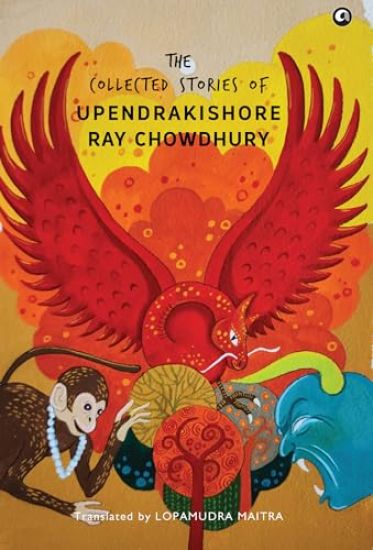
The Collected Stories of Upendrakishore Ray Chowdhury
UPENDRAKISHORE RAY CHOWDHURY
Aleph Book Company
2023
nidottu
The Collected Stories of Upendrakishore Ray Chowdhury is a selection of sixty-three stories by a master storyteller (1863-1915). Featuring a vibrant cast of characters-eccentric woodland animals, a motley crew of unusual villagers and townspeople, bewildering ghosts, competitive demons, and gods from Norway and Japan-these stories laced with rib-tickling humour, clever puns, and bizarre situations have entertained young readers for generations. 'Tuntunir Boi', the first book in the collection, has twenty-seven stories. These include adventure yarns of the author's most popular characters like the mischievous tailor bird Tuntuni, the crafty fox Sheyal, the arrogant feline Mawjontali Sarkar, and the fearless farmer Buddhu's Baap. The second book, 'Golpomala', includes some beloved gems-stories of Gupi the singer and Bagha the instrumentalist; of Ghyanghashur, a half-bird, half-beast; of the Japanese gods Izanagi and Izanami; and of a sailor's extraordinary sea voyage-tales that feature fantastical characters, magical lands, and exhilarating adventures. Vividly translated by Lopamudra Maitra and sprinkled with illustrations by the author, the stories in this volume will charm and delight readers of all ages.

The essays offered here were written between 1970 and 2005. They were not written with the view to form a book. They are now published together in the conviction that, both singly and as a whole, they can contribute to a better appreciation of Satyajit Ray’s legacy. The essays deal with Ray as a filmmaker. The date on which each essay was written is indicated as it situates each in the cultural context in which it was conceived. Out of the twenty-nine feature films of Ray, only eight, plus the Apu Trilogy as a whole, are discussed. Moreover, this small collection is not a selection, indicating preferences; nor is it a classification, rating the films. The discussion of Jana Aranya is the only essay that was written for this book to illuminate the evolution that took place from the first to the last film of Satyajit Ray. In order to preserve their historical historical, generally, the essays have not been updated. Given Ray’s deep involvement in film education, especially in the film societies movement in India,

En este volumen: Los cuentos del whisky, El crucero de las sombras, El gran nocturno, La ciudad del miedo indecible, El libro de los fantasmas.Si no sabe que leer desde que
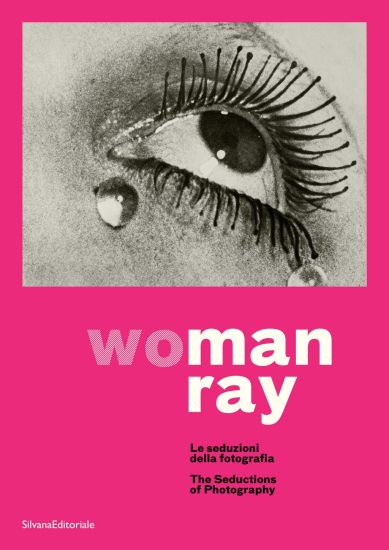
Man Ray, surrealist master and exponent of the Dada movement, managed to reinvent not only the photographic language, but also the representation of the body and face, as well as the genres of the nude and the portrait themselves. This book brings together around 200 photographs produced from the 1920s right up to his death in 1976, all featuring female subjects.Through rayographs, solarisations and double exposures, the female body undergoes a continual metamorphosis of forms and meanings, becoming an abstract form, an object of seduction, classical memory or realistic portrait, in endless playful and refined variations. Among the protagonists of his shots are Lee Miller, Berenice Abbott, Dora Maar and Juliet, a lifelong companion, to whom is dedicated the amazing The Fifty Faces of Juliet portfolio (1943-1944). But these women were, in turn, great artists: as evidence is presented here a corpus of works dating back to the time - between the 1930s and '40s - of their most direct association with Man Ray and with the environment of the Dada avant-garde and Parisian surrealism. This volume offers a wide survey of one of the most exuberant periods of the 20th century, with authentic masterpieces of photographic art such as the Electricité portfolios (1931) and the very rare Les mannequins. Résurrection des mannequins (1938). Text in English and Italian.
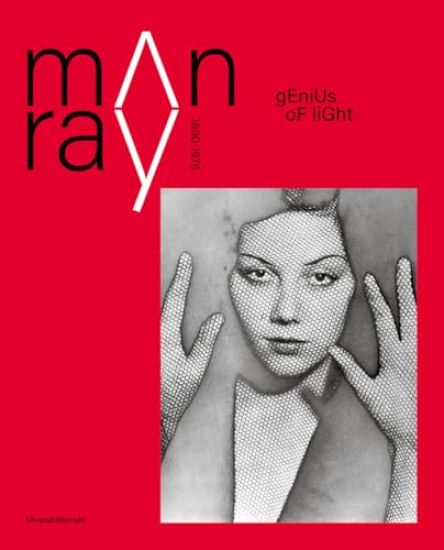
Man Ray
SILVANA
2023
nidottu
Man Ray (1890-1976) occupies a prominent place in 20th century art history. A versatile artist, he was a pioneer of modern art. His polymorphic work crosses all fields visuals: photography, assemblage, sculpture, painting, drawing, film... Man Ray arrived from New York in Paris in July 1921. Born in Philadelphia in 1890, of Jewish parents of Russian origin, Emmanuel Radintsky took a two-syllable pseudonym: “Man”, man (short for Manny, his childhood nickname) and “Ray”, the ray of light. Painter, draftsman, assembler of objects, in New York he frequents intellectual and artistic circles, discovers the European avant-gardes with his first wife who makes him discover French literature... He became friends with Marcel Duchamp, with whom he collaborates for artistic creations. This friendship will last all their lives. In connection with the movement European Dada, they publish the only issue of New York Dada, which attracted very little attention. Disappointed and disillusioned, Man Ray concludes that “Dada cannot live in New York”. He only has one objective: to join Duchamp who has just returned to Paris...