Kirjojen hintavertailu. Mukana 11 518 949 kirjaa ja 12 kauppaa.

Kirjahaku

Etsi kirjoja tekijän nimen, kirjan nimen tai ISBN:n perusteella.

1000 tulosta hakusanalla Raymond Faure

Spirit of the Grassroots People

Spirit of the Grassroots People

Raymond Mason

McGill-Queen's University Press
2020
sidottu
Raymond Mason is an Ojibway activist who campaigns for the rights of residential school survivors and a founder of Spirit Wind, an organization that played a key role in the development of the Indian Residential School Settlement Agreement. This memoir offers a firsthand account of the personal and political challenges Mason confronted on this journey. A riveting and at times harrowing read, Spirit of the Grassroots People describes the author's experiences in Indian day and residential schools in Manitoba and his struggles to find meaning in life after trauma and abuse. Mason details the work that he and his colleagues did over many years to gain recognition and compensation for their suffering. Drawing from Indigenous oral traditions as well as Western historiography, the work applies the concept of two-eyed seeing to the histories of colonialism and education in Canada. The memoir is supplemented by a final chapter in which Theodore Michael Christou and Jackson Pind put Mason's story into a historical and educational context. An essential key to understanding the legacy of Indian residential and day schools, this text is both a documentation of history and a deeply personal story of a human experience.
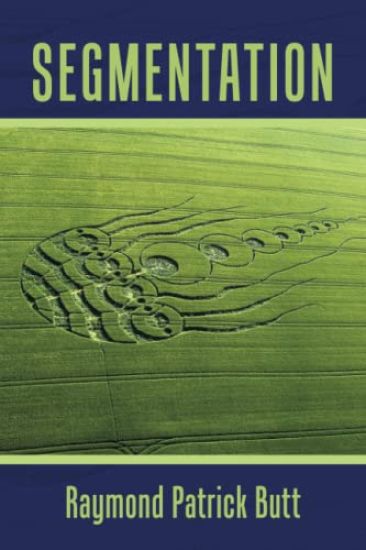
Segmentation

Segmentation

Raymond Patrick Butt

Tellwell Talent
2021
pokkari
Venerable disputations of an alienated heart and mind. Existential poetry in a whorl of abstract myth, foreign bodies, musick and sea stirrings. Two full years in editing; Segmentation pushes the human boundaries of space, time and thought. Prepare for a lucid plunge into deep water.
Segmentation

Segmentation

Raymond Patrick Butt

Tellwell Talent
2021
sidottu
Venerable disputations of an alienated heart and mind. Existential poetry in a whorl of abstract myth, foreign bodies, musick and sea stirrings. Two full years in editing; Segmentation pushes the human boundaries of space, time and thought. Prepare for a lucid plunge into deep water.
Evidence

Evidence

Raymond N. Emson

Red Globe Press
2010
nidottu
From DNA profiling to consideration of the accused's previous conduct, the law of evidence is a fascinating amalgam of logic, common sense, philosophy and tactics. Evidence explains the fundamentals and looks at the principles behind it.
The Columbia Guide to the Latin American Novel Since 1945

The Columbia Guide to the Latin American Novel Since 1945

Raymond Williams

Columbia University Press
2007
sidottu
In this expertly crafted, richly detailed guide, Raymond Leslie Williams explores the cultural, political, and historical events that have shaped the Latin American and Caribbean novel since the end of World War II. In addition to works originally composed in English, Williams covers novels written in Spanish, Portuguese, French, Dutch, and Haitian Creole, and traces the profound influence of modernization, revolution, and democratization on the writing of this era. Beginning in 1945, Williams introduces major trends by region, including the Caribbean and U.S. Latino novel, the Mexican and Central American novel, the Andean novel, the Southern Cone novel, and the novel of Brazil. He discusses the rise of the modernist novel in the 1940s, led by Jorge Luis Borges's reaffirmation of the right of invention, and covers the advent of the postmodern generation of the 1990s in Brazil, the Generation of the "Crack" in Mexico, and the McOndo generation in other parts of Latin America. An alphabetical guide offers biographies of authors, coverage of major topics, and brief introductions to individual novels. It also addresses such areas as women's writing, Afro-Latin American writing, and magic realism. The guide's final section includes an annotated bibliography of introductory studies on the Latin American and Caribbean novel, national literary traditions, and the work of individual authors. From early attempts to synthesize postcolonial concerns with modernist aesthetics to the current focus on urban violence and globalization, The Columbia Guide to the Latin American Novel Since 1945 presents a comprehensive, accessible portrait of a thoroughly diverse and complex branch of world literature.
The Rise and Fall of Soul and Self

The Rise and Fall of Soul and Self

Raymond Martin; John Barresi

Columbia University Press
2006
sidottu
This book traces the development of theories of the self and personal identity from the ancient Greeks to the present day. From Plato and Aristotle to Freud and Foucault, Raymond Martin and John Barresi explore the works of a wide range of thinkers and reveal the larger intellectual trends, controversies, and ideas that have revolutionized the way we think about ourselves. The authors open with ancient Greece, where the ideas of Plato, Aristotle, and the materialistic atomists laid the groundwork for future theories. They then discuss the ideas of the church fathers and medieval and Renaissance philosophers, including St. Paul, Philo, Augustine, Aquinas, and Montaigne. In their coverage of the emergence of a new mechanistic conception of nature in the seventeenth century, Martin and Barresi note a shift away from religious and purely philosophical notions of self and personal identity to more scientific and social conceptions, a trend that has continued to the present day. They explore modern philosophy and psychology, including the origins of different traditions within each discipline, and explain both the theoretical relevance of feminism and gender and ethnic studies and also the ways that Derrida and other recent thinkers have challenged the very idea that a unified self or personal identity even exists. Martin and Barresi cover a number of issues broached by philosophers and psychologists, such as the existence of a fixed and unchanging self and whether the concept of the soul has a use outside of religious contexts. They address the question of whether notions of the soul and the self are still viable in today's world. Together, they reveal the fascinating ways in which great thinkers have grappled with these and other questions and the astounding impact their ideas have had on the development of self-understanding in the west.
The Rise and Fall of Soul and Self

The Rise and Fall of Soul and Self

Raymond Martin; John Barresi

Columbia University Press
2008
pokkari
This book traces the development of theories of the self and personal identity from the ancient Greeks to the present day. From Plato and Aristotle to Freud and Foucault, Raymond Martin and John Barresi explore the works of a wide range of thinkers and reveal the larger intellectual trends, controversies, and ideas that have revolutionized the way we think about ourselves. The authors open with ancient Greece, where the ideas of Plato, Aristotle, and the materialistic atomists laid the groundwork for future theories. They then discuss the ideas of the church fathers and medieval and Renaissance philosophers, including St. Paul, Philo, Augustine, Aquinas, and Montaigne. In their coverage of the emergence of a new mechanistic conception of nature in the seventeenth century, Martin and Barresi note a shift away from religious and purely philosophical notions of self and personal identity to more scientific and social conceptions, a trend that has continued to the present day. They explore modern philosophy and psychology, including the origins of different traditions within each discipline, and explain both the theoretical relevance of feminism and gender and ethnic studies and also the ways that Derrida and other recent thinkers have challenged the very idea that a unified self or personal identity even exists. Martin and Barresi cover a number of issues broached by philosophers and psychologists, such as the existence of a fixed and unchanging self and whether the concept of the soul has a use outside of religious contexts. They address the question of whether notions of the soul and the self are still viable in today's world. Together, they reveal the fascinating ways in which great thinkers have grappled with these and other questions and the astounding impact their ideas have had on the development of self-understanding in the west.
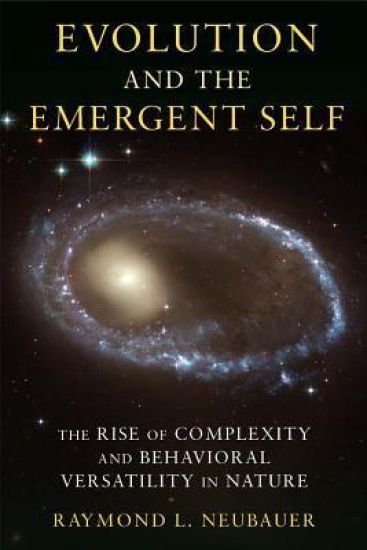
Evolution and the Emergent Self

Evolution and the Emergent Self

Raymond L. Neubauer

Columbia University Press
2011
sidottu
Evolution and the Emergent Self is an eloquent and evocative new synthesis that explores how the human species emerged from the cosmic dust. Lucidly presenting ideas about the rise of complexity in our genetic, neuronal, ecological, and ultimately cosmological settings, the author takes readers on a provocative tour of modern science's quest to understand our place in nature and in our universe. Readers fascinated with "Big History" and drawn to examine big ideas will be challenged and enthralled by Raymond L. Neubauer's ambitious narrative. How did humans emerge from the cosmos and the pre-biotic Earth, and what mechanisms of biological, chemical, and physical sciences drove this increasingly complex process? Neubauer presents a view of nature that describes the rising complexity of life in terms of increasing information content, first in genes and then in brains. The evolution of the nervous system expanded the capacity of organisms to store information, making learning possible. In key chapters, the author portrays four species with high brain:body ratios-chimpanzees, elephants, ravens, and dolphins-showing how each species shares with humans the capacity for complex communication, elaborate social relationships, flexible behavior, tool use, and powers of abstraction. A large brain can have a hierarchical arrangement of circuits that facilitates higher levels of abstraction. Neubauer describes this constellation of qualities as an emergent self, arguing that self-awareness is nascent in several species besides humans and that potential human characteristics are embedded in the evolutionary process and have emerged repeatedly in a variety of lineages on our planet. He ultimately demonstrates that human culture is not a unique offshoot of a language-specialized primate, but an analogue of fundamental mechanisms that organisms have used since the beginning of life on Earth to gather and process information in order to buffer themselves from fluctuations in the environment. Neubauer also views these developments in a cosmic setting, detailing open thermodynamic systems that grow more complex as the energy flowing through them increases. Similar processes of increasing complexity can be found in the "self-organizing" structures of both living and nonliving forms. Recent evidence from astronomy indicates that planet formation may be nearly as frequent as star formation. Since life makes use of the elements commonly seeded into space by burning and expiring stars, it is reasonable to speculate that the evolution of life and intelligence that happened on our planet may be found across the universe.
Techniques of Special Effects of Cinematography
First published in 1985. Exactly 20 years have passed since the first edition of this text appeared, in 1965. During this period, the author has gathered feedback from professional film-making circles. This fourth revision introduces new information in nearly all chapters. 130 new illustrations have been added, many of them illustrating feature films which are currently in release. The bibliography has also been enlarged considerably. The contributions of the visual-effects cinematographer have always been valued highly within the theatrical motion-picture industry. Because of their work, film producers have been able to endow their pictures with considerable 'production value' which the budget could not otherwise sustain.
Father Christmas

Father Christmas

Raymond Briggs

Puffin
2018
sidottu
"BLOOMING CHRISTMAS, HERE AGAIN!"Reissued in a mini hardback gift edition, with a letter from Raymond Briggs, this is the perfect stocking filler.On Christmas Eve morning, a very grumpy Father Christmas is dreaming about summer, and certainly doesn't want to get up in the cold to deliver presents!Follow his journey through the night, as he battles the elements to deliver his presents.Told through a comic strip, with beautiful illustrations based on the houses that Raymond grew up in, this is a hilarious festive tale that has delighted children for generations.More brilliant Raymond Briggs stories:Father Christmas Goes on HolidayThe Snowman - a wordless picture book