

Kirjahaku
Etsi kirjoja tekijän nimen, kirjan nimen tai ISBN:n perusteella.
1000 tulosta hakusanalla Raynor David R.

Foreign Service Family Style: A Narc treads among the Diplomats
Ella Mae Rayner Rn; Gordon J. Rayner
Createspace Independent Publishing Platform
2015
nidottu




Mycorrhiza - An Account of Non-Pathogenic Infection by Fungi in Vascular Plants and Bryophytes
M C Rayner
White Press
2018
pokkari


It was the most anticipated summer break of their young lives.For Bran Lampshire, that summer of 1986 would be far different. The lure of a wilderness adventure sends him and his friends on a troublesome journey that would see them far from home and into the isolated shadows of the Sleathton Estate. In a forgotten land where nature thrives, an unexplained mist settles upon the shaded grounds. And stories were told of events so chilling, they were forcibly buried over time.Lose yourself beneath the endless trees. And discover that legends are sometimes so much more than ghost stories.

In the wake of abandoning his land during the Highland Famine, Peter Daily struggles to accept the hauntings that have plagued his past. Attempting to flee his torments, he travels far to his childhood refuge on the Scottish Isle of Lismore, a small island cut off by high cliffs and churning waters. But escaping one's past is never as simple as it first seems. When the darkness descends, Daily is tormented by the memories he longs to suppress, forcing him to relive the horrors suffered by those he has cruelly wronged.In current times, Leslie Wills seeks to uncover the truth. Driven by his connection, he delves into the past, determined to expose the shadows that cling to him.One thing is certain. No matter where you try to hide, fear will always find you.

The Conquest of German South-West Africa, 1914-1915
W S Rayner; W W O'Shaughnessy
Leonaur Ltd
2014
sidottu

The Conquest of German South-West Africa, 1914-1915
W S Rayner; W W O'Shaughnessy
Leonaur Ltd
2014
pokkari

High-Flying sports media mogul and David Beckham doppelganger, Mr. Arsenal - otherwise known as Lee Janes, is back.Following the production of his company's documentaries on the former-Arsenal player Jon Sammels, England's failed World Cup bid and Ramsey's failings of 1970, and the deceit surrounding Munich 1958, his company had started to be taken very seriously and were awarded a six-month contract to give ITV a few hours a week.However, things don't always go to plan - not in his life, anyway.Side-tracked by his home-life that includes a loving wife, a needy ex-wife, a miserable baby and a more miserable football team led by an even more miserable manager, he sees his team's 2014/15 season mirroring both the 1958/59 season and the 1972/73 season - and he comes up with 'Parallel's - The throwing away of the Doubles.'However, that doesn't even scratch the surface of the story that is 'ITV 7'.


Queen of Cups Part 1 takes you behind the scenes of ITV 7 - the 24-hour weekend football channel, whilst following the life of its extremely forthright and candidly spoken numero uno, Lee Janes - both through the man himself and through the eyes of both his best friend and Assisstant Producer.A quick fast-forward to July 2015, and the main man takes stock at what has passed, before embarking on what is to come - and what is to come, he certainly isn't expecting! However, somewhere in between, he gets cajoled by ITV 7's rather colourful Head of Security, into doing a job on the side - a football documentary that covers the Terry Neill Years - from his appointment as 15th choice in the summer of 1976 to the beginning of his downfall and forced resignation in December 1983. This includes the lies and deceit from inside the club, the failed transfers and indecisiveness that stopped Arsenal competing at the very, very top, along with the scheming nature of the former Arsenal player who only a couple of years earlier had been facing the sack as manager of Hull City, only to be handed a lifeline as manager of Arsenal's fierce North London rivals, Tottenham Hotspur - a club he helped save from relegation, but also a club whose board he totally rubbed up the wrong way - handing in his resignation on more than a few occasions, whilst at the same time it was being suggested - not only by the media, that he had been making illegal or improper payments to players.
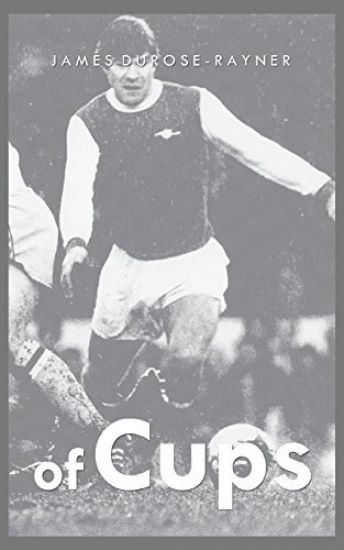
Queen of Cups Part 2. Neill had not only been player, captain and manager of Northern Ireland, he had also captained Arsenal at just 20 years of age. However, he had gone on to be relieved of the role, befor edropping down the pecking order and being made twelveth man for Arsenal's biggest game in 16 years - the 1968 League Cup Final - a match where he publicly snubbed Princess Alexandria, before going on record stating that the whole business had truly "sickened" him and that he would have to re-assess his future. He did. He and his manager Bertie Mee would never see eye to eye again, with Neill being fined on numerous occasions for breaching club discipline, before realising that he had no future at the club, duly leaving for Hully City in the summer of 1970.Whilst the main character in the story is trying to control a life that is continually spiralling out of control, he wants to find out more about what made Neill tick and through a journalist he falls in with ex-England and Arsenal midfielder, Alan Hudson, who immediately gave him the answer to a question that had been nagging at him: "Why did an amiable player such as George Armstrong, fall out with Neill?" The honesty and candidness of hte man he becomes to know as 'Huddy' helps not only give him an insight to Neill's lack of man-management, it also helps form a friendship between the two and is the catalyst for some hilarious consequeneces. However, the story doesn't end there, as it was Alan Hudson who Neill turned to, to help save his job in December 1983... but by then it was too late.

Handbook on European Union Climate Change Policy and Politics
Tim (EDT) Rayner; Kacper (EDT) Szulecki; Andrew J. (EDT) Jordan
Edward Elgar Pub
2023
sidottu

How Botha and Smuts Conquered German South West
W S Rayner; W W O'Shaughnessy
Naval Military Press Ltd
2010
pokkari

Degrees Of Freedom: Living In Dynamic Boundaries
Alan D M Rayner
Imperial College Press
1997
sidottu
Drawing especially on insights emerging from studies of the cellular networks formed by fungi, this book describes the fundamental indeterminacy that enables life forms to thrive in and create inconstant circumstances. It explains how indeterminacy arises from counteraction between associative and dissociative processes at the reactive interfaces between living systems and their surroundings. It stresses the relevance of these processes to understanding the dynamic contexts within which living systems of all kinds — including human societies-explore for, use up, conserve and recycle sources of energy.By focusing on dynamic boundaries, the book counterbalances the discretist view that living systems are assembled entirely from building-block-like units — individuals and genes — that can be freely sifted, as opposed to channeled, by natural selection. It also shows how the versatility that enables life forms to proliferate in rich environments, whilst minimizing losses in restrictive environments, depends on capacities for error and co-operation within a fluid, non-hierarchical power structure. Understanding this point yields a more compassionate, less competitive and less self-centred outlook on life's successes and failures.

Degrees Of Freedom: Living In Dynamic Boundaries
Alan D M Rayner
Imperial College Press
1997
nidottu
Drawing especially on insights emerging from studies of the cellular networks formed by fungi, this book describes the fundamental indeterminacy that enables life forms to thrive in and create inconstant circumstances. It explains how indeterminacy arises from counteraction between associative and dissociative processes at the reactive interfaces between living systems and their surroundings. It stresses the relevance of these processes to understanding the dynamic contexts within which living systems of all kinds — including human societies-explore for, use up, conserve and recycle sources of energy.By focusing on dynamic boundaries, the book counterbalances the discretist view that living systems are assembled entirely from building-block-like units — individuals and genes — that can be freely sifted, as opposed to channeled, by natural selection. It also shows how the versatility that enables life forms to proliferate in rich environments, whilst minimizing losses in restrictive environments, depends on capacities for error and co-operation within a fluid, non-hierarchical power structure. Understanding this point yields a more compassionate, less competitive and less self-centred outlook on life's successes and failures.