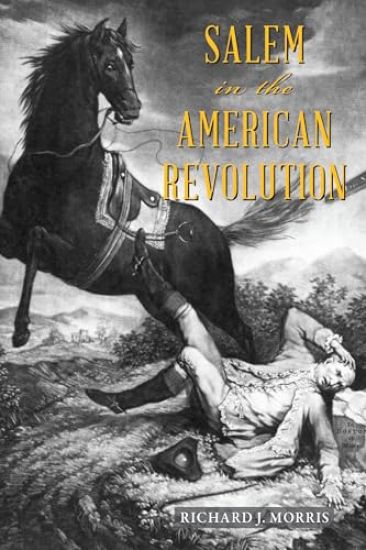
When the French and Indian War ended in 1763, Salem longed for a time of tranquility. However, that conflict left England deeply in debt and determined to reduce its obligations by taxing America. Salem's citizens initially opposed parliamentary taxes because they believed that the English were profiting from them. As Britain levied new taxes and pressed local officials to collect them, divisions erupted in town. In 1774, Salem became the capital of Massachusetts. By then, its citizens were being taxed from abroad, governed by an English general and tried before judges and juries appointed by royal officials. Join historian Richard J. Morris as he explores how the struggle for independence changed the town of Salem.
In September 1985, NATO sponsored an Advanced Study WOl'kshop entitled, "Noise-Induced Hearing Loss: Basic and Applied Aspects." Tne meeting was held in a mountain retreat near Lucca, Italy and was attended by scientists, clinicians, and public officials from 12 countries. This was the third in a series of such conferences organized by the authors. The first two were supported by the United States National Institute of Occupational Safety and Health; their proceedings were published as "The Effects of Noise on Hearing" in 1976 and "New Perspectives on Noise-Induced Hearing Loss" in 1982. The Organizing Committee approached NATO because it was felt that the problem of noise was common to all industrialized countries and was an especially serious problem for the military. Thus, the NATO sponsorship and the Italian site of the meeting were part of the Organizing Committee's plan to obtain an international and thorough repr'esentation on the problem of noise-induced hearing loss. The NATO meeting and proceedings followed the format of the previous two symposia with an initial focus on the anatomical and physiological disturbances resulting from noise-induced hearing loss. This was followed by sections devoted to studies of a more applied nature involving general auditory performance in noise, issues associated with the establishment of noise-exposure criteria, nonauditory effects of noise, and the interaction of noise with other agents.
Robert Louis Stevenson and the Pictorial Text explores the genesis, production and the critical appreciation of the illustrations to the fiction of Robert Louis Stevenson. Stevenson is one of the most copied and interpreted authors of the late nineteenth century, especially his novels Treasure Island and Strange Case of Dr Jekyll and Mr Hyde. These interpretations began with the illustration of his texts in their early editions, often with Stevenson’s express consent, and this book traces Stevenson’s understanding and critical responses to the artists employed to illustrate his texts. In doing so, it attempts to position Stevenson as an important thinker and writer on the subject of illustrated literature, and on the marriage of literature and visual arts, at a moment preceding the dawn of cinema, and the rejection of such popular tropes by modernist writers of the early twentieth century.