The rugged, parched landscape and fierce inhabitants of the Iberian Peninsula resisted Rome’s best generals for two centuries. Roman Spain tells the story of this conquest, making use of the latest archaeological evidence to explore the social, religious, political and economic implications of the transition from a tribal community accustomed to grisly human sacrifices to a civilised, Latin-speaking provincial society.From the fabled kingdom of Tartesos to the triumph of Christianity, Professor Curchin traces the evolution of Hispano-Roman cults, the integration of Spain into the Roman economy, cultural ‘resistance’ to Romanisation, and surveys the chief cities of the Roman administration as well as conditions in the countryside. Special emphasis is placed on social relationships: soldier and civilian, the emperor and the provincials, patrons and clients, the upper and lower classes, women and the family.
Roman Gaul, first published in 1983, makes use of a wealth of archaeological discoveries and modern methods of interpretation to give an account of the Roman presence in Gaul, from the time of Caesar’s conquests until the Crisis of the third century. Professor Drinkwater emphasises the changes caused in the Three Gauls and Germany by the impact of Romanisation – urbanisation, agriculture, trade and education – and points out the often curious ways in which Roman influences survive in these areas to the present day. Particular attention is paid to the evolution of the landowning class, as well as its relationship with the artisans and traders found in townships and cities. An assessment of the strength of Romano-Gallic society and its economy in the tumultuous third century AD concludes this lively and provocative coverage of an intriguing subject. Roman Gaul will be of interest to all students of the Roman legacy.
Roman Gaul, first published in 1983, makes use of a wealth of archaeological discoveries and modern methods of interpretation to give an account of the Roman presence in Gaul, from the time of Caesar’s conquests until the Crisis of the third century. Professor Drinkwater emphasises the changes caused in the Three Gauls and Germany by the impact of Romanisation – urbanisation, agriculture, trade and education – and points out the often curious ways in which Roman influences survive in these areas to the present day. Particular attention is paid to the evolution of the landowning class, as well as its relationship with the artisans and traders found in townships and cities. An assessment of the strength of Romano-Gallic society and its economy in the tumultuous third century AD concludes this lively and provocative coverage of an intriguing subject. Roman Gaul will be of interest to all students of the Roman legacy.
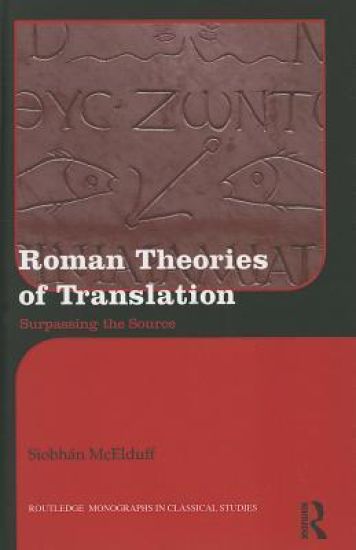
For all that Cicero is often seen as the father of translation theory, his and other Roman comments on translation are often divorced from the complicated environments that produced them. The first book-length study in English of its kind, Roman Theories of Translation: Surpassing the Source explores translation as it occurred in Rome and presents a complete, culturally integrated discourse on its theories from 240 BCE to the 2nd Century CE. Author Siobhán McElduff analyzes Roman methods of translation, connects specific events and controversies in the Roman Empire to larger cultural discussions about translation, and delves into the histories of various Roman translators, examining how their circumstances influenced their experience of translation.This book illustrates that as a translating culture, a culture reckoning with the consequences of building its own literature upon that of a conquered nation, and one with an enormous impact upon the West, Rome's translators and their theories of translation deserve to be treated and discussed as a complex and sophisticated phenomenon. Roman Theories of Translation enables Roman writers on translation to take their rightful place in the history of translation and translation theory.
This cutting-edge collection of essays offers provocative studies of ancient history, literature, gender identifications and roles, and subsequent interpretations of the republican and imperial Roman past. The prose and poetry of Cicero and Petronius, Lucretius, Virgil, and Ovid receive fresh interpretations; pagan and Christian texts are re-examined from feminist and imaginative perspectives; genres of epic, didactic, and tragedy are re-examined; and subsequent uses and re-uses of the ancient heritage are probed with new attention: Shakespeare, Nineteenth Century American theater, and contemporary productions involving prisoners and veterans. Comprising nineteen essays collectively honoring the feminist Classical scholar Judith Hallett, this book will interest the Classical scholar, the ancient historian, the student of Reception Studies, and feminists interested in all periods. The authors from the United States, Britain, France and Switzerland are authorities in one or more of these fields and chapters range from the late Republic to the late Empire to the present.
From the most basic terms to the structures and practices of the Church, this book offers a plain-speaking introduction to Roman Catholicism. Now in a second edition, it contains new sections on relations with other faiths, coverage of recent controversies in the Church and an expanded section on social teaching. It covers: Roman Catholic beliefs and traditions practices and devotional life – rituals, prayer, mass Church structures and authorities – from Vatican to parish church Church hierarchies and people – from bishops to the laity the role of the Church in society.With a glossary, further reading sections and reference to official documents of the Church, this is the perfect guide for students approaching the study of Roman Catholicism for the first time.
From the most basic terms to the structures and practices of the Church, this book offers a plain-speaking introduction to Roman Catholicism. Now in a second edition, it contains new sections on relations with other faiths, coverage of recent controversies in the Church and an expanded section on social teaching. It covers: Roman Catholic beliefs and traditions practices and devotional life – rituals, prayer, mass Church structures and authorities – from Vatican to parish church Church hierarchies and people – from bishops to the laity the role of the Church in society.With a glossary, further reading sections and reference to official documents of the Church, this is the perfect guide for students approaching the study of Roman Catholicism for the first time.
Originally published between 1920-70,The History of Civilization was a landmark in early twentieth century publishing. It was published at a formative time within the social sciences, and during a period of decisive historical discovery. The aim of the general editor, C.K. Ogden, was to summarize the most up to date findings and theories of historians, anthropologists, archaeologists and sociologists. This reprinted material is available as a set or in the following groupings: * Prehistory and Historical Ethnography Set of 12: 0-415-15611-4: £800.00 * Greek Civilization Set of 7: 0-415-15612-2: £450.00 * Roman Civilization Set of 6: 0-415-15613-0: £400.00 * Eastern Civilizations Set of 10: 0-415-15614-9: £650.00 * Judaeo-Christian Civilization Set of 4: 0-415-15615-7: £250.00 * European Civilization Set of 11: 0-415-15616-5: £700.00
Great debate exists amongst classical historians on the nature of Roman republican government. Some contend that the Roman Republic was governed by a small group of aristocratic families that entrenched their rule by means of long-standing alliances and an intricate network of loyal clients from the lower echelons of society. Others contest the definition of the republican government as oligarchic, maintaining that the Roman elite did not operate in a political vacuum and that Polybius’ judgment, which concedes a democratic element in the Roman constitution as embodied in the powers of the popular assemblies, cannot be simply swept aside. This debate has found its way into various scholarly works, but, until now, no single volume has been dedicated specifically to elections and electioneering, a sphere where the people—according to these interpretations—played a central if not a crucial role. Roman Elections in the Age of Cicero provides new and intriguing insights into the nature of Roman republican government and the people’s actual powers, but also addresses questions relevant to elections in our own societies today.
The streets of Roman cities have received surprisingly little attention until recently. Traditionally the main interest archaeologists and classicists had in streets was in tracing the origins and development of the orthogonal layout used in Roman colonial cities. Roman Urban Street Networks is the first volume to sift through the ancient literature to determine how authors used the Latin vocabulary for streets, and determine what that tells us about how the Romans perceived their streets. Author Alan Kaiser offers a methodology for describing the role of a street within the broader urban transportation network in such a way that one can compare both individual streets and street networks from one site to another. This work is more than simply an exploration of Roman urban streets, however. It addresses one of the central problems in current scholarship on Roman urbanism: Kaiser suggests that streets provided the organizing principle for ancient Roman cities, offering an exciting new way of describing and comparing Roman street networks. This book will certainly lead to an expanded discussion of approaches to and understandings of Roman streetscapes and urbanism.
Winner of the Spur Award for Best Historical Novel "Douglas C. Jones is one the great novelists of the American West, and Roman is one of his finest works--a hugely entertaining story with unforgettable characters."--James Donovan, Author of A Terrible Glory: Custer and the Little Bighorn Young Roman Hasford stood by his mother and sister on the family's Arkansas hill farm while his father was off fighting in the Civil War. Now that his father has returned, Roman heads west to blaze his own trail. Eager for adventure, Roman gets more than he bargained for--from the rough-and-tumble boomtown of Leavenworth, Kansas, to the blood-soaked prairies where he fights Cheyenne warriors at the Battle of Beecher's Island. Authentic and action-packed, Douglas C. Jones's Roman is an epic, unforgettable coming-of-age story, set against the background of the sprawling, wild, new frontier of the American West.
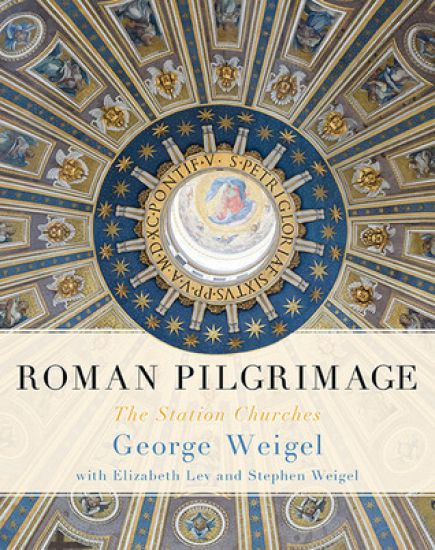
The annual Lenten pilgrimage to dozens of Rome's most striking churches is a sacred tradition dating back almost two millennia, to the earliest days of Christianity. Along this historic spiritual pathway, today's pilgrims confront the mysteries of the Christian faith through a program of biblical and early Christian readings amplified by some of the greatest art and architecture of western civilization.In Roman Pilgrimage , bestselling theologian and papal biographer George Weigel, art historian Elizabeth Lev, and photographer Stephen Weigel lead readers through this unique religious and aesthetic journey with magnificent photographs and revealing commentaries on the pilgrimage's liturgies, art, and architecture. Through reflections on each day's readings about faith and doubt, heroism and weakness, self-examination and conversion, sin and grace, Rome's familiar sites take on a new resonance. And along that same historical path, typically unexplored treasures,artifacts of ancient history and hidden artistic wonders,appear in their original luster, revealing new dimensions of one of the world's most intriguing and multi-layered cities.A compelling guide to the Eternal City, the Lenten Season, and the itinerary of conversion that is Christian life throughout the year, Roman Pilgrimage reminds readers that the imitation of Christ through faith, hope, and love is the template of all true discipleship, as the exquisite beauty of the Roman station churches invites reflection on the deepest truths of Christianity.
"This is a stimulating book and should be compulsory reading for all students of Roman art."---Classical Review "[A] model exploration into the ways private décor can be used to facilitate a larger understanding of Roman art and society."---Classical WorldRoman Art in the Private Sphere presents an impressive case for the social and art historical importance of the paintings, mosaics, and sculptures that filled the private houses of the Roman elite. The six essays in this volume range from the first century BCE to the fourth century CE, and from the Italian peninsula to the Eastern Empire and North African provinces, treating works of art that belonged to every major Roman housing type: the single-family atrium houses and the insula apartment blocks in Italian cities, the dramatically sited villas of the Campanian coast and countryside, and the palatial mansions of late antique provincial aristocrats. This new edition includes a fresh contribution by editor Elaine Gazda, tracing the developments in the treatment of private Roman art since the publication of the original edition of Roman Art in the Private Sphere. Elaine K. Gazda is Professor of the History of Art and Curator of Hellenistic and Roman Antiquities at the Kelsey Museum of Archaeology, University of Michigan.
A study of Roman politics from the early kings, through the Republic, to the age of the dictatorships. The story unfolds against a background of wars, financial tangles, shifting foreign policy, and personal rivalries. Sir Frank finds the secret of Roman power in the dignity of its great men and the liberty of the small. Though centuries have elapsed since the Caesars, we need not look far to discover in our own day the same conflicts between personal ambition and the dream of peace with dignity that consumed Rome. This book underscores the fragility of all political institutions, including our own.
Traditional theater in the Roman world depicted powerful emotions and political ideals that were often the norm in Roman society. Although modern historians have only a hazy perception of performances during both Republic and Empire, testimony to the greatness of the epoch's theater lies in the ruins that stretch across the expanse of the great "vanished empire." William Slater's new volume Roman Theater and Society brings an important perspective to the much-maligned status of the Roman theater, which has only recently been reappraised and appreciated as uniquely Roman rather than criticized for not being Greek. From this point of embarkation, William Slater and the nine contributors discuss theater in Rome and the Greek east with a definition of performance incorporating not only stage performances but also dinnertime entertainment, sporting events, and political events. Contributors are T. D. Barnes, K. M. Coleman, J. C. Edmonson, E. R. Gebhard, J. R. Green, E. J. Jory, W. D. Lebek, and D. S. Potter.Individual chapters combine literary evidence with archaeological, thereby engendering a deeper appreciation for the social and political roles of Roman theater. It becomes clear that these roles were of great influence in giving voice to the popular demands of the average Roman. In examining the roles of theater the contributors turn to the players and audience themselves for deeper understanding.Roman Theater and Society will be of great interest to classicists, theater specialists, and anyone interested in the interplay among plays, theaters, and the people on stage and in the audience.William J. Slater is Professor of Classics, McMaster University.
Roman coins often shed light on Roman public life and society through the legends, portraits, and images they bear. The papers collected in this volume were originally presented at the Second E. Togo Salmon Conference on Roman Studies. The eight contributors are specialists in Roman coins or Roman history and in the relations between them.Coins are a unique source of information about the Roman world. In the case of the Roman Empire they were issued by or with the approval of the ruling power. The representations and legends they show therefore present an official view of contemporary affairs. The coins themselves, minted for official purposes such as paying the army, when studied carefully can help reconstruct official policies. They can also occasionally reveal what monuments now lost may have looked like.It is not infrequent to come across pleas that the ancient historian should make more frequent use of numismatic evidence. These essays make clear that efforts are being made both by numismatists and by historians to bring the two disciplines together. At the same time the papers reveal that the task is by no means a straightforward one. The survival of Roman coins is variable, and so attempts to reconstruct the size and distribution of issues calls for skilled and experienced analysis. This collection of papers provides evidence for the kind of deductions that the historian may make from Roman coins as well as the illustrations of the pitfalls that await the unwary. Those interested in Roman history, amateur coin collectors, and professional numismatists will all find much here to widen their knowledge of the public context of Roman coins.George Paul is Professor of Classics, McMaster University. Michael Ierardi is Lecturer in Classics, McMaster University.
Roman Propertius and the Reinvention of Elegy presents an arresting new interpretation of the intricate and complex poetry of Propertius' final collection. Jeri Blair DeBrohun illuminates the manner in which the poet reinvents and revitalizes his elegy in Book 4 by broadening its lyrical promise and ideological horizons. DeBrohun finds the most striking element of Book 4 to be the apparent polarity of the poems, whose themes are split between new, aetiological subjects of Roman national significance and amatory affairs that evoke the themes of Propertius' first three books. In her compelling reassessment of Propertius' aspirations in Book 4, DeBrohun identifies the conflict between his new ambitions to produce Roman aetiological elegy and his traditional, exclusive devotion to erotic concerns as the central dynamic of his collection. Roman Propertius and the Reinvention of Elegy reveals how the poet came to find in the subcodes of the elegiac genre a medium of interaction between the opposing values of the two themes. Roman Propertius will interest not only scholars and students of Greek and Roman Poetry but also students of later traditions who are interested in the questions of genre and the relationship between poetry and wider cultural discourses. Jeri Blair DeBrohun is Associate Professor of Classics, Brown University.
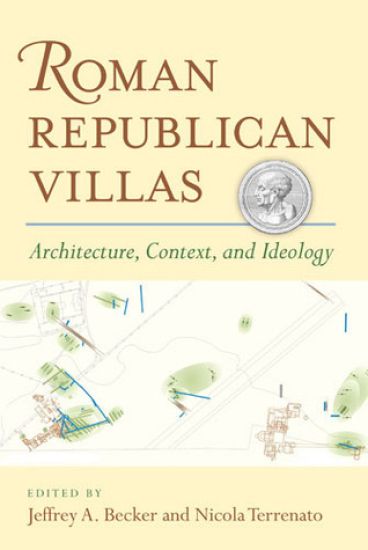
The Roman villa is a classic icon of Western culture, and yet villa can be used to cover a multiplicity of ideas, experiences, and places. In the late Republic and early Imperial periods, villas are inseparable from elite lifestyles, providing a prestigious setting for leisurely and intellectual pursuits. But how did these advanced buildings come about? Roman Republican Villas examines key aspects of early villa culture and architecture, with the goal of understanding the development and deployment of villas in Republican Italy. For instance, where does the "classic" villa architecture originate? How do writers like Cato the Elder or Varro use the villa to their own advantage? How visible are Republican villas in the landscape of central Italy?Traditional theories about villa development have been largely focused on stereotypical ideals of early Roman austerity and industriousness. New work at sites such as the Auditorium, however, proves the existence of luxurious residences already by the 5th-4th c. BCE, even before the Roman conquest of Italy. Such recent developments in archaeological fieldwork have begun to reshape the discourse in such a way that old assumptions are being challenged and, in many cases, found wanting. Within this atmosphere of new discoveries and reconsideration, scholars are uniquely poised to re-examine the villa and the part it played in the culture of Roman Italy, in terms of both the material remains and the literary sources. The villa also plays a prominent role in Republican literature such as the De agri cultura of Cato and the texts of Varro, as the early Latin authors seek to fashion identities for themselves and the city of Rome. Drawing on diverse source materials, the collected essays of Roman Republican Villas help to re-center the discussion of Roman villa culture, particularly in light of new evidence offered both by fieldwork and by new approaches to Republican agricultural writers.This volume brings together scholars of Latin literature, Roman history, and classical archaeology to offer a multidisciplinary approach to the questions connected to the emergence and development of villas and their farming culture. With contributions from leading scholars Jeffrey A. Becker, John Bodel, Stephen L. Dyson, Carin M. C. Green, Brendon Reay, Nicola Terrenato, Mario Torelli, and Rita Volpe, the viewpoints offered build upon previous scholarship and ask challenging questions about how the evidence of Roman villas has traditionally been interpreted.