Sam is hired by the owner of a professional basketball team in L.A. to find out who is blackmailing him. The story takes place during the NBA playoffs and the blackmailer says he has credible information that the star player for the team has a drug problem and is getting his drugs from a Cartel. He wants seventy-five million dollars, or he'll go public with the accusation and force the NBA to suspend him for the series. Sam has one week to find out who the blackmailer is and stop it.
The Case of the Blonde with the Bad Nose Job is Sam's first case and a comedy/mystery about two rich sisters and a kidnapping in Las Vegas. Sam is a street-smart private investigator with a sometimes irreverent and hilarious approach to solving cases while putting his life in danger. The Case of the Blonde with the Bad Nose Job combines all the surprises of a great who done it with all the laughs of an engaging comedy.
Sam is hired by the owner of a professional basketball team in L.A. to find out who is blackmailing him. The story takes place during the NBA playoffs and the blackmailer says he has credible information that the star player for the team has a drug problem and is getting his drugs from a Cartel. He wants seventy-five million dollars, or he'll go public with the accusation and force the NBA to suspend him for the series. Sam has one week to find out who the blackmailer is and stop it.
After a month of moving to Georgetown, Texas, I took a ride south on IH-35 from Georgetown to Austin. I couldn't help but notice a large green and white highway sign that said, Sam Bass Road. I became interested where this road went and exited and followed it to where another road sign came into sight, A. W. Grimes Boulevard. I am not sure why, but I needed to find out who these people were just like I did when I wrote a story about the Runaway Scrape in Texas and discovered Three-Legged Willie's statue on the town square in Georgetown. Sam Bass and his gang held up two stagecoaches while in Deadwood, South Dakota in 1877. Sam had a fling with Calamity Jane and sat in the same chair Wild Bill Hickok sat in before being shot in a poker game holding a Dead Man's Hand. In the fall of 1877, Sam Bass and his friends robbed the eastbound Union Pacific passenger train and came away with over $60,000 in twenty-dollar gold pieces. After a successful robbery, they split up into pairs and went in all directions. Some were caught. Bass was an excellent transformist and disguised himself as a poor farmer and made his way back to Denton County, Texas with his share of the gold. In the springtime of 1878, Sam and his gang robbed four trains within twenty miles of Dallas. Word was sent to Governor Hubbard that something needed to be done. The bandits became the object of a spirited chase across North Texas by reward-seeking citizens and a special company of Texas Rangers headed by Junius Peak. Follow the life story of Sam Bass from his childhood days to his last days in Round Rock, Texas on July 21, 1878. Even though this notorious outlaw spent less than a week in this small community, his short visit put the town on world atlases and had a major street named after him. It wasn't but a few years ago the community got together and named a boulevard after Deputy A. W. Grimes, the man Sam Bass was accused of killing in 1878. Unlike John Wesley Hardin, he had no notches on his gun handle and once joked about selling his revolver for money. Historical figures in novel: Jack McCall, Wild Bill Hickok, Deadwood, South Dakota, Calamity Jane, Martha Cannary, Joel Collins, Samuel Bass, Henry Underwood, Steeldust, Sheriff Eagan, Sarah Lacey, Kate Leroy, Frank Corley, Maggie MacDonald, Jack Davis, James Berry, Tom Nixon, Bill Heffridge, Jim Murphy, Sheriff Brousaard, Frank Blockey Jackson, Tooney Waits, Tom Gerrin, Billy Everheart, Bob Welch, Elizabethtown, Marshall George Smith, Arkansas Johnson, Charlie Carter, Sawnie Robertson, John Laws John Wesley Hardin, Waco, John Jones, Colonel Richard Hubbard, T. J. Jackson, Judge DuVal, Texas Rangers, Scott Mayes, Judge Jim Hogg, Round Rock, Texas, Brushy Creek, Dick Ware, Chris Connor, George Harrell, Mary Matson, Reverend J. W. Ledbetter, Walter Johnson, Tom Spotswood, Seaborn Barnes, Nubbins Colt, Sheriff George Drennan, Thomas Gerren, Albert Herndon, Sam Pipes, Billy Collins, Will Scott, George Noble, Governor Richard Hubbard, Lieutenant Junius Peak, Frank Finley, James Curry, John Lovejoy, John McKeen, Julius Alvord, Albert Grimes, Judge Jesse Grimes.
The loving, warm relationship between a great-grandfather and his great-grandson, Sam and Cody. Cody's father and grandfather died in previous wars, and Pa Pa Sam has become a father figure to Cody. Pa Pa Sam, Cody, and Amina, Cody's mother, have created a new close family unit. Cody spends much loving, precious time with Pa Pa Sam going places, sharing fun activities, and learning about life and death.
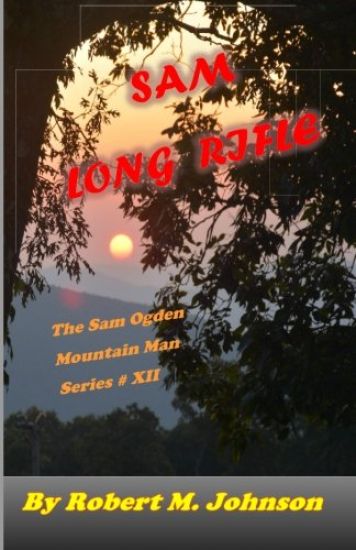
The 19th Century in America was remarkable for many things that formed and shaped the new country that was rapidly expanding from ocean to ocean. Men like the fictional characters, Sam Ogden and Clyde Patterson had been among the first to participate in the wilderness trapping bonanza spawned by the beaver trade and the culture of the top hat. Now, it is the 1840's, and the need for beaver pelts is over. The West was about to see the first signs of a real Western migration, the Oregon Trail. Sam Ogden had invested his "wealth," from his days as a trapper, in the General Store of a southern Colorado settlement, at Grand Junction. With his wife, the Mandan woman, Little Fire, Sam has settled down and is beginning to raise a family. His reputation with the Long Rifle, the frontier Hawken rifle, followed him into the more stable life of the settlement. The Indians at the Rendezvous, started calling him "Sam Long Rifle." His partner, Clyde Patterson, a veteran of the War of 1812, and quite a bit older than "Young Sam," has also taken up life in the settlement. They both became embedded in the process of the western frontier, as it developed the first signs of what the two former trappers called disdainfully, "civilization." Grand Junction was evolving partly because of Clyde and Sam and partly despite them. In the young life of Sam Ogden, several years have gone by since the last time he decided to write down the events of his life on the frontier. During the intervening years he has fathered two children and made many new friends as part owner of the General Store at Grand Junction. In the previous volume, "Finding a Firestone," Sam has indulged in his fascination with gemstones and gold, found in the Rocky Mountain Wilderness. In this volume, called "Sam Long Rifle," he and his family are gifted with an amazing large dog, a Pyrenean Sheepdog, they named Ruffian. Also, a hunting expedition has brought an English Nobleman, John, Earl of Wickham to the territory. The Earl has hired "Sam Long Rifle" as his guide into the high Rockies. Let the adventures begin.
After a final act of horrendous abuse threatens her life, fifteen-year-old Sam runs away from home and into the Olympic Mountains of Washington State. Physically and emotionally exhausted, she happens upon a mysterious tree house in the woods which shelters an old woman named Theory. Through elements of magic and sage advice, Theory takes Sam on an unforgettable healing journey. Sam begins to discover that she, too, has powers. But her process is interrupted by the nervous reality that her abusers will soon go after her younger sister, Nova, unless she can get to her first.With the help of Sam's friend, Dodger, and two other spirited kids from foster care, the group sets up a hidden camp in the wilderness and forms "The Orphan's Collective." While struggling to create their own concept of "family," Dodger and Sam also work to navigate their budding feelings for one another. As the group formulates a plan to reach the masses of kids left behind by adults who never wanted them, they naturally begin to rewrite the fate that has seemingly already been decided for them.Sam's Theory is a story of immeasurable grit and re-empowerment after trauma. With embedded real-world advice, it is the recognition of our tremendous capacity as human beings to withstand darkness and summon resiliency, simply by learning how to use our voices and reconnect with those around us.
In late 1908 Samuel Paul Crippen leaves familiar Pennsyltucky surroundings and journeys west by iron horse to Oregon. His new diary fills with details of passionate determination for his work and one woman. He becomes as much a father to stepdaughter, Willa Girl, as to his five birth children. Torment over the mysterious illness of his beloved Edith and worrisome lack of money plague Sam's ability to persevere./ World War II sees his sons perilous landings on Normandy beach with John as a member of the 82nd Airborne Infantry Glider Division. The units All American special edition newspaper is saved in Sam's trunk along with 100s of artifacts and journals. V-mail, which crisscrosses the ocean, is preserved by his son, Steele./ Sam's own words informed of painful periods when tuberculosis, measles, and scarlet fever rampaged unchecked among the population to maim or snuff out lives. Horseheads, NY, where Sam resettles is no exception to these ills./ Struggles, disappointments, and victories are recorded in his diaries for 53 years. But nearly half a century later new information was uncovered and surfaces. There is proof that Sam, his dear Edith, and one other kept a secret from even those closest to them, which the three took to their graves./
Anew serial killer was on the loose. Sam and John need to find him before he strikes again. One person who may have been the last person to disappear suddenly comes back to town. is she in danger? Other life events interfere in this story as they try to solve the mystery.
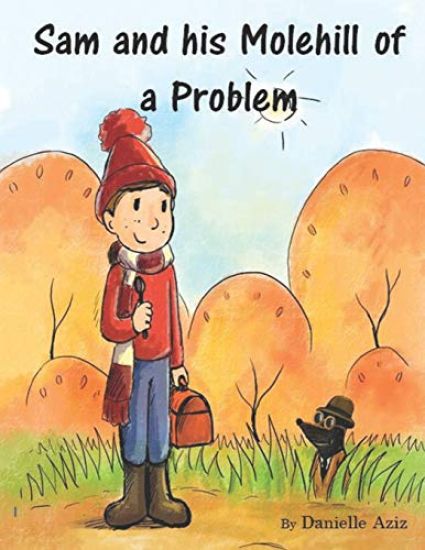
Sam and his Molehill of a Problem, is a story of a boy that has a difficult time Stopping and Thinking before he Does. One simple problem turns into a disaster as Sam fails to slow down, take responsibility, recognize his emotions and make choices that will lead to a positive outcome.
Sam Steele's Adventures on Land and Sea is a juvenile adventure novel written by L. Frank Baum, famous as the creator of the Land of Oz. The book was Baum's first effort at writing specifically for an audience of adolescent boys, a market he would pursue in the coming years of his career. The novel was first published in 1906, under the pen name "Capt. Hugh Fitzgerald," one of Baum's multiple pseudonyms.
This Sam Smith Diary for the academic year 2019 enables you to keep organised and up to date, with plenty of space to write notes, lists or appointments, Diary runs from 1st january 2019 to 31st december 20
This Sam Smith Diary for the academic year 2019 enables you to keep organised and up to date, with plenty of space to write notes, lists or appointments, Diary runs from 1st january 2019 to 31st december 20
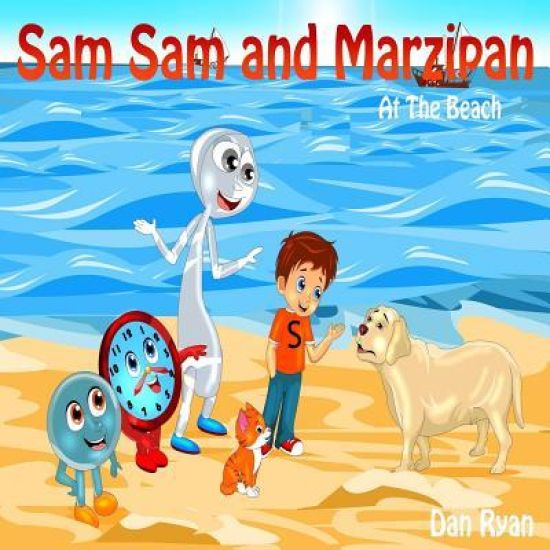
Saving Christmas is what every child wants to hear or read Sam and his friends receive a visit from Jingle, Santa Claus' elf who tells them that a train with all of the children's letters to Santa has been left behind at the station. Jingle wants Sam and his friends to help save Christmas. The group hook up the little train and fly to the North Pole where they deliver the children's letters to Santa. Sam Sam is a four year old boy whose imagination sees his cubby friends, Marzipan (his faithful cat - who also talks); Spoon, Dish and Tock (the cubby wall clock) come to life and join him on his adventures. This early learning book is superbly illustrated and children will want to read the story over and over, as they too will imagine sharing Sam Sam's adventure.
This collection of literature attempts to compile many of the classic works that have stood the test of time and offer them at a reduced, affordable price, in an attractive volume so that everyone can enjoy them.
"Surrogate Structures" is an exhibition catalogue for the British artist's, Sam Stocker, installation at The Container, Tokyo. It is the 14th catalogue in a series published by the gallery to archive and promote artists in Japan and abroad. The catalogue showcases writings by the gallery director, Shai Ohayon, and Tokyo-based writer/artist James Jack, as well as notes by Sam Stocker. The publication chronicles Stocker's, a recent PhD graduate of Tokyo University of the Arts (Geidai) graduate, art creating process for his site-specific life-size sculptural installation at The Container. Responding to a specific site is a pivotal element in Stocker's works where historical and geographical findings are dressed in highly personal associative events, memories, and thoughts. Slowly, through a journey of discovery that Stocker consciously undertakes, shapes and concepts emerge and grow, taking on a life of their own to piece together a new piece of art. Although at first look many of his structures seem untidy, they present keen attention to detail and high aesthetic accuracy. The shapes and structures are convincingly premeditated, and enable the viewers to experience the installations both physically and psychologically. Much of Stocker's process is collecting materials and making connections, some sort of a cerebral game, in efforts to "find the work". Thereafter, production starts, fitting in all of the components together, like a puzzle. Although the final pieces are exhaustively planned, they are still also tentative and come to life with the instinctive input of the artist. Stocker does not seek to justify his works or give them a purpose. It is art for art's sake-terribly subjective and "pointless", but it is this purism that is fundamental in the way Stocker defines his role as an artist. He seeks to create bits of his own world, live his own art, surrounds himself with it, in an endeavor to present his version of truth through his art making. Sam Stocker's installation at The Container, Surrogate Structures, such as in his previous works, is inspired by research and visits the artist conducted to the area. One such location that influenced the artist's work for the exhibition is the existence of a Fujizuka just behind the location of the gallery. Fujizuka are small mounds, replicas representing Mount Fuji, found in and around Tokyo. These surrogates became popular during the Edo period to enable pilgrims who could not climb Mount Fuji to experience the ten stations of the mountain right to the summit. The irony of the concept intrigues the artist, but also the nurturing nature of Fujizuka, comforting the needy like a womb, a vessel, a box. The Container is a contemporary exhibition space in Nakameguro, Tokyo. The space opened in March 2011 to create a site that encourages people to engage with art installations and works, where the emphasis is on curation and the accessibility of contemporary art and ideas to the general public. As the name suggests, the physical space is no more than a constructed shipping container (485x180x177cm), made to measurements of old Japanese shipping containers, housed inside Bross hair salon, in one of Tokyo's most loved and trendy neighbourhoods. The Container invites Japanese and international artists to make site-specifc installations four times a year. Each installation remains on view to the public for two-and-a- half months. Since 2013, The Container also started to publish full-colour, bilingual (Jap/Eng) exhibition catalogues, available online and at the gallery. The space receives extensive international coverage, including ArtAsiaPacific, Artforum, Hyperallergic, Glass Magazine, Art & Antiques Magazine, Dazed & Confused, Blouin Artinfo, Art-iT, Bijutsu-Techo/BT, NHK, Tokyo Art Beat, The Japan Times, and The Sunday Times, travel guides and in-flight magazines, to mention only a few. www.the-container.com