Kirjahaku
Etsi kirjoja tekijän nimen, kirjan nimen tai ISBN:n perusteella.
1000 tulosta hakusanalla Samuel Butler; Samuel Johnson
The Life of Samuel Hopkins Emery, Begun as an Autobiography
Samuel Hopkins Emery
Trieste Publishing
2018
nidottu
The Life of Samuel Hopkins Emery, Begun as an Authobiography
Samuel Hopkins Emery
Trieste Publishing
2018
nidottu
Some Discourses, Epistles, and Letters, by the Late Samuel Fothergill. to Which Are Added, Some Discourses by the Late Catherine Phillips, Both of the Society of Friends
Samuel Fothergill
Trieste Publishing
2018
nidottu
He was a servant to the public, a writer for hire. He was a hero, an author adding to the glory of his nation. But can a writer be both hack and hero? The career of Samuel Johnson, recounted here by Lawrence Lipking, proves that the two can be one. And it further proves, in its enduring interest for readers, that academic fashions today may be a bit hasty in pronouncing the "death of the author."A book about the life of an author, about how an author is made, not born, Lipking's Samuel Johnson is the story of the man as he lived--and lives--in his work. Tracing Johnson's rocky climb from anonymity to fame, in the course of which he came to stand for both the greatness of English literature and the good sense of the common reader, the book shows how this life transformed the very nature of authorship.Beginning with the defiant letter to Chesterfield that made Johnson a celebrity, Samuel Johnson offers fresh readings of all the writer's major works, viewed through the lens of two ongoing preoccupations: the urge to do great deeds--and the sense that bold expectations are doomed to disappointment. Johnson steers between the twin perils of ambition and despondency. Mounting a challenge to the emerging industry that glorified and capitalized on Shakespeare, he stresses instead the playwright's power to cure the illusions of everyday life. All Johnson's works reveal his extraordinary sympathy with ordinary people. In his groundbreaking Dictionary, in his poems and essays, and in The Lives of the English Poets, we see Johnson becoming the key figure in the culture of literacy that reaches from his day to our own.
Bewigged, muscular and for his day unusually tall, adorned in soiled, rumpled clothes, beset by involuntary tics, opinionated, powered in his conversation by a prodigious memory and intellect, Samuel Johnson (1709-1784) was in his life a literary and social icon as no other age has produced. "Johnsonianissimus," as Boswell called him, became in the hands of his first biographers the rationalist epitome and sage of Enlightenment. These clich s--though they contain elements of truth--distort the complexity of the public and private Johnson. Peter Martin portrays a Johnson wracked by recriminations, self-doubt, and depression--a man whose religious faith seems only to have deepened his fears. His essays, scholarship, biography, journalism, travel writing, sermons, fables, as well as other forms of prose and poetry in which he probed himself and the world around him, Martin shows, constituted rational triumphs against despair and depression. It is precisely the combination of enormous intelligence and frank personal weakness that makes Johnson's writing so compelling. Benefiting from recent critical scholarship that has explored new attitudes toward Johnson, Martin's biography gives us a human and sympathetic portrait of Dr. Johnson. Johnson's criticism of colonial expansion, his advocacy for the abolition of slavery, his encouragement of women writers, his treatment of his female friends as equals, and his concern for the underprivileged and poor make him a very "modern" figure. The Johnson that emerges from this enthralling biography, published for the tercentenary of Johnson's birth, is still the foremost figure of his age but a more rebellious, unpredictable, flawed, and sympathetic figure than has been previously known.
Thanks to Boswell’s monumental biography of Samuel Johnson, we remember Dr. Johnson today as a great wit and conversationalist, the rationalist epitome and the sage of the Enlightenment. He is more often quoted than read, his name invoked in party conversation on such diverse topics as marriage, sleep, deceit, mental concentration, and patriotism, to generally humorous effect. But in Johnson’s own day, he was best known as an essayist, critic, and lexicographer: a gifted writer possessed of great force of mind and wisdom. Writing a century after Johnson, Ruskin wrote of Johnson’s essays: He “taught me to measure life, and distrust fortune…he saved me forever from false thoughts and futile speculations.” Peter Martin here presents “the heart of Johnson,” a selection of some of Johnson’s best moral and critical essays. At the center of this collection are the periodical essays from the Rambler, Adventurer, and Idler. Also included are Johnson’s great moral fable, Rasselas; the Prefaces to the Dictionary and his edition of Shakespeare; and selections from Lives of the Poets. Together, these works—allied in their literary, social, and moral concerns—are the ones that continue to speak urgently to readers today.
Mark Twain-Howells Letters: The Correspondence of Samuel L. Clemens and William D. Howells, 1872-1910, Volume I
Samuel L Clemens; William D Howells
Harvard University Press
1960
sidottu
Mark Twain-Howells Letters: The Correspondence of Samuel L. Clemens and William D. Howells, 1872-1910, Volume II
Samuel L Clemens; William D Howells
Harvard University Press
1960
sidottu
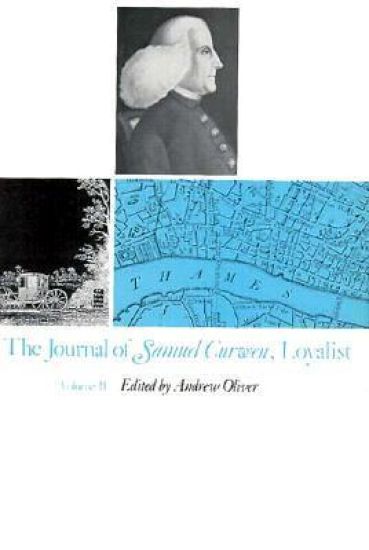
"He was a man of fair learning, and more than average accomplishment; not at all intolerant of opinions at issue with his own; in religion a Dissenter of the class still prevalent in New England: in his tastes scholarly and refined, not ill read in general literature, prone to social enjoyments, a reasonably good critic of what he saw, altogether an excellent example of the class of men out of whom the fathers and founders of that great republic sprang..."-Charles Dickens, in summing up the character of Samuel CurwenThis unabridged two-volume edition of Samuel Curwen's journal supersedes the only version previously available to historians: a fragmentary and inaccurate mid-nineteenth-century work published by George Atkinson Ward, which nevertheless was celebrated by Charles Dickens.Andrew Oliver, combining painstaking documentation with an abundance of illustrations, provides a colorful, complete work which ranks as a valuable source of English social history from 1775 to 1784. It was during these years that Curwen, a Salem merchant, after fleeing from the harassment incurred by his loyalist activities, migrated to England and kept this journal. A man small in size, physically timid, mentally brave, and remarkably injudicious, Curwen felt that he was "unhappily though unjustly ranked" as a tory. Thus his observations and thoughts are useful in understanding the attitudes and experiences of the loyalist exiles.Set primarily in England and sparked throughout with engaging reports on personalities, places, and even the weather, the journal traces Curwen's nine years of exile. It also briefly details his departure from Salem, his short and alarming sojourn in Philadelphia where he found the political climate no less unfavorable, and his subsequent sea voyage to England.The Journal of Samuel Curwen, Loyalist is the first in a series of Loyalist Papers, a long-term program to be undertaken independently by a number of publishers in Britain, Canada, and the United States. The program will locate, gather, and make available documents that place in perspective those Americans who, at the time of the Revolution, remained loyal to the Crown.
The Collected Works of Samuel Taylor Coleridge, Vol. 16, Part 1
Samuel Taylor Coleridge
Princeton University Press
2001
sidottu
Poetry in its many guises is at the center of Coleridge's multifarious interests, and this long-awaited new edition of his complete poetical works marks the pinnacle of the Bollingen Collected Coleridge. The three parts of Volume 16 confirm and expand the sense of the Coleridge who has emerged over the past half-century, with implications for English Romantic writing as a whole. Setting new standards of comprehensiveness in the presentation of Romantic texts, they will interest historians and editorial theorists, as well as readers and students of poetry. They represent a work of truly monumental importance. The first part presents the reading texts of 706 poems in chronological sequence. Its blend of newly discovered and newly collected poems, presented in light of all known evidence and where practicable in unrevised forms, offers a fresh and original Coleridge: less inhibited by Victorian ideas about what poetry should be, moving easily and productively between genres and levels of seriousness. In texts that remained fluid and exploratory to the end, Coleridge alternates between lyric and satire, prophecy and conversation, symbol and allegory. Each poem is accompanied by a headnote and commentary that together provide its historical-biographical context and offer key textual variants. The book opens with an introduction and chronological tables. The three appendixes position individual poems in the contexts in which they appeared during Coleridge's lifetime. Illustrations such as contemporary scenes and portraits bring this rich collection, like the companion volumes, all the more to life.
The Collected Works of Samuel Taylor Coleridge, Vol. 16, Part 2
Samuel Taylor Coleridge
Princeton University Press
2001
sidottu
Poetry in its many guises is at the center of Coleridge's multifarious interests, and this long-awaited new edition of his complete poetical works marks the pinnacle of the Bollingen Collected Coleridge. The three parts of Volume 16 confirm and expand the sense of the Coleridge who has emerged over the past half-century, with implications for English Romantic writing as a whole. Setting new standards of comprehensiveness in the presentation of Romantic texts, they will interest historians and editorial theorists, as well as readers and students of poetry. They represent a work of truly monumental importance. The second part presents the same 706 poems as the first, in the same chronological sequence, but differently records in each case all known textual information in collated form--allowing for alternative construals of the reading texts. An additional 135 items are inserted into the same sequence, comprising poems mistakenly ascribed to Coleridge or of dubious authenticity and poems that remained only in the planning stage or that are referred to but have not been recovered. The index of titles and first lines incorporates the full range of variants. All told, the Collected Coleridge variorum sequence collates over a third more additional texts--in more detailed and accurate form--than those found in the previous standard edition, by E.H. Coleridge. The presentation method in this second part will interest editorial theorists as well as those interested primarily in Coleridge and/or the making of poetry. The unusually detailed textual information also reveals changes in such areas as linguistic and grammatical usage, patterns of transcription and circulation among anthologists, and contemporary publishers' house styles.
The Collected Works of Samuel Taylor Coleridge, Vol. 12, Part 6
Samuel Taylor Coleridge; George Whalley
Princeton University Press
2001
sidottu
In his introduction to this edition of Coleridge's Marginalia, the late George Whalley wrote, "There is no body of marginalia--in English, or perhaps in any other language--comparable with Coleridge's in range and variety and in the sensitiveness, scope, and depth of his reaction to what he was reading." The Princeton edition of the Marginalia, of which this is the sixth volume, brings together over eight thousand notes, many never before printed, varying from a single word to substantial essays. In alphabetical order of authors, the notes are presented literatim from the original manuscripts whenever the annotated volumes can be found. Each note is preceded by the passage of the original text that appears to have provoked Coleridge's comment. Texts in foreign languages are followed by translations. The present volume comprises annotations on more than fifty books and manuscripts (from Valckenaer to Zwick, plus Addenda), including comments on Wordsworth's "Benjamin the Waggoner," "The Prelude," and "Translation of Virgil's Aeneid," as well as on William Godwins's verse drama "Abbas." A key-word index to the six volumes of Marginalia, provided here, will give readers ready access to Coleridge's ideas on subjects ranging from literature and philosophy through religion, politics, history, biography, and science.
The Description for this book, Samuel Johnson and the Impact of Print: (Originally published as Printing Technology, Letters, and Samuel Johnson), will be forthcoming.
The Collected Works of Samuel Taylor Coleridge, Volume 7
Samuel Taylor Coleridge
Princeton University Press
1985
pokkari
Biographia Literaria has emerged over the last century as a supreme work of literary criticism and one of the classics of English literature. Into this volume poured 20 years of speculation about the criticism and uses of poetry and about the psychology of art. Following the text of the 1817 edition, the editors offer the first completely annotated edition of the highly allusive work.
The Collected Works of Samuel Taylor Coleridge, Volume 8
Samuel Taylor Coleridge
Princeton University Press
2000
sidottu
During the winter of 1818-1819, Samuel Taylor Coleridge gave fourteen lectures on the history of philosophy. A shorthand writer took down twelve of them in the most detailed version of Coleridge's lectures known to exist. The transcriptions are imperfect and inaccurate in various ways, but, when they are combined with Coleridge's own notes, as in this edition, the result is a coherent and largely complete whole. The lectures contain Coleridge's interpretation of the history of philosophy. He opposed the idea, widely accepted at the time, that the philosophy of the Enlightenment had advanced by conquering religion. He believed that this view had doomed philosophy to the low esteem in which it was held in Britain, and he wanted to counter it by showing that the philosophy of the Enlightenment was largely derivative and that neither philosophy nor religion could stand alone. This series of lectures was his most systematic attempt to survey the relationship of philosophy to religion from Thales to Kant. The edition presents a fully annotated and indexed text of the lecture series, and it provides in addition the complete texts of the shorthand reports and of Coleridge's own notes (which were omitted from the Coleridge Notebooks), along with newspaper and manuscript reports by people who attended the lectures. The volume includes an appendix by Owen Barfield, which is drawn from his incomplete manuscript edition of the lectures.