Online applications have been gaining wide acceptance among the general public. Companies like Amazon, Google, Yahoo! and NetFlicks have been doing extremely well over the last few years largely because of people becoming more comfortable and trusting of the Internet. The increasing acceptance of online products makes it increasingly important to address some of the scientific techniques involved in developing efficient 3D online systems.The topics discussed in this book broadly cover four categories: networking issues in online multimedia; joint texture-mesh simplification and view independent transmission; view dependent transmission and server-side rendering; content and background creation; and creating simple online games.
This book highlights the qualitative and quantitative sequential changes in microstructure of P91 steel under various stress and temperature conditions. The P91 alloy is an established material used under elevated temperature and stress in the components of thermal power plants. Temperature and stress levels for laboratory experimentation have been selected based on the true operating condition of a boiler. This book describes both full length as well as interrupted tests that were performed under given parameters. Subsequently, the microstructures, bulk hardness and NDE parameters (magnetic and non-linear ultrasonic) have been evaluated. For reliable data, the microstructures have been observed at different regions of creep exposed samples by different characterization techniques. This has been further followed by drawing co-relation between specific features like precipitate size variation with creep strain / creep time and so on. Given the contents, this book will be a useful reference for researchers and professionals working in the area of materials especially in thermal power plants.
This book highlights the qualitative and quantitative sequential changes in microstructure of P91 steel under various stress and temperature conditions. The P91 alloy is an established material used under elevated temperature and stress in the components of thermal power plants. Temperature and stress levels for laboratory experimentation have been selected based on the true operating condition of a boiler. This book describes both full length as well as interrupted tests that were performed under given parameters. Subsequently, the microstructures, bulk hardness and NDE parameters (magnetic and non-linear ultrasonic) have been evaluated. For reliable data, the microstructures have been observed at different regions of creep exposed samples by different characterization techniques. This has been further followed by drawing co-relation between specific features like precipitate size variation with creep strain / creep time and so on. Given the contents, this book will be a useful reference for researchers and professionals working in the area of materials especially in thermal power plants.
This book highlights the qualitative and quantitative sequential changes in microstructure of P22 steel under various stress and temperature conditions. The P22 alloy is an established material used under elevated temperature and stress for the components of thermal power plants. Temperature and stress levels for laboratory experimentation have been selected based on the true operating condition of a boiler. This book describes both continuous as well as interrupted tests that were performed under given parameters. Subsequently, the microstructures, bulk hardness and NDE parameters (magnetic and non-linear ultrasonic) have been evaluated. For reliable data, the microstructures have been observed at different regions of creep exposed samples by different characterization techniques. This has been further followed by drawing correlation between specific features like precipitate size variation with creep strain / creep time and so on. Given the contents, this book will be a useful reference for researchers and professionals working in the area of materials especially in thermal power plants.
This book highlights the qualitative and quantitative sequential changes in microstructure of P22 steel under various stress and temperature conditions. The P22 alloy is an established material used under elevated temperature and stress for the components of thermal power plants. Temperature and stress levels for laboratory experimentation have been selected based on the true operating condition of a boiler. This book describes both continuous as well as interrupted tests that were performed under given parameters. Subsequently, the microstructures, bulk hardness and NDE parameters (magnetic and non-linear ultrasonic) have been evaluated. For reliable data, the microstructures have been observed at different regions of creep exposed samples by different characterization techniques. This has been further followed by drawing correlation between specific features like precipitate size variation with creep strain / creep time and so on. Given the contents, this book will be a useful reference for researchers and professionals working in the area of materials especially in thermal power plants.
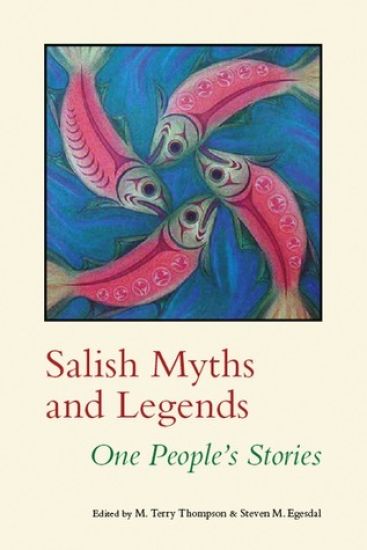
The rich storytelling traditions of Salish-speaking peoples in the Pacific Northwest of North America are showcased in this anthology of story, legend, song, and oratory. From the Bitterroot Mountains to the Pacific Ocean, Salish-speaking communities such as the Bella Coola, Shuswap, Tillamook, Quinault, Colville-Okanagan, Coeur d'Alene, and Flathead have always been guided and inspired by the stories of previous generations. Many of the most influential and powerful of those tales appear in this volume. Salish Myths and Legends features an array of Trickster stories centered on Coyote, Mink, and other memorable characters, as well as stories of the frightening Basket Ogress, accounts of otherworldly journeys, classic epic cycles such as South Wind's Journeys and the Bluejay Cycle, tales of such legendary animals as Beaver and Lady Louse from the beginning of time, and stories that explain why things are the way they are. The anthology also includes humorous traditional tales, speeches, and fascinating stories of encounters with whites, including "Circling Raven and the Jesuits." Translated by leading scholars working in close collaboration with Salish storytellers, these stories are certain to entertain and provoke, vividly testifying to the enduring power of storytelling in Native communities.
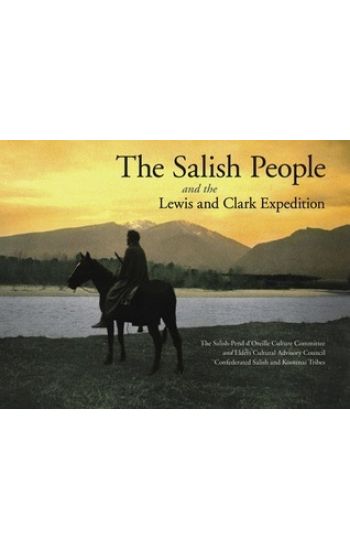
On September 4, 1805, in the upper Bitterroot Valley of what is now western Montana, more than four hundred Salish people were encamped, pasturing horses, preparing for the fall bison hunt, and harvesting chokecherries as they had done for countless generations. As the Lewis and Clark expedition ventured into the territory of a sovereign Native nation, the Salish met the strangers with hospitality and vital provisions while receiving comparatively little in return. For the first time, a Native American community offers an in-depth examination of the events and historical significance of their encounter with the Lewis and Clark expedition. The result is a new understanding of the expedition and its place in the wider context of U.S. history. Through oral histories and other materials, Salish elders recount the details of the Salish encounter with Lewis and Clark: their difficulty communicating with the strangers through multiple interpreters and consequent misunderstanding of the expedition’s invasionary purpose, their discussions about whether to welcome or wipe out the newcomers, their puzzlement over the black skin of the slave York, and their decision to extend traditional tribal hospitality and gifts to the guests. What makes The Salish People and the Lewis and Clark Expedition a startling departure from previous accounts of the Lewis and Clark expedition is how it depicts the arrival of non-Indians—not as the beginning of history but as another chapter in a long tribal history. Much of this book focuses on the ancient cultural landscape and history that had already shaped the region for millennia before the arrival of Lewis and Clark. The elders begin their vivid portrait of the Salish world by sharing creation stories and their traditional cycle of life. The book then takes readers on a cultural tour of the Native trails that the expedition followed. With tribal elders as our guides, we now learn of the Salish cultural landscape that was invisible to Lewis and Clark. The Salish People and the Lewis and Clark Expedition also portrays with new clarity the profound upheaval of the Native world in the century before the expedition's arrival, as tribes in the region were introduced to horses, European diseases, and firearms. The arrival of Lewis and Clark marked the beginning of a heightened level of conflict and loss, and the book details the history that followed the expedition: the opening of Salish territory to the fur trade; the arrival of Jesuit missionaries; the establishment of Indian reservations, the non-Indian development of western Montana; and, more recently, the revival and strengthening of tribal sovereignty and culture. Conveyed by tribal recollections and richly illustrated, The Salish People and the Lewis and Clark Expedition not only sheds new light on the meaning of the expedition; it also illuminates the people who greeted Lewis and Clark and, despite much of what followed, thrive in their homeland today.
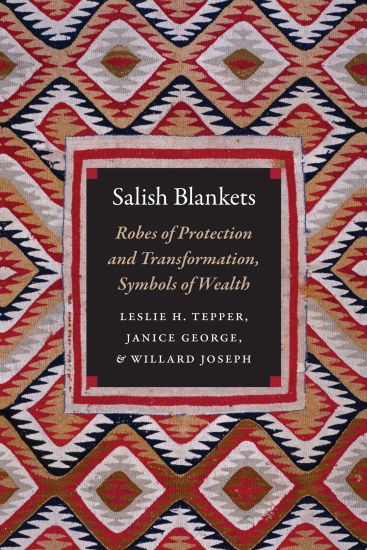
Salish Blankets presents a new perspective on Salish weaving through technical and anthropological lenses. Worn as ceremonial robes, the blankets are complex objects said to preexist in the supernatural realm and made manifest in the natural world through ancestral guidance. The blankets are protective garments that at times of great life changes-birth, marriage, death-offer emotional strength and mental focus. A blanket can help establish the owner’s standing in the community and demonstrate a weaver’s technical expertise and artistic vision. The object, the maker, the wearer, and the community are bound and transformed through the creation and use of the blanket. Drawing on first-person accounts of Salish community members, object analysis, and earlier ethnographic sources, the authors offer a wide-ranging material culture study of Coast Salish lifeways. Salish Blankets explores the design, color/pigmentation, meaning, materials, and process of weaving and examines its historical and cultural contexts.
In depth study and comparison of Salish kinship systems, terms, roles, and behaviors of the coast and plateau of the Northwest by scholars over 150 years.
Salish language family of Northwest in terms of native and academic sources concerned with world changers, eras, habitats, and houses portraying these in carvings, sketches, and names.
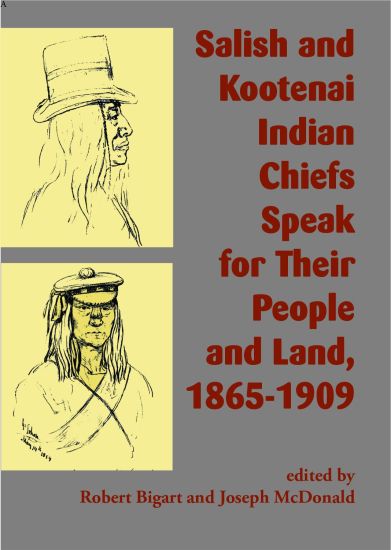
Named a 2023 Best Historical Material from the American Library Association This collection includes talks or petitions by Salish and Kootenai chiefs found in the surviving historical record. The Salish and Kootenai Indians of the Flathead Indian Reservation confronted many crises in the late nineteenth and early twentieth centuries. The physical and cultural survival of the tribes was challenged by epidemics, intertribal warfare with larger enemy tribes, and an invasion of white settlers. The tribes had to fight to have their voices heard and to get the United States government to keep its promises. Fortunately, the tribes had capable leaders who spoke up for their interests and negotiated with visiting government officials. The chiefs were able to get sympathetic white men to write letters supporting their efforts to keep a reservation in the Bitterroot Valley of western Montana and pressure the government to honor other promises made in the 1855 Hellgate Treaty. In later negotiations their white neighbors coveted tribal land and assets. Many of the chiefs’ statements were preserved in English by newspaper reporters and government clerks. The interpreters in the meetings had to struggle to explain white American cultural concepts of property and right and wrong. They were also challenged in trying to explain Salish and Kootenai values to the white officials.
TRENDS IN LINGUISTICS is a series of books that open new perspectives in our understanding of language. The series publishes state-of-the-art work on core areas of linguistics across theoretical frameworks, as well as studies that provide new insights by approaching language from an interdisciplinary perspective. TRENDS IN LINGUISTICS considers itself a forum for cutting-edge research based on solid empirical data on language in its various manifestations, including sign languages. It regards linguistic variation in its synchronic and diachronic dimensions as well as in its social contexts as important sources of insight for a better understanding of the design of linguistic systems and the ecology and evolution of language. TRENDS IN LINGUISTICS publishes monographs and outstanding dissertations as well as edited volumes, which provide the opportunity to address controversial topics from different empirical and theoretical viewpoints. High quality standards are ensured through anonymous reviewing. To discuss your book idea or submit a proposal, please contact Birgit Sievert.
On September 4, 1805, in the upper Bitterroot Valley of what is now western Montana, more than four hundred Salish people were encamped, pasturing horses, preparing for the fall bison hunt, and harvesting chokecherries as they had done for countless generations. As the Lewis and Clark expedition ventured into the territory of a sovereign Native nation, the Salish met the strangers with hospitality and vital provisions while receiving comparatively little in return. For the first time, a Native American community offers an in-depth examination of the events and historical significance of their encounter with the Lewis and Clark expedition. The result is a new understanding of the expedition and its place in the wider context of U.S. history. Through oral histories and other materials, Salish elders recount the details of the Salish encounter with Lewis and Clark: their difficulty communicating with the strangers through multiple interpreters and consequent misunderstanding of the expedition’s invasionary purpose, their discussions about whether to welcome or wipe out the newcomers, their puzzlement over the black skin of the slave York, and their decision to extend traditional tribal hospitality and gifts to the guests. What makes The Salish People and the Lewis and Clark Expedition a startling departure from previous accounts of the Lewis and Clark expedition is how it depicts the arrival of non-Indians—not as the beginning of history but as another chapter in a long tribal history. Much of this book focuses on the ancient cultural landscape and history that had already shaped the region for millennia before the arrival of Lewis and Clark. The elders begin their vivid portrait of the Salish world by sharing creation stories and their traditional cycle of life. The book then takes readers on a cultural tour of the Native trails that the expedition followed. With tribal elders as our guides, we now learn of the Salish cultural landscape that was invisible to Lewis and Clark. The Salish People and the Lewis and Clark Expedition also portrays with new clarity the profound upheaval of the Native world in the century before the expedition's arrival, as tribes in the region were introduced to horses, European diseases, and firearms. The arrival of Lewis and Clark marked the beginning of a heightened level of conflict and loss, and the book details the history that followed the expedition: the opening of Salish territory to the fur trade; the arrival of Jesuit missionaries; the establishment of Indian reservations, the non-Indian development of western Montana; and, more recently, the revival and strengthening of tribal sovereignty and culture. Conveyed by tribal recollections and richly illustrated, The Salish People and the Lewis and Clark Expedition not only sheds new light on the meaning of the expedition; it also illuminates the people who greeted Lewis and Clark and, despite much of what followed, thrive in their homeland today.
Coast Salish Totem Poles is the media companion to A Totem Pole History and includes: • Two CDs of Pauline Hillaire telling traditional stories associated with the totem poles and Joe Hillaire singing Lummi songs. • A DVD in which Pauline shows viewers how to interpret the stories and history expressed in Joe’s totem poles.