

Kirjahaku
Etsi kirjoja tekijän nimen, kirjan nimen tai ISBN:n perusteella.
1000 tulosta hakusanalla Scott Edwards

By the close of the nineteenth century, the works of Sir Walter Scott (1771–1832) could be found on the bookshelves of every respectable Victorian. Public interest was such that, nearly sixty years after his death, there remained considerable demand for new insights into the man and his milieu. First published in 1890, his two-volume journal for the period 1825–32 immediately attracted press attention. One review observed that 'it shows us the man in prosperity and in adversity, now delightfully humorous … now saddened by the financial troubles which came upon his later years'. Notwithstanding his money worries, Scott's final decade was not without literary achievement. Volume 1 comprises entries from November 1825 to June 1827, soon after Scott had published Tales of the Crusaders (1825) and during which period he wrote his Letters of Malachi Malagrowther (1826).
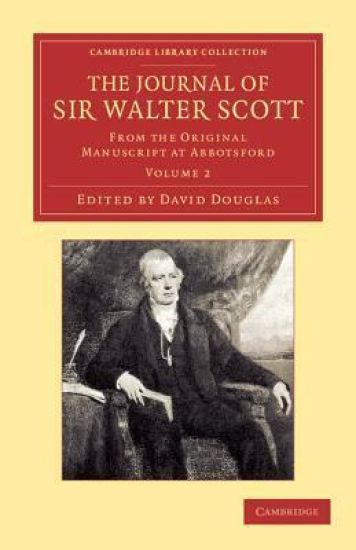
By the close of the nineteenth century, the works of Sir Walter Scott (1771–1832) could be found on the bookshelves of every respectable Victorian. Public interest was such that, nearly sixty years after his death, there remained considerable demand for new insights into the man and his milieu. First published in 1890, his two-volume journal for the period 1825–32 immediately attracted press attention. One review observed that 'it shows us the man in prosperity and in adversity, now delightfully humorous … now saddened by the financial troubles which came upon his later years'. Notwithstanding his money worries, Scott's final decade was not without literary achievement. Volume 2 comprises entries from July 1827 to April 1832, during which time Scott published The Fair Maid of Perth (1828) and Letters on Demonology and Witchcraft (1830).
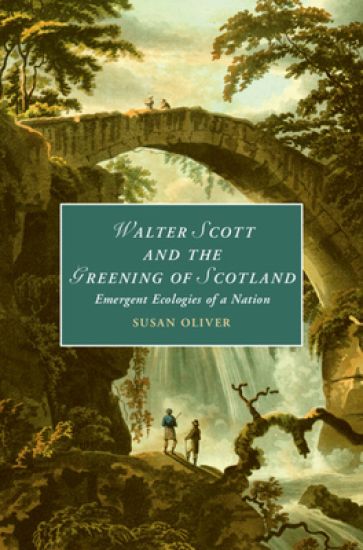
The work of Walter Scott, one of the most globally influential authors of the nineteenth century, provides us with a unique narrative of the changing ecologies of Scotland over several centuries and writes this narrative into the history of environmental literature. Farmed environments, mountains, moors and forests along with rivers, shorelines, islands and oceans are explored, situating Scott's writing about shared human and nonhuman environments in the context of the emerging Anthropocene. Susan Oliver attends to changes and losses acting in counterpoint to the narratives of 'improvement' that underpin modernization in land management. She investigates the imaginative ecologies of folklore and local culture. Each chapter establishes a dialogue between ecocritical theory and Scott as storyteller of social history. This is a book that shows how Scott challenged conventional assumptions about the permanency of stone and the evanescence of air; it begins with the land and ends by looking at the stars.

The work of Walter Scott, one of the most globally influential authors of the nineteenth century, provides us with a unique narrative of the changing ecologies of Scotland over several centuries and writes this narrative into the history of environmental literature. Farmed environments, mountains, moors and forests along with rivers, shorelines, islands and oceans are explored, situating Scott's writing about shared human and nonhuman environments in the context of the emerging Anthropocene. Susan Oliver attends to changes and losses acting in counterpoint to the narratives of 'improvement' that underpin modernization in land management. She investigates the imaginative ecologies of folklore and local culture. Each chapter establishes a dialogue between ecocritical theory and Scott as storyteller of social history. This is a book that shows how Scott challenged conventional assumptions about the permanency of stone and the evanescence of air; it begins with the land and ends by looking at the stars.

First published in 1979. This study explores the main critical issues that arise out of a modern reading of Scott’s work, and treats the major novels in detail. It tackles the questions of Scott’s place in literary history and his problems in pioneering the historical novel. As well as examining the greater novels of the Scottish series, the author also deals with the relation between historical fiction and reality, with reference to the Waverley Novels, and Scott’s own attitude to history. Also discussed are some of the possible reasons for Scott’s failure to depict conflicts in his contemporary society. This book would be of interest to students of literature.
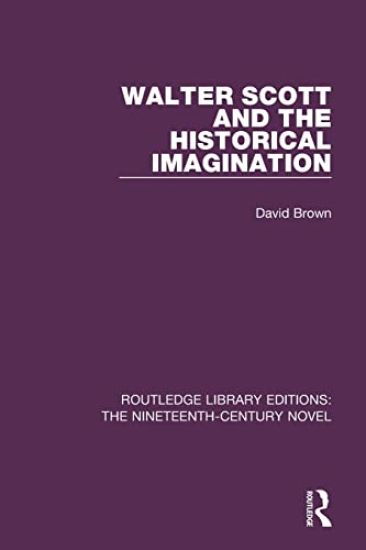
First published in 1979. This study explores the main critical issues that arise out of a modern reading of Scott’s work, and treats the major novels in detail. It tackles the questions of Scott’s place in literary history and his problems in pioneering the historical novel. As well as examining the greater novels of the Scottish series, the author also deals with the relation between historical fiction and reality, with reference to the Waverley Novels, and Scott’s own attitude to history. Also discussed are some of the possible reasons for Scott’s failure to depict conflicts in his contemporary society. This book would be of interest to students of literature.

First published in 1968, this study is an exciting and challenging introduction to the writings of Sir Walter Scott. The author discusses the more striking features of Scott’s style — his use of language and characterisation — and also evaluates the contemporary moral and political attitudes portrayed in the novels. The use of literary conventions of the time is examined with reference to Scott’s work and extracts exemplify in particular the use of the Heroic. While admitting Scott’s faults as a writer, the author presents a general view of him as one whose works deserve deeper study than was the prevailing opinion at the time. This book will be of interest to students of literature.

First published in 1968, this study is an exciting and challenging introduction to the writings of Sir Walter Scott. The author discusses the more striking features of Scott’s style — his use of language and characterisation — and also evaluates the contemporary moral and political attitudes portrayed in the novels. The use of literary conventions of the time is examined with reference to Scott’s work and extracts exemplify in particular the use of the Heroic. While admitting Scott’s faults as a writer, the author presents a general view of him as one whose works deserve deeper study than was the prevailing opinion at the time. This book will be of interest to students of literature.
Miller-Scott, A: Uber Das Verhaltnis Von Dryden's State Of I
Anna Miller-Scott
KESSINGER PUBLISHING, LLC
2010
nidottu
Histoires Du Temps de Croisades Et Oeuvres de Sir Walter Scott (1828)
Walter Scott
KESSINGER PUBLISHING, LLC
2010
pokkari
The Life, Letters, And Papers Of The Late Rev. Thomas Scott, Author Of The Commentary On The Bible
John Scott
KESSINGER PUBLISHING, LLC
2010
sidottu
The Poetical Works Of Henry Scott Riddell
Henry Scott Riddell
KESSINGER PUBLISHING, LLC
2010
sidottu