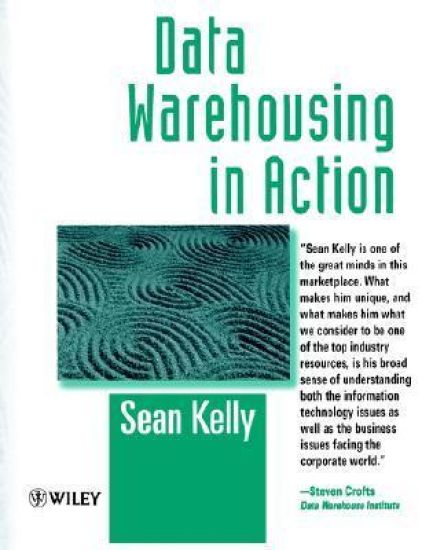
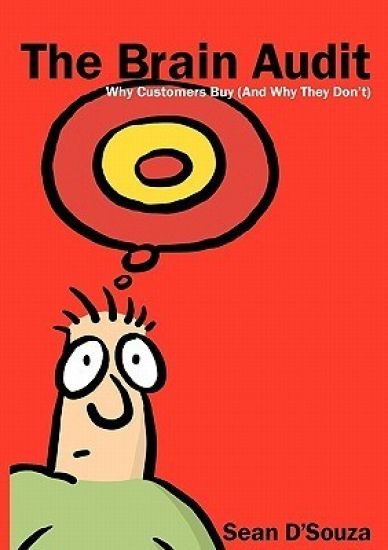
Construct and implement a data warehousing plan. In their efforts to collect information that will give them an edge, many companies have amassed vast amounts of data. Often this data becomes unwieldy and difficult to translate into anything useful. Data warehousing, storing all of this data in a system that allows for rapid retrieval of customized information, is the solution. This book, written by a data warehousing authority, is a step-by-step guide to creating and managing a data warehouse from start to finish, reviewing marketing, technology, and design issues.
Lesbian, gay, bisexual, and transgender people face the same family issues as their heterosexual counterparts, but that is only the beginning of their struggle. The LGBT community also encounters legal barriers to government recognition of their same-sex relationships and relationships to their own children. Policy Issues Affecting Lesbian, Gay, Bisexual, and Transgender Families addresses partner recognition, parenting, issues affecting children of LGBT parents, health care, discrimination, senior care and elder rights, and equal access to social services. Sean Cahill and Sarah Tobias provide up-to-date, accurate analysis of the major policies affecting LGBT people, their same-sex partners, and their children. This valuable resource offers literature reviews of demographic research as well as original research based on the U.S. Census same-sex couple sample. It also provides a look at the 30-year history of right-wing anti-gay activism and the intra-community intellectual debates over the fight for marriage."The sheer diversity of gay people and opinion shines through Cahill and Tobias's fact-packed depiction of same-sex couples and their kids, their needs and day-to-day challenges, and the movement for fairness and the freedom to marry. The disparate personal stories and struggles in this informative book underscore the importance of ending discrimination in marriage and ensuring that no family is left behind."—Evan Wolfson, Founder and Executive Director of the Freedom to Marry Project"A concise, comprehensive guide to gay-family issues that combines an impassioned progressive sensibility with a firm respect for facts."—Jonathan Rauch, senior writer and columnist for National Journal, Atlantic Monthly correspondent, and author of Gay Marriage: Why It Is Good for Gays, Good for Straights, and Good for America"Cahill and Tobias offer readers a thorough and immensely readable guide to the legal problems faced by LGBT families."—Ellen Andersen, Indiana University–Purdue University at Indianapolis"For an account of policy issues that frame lesbian, gay, bisexual, and transgender (LGBT) family lives here in the United States, one need look no further. Sean Cahill and Sarah Tobias supply accurate and up-to-date information about the legal and policy contexts of LGBT lives across the country. This book is sure to be a valuable resource for students and scholars, as well as for others seeking to understand and challenge discrimination based on sexual orientation or gender identity."—Charlotte J. Patterson, University of VirginiaSean Cahill is Director of the National Gay and Lesbian Task Force Policy Institute.Sarah Tobias is a feminist theorist and LGBT activist who earned her Ph.D. in Political Science from Columbia University. She has taught Political Theory at colleges in New York and New Jersey, and currently works as Senior Policy Analyst in the Democracy program at Demos, a New York City–based think tank.
Jason Cianciotto and Sean Cahill, experts on lesbian, gay, bisexual, and transgender public policy advocacy, combine an accessible review of social science research with analyses of school practices and local, state, and federal laws that affect LGBT students. In addition, portraits of LGBT youth and their experiences with discrimination at school bring human faces to the issues the authors discuss. This is an essential guide for teachers, school administrators, guidance counselors, and social workers interacting with students on a daily basis; school board members and officials determining school policy; nonprofit advocates and providers of social services to youth; and academic scholars, graduate students, and researchers training the next generation of school administrators and informing future policy and practice.
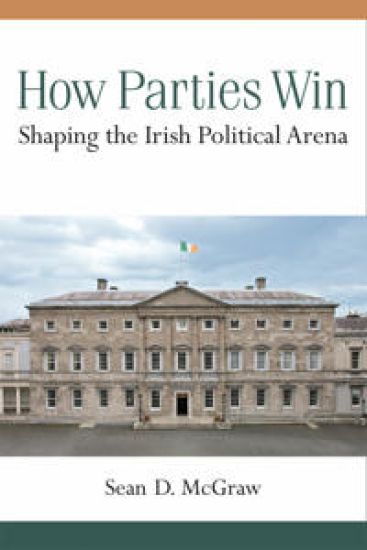
In recent decades, Ireland’s three major political parties have maintained over 80 percent of the vote in the face of rapidly shifting social divisions, political values, and controversial issues, though not by giving voice to particular interest groups or reacting to issues of the day. Rather, Sean D. McGraw reveals how party leaders select, or purposely sideline, pressing political and social issues in order to preserve their competitive advantage. By relegating divisive issues to extraparliamentary institutions, such as referenda or national wage bargaining systems, major parties mitigate the effects of changing environments and undermine the appeal of minor parties. This richly textured case study of the major parties in the Republic of Ireland engages the broader comparative argument that political parties actively shape which choices are available to the electorate and—just as importantly—which are not. Additionally, McGraw sets a new standard for mixed-method research by employing public opinion surveys, party manifestos, content analysis of media coverage, the author’s own survey of nearly two-thirds of Irish parliamentarians in both 2010 and 2012, and personal interviews conducted over the course of six years.
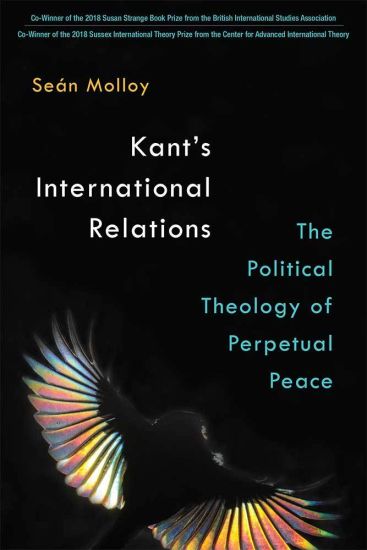
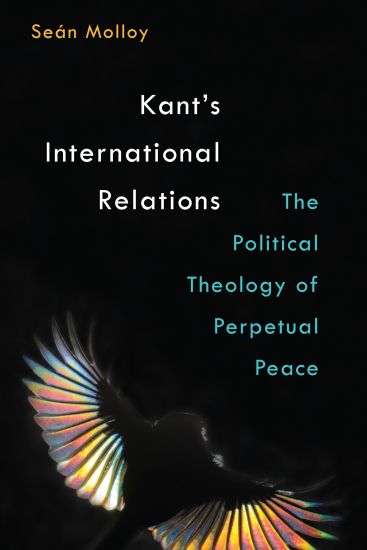
Why does Immanuel Kant (1724–1804) consistently invoke God and Providence in his most prominent texts relating to international politics? In this wide-ranging study, Seán Molloy proposes that texts such as Idea for a Universal History with Cosmopolitan Intent and Toward Perpetual Peace cannot be fully understood without reference to Kant’s wider philosophical projects, and in particular the role that belief in God plays within critical philosophy and Kant’s inquiries into anthropology, politics, and theology. Molloy’s broader view reveals the political-theological dimensions of Kant’s thought as directly related to his attempts to find a new basis for metaphysics in the sacrifice of knowledge to make room for faith.This book is certain to generate controversy. Kant is hailed as “the greatest of all theorists” in the field of International Relations (IR); in particular, he has been acknowledged as the forefather of Cosmopolitanism and Democratic Peace Theory. Yet, Molloy charges that this understanding of Kant is based on misinterpretation, neglect of particular texts, and failure to recognize Kant’s ambivalences and ambiguities. Molloy’s return to Kant’s texts forces devotees of Cosmopolitanism and other ‘Kantian’ schools of thought in IR to critically assess their relationship with their supposed forebear: ultimately, they will be compelled to seek different philosophical origins or to find some way to accommodate the complexity and the decisively nonsecular aspects of Kant’s ideas.
Playwright, actor and director Charles Ludlam (1943–1987) helped to galvanize the Ridiculous style of theater in New York City starting in the 1960s. Decades after his death, his place in the chronicle of American theater has remained constant, but his influence has changed. Although his Ridiculous Theatrical Company shut its doors, the Ludlamesque Ridiculous has continued to thrive and remain a groundbreaking genre, maintaining its relevance and potency by metamorphosing along with changes in the LGBTQ community. Author Sean F. Edgecomb focuses on the neo-Ridiculous artists Charles Busch, Bradford Louryk, and Taylor Mac to trace the connections between Ludlam’s legacy and their performances, using alternative queer models such as kinetic kinship, lateral historiography, and a new approach to camp. Charles Ludlam Lives! demonstrates that the queer legacy of Ludlam is one of distinct transformation—one where artists can reject faithful interpretations in order to move in new interpretive directions.
Collateral Damage provides an overview of how political communication influences the process of incorporation with the broad society as well as its political parties. Sean Richey shows that how politicians talk about immigrants affects how their children perceive America and their feelings about the nation. These perceptions and feelings in turn greatly influence the children’s desire to incorporate into American political society. He also shows that regardless of a speaker’s intended outcome, what is said can still have a deleterious effect on incorporation desire, a communicative process that he terms “collateral damage.” Richey uses new experimental and survey evidence, as well as the rhetoric of Donald Trump as a test case, to examine how anti-immigration communication influences the incorporation of the children of immigrants.
Playwright, actor and director Charles Ludlam (1943–1987) helped to galvanize the Ridiculous style of theater in New York City starting in the 1960s. Decades after his death, his place in the chronicle of American theater has remained constant, but his influence has changed. Although his Ridiculous Theatrical Company shut its doors, the Ludlamesque Ridiculous has continued to thrive and remain a groundbreaking genre, maintaining its relevance and potency by metamorphosing along with changes in the LGBTQ community. Author Sean F. Edgecomb focuses on the neo-Ridiculous artists Charles Busch, Bradford Louryk, and Taylor Mac to trace the connections between Ludlam’s legacy and their performances, using alternative queer models such as kinetic kinship, lateral historiography, and a new approach to camp. Charles Ludlam Lives! demonstrates that the queer legacy of Ludlam is one of distinct transformation—one where artists can reject faithful interpretations in order to move in new interpretive directions.
Collateral Damage provides an overview of how political communication influences the process of incorporation with the broad society as well as its political parties. Sean Richey shows that how politicians talk about immigrants affects how their children perceive America and their feelings about the nation. These perceptions and feelings in turn greatly influence the children’s desire to incorporate into American political society. He also shows that regardless of a speaker’s intended outcome, what is said can still have a deleterious effect on incorporation desire, a communicative process that he terms “collateral damage.” Richey uses new experimental and survey evidence, as well as the rhetoric of Donald Trump as a test case, to examine how anti-immigration communication influences the incorporation of the children of immigrants.
Jason Cianciotto and Sean Cahill, experts on lesbian, gay, bisexual, and transgender public policy advocacy, combine an accessible review of social science research with analyses of school practices and local, state, and federal laws that affect LGBT students. In addition, portraits of LGBT youth and their experiences with discrimination at school bring human faces to the issues the authors discuss. This is an essential guide for teachers, school administrators, guidance counselors, and social workers interacting with students on a daily basis; school board members and officials determining school policy; nonprofit advocates and providers of social services to youth; and academic scholars, graduate students, and researchers training the next generation of school administrators and informing future policy and practice.
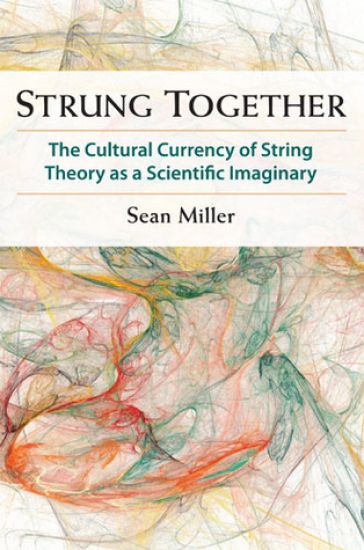
In Strung Together: The Cultural Currency of String Theory as a Scientific Imaginary, Sean Miller examines the cultural currency of string theory, both as part of scientific discourse and beyond it. He demonstrates that the imaginative component of string theory is both integral and indispensable to it as a scientific discourse. While mathematical arguments provide precise prompts for physical intervention in the world, the imaginary that supplements mathematical argument within string theory technical discourse allows theorists to imagine themselves interacting with the cosmos as an abstract space in such a way that strings and branes as phenomena become substantiated and legitimized. And it is precisely this sort of imaginary—which Miller calls a scientific imaginary—duly substantiated and acculturated, that survives the move from string theory technical discourse to popularizations and ultimately to popular and literary discourses. In effect, a string theory imaginary legitimizes the science itself and helps to facilitate a virtual domestication of a cosmos that was heretofore remote, alien, and incomprehensible.
In recent decades, Ireland’s three major political parties have maintained over 80 percent of the vote in the face of rapidly shifting social divisions, political values, and controversial issues, though not by giving voice to particular interest groups or reacting to issues of the day. Rather, Sean D. McGraw reveals how party leaders select, or purposely sideline, pressing political and social issues in order to preserve their competitive advantage. By relegating divisive issues to extraparliamentary institutions, such as referenda or national wage bargaining systems, major parties mitigate the effects of changing environments and undermine the appeal of minor parties. This richly textured case study of the major parties in the Republic of Ireland engages the broader comparative argument that political parties actively shape which choices are available to the electorate and—just as importantly—which are not. Additionally, McGraw sets a new standard for mixed-method research by employing public opinion surveys, party manifestos, content analysis of media coverage, the author’s own survey of nearly two-thirds of Irish parliamentarians in both 2010 and 2012, and personal interviews conducted over the course of six years.
Why does Immanuel Kant (1724–1804) consistently invoke God and Providence in his most prominent texts relating to international politics? In this wide-ranging study, Seán Molloy proposes that texts such as Idea for a Universal History with Cosmopolitan Intent and Toward Perpetual Peace cannot be fully understood without reference to Kant’s wider philosophical projects, and in particular the role that belief in God plays within critical philosophy and Kant’s inquiries into anthropology, politics, and theology. Molloy’s broader view reveals the political-theological dimensions of Kant’s thought as directly related to his attempts to find a new basis for metaphysics in the sacrifice of knowledge to make room for faith.This book is certain to generate controversy. Kant is hailed as “the greatest of all theorists” in the field of International Relations (IR); in particular, he has been acknowledged as the forefather of Cosmopolitanism and Democratic Peace Theory. Yet, Molloy charges that this understanding of Kant is based on misinterpretation, neglect of particular texts, and failure to recognize Kant’s ambivalences and ambiguities. Molloy’s return to Kant’s texts forces devotees of Cosmopolitanism and other ‘Kantian’ schools of thought in IR to critically assess their relationship with their supposed forebear: ultimately, they will be compelled to seek different philosophical origins or to find some way to accommodate the complexity and the decisively nonsecular aspects of Kant’s ideas.
Food is Love is a beautiful compilation of heirloom recipes and homemade creations collected by Sean and Donna Slack over the past decade, with a vision of providing their children with a "leaving the nest" recipe manual full of family favourites. Sean and Donna believe teaching your own kids how to cook is a necessary life skill when moving out of the home. Cooking meals on a budget that is affordable is also just as important when starting out in life and all meals in this cookbook can be made for a family of 6, for under $25.Food is Love; is a private collection of more than thirty simple, affordable, and delicious meals, including Asian and Western family favourites, full of modern fusion recipes for anyone to enjoy. From a few can't-live-with-out sauces and fresh salads that are addictive and full of flavour, to incredibly tasty Asian meals like BBQ Pork, Cantonese Steamed Fish, and Chilli Chicken Wings. Recipes include super easy Teriyaki Chicken, Soy chicken, Sweet 'n' Sour Pork, Thai-style Deep Fried Fish, and Vietnamese Style Fried Pork, all as delicious as they sound. Western influences include - easy-as fluffy scrambled eggs, reconstructed prawn cocktail salad, classic roast chicken, and the very best "three" ingredient "Bacon-pesto-Pasta", along with a few mouth-watering treats like banana bread, crumble, and chocolate slice. There is something here for everyone, including how to make the simplest steamed rice and tastiest bok choy that's so easy, any novice can get it right, along with food tips and suggestions. All recipes have been hand-selected, trialled, tested, and devoured. All meals are easy to prepare and cook, full of flavour, and are fit for any young adult to attempt. The first edition of Food is Love, was loosely collated during New Zealand's first lock-down, March 2020, and was printed for their eldest child's 21st birthday and ever since that original copy sat on the kitchen bench, dozens of requests have been an ongoing trend in their household. This demand has been the inspiration behind Sean and Donna crafting a final master copy and having it published with the help of a good friend.Food is Love is a parent's gift for their children when heading out into the big wide world and this recipe book is dedicated to their four kids. Food is Love is The Slacks Family Bible, full of homegrown food and fond memories. As parents, Sean and Donna hope these family favourites will live on in their kid's hearts and stomachs forever. They hope Food is Love will always remind their children of home and the love that went into cooking, eating, and sharing around the table as a family every day.All photography has been taken by the Slacks - usually just before the food was consumed. All photos are the real deal, not something fake or "made for TV". The style of writing is also by Sean and Donna and has a relaxed and personable approach. All recipes can easily be emulated and are open to interpretation to make them your own once your taste buds are accustomed. The consistent and magic ingredient you cannot see, but you can feel and taste, is what makes this recipe book a very special one.
"the American people are on a need-to-know basis and the 37th state of Genison is not something they need to know" - Jack McCraeLuke Sawyer is an ex-slave and former Union soldier-turned-lawman. Along with his partner, Jack McCrae, Luke is tasked with finding Charles Lee Ringo - a maniacal cult leader with a loyal army of disgruntled former confederates. In order to capture Ringo, the pair of lawmen must venture into the secret 37th state of Genison, a technologically advanced state populated by a telekinetic alien species.
Take a flick through the pages of this book and see if something arouses your curiosity.This book represents 26 years of artwork and written material. It has been compiled in such a way as to be relevant 26 years ago and also today and into the future. Our human condition has never changed, and never will, despite technology, our social advances, and our 'comfy' Western civilisation.Kings, Queens and Civilisations come and go, but we don't really change much.Read on and enjoy. Be challenged. Be entertained. In the words of Dr Dick Shinnery, hopefully you might have a "wee think".John TohillP.S. Sean O'Tuathail is out at the moment so I wrote this in his absence - he won't mind.
The long-awaited monograph of the UK’s leading graphic design and branding agency. The world is full of design companies, but none of them are like North. Formed in 1995 by Sean Perkins joined for the past 25 years by Jeremy Coysten and Stephen Gilmore the studio has always followed a highly individualistic path. This individualism manifests itself in many ways: most notably in the absence of a densely populated studio website; there are no hyperactive social media feeds; even the studio’s name, derived from Perkins’ origins in the unmetropolitan north of England, stands for frill-free, plain speaking, visual directness. It’s almost as if North is a well-kept secret. Yet the group has a devoted worldwide following, and attracts myriad clients keen to hire them for their ability to produce memorable and carefully engineered visual identities. North’s work is the product of sharp-brained research, high-end craft and precise visual expression. And as can be seen in the pages of this book, the studio’s first monograph, the result is a rich crop of brand identities, packaging, exhibitions, books, posters and logos. It includes work for Tate, Southbank, Munch (Oslo), Co-op, Barbican, Samsung, Meta, Science Museum, The Royal Mint and M+ (Hong Kong). On the grounds that graphic design is required to ‘speak for itself’, the book dispenses with descriptive or biographical texts. Instead, the reader is engaged by more than 300 pages of articulate and eloquent visual expression, arranged in a rigorously planned mix of photography, typography, layout and colour. Like North itself, the book is unlike other design books. That’s what makes it a North book.
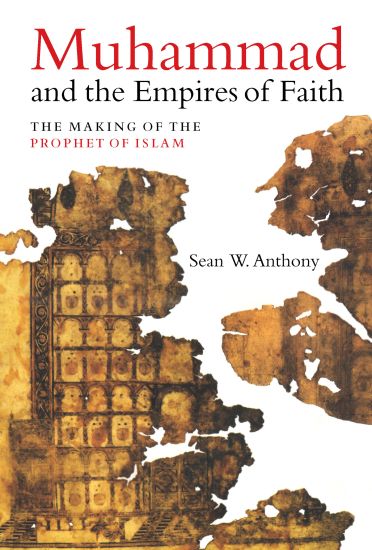
In Muhammad and the Empires of Faith, Sean W. Anthony demonstrates how critical readings of non-Muslim and Muslim sources in tandem can breathe new life into the historical study of Muhammad and how his message transformed the world. By placing these sources within the intellectual and cultural world of Late Antiquity, Anthony offers a fresh assessment of the earliest sources for Muhammad’s life, taking readers on a grand tour of the available evidence, and suggests what new insights stand to be gained from the techniques and methods pioneered by countless scholars over the decades in a variety of fields. Muhammad and the Empires of Faith offers both an authoritative introduction to the multilayered traditions surrounding the life of Muhammad and a compelling exploration of how these traditions interacted with the broader landscape of Late Antiquity.