Kirjojen hintavertailu. Mukana 11 627 220 kirjaa ja 12 kauppaa.

Kirjahaku

Etsi kirjoja tekijän nimen, kirjan nimen tai ISBN:n perusteella.

1000 tulosta hakusanalla Seth Ferranti

SharePoint 2010 User's Guide

SharePoint 2010 User's Guide

Seth Bates; Anthony Smith; Roderick Smith

APress
2010
nidottu
Microsoft SharePoint Foundation 2010 and SharePoint Server 2010 provide a collection of tools and services you can use to improve user and team productivity, make information sharing more effective, and facilitate business decision–making processes. In order to get the most out of SharePoint 2010, you need to understand how to best use the capabilities to support your information management, collaboration, and business process management needs. This book is designed to provide you with the information you need to effectively use these tools. Whether you are using SharePoint as an intranet or business solution platform, you will learn how to use the resources (such as lists, libraries, and sites) and services (such as publishing, workflow, and policies) that make up these environments. Information and process owners will be given the knowledge they need to build and manage solutions. Information and process consumers will be given the knowledge they need to effectively use SharePoint resources. In this book, Seth Bates and Tony Smith walk you through the components and capabilities that make up a SharePoint 2010 environment. Their expertise shines as they provide step-by-step instructions for using and managing these elements, as well as recommendations for how to best leverage them. As a reader, you’ll then embrace two common SharePoint uses, document management and project information management, and walk through creating samples of these solutions, understanding the challenges these solutions are designed to address and the benefits they can provide. The authors have brought together this information based on their extensive experience working with these tools and with business users who effectively leverage these technologies within their organizations. These experiences were incorporated into the writing of this book to make it easy for you to gain the knowledge you need to make the most of theproduct.
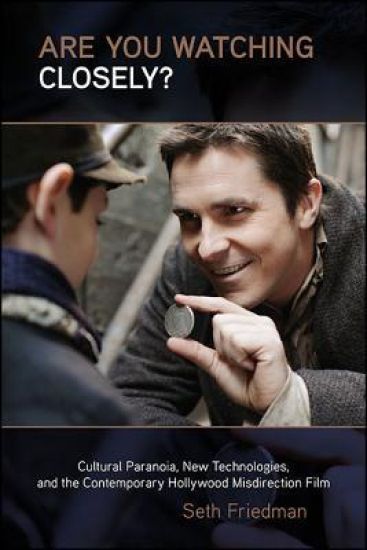
Are You Watching Closely?

Are You Watching Closely?

Seth Friedman

State University of New York Press
2017
sidottu
Identifies a new genre—misdirection films—and explains its appeal to contemporary producers and audiences.Are You Watching Closely? is the first book to explore the recent spate of "misdirection films," a previously unidentified Hollywood genre characterized by narratives that inspire viewers to reinterpret them retrospectively. Since 1990, Hollywood has backed more of these films than ever before, many of which, including The Sixth Sense (1999), A Beautiful Mind (2001), and Inception (2010), were both commercial and critical successes. Seth Friedman examines this genre in its sociocultural, industrial, and technological contexts to explain why it has become more attractive to producers and audiences.The recent popularity of misdirection films, Friedman argues, is linked to new technologies that enable repeat viewings and online discussion, which makes it enticing to an industry that depends increasingly on the aftermarket, as well as to historically specific cultural developments. That is, in addition to being well suited for shifting industrial and technological conditions, these films are appealing because they suggest that it remains possible to know what "actually" occurred and who was "really" responsible for events at a time when it is also becoming increasingly recognized that "truth" is relative. Are You Watching Closely? shows how Hollywood's effective strategies for these changing circumstances put it at the forefront of a storytelling trend that has increasingly become important across media. Through close analyses of how misdirection films have been designed, marketed, and received in relation to their contexts, Friedman demonstrates the ways in which they epitomize a kind of narrative experimentation that has become a crucial facet of twenty-first-century audiovisual storytelling.
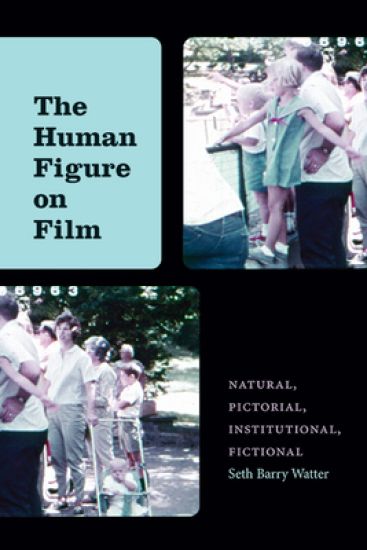
The Human Figure on Film

The Human Figure on Film

Seth Barry Watter

STATE UNIVERSITY OF NEW YORK PRESS
2023
sidottu
Offers a fresh approach to the problem of the human figure in an age of digital cinema.The Human Figure on Film asks what it is we look for when we look at human beings projected on a screen. People have appeared onscreen since film was invented. Nothing could be more common, and yet nothing confounds us more, than a filmed human being. Scholars and critics have attempted to reduce the mystery, creating methodologies that make this figure legible. Some of their efforts form the subject of this book.Each chapter is devoted to a single, central concept-the natural, the pictorial, the institutional, and the fictional-that viewers have used to make sense of what they see. Each concept, in turn, is tied to the work and methods of a particular kind of historical observer: the natural historian (Ray L. Birdwhistell), the aesthete or pictorialist (Victor O. Freeburg), the anthropologist of institutions (Hortense Powdermaker), and the critic of fiction (V. F. Perkins). All of these researchers have their own interests and criteria of understanding, ranging from a microscopic look at gestures to a broad view of characters. Using a combination of critical history, biography, and formal analysis, The Human Figure on Film offers a fresh approach to the problem of figuration in an age of digital cinema. It is, at once, a cross-section of the field of film studies, a handbook of methods, and an inquiry into the nature of inquiry itself.
The Human Figure on Film

The Human Figure on Film

Seth Barry Watter

STATE UNIVERSITY OF NEW YORK PRESS
2024
pokkari
Offers a fresh approach to the problem of the human figure in an age of digital cinema.The Human Figure on Film asks what it is we look for when we look at human beings projected on a screen. People have appeared onscreen since film was invented. Nothing could be more common, and yet nothing confounds us more, than a filmed human being. Scholars and critics have attempted to reduce the mystery, creating methodologies that make this figure legible. Some of their efforts form the subject of this book.Each chapter is devoted to a single, central concept-the natural, the pictorial, the institutional, and the fictional-that viewers have used to make sense of what they see. Each concept, in turn, is tied to the work and methods of a particular kind of historical observer: the natural historian (Ray L. Birdwhistell), the aesthete or pictorialist (Victor O. Freeburg), the anthropologist of institutions (Hortense Powdermaker), and the critic of fiction (V. F. Perkins). All of these researchers have their own interests and criteria of understanding, ranging from a microscopic look at gestures to a broad view of characters. Using a combination of critical history, biography, and formal analysis, The Human Figure on Film offers a fresh approach to the problem of figuration in an age of digital cinema. It is, at once, a cross-section of the field of film studies, a handbook of methods, and an inquiry into the nature of inquiry itself.
Reframing Diversity and Inclusive Leadership

Reframing Diversity and Inclusive Leadership

Seth N. Asumah; Mechthild Nagel

STATE UNIVERSITY OF NEW YORK PRESS
2024
sidottu
Shows how authentic diversity and inclusive leadership practices can promote anti-racist, equitable, and transformational change in institutions of higher learning in the United States and beyond.Finalist for the 2024 Foreword INDIES Book of the Year Award in the Education categoryHow can we tackle racism and sexism on our college and university campuses? What is the role of education leaders in advancing social justice? Reframing Diversity and Inclusive Leadership addresses the urgent need for more than merely performative gestures toward-and a redoubled, authentically engaged investment in-diversity, equity, and inclusion (DEI). Seth N. Asumah and Mechthild Nagel examine how traditional leadership models have tended to exacerbate racial and gender inequities in United States higher education and society at large. Using a cross-cultural, comparative approach indebted to critical race theory, critical whiteness studies, and Black feminism, Asumah and Nagel draw on decades of combined experience in the US and globally to provide a framework for inclusive leadership practices, actions, and policies. A valuable resource for administrators, faculty, students, and political and industry leaders, Reframing Diversity and Inclusive Leadership responds to calls for justice on campuses and beyond.
Reframing Diversity and Inclusive Leadership

Reframing Diversity and Inclusive Leadership

Seth N. Asumah; Mechthild Nagel

STATE UNIVERSITY OF NEW YORK PRESS
2024
pokkari
Shows how authentic diversity and inclusive leadership practices can promote anti-racist, equitable, and transformational change in institutions of higher learning in the United States and beyond.Finalist for the 2024 Foreword INDIES Book of the Year Award in the Education categoryHow can we tackle racism and sexism on our college and university campuses? What is the role of education leaders in advancing social justice? Reframing Diversity and Inclusive Leadership addresses the urgent need for more than merely performative gestures toward-and a redoubled, authentically engaged investment in-diversity, equity, and inclusion (DEI). Seth N. Asumah and Mechthild Nagel examine how traditional leadership models have tended to exacerbate racial and gender inequities in United States higher education and society at large. Using a cross-cultural, comparative approach indebted to critical race theory, critical whiteness studies, and Black feminism, Asumah and Nagel draw on decades of combined experience in the US and globally to provide a framework for inclusive leadership practices, actions, and policies. A valuable resource for administrators, faculty, students, and political and industry leaders, Reframing Diversity and Inclusive Leadership responds to calls for justice on campuses and beyond.
The Panic Virus: The True Story Behind the Vaccine-Autism Controversy
WHO DECIDES WHICH FACTS ARE TRUE? In 1998 Andrew Wakefield, a British gastroenterologist with a history of self-promotion, published a paper with a shocking allegation: the measles-mumps-rubella vaccine might cause autism. The media seized hold of the story and, in the process, helped to launch one of the most devastating health scares ever. In the years to come Wakefield would be revealed as a profiteer in league with class-action lawyers, and he would eventually lose his medical license. Meanwhile one study after another failed to find any link between childhood vaccines and autism. Yet the myth that vaccines somehow cause developmental disorders lives on. Despite the lack of corroborating evidence, it has been popularized by media personalities such as Oprah Winfrey and Jenny McCarthy and legitimized by journalists who claim that they are just being fair to "both sides" of an issue about which there is little debate. Meanwhile millions of dollars have been diverted from potential breakthroughs in autism research, families have spent their savings on ineffective "miracle cures," and declining vaccination rates have led to outbreaks of deadly illnesses like Hib, measles, and whooping cough. Most tragic of all is the increasing number of children dying from vaccine-preventable diseases. In The Panic Virus Seth Mnookin draws on interviews with parents, public-health advocates, scientists, and anti-vaccine activists to tackle a fundamental question: How do we decide what the truth is? The fascinating answer helps explain everything from the persistence of conspiracy theories about 9/11 to the appeal of talk-show hosts who demand that President Obama "prove" he was born in America. The Panic Virus is a riveting and sometimes heart-breaking medical detective story that explores the limits of rational thought. It is the ultimate cautionary tale for our time.
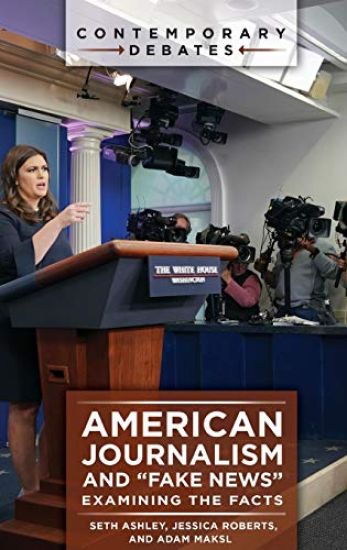
American Journalism and "Fake News"

American Journalism and "Fake News"

Seth Ashley; Jessica Roberts; Adam Maksl

Greenwood Press
2018
sidottu
This book provides a comprehensive and impartial overview of the state of American journalism and news-gathering in the 21st century, with a special focus on the rise—and meaning—of "fake news."A part of ABC-CLIO's Examining the Facts series, which uses evidence-based documentation to examine the veracity of claims and beliefs about high-profile issues in American culture and politics, this volume examines beliefs, claims, and myths about American journalism and news media. It offers a comprehensive overview of the field of American journalism, including contemporary issues and historical foundations, and places modern problems such as "fake news" and misinformation in the context of larger technological and economic forces. The book illustrates the strengths and weaknesses of journalistic practices so readers can feel empowered to navigate the complex information environment in which we live and to understand the level to which various news sources can (or can't) be trusted to provide accurate and timely coverage of issues and events of import to the public and the nation. These skills and knowledge structures are necessary for any citizen who wishes to be an informed participant in a self-governing democratic society.