

Kirjahaku
Etsi kirjoja tekijän nimen, kirjan nimen tai ISBN:n perusteella.
1000 tulosta hakusanalla Seth Low


The Ladies' Medical Guide. by S. Pancoast.
Seth Pancoast
University of Michigan Library
2006
pokkari


Microsoft SharePoint Foundation 2010 and SharePoint Server 2010 provide a collection of tools and services you can use to improve user and team productivity, make information sharing more effective, and facilitate business decision–making processes. In order to get the most out of SharePoint 2010, you need to understand how to best use the capabilities to support your information management, collaboration, and business process management needs. This book is designed to provide you with the information you need to effectively use these tools. Whether you are using SharePoint as an intranet or business solution platform, you will learn how to use the resources (such as lists, libraries, and sites) and services (such as publishing, workflow, and policies) that make up these environments. Information and process owners will be given the knowledge they need to build and manage solutions. Information and process consumers will be given the knowledge they need to effectively use SharePoint resources. In this book, Seth Bates and Tony Smith walk you through the components and capabilities that make up a SharePoint 2010 environment. Their expertise shines as they provide step-by-step instructions for using and managing these elements, as well as recommendations for how to best leverage them. As a reader, you’ll then embrace two common SharePoint uses, document management and project information management, and walk through creating samples of these solutions, understanding the challenges these solutions are designed to address and the benefits they can provide. The authors have brought together this information based on their extensive experience working with these tools and with business users who effectively leverage these technologies within their organizations. These experiences were incorporated into the writing of this book to make it easy for you to gain the knowledge you need to make the most of theproduct.




Proofs Of The Real Existence, And Dangerous Tendency, Of Illuminism (1802)
Seth Payson
KESSINGER PUBLISHING CO
2008
pokkari
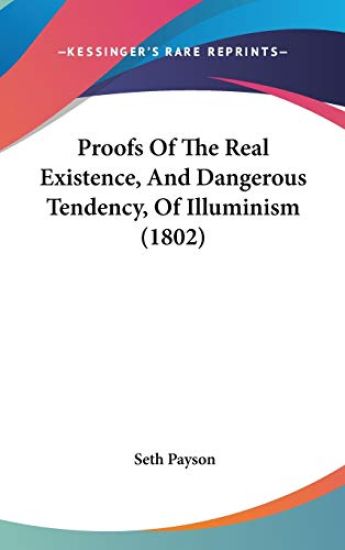
Proofs Of The Real Existence, And Dangerous Tendency, Of Illuminism (1802)
Seth Payson
KESSINGER PUBLISHING CO
2008
muu
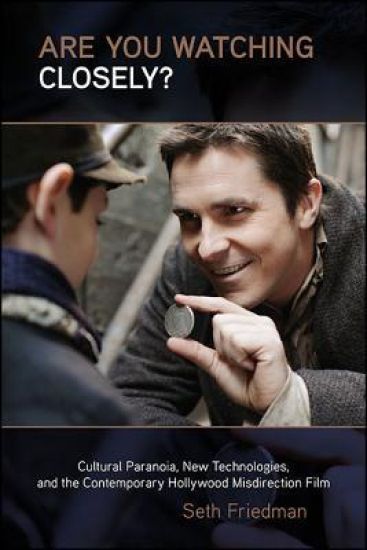
Identifies a new genre—misdirection films—and explains its appeal to contemporary producers and audiences.Are You Watching Closely? is the first book to explore the recent spate of "misdirection films," a previously unidentified Hollywood genre characterized by narratives that inspire viewers to reinterpret them retrospectively. Since 1990, Hollywood has backed more of these films than ever before, many of which, including The Sixth Sense (1999), A Beautiful Mind (2001), and Inception (2010), were both commercial and critical successes. Seth Friedman examines this genre in its sociocultural, industrial, and technological contexts to explain why it has become more attractive to producers and audiences.The recent popularity of misdirection films, Friedman argues, is linked to new technologies that enable repeat viewings and online discussion, which makes it enticing to an industry that depends increasingly on the aftermarket, as well as to historically specific cultural developments. That is, in addition to being well suited for shifting industrial and technological conditions, these films are appealing because they suggest that it remains possible to know what "actually" occurred and who was "really" responsible for events at a time when it is also becoming increasingly recognized that "truth" is relative. Are You Watching Closely? shows how Hollywood's effective strategies for these changing circumstances put it at the forefront of a storytelling trend that has increasingly become important across media. Through close analyses of how misdirection films have been designed, marketed, and received in relation to their contexts, Friedman demonstrates the ways in which they epitomize a kind of narrative experimentation that has become a crucial facet of twenty-first-century audiovisual storytelling.
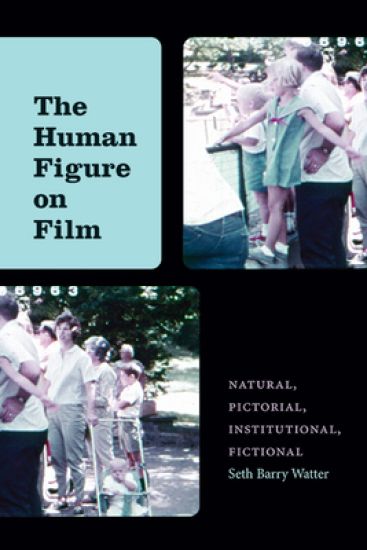
Offers a fresh approach to the problem of the human figure in an age of digital cinema.The Human Figure on Film asks what it is we look for when we look at human beings projected on a screen. People have appeared onscreen since film was invented. Nothing could be more common, and yet nothing confounds us more, than a filmed human being. Scholars and critics have attempted to reduce the mystery, creating methodologies that make this figure legible. Some of their efforts form the subject of this book.Each chapter is devoted to a single, central concept-the natural, the pictorial, the institutional, and the fictional-that viewers have used to make sense of what they see. Each concept, in turn, is tied to the work and methods of a particular kind of historical observer: the natural historian (Ray L. Birdwhistell), the aesthete or pictorialist (Victor O. Freeburg), the anthropologist of institutions (Hortense Powdermaker), and the critic of fiction (V. F. Perkins). All of these researchers have their own interests and criteria of understanding, ranging from a microscopic look at gestures to a broad view of characters. Using a combination of critical history, biography, and formal analysis, The Human Figure on Film offers a fresh approach to the problem of figuration in an age of digital cinema. It is, at once, a cross-section of the field of film studies, a handbook of methods, and an inquiry into the nature of inquiry itself.

Offers a fresh approach to the problem of the human figure in an age of digital cinema.The Human Figure on Film asks what it is we look for when we look at human beings projected on a screen. People have appeared onscreen since film was invented. Nothing could be more common, and yet nothing confounds us more, than a filmed human being. Scholars and critics have attempted to reduce the mystery, creating methodologies that make this figure legible. Some of their efforts form the subject of this book.Each chapter is devoted to a single, central concept-the natural, the pictorial, the institutional, and the fictional-that viewers have used to make sense of what they see. Each concept, in turn, is tied to the work and methods of a particular kind of historical observer: the natural historian (Ray L. Birdwhistell), the aesthete or pictorialist (Victor O. Freeburg), the anthropologist of institutions (Hortense Powdermaker), and the critic of fiction (V. F. Perkins). All of these researchers have their own interests and criteria of understanding, ranging from a microscopic look at gestures to a broad view of characters. Using a combination of critical history, biography, and formal analysis, The Human Figure on Film offers a fresh approach to the problem of figuration in an age of digital cinema. It is, at once, a cross-section of the field of film studies, a handbook of methods, and an inquiry into the nature of inquiry itself.
Reframing Diversity and Inclusive Leadership
Seth N. Asumah; Mechthild Nagel
STATE UNIVERSITY OF NEW YORK PRESS
2024
sidottu
Shows how authentic diversity and inclusive leadership practices can promote anti-racist, equitable, and transformational change in institutions of higher learning in the United States and beyond.Finalist for the 2024 Foreword INDIES Book of the Year Award in the Education categoryHow can we tackle racism and sexism on our college and university campuses? What is the role of education leaders in advancing social justice? Reframing Diversity and Inclusive Leadership addresses the urgent need for more than merely performative gestures toward-and a redoubled, authentically engaged investment in-diversity, equity, and inclusion (DEI). Seth N. Asumah and Mechthild Nagel examine how traditional leadership models have tended to exacerbate racial and gender inequities in United States higher education and society at large. Using a cross-cultural, comparative approach indebted to critical race theory, critical whiteness studies, and Black feminism, Asumah and Nagel draw on decades of combined experience in the US and globally to provide a framework for inclusive leadership practices, actions, and policies. A valuable resource for administrators, faculty, students, and political and industry leaders, Reframing Diversity and Inclusive Leadership responds to calls for justice on campuses and beyond.
Reframing Diversity and Inclusive Leadership
Seth N. Asumah; Mechthild Nagel
STATE UNIVERSITY OF NEW YORK PRESS
2024
pokkari
Shows how authentic diversity and inclusive leadership practices can promote anti-racist, equitable, and transformational change in institutions of higher learning in the United States and beyond.Finalist for the 2024 Foreword INDIES Book of the Year Award in the Education categoryHow can we tackle racism and sexism on our college and university campuses? What is the role of education leaders in advancing social justice? Reframing Diversity and Inclusive Leadership addresses the urgent need for more than merely performative gestures toward-and a redoubled, authentically engaged investment in-diversity, equity, and inclusion (DEI). Seth N. Asumah and Mechthild Nagel examine how traditional leadership models have tended to exacerbate racial and gender inequities in United States higher education and society at large. Using a cross-cultural, comparative approach indebted to critical race theory, critical whiteness studies, and Black feminism, Asumah and Nagel draw on decades of combined experience in the US and globally to provide a framework for inclusive leadership practices, actions, and policies. A valuable resource for administrators, faculty, students, and political and industry leaders, Reframing Diversity and Inclusive Leadership responds to calls for justice on campuses and beyond.