Kirjojen hintavertailu. Mukana 12 016 292 kirjaa ja 12 kauppaa.

Kirjahaku

Etsi kirjoja tekijän nimen, kirjan nimen tai ISBN:n perusteella.

1000 tulosta hakusanalla Stanley Waterloo

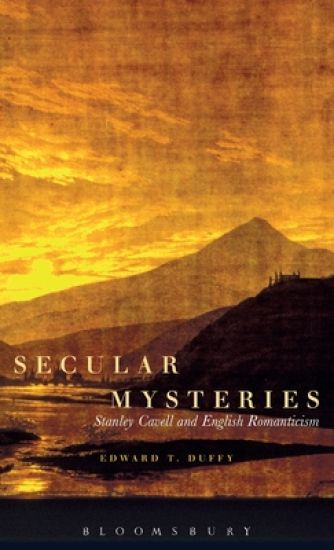
Secular Mysteries: Stanley Cavell and English Romanticism

Secular Mysteries: Stanley Cavell and English Romanticism

Edward T. Duffy

Bloomsbury Academic USA
2013
sidottu
Stanley Cavell and English Romanticism serves as both introduction to Cavell for Romanticists, and to the larger question of what philosophy means for the reading of literature, as well as to the importance and relevance of Romantic literature to Cavell's thought. Illustrated through close readings of Wordsworth and Shelley, and extended discussions of Emerson and Thoreau as well as Cavell, Duffy proposes a Romanticism of persisting cultural relevance and truly trans-Atlantic scope. The turn to romanticism of America's most distinguished "ordinary-language" philosopher is shown to be tied to the neo-Romantic claim that far from being merely an illustrator of the truths discovered by philosophy, poetry is its equal partner in the instituting of knowledge. This book will be vital reading for anyone interested in Romanticism, Stanley Cavell and the ever-deepening connections between literature and philosophy.
Secular Mysteries: Stanley Cavell and English Romanticism

Secular Mysteries: Stanley Cavell and English Romanticism

Edward T. Duffy

Bloomsbury Academic USA
2013
nidottu
Stanley Cavell and English Romanticism serves as both introduction to Cavell for Romanticists, and to the larger question of what philosophy means for the reading of literature, as well as to the importance and relevance of Romantic literature to Cavell's thought. Illustrated through close readings of Wordsworth and Shelley, and extended discussions of Emerson and Thoreau as well as Cavell, Duffy proposes a Romanticism of persisting cultural relevance and truly trans-Atlantic scope. The turn to romanticism of America's most distinguished "ordinary-language" philosopher is shown to be tied to the neo-Romantic claim that far from being merely an illustrator of the truths discovered by philosophy, poetry is its equal partner in the instituting of knowledge. This book will be vital reading for anyone interested in Romanticism, Stanley Cavell and the ever-deepening connections between literature and philosophy.
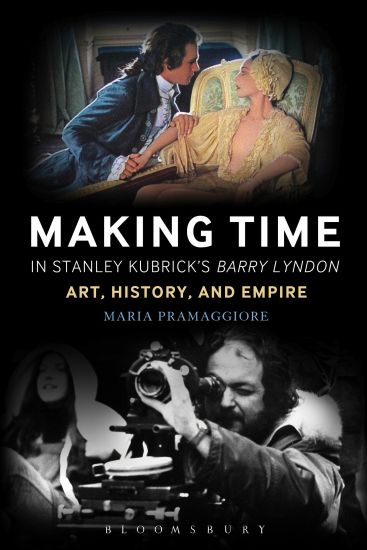
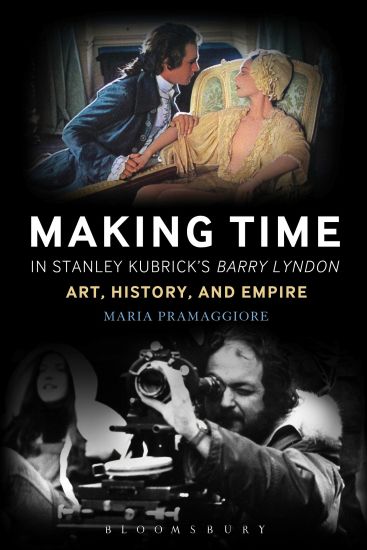
Making Time in Stanley Kubrick's Barry Lyndon

Making Time in Stanley Kubrick's Barry Lyndon

Maria Pramaggiore

Bloomsbury Academic USA
2015
sidottu
Considered by critics to be Stanley Kubrick's masterpiece, Barry Lyndon has suffered from scholarly and popular neglect. Maria Pramaggiore argues that one key reason that this film remains unappreciated, even by Kubrick aficionados, is that its transnational and intermedial contexts have not been fully explored. Taking a novel approach, she looks at the film from a transnational perspective -- as a foreign production shot in Ireland and an adaptation of a British novel by an American director about an Irish subject. Pramaggiore argues that, in Barry Lyndon, Kubrick develops his richest philosophical mediation on cinema's capacity to mediate the real and foregrounds film's relationship to other technologies of visuality, including painting, photography, and digital media. By combining extensive research into the film's source novel, production and reception with systematic textual analysis and an engagement with several key issues in contemporary academic debate, this work promises not only to make a huge impact in the field of Kubrick studies, but also in 1970s filmmaking, cultural history and transnational film practice.
Making Time in Stanley Kubrick's Barry Lyndon

Making Time in Stanley Kubrick's Barry Lyndon

Maria Pramaggiore

Bloomsbury Academic USA
2015
nidottu
Considered by critics to be Stanley Kubrick's masterpiece, Barry Lyndon has suffered from scholarly and popular neglect. Maria Pramaggiore argues that one key reason that this film remains unappreciated, even by Kubrick aficionados, is that its transnational and intermedial contexts have not been fully explored. Taking a novel approach, she looks at the film from a transnational perspective -- as a foreign production shot in Ireland and an adaptation of a British novel by an American director about an Irish subject. Pramaggiore argues that, in Barry Lyndon, Kubrick develops his richest philosophical mediation on cinema's capacity to mediate the real and foregrounds film's relationship to other technologies of visuality, including painting, photography, and digital media. By combining extensive research into the film's source novel, production and reception with systematic textual analysis and an engagement with several key issues in contemporary academic debate, this work promises not only to make a huge impact in the field of Kubrick studies, but also in 1970s filmmaking, cultural history and transnational film practice.
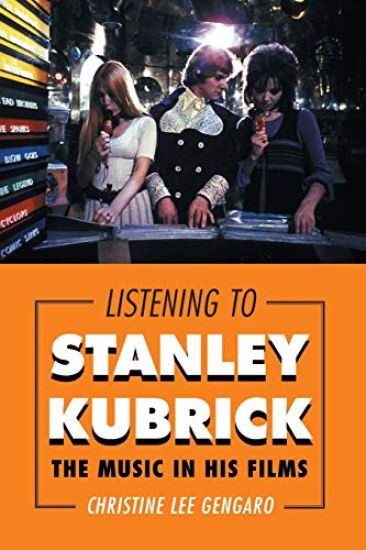
Listening to Stanley Kubrick

Listening to Stanley Kubrick

Christine Lee Gengaro

Rowman Littlefield
2014
nidottu
The musical scores of Stanley Kubrick’s films are often praised as being innovative and forward-looking. Despite playing such an important part in his productions, however, the ways in which Kubrick used music to great effect is still somewhat mysterious to many viewers. Although some viewers may know a little about the music in 2001 or A Clockwork Orange, few are aware of the particulars behind the music in Kubrick's other films. In Listening to Stanley Kubrick: The Music in His Films, Christine Lee Gengaro provides an in-depth exploration of the music that was composed for Kubrick’s films and places the pre-existent music he utilized into historical context. Gengaro discusses the music in every single work, from Kubrick’s first films, including the documentary shorts The Flying Padre and Day of the Fight, through all of his feature films, from Fear and Desire to Eyes Wide Shut. No film is left out; no cue is ignored. Besides closely examining the scores composed by Gerald Fried for Kubrick’s early works, Gengaro pays particular attention to five of the director’s most provocative and acclaimed films—2001: A Space Odyssey, A Clockwork Orange, Barry Lyndon, The Shining, and Eyes Wide Shut. For each film, she engages the reader by explaining how the music was excerpted (and changed, in some cases), and how the historical facts about a musical piece add layers of meaning—sometimes unintended—to the films. Meant for film lovers, music lovers, and scholars, Listening to Stanley Kubrick is a thoroughly researched examination into the musical elements of one of cinema’s most brilliant artists. Appropriate for a cinema studies or music classroom, this volume will also appeal to any fan of Kubrick’s films.
Twain And Stanley Enter Paradise

Twain And Stanley Enter Paradise

Oscar Hijuelos

Grand Central Publishing
2016
pokkari
Twain and Stanley Enter Paradise, the impeccably researched final novel from the author of The Mambo Kings Play Songs of Love, follows famed 19th century journalist-explorer Henry Stanley, his wife, the painter Dorothy Tennant, and Stanley's long friendship with Mark Twain, as they venture to Cuba in search of Stanley's father. Told through a fictitious manuscript and imagined correspondence between Stanley, Tennant, and Twain, Hijuelos captures not only the general style of educated 19th century, but manages to pull off the seemingly impossible task of channeling Mark Twain himself. The manuscript--in the works for decades--was found, whole and finished, by Hijuelos's widow after his death. As a companion to the novel, an ebook will be released of Hijuelos' short story "Another Spaniard in the Works" about a musician who meets John Lennon. In the '60s, Lennon had published a book of humorous writings and drawings called "A Spaniard in the Works" and now Hijuelos brings Lennon to life through music and literature.
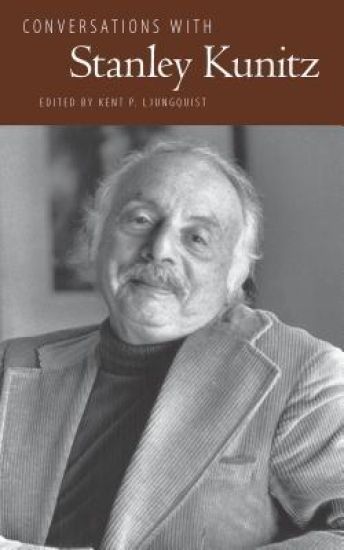
Conversations with Stanley Kunitz

Conversations with Stanley Kunitz

University Press of Mississippi
2016
nidottu
He again tops the crowd - he surpasses himself, the old iron brought to the white heat of simplicity."" That's what Robert Lowell said of the poetry of Stanley Kunitz (1905-2006) and his evolving artistry. The interviews and conversations contained in this volume derive from four decades of Kunitz's distinguished career. They touch on aesthetic motifs in his poetry, the roots of his work, his friendships in the sister arts of painting and sculpture, his interactions with Lowell and Theodore Roethke, and his comments on a host of poets: John Keats, Walt Whitman, Randall Jarrell, Wallace Stevens, and Anna Akhmatova.Kunitz emerged from a mid-sized industrial town in central Massachusetts, surviving family tragedy and a sense of personal isolation and loneliness, to become an eloquent spokesman for poetry and for the power of the human imagination. Kunitz has commented, ""If we want to know what it felt like to be alive at any given moment in the long odyssey of the race, it is to poetry we must turn."" His own odyssey from ""metaphysical loneliness"" to a sense of community with fellow writers and artists - by building institutions like Poets House and the Fine Arts Work Center in Provincetown, Massachusetts - is ever present in these interviews.
The Aravaipa and Stanley Mining Districts of Graham County Arizona

The Aravaipa and Stanley Mining Districts of Graham County Arizona

Us Department of Interior

Createspace Independent Publishing Platform
2014
nidottu
Title: The Aravaipa and Stanley Mining Districts of Graham County Arizona Author: US Department of Interior Introduction by: Kerby Jackson Size: 8.5 X 11 Page Count: 140 List Price (Back Cover):11.99 Description: Mining historian Kerby Jackson introduces us to a classic mining work in this important re-issue of the Department of Interior publication "Geology and Ore Deposits of the Aravaipa and Stanley Mining Districts of Graham County, Arizona". Originally published in 1925, this important publication on Arizona Mining has not been available for nearly ninety years. Included are rare insights into the gold and silver mines of these two important mining districts, together with hard to find maps. Note: This edition is a perfect facsimile of the original edition and is not set in a modern typeface. As such, some type characters and images might suffer from slight imperfections or minor shadows in the page background.
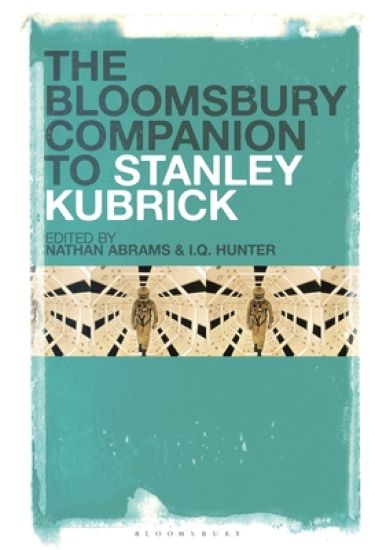
The Bloomsbury Companion to Stanley Kubrick
Stanley Kubrick is one of the most revered directors in cinema history. His 13 films, including classics such as Paths of Glory, 2001: A Space Odyssey, A Clockwork Orange, Barry Lyndon, and The Shining, attracted controversy, acclaim, a devoted cult following, and enormous critical interest. With this comprehensive guide to the key contexts - industrial and cultural, as well as aesthetic and critical - the themes of Kubrick's films sum up the current vibrant state of Kubrick studies. Bringing together an international team of leading scholars and emergent voices, this Companion provides comprehensive coverage of Stanley Kubrick’s contribution to cinema. After a substantial introduction outlining Kubrick's life and career and the film's production and reception contexts, the volume consists of 39 contributions on key themes that both summarise previous work and offer new, often archive-based, state-of-the-art research. In addition, it is specifically tailored to the needs of students wanting an authoritative, accessible overview of academic work on Kubrick.
The Thought of Stanley Cavell and Cinema
Stanley Cavell was, by many accounts, America's greatest philosophical thinker of film. Like Bazin in France and Perkins in England, Cavell did not just transform the American capacity to take film as a subject for philosophical criticism; he had to first invent that legitimacy. Part of that effort involved the creation of several key now-canonical texts in film studies, among them the seminal The World Viewed along with Pursuits of Happiness and Contesting Tears. The present collection offers, for the first time anywhere, a concerted effort mounted by some of today's most compelling writers on film to take careful account of Cavell's legacy. The contributors think anew about what precisely Cavell contributed, what holds up, what is in need to revision or updating, and how his writing continues to be of vital significance and relevance for any contemporary approach to the philosophy of film.
Movies with Stanley Cavell in Mind

Movies with Stanley Cavell in Mind

Bloomsbury Academic USA
2021
sidottu
In Movies with Stanley Cavell in Mind, some of the scholars who have become essential for our understanding of Stanley Cavell’s writing on film gather to use his landmark contributions to help us read new films—from Hollywood and elsewhere—that exist beyond his immediate reach and reading. In extending the scope of Cavell’s film philosophy, we naturally find ourselves contending with it and amending it, as the case may be. Through a series of interpretive vignettes, the group effort situates, for the expert and novitiate alike, how Cavell’s writing on film can profitably enrich one’s experience of cinema generally and also inform how we might continue the practice of serious philosophical criticism of specific films mindful of his sensibility. The resulting conversations between texts, traditions, disciplines, genres, and generations creates propitious conditions for discovering what it means to watch and listen to movies with Stanley Cavell in mind.