Kirjojen hintavertailu. Mukana 11 455 364 kirjaa ja 12 kauppaa.

Kirjahaku

Etsi kirjoja tekijän nimen, kirjan nimen tai ISBN:n perusteella.

1000 tulosta hakusanalla Steven Awalt

Community Economic Development in Social Work

Community Economic Development in Social Work

Steven D. Soifer; Joseph B. McNeely; Cathy Costa; Nancy Pickering-Bernheim

Columbia University Press
2014
pokkari
Community economic development (CED) is an increasingly essential factor in the revitalization of low- to moderate-income communities. This cutting-edge text explores the intersection of CED and social work practice, which both focus on the well-being of indigent communities and the empowerment of individuals and the communities in which they live. This unique textbook emphasizes a holistic approach to community building that combines business and real-estate development with a focus on stimulating family self-reliance and community empowerment. The result is an innovative approach to rehabilitating communities in decline while preserving resident demographics. The authors delve deep into the social, political, human, and financial capital involved in effecting change and how race and regional issues can complicate approaches and outcomes. Throughout, they integrate case examples to illustrate their strategies and conclude with a consideration of the critical role social workers can play in developing CED's next phase.

Understanding Environmental Policy

Understanding Environmental Policy

Steven Cohen

Columbia University Press
2006
sidottu
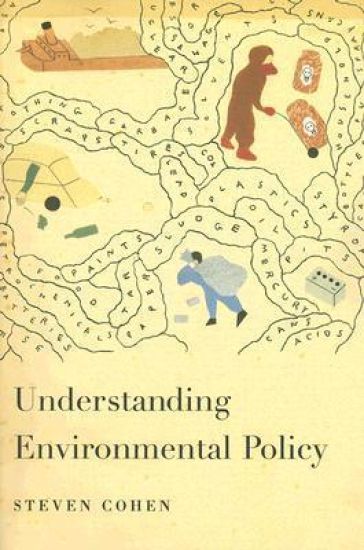
In Understanding Environmental Policy, Steven Cohen introduces an innovative, multidimensional framework for developing effective environmental policy within the United States and around the world. He demonstrates his approach through an analysis of four case studies representing current local, national, and international environmental challenges: New York City's garbage crisis; the problem of leaks from underground storage units; toxic waste contamination and the Superfund program; and global climate change. He analyzes the political, scientific, technological, organizational, and moral import of these environmental issues and the nature of the policy surrounding them. He also places a specific focus on the response from the George W. Bush administration. Cohen considers how our current environmental policy and problems reflect the value we place on our ecosystems; whether science and technology can solve the environmental problems they create; and what policy is necessary to reduce environmentally damaging behaviors. Cohen's multifaceted approach is essential reading for analysts, managers, activists, students, and scholars of environmental policy.
Understanding Environmental Policy

Understanding Environmental Policy

Steven Cohen

Columbia University Press
2006
nidottu
In Understanding Environmental Policy, Steven Cohen introduces an innovative, multidimensional framework for developing effective environmental policy within the United States and around the world. He demonstrates his approach through an analysis of four case studies representing current local, national, and international environmental challenges: New York City's garbage crisis; the problem of leaks from underground storage units; toxic waste contamination and the Superfund program; and global climate change. He analyzes the political, scientific, technological, organizational, and moral import of these environmental issues and the nature of the policy surrounding them. He also places a specific focus on the response from the George W. Bush administration. Cohen considers how our current environmental policy and problems reflect the value we place on our ecosystems; whether science and technology can solve the environmental problems they create; and what policy is necessary to reduce environmentally damaging behaviors. Cohen's multifaceted approach is essential reading for analysts, managers, activists, students, and scholars of environmental policy.
From Student to Scholar

From Student to Scholar

Steven Cahn; Catharine R. Stimpson

Columbia University Press
2008
sidottu
Steven M. Cahn's advice on the professorial life covers an extensive range of critical issues: how to plan, complete, and defend a dissertation; how to navigate a job interview; how to improve teaching performance; how to prepare and publish research; how to develop a professional network; and how to garner support for tenure. He deals with such hurdles as a difficult dissertation advisor, problematic colleagues, and the pressures of the tenure clock. Whether you are beginning graduate study, hoping to secure an academic position, or striving to build a professorial career, Cahn's insights are invaluable to traversing the thickets of academia.
From Student to Scholar

From Student to Scholar

Steven Cahn; Catharine R. Stimpson

Columbia University Press
2008
pokkari
Steven M. Cahn's advice on the professorial life covers an extensive range of critical issues: how to plan, complete, and defend a dissertation; how to navigate a job interview; how to improve teaching performance; how to prepare and publish research; how to develop a professional network; and how to garner support for tenure. He deals with such hurdles as a difficult dissertation advisor, problematic colleagues, and the pressures of the tenure clock. Whether you are beginning graduate study, hoping to secure an academic position, or striving to build a professorial career, Cahn's insights are invaluable to traversing the thickets of academia.
The Gold Standard at the Turn of the Twentieth Century

The Gold Standard at the Turn of the Twentieth Century

Steven Bryan

Columbia University Press
2010
sidottu
By the end of the nineteenth century, the world was ready to adopt the gold standard out of concerns of national power, prestige, and anti-English competition. Yet although the gold standard allowed countries to enact a virtual single world currency, the years before World War I were not a time of unfettered liberal economics and one-world, one-market harmony. Outside of Europe, the gold standard became a tool for nationalists and protectionists primarily interested in growing domestic industry and imperial expansion. This overlooked trend, provocatively reassessed in Steven Bryan's well-documented history, contradicts our conception of the gold standard as a British-based system infused with English ideas, interests, and institutions. In countries like Japan and Argentina, where nationalist concerns focused on infant-industry protection and the growth of military power, the gold standard enabled the expansion of trade and the goals of the age: industry and empire. Bryan argues that these countries looked less to Britain and more to North America and the rest of Europe for ideological models. Not only does this history challenge our idealistic notions of the prewar period, but it also reorients our understanding of the history that followed. Policymakers of the 1920s latched onto the idea that global prosperity before World War I was the result of a system dominated by English liberalism. Their attempt to reproduce this triumph helped bring about the global downturn, the Great Depression, and the collapse of the interwar world.
Sustainability Management

Sustainability Management

Steven Cohen

Columbia University Press
2011
sidottu
Can we grow our world economy and create opportunities for the poor while keeping the planet intact? Can we maintain our vibrant, dynamic lifestyles while ensuring the Earth stays productive and viable? Aimed at managers, students, scholars, and policymakers, Sustainability Management answers these questions in the affirmative, arguing it is possible for environmentally sustainable business practices and policies to foster economic and long-term growth. Written by a former analyst and consultant with the EPA, this book originally combines sustainable efforts in water, agriculture, urban, and power management to achieve--in practice, not just in theory--a sustainable planet and economy. Steven Cohen begins with the technical, financial, managerial, and political challenges of such a project, and then honestly assesses sustainable practices in the manufacturing and service industries. He addresses renewable and carbon-free energy production; water sustainability, especially with regard to energy issues involving filtration, distribution, and changing rainfall patterns; food cultivation and distribution; and ways to maintain the interdependent systems on which we depend to live. Taking examples from New York City, one of the most sustainable and sustainability-minded metropolises in the world, Cohen explains how everything from construction to waste management can be designed to facilitate a sustainable environment, not just for New York but also for the world. He concludes with this macroscopic view, outlining the global efforts necessary to preserve biodiversity and ecosystems, and the impact of war, terrorism, and human conflict on sustainability.
Sustainability Management

Sustainability Management

Steven Cohen

Columbia University Press
2014
pokkari
Can we grow our world economy and create opportunities for the poor while keeping the planet intact? Can we maintain our vibrant, dynamic lifestyles while ensuring the Earth stays productive and viable? Aimed at managers, students, scholars, and policymakers, Sustainability Management answers these questions in the affirmative, arguing it is possible for environmentally sustainable business practices and policies to foster economic and long-term growth. Written by a former analyst and consultant with the EPA, this book originally combines sustainable efforts in water, agriculture, urban, and power management to achieve--in practice, not just in theory--a sustainable planet and economy. Steven Cohen begins with the technical, financial, managerial, and political challenges of such a project, and then honestly assesses sustainable practices in the manufacturing and service industries. He addresses renewable and carbon-free energy production; water sustainability, especially with regard to energy issues involving filtration, distribution, and changing rainfall patterns; food cultivation and distribution; and ways to maintain the interdependent systems on which we depend to live. Taking examples from New York City, one of the most sustainable and sustainability-minded metropolises in the world, Cohen explains how everything from construction to waste management can be designed to facilitate a sustainable environment, not just for New York but also for the world. He concludes with this macroscopic view, outlining the global efforts necessary to preserve biodiversity and ecosystems, and the impact of war, terrorism, and human conflict on sustainability.
Haiku Before Haiku

Haiku Before Haiku

Steven D. Carter

Columbia University Press
2011
pokkari
While the rise of the charmingly simple, brilliantly evocative haiku is often associated with the seventeenth-century Japanese poet Matsuo Basho, the form had already flourished for more than four hundred years before Basho even began to write. These early poems, known as hokku, are identical to haiku in syllable count and structure but function differently as a genre. Whereas each haiku is its own constellation of image and meaning, a hokku opens a series of linked, collaborative stanzas in a sequence called renga. Under the mastery of Basho, hokku first gained its modern independence. His talents contributed to the evolution of the style into the haiku beloved by so many poets around the world--Richard Wright, Jack Kerouac, and Billy Collins being notable devotees. Haiku Before Haiku presents 320 hokku composed between the thirteenth and early eighteenth centuries, from the poems of the courtier Nijo Yoshimoto to those of the genre's first "professional" master, Sogi, and his disciples. It features 20 masterpieces by Basho himself. Steven D. Carter introduces the history of haiku and its aesthetics, classifying these poems according to style and context. His rich commentary and notes on composition and setting illuminate each work, and he provides brief biographies of the poets, the original Japanese text in romanized form, and earlier, classical poems to which some of the hokku allude.
Haiku Before Haiku

Haiku Before Haiku

Steven D. Carter

Columbia University Press
2011
sidottu
While the rise of the charmingly simple, brilliantly evocative haiku is often associated with the seventeenth-century Japanese poet Matsuo Basho, the form had already flourished for more than four hundred years before Basho even began to write. These early poems, known as hokku, are identical to haiku in syllable count and structure but function differently as a genre. Whereas each haiku is its own constellation of image and meaning, a hokku opens a series of linked, collaborative stanzas in a sequence called renga. Under the mastery of Basho, hokku first gained its modern independence. His talents contributed to the evolution of the style into the haiku beloved by so many poets around the world--Richard Wright, Jack Kerouac, and Billy Collins being notable devotees. Haiku Before Haiku presents 320 hokku composed between the thirteenth and early eighteenth centuries, from the poems of the courtier Nijo Yoshimoto to those of the genre's first "professional" master, Sogi, and his disciples. It features 20 masterpieces by Basho himself. Steven D. Carter introduces the history of haiku and its aesthetics, classifying these poems according to style and context. His rich commentary and notes on composition and setting illuminate each work, and he provides brief biographies of the poets, the original Japanese text in romanized form, and earlier, classical poems to which some of the hokku allude.
New Strategies for Social Innovation

New Strategies for Social Innovation

Steven G Anderson

Columbia University Press
2014
sidottu
Market-based development strategies designed to help the world's poor receive significant support from advocates, academics, governments, and the media, yet frequently the perceived success of these programs rests on carefully selected examples and one-sided, enthusiastic accounts. In practice, these approaches are often poorly defined and executed, with little balanced, comparative analysis of their true strengths and weaknesses. This book is the first to assess emerging market-based social change approaches comparatively, focusing specifically on social entrepreneurship, corporate social responsibility, fair trade, and private sustainable development. Steven G. Anderson begins by identifying the problems these programs address and then describes their core, shared principles. He follows with a general framework for defining and evaluating these and other development approaches. Separate chapters provide background on the historical development and application of each approach, as well as interpretations of the processes for implementation and the underlying behavioral assumptions related to successful outcomes. A final chapter compares each approach across a set of important program development dimensions and analyzes the utility of market-based approaches as part of a general consideration of social development strategies for the developing world.
New Strategies for Social Innovation

New Strategies for Social Innovation

Steven G Anderson

Columbia University Press
2014
pokkari
Market-based development strategies designed to help the world's poor receive significant support from advocates, academics, governments, and the media, yet frequently the perceived success of these programs rests on carefully selected examples and one-sided, enthusiastic accounts. In practice, these approaches are often poorly defined and executed, with little balanced, comparative analysis of their true strengths and weaknesses. This book is the first to assess emerging market-based social change approaches comparatively, focusing specifically on social entrepreneurship, corporate social responsibility, fair trade, and private sustainable development. Steven G. Anderson begins by identifying the problems these programs address and then describes their core, shared principles. He follows with a general framework for defining and evaluating these and other development approaches. Separate chapters provide background on the historical development and application of each approach, as well as interpretations of the processes for implementation and the underlying behavioral assumptions related to successful outcomes. A final chapter compares each approach across a set of important program development dimensions and analyzes the utility of market-based approaches as part of a general consideration of social development strategies for the developing world.
Polishing Your Prose

Polishing Your Prose

Steven Cahn; Victor Cahn; Mary Ann Caws

Columbia University Press
2013
sidottu
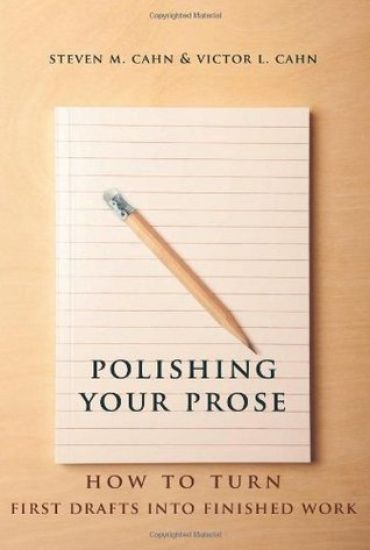
This singular book illustrates how to edit a piece of prose and enhance its clarity of thought and felicity of style. The authors first present ten principles of effective composition, and then scrutinize three extended paragraphs, suggesting with remarkable specificity how to improve them. The volume also offers challenging practice questions, as well as two finished essays, one serious and one humorous, that demonstrate how attention to sound mechanics need not result in mechanical writing. Steven M. Cahn and Victor L. Cahn help readers deploy a host of corrective strategies, such as avoiding jargon, bombast, and redundancy; varying sentence structure; paring the use of adjectives and adverbs; properly deploying phrases and clauses; and refining an argument. Here is a book for all who seek to increase their facility in written communication.
Polishing Your Prose

Polishing Your Prose

Steven Cahn; Victor Cahn; Mary Ann Caws

Columbia University Press
2013
pokkari
This singular book illustrates how to edit a piece of prose and enhance its clarity of thought and felicity of style. The authors first present ten principles of effective composition, and then scrutinize three extended paragraphs, suggesting with remarkable specificity how to improve them. The volume also offers challenging practice questions, as well as two finished essays, one serious and one humorous, that demonstrate how attention to sound mechanics need not result in mechanical writing. Steven M. Cahn and Victor L. Cahn help readers deploy a host of corrective strategies, such as avoiding jargon, bombast, and redundancy; varying sentence structure; paring the use of adjectives and adverbs; properly deploying phrases and clauses; and refining an argument. Here is a book for all who seek to increase their facility in written communication.
Understanding Environmental Policy

Understanding Environmental Policy

Steven Cohen

Columbia University Press
2014
sidottu
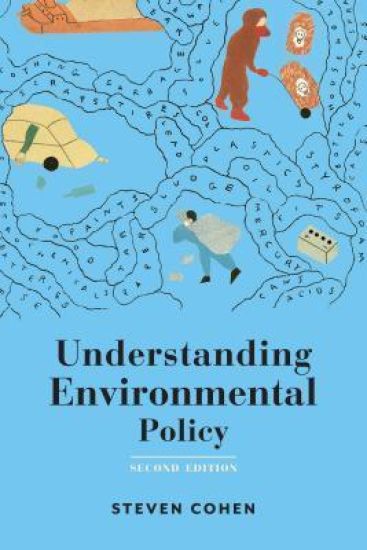
The first edition of this pragmatic course text emphasized the policy value of a "big picture" approach to the ethical, political, technological, scientific, economic, and management aspects of environmental issues. The text then applied this approach to real-world case examples involving leaks in underground storage tanks, toxic waste cleanup, and the effects of global climate change. This second edition demonstrates the ongoing effectiveness of the book's framework in generating meaningful action and policy solutions to current environmental issues. The text adds case examples concerning congestion taxes, e-waste, hydrofracking, and recent developments in global climate change, updating references and other materials throughout and incorporating the political and policy changes of the Obama administration's first term and developments in national and global environmental issues.
Understanding Environmental Policy

Understanding Environmental Policy

Steven Cohen

Columbia University Press
2014
pokkari
The first edition of this pragmatic course text emphasized the policy value of a "big picture" approach to the ethical, political, technological, scientific, economic, and management aspects of environmental issues. The text then applied this approach to real-world case examples involving leaks in underground storage tanks, toxic waste cleanup, and the effects of global climate change. This second edition demonstrates the ongoing effectiveness of the book's framework in generating meaningful action and policy solutions to current environmental issues. The text adds case examples concerning congestion taxes, e-waste, hydrofracking, and recent developments in global climate change, updating references and other materials throughout and incorporating the political and policy changes of the Obama administration's first term and developments in national and global environmental issues.
Happiness and Goodness

Happiness and Goodness

Steven M. Cahn; Christine Vitrano; Robert Talisse

Columbia University Press
2015
sidottu
How should we evaluate the success of each person's life? Countering the prevalent philosophical perspective on the subject, Steven M. Cahn and Christine Vitrano defend the view that our well-being is dependent not on particular activities, accomplishments, or awards but on finding personal satisfaction while treating others with due concern. The authors suggest that moral behavior is not necessary for happiness and does not ensure it. Yet they also argue that morality and happiness are needed for living well, and together suffice to achieve that goal. Cahn and Vitrano link their position to elements within both the Hellenistic and Hebraic traditions, in particular the views of Epicurus and lessons found in the Book of Ecclesiastes. Written in an accessible style and illustrated with incisive vignettes drawn from history, literature, films, and everyday life, Happiness and Goodness is a compelling work of philosophy for anyone who seeks to understand the nature of a good life.
Happiness and Goodness

Happiness and Goodness

Steven M. Cahn; Christine Vitrano; Robert Talisse

Columbia University Press
2015
pokkari
How should we evaluate the success of each person's life? Countering the prevalent philosophical perspective on the subject, Steven M. Cahn and Christine Vitrano defend the view that our well-being is dependent not on particular activities, accomplishments, or awards but on finding personal satisfaction while treating others with due concern. The authors suggest that moral behavior is not necessary for happiness and does not ensure it. Yet they also argue that morality and happiness are needed for living well, and together suffice to achieve that goal. Cahn and Vitrano link their position to elements within both the Hellenistic and Hebraic traditions, in particular the views of Epicurus and lessons found in the Book of Ecclesiastes. Written in an accessible style and illustrated with incisive vignettes drawn from history, literature, films, and everyday life, Happiness and Goodness is a compelling work of philosophy for anyone who seeks to understand the nature of a good life.
The Ethnic Avant-Garde

The Ethnic Avant-Garde

Steven S. Lee

Columbia University Press
2015
sidottu
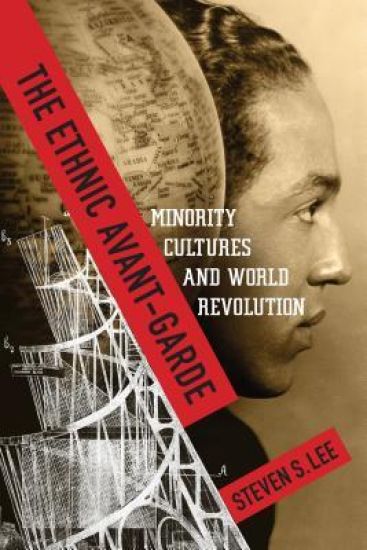
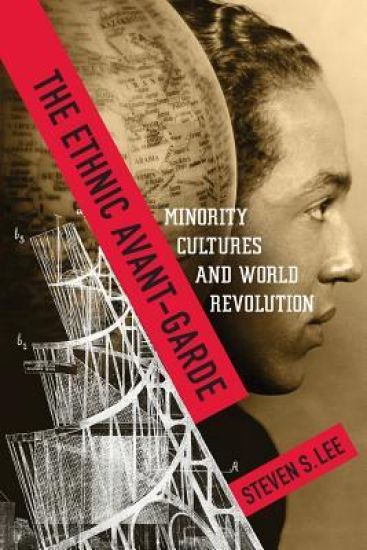
During the 1920s and 1930s, American minority artists and writers collaborated extensively with the Soviet avant-garde, seeking to build a revolutionary society that would end racial discrimination and advance progressive art. Making what Claude McKay called "the magic pilgrimage" to the Soviet Union, these intellectuals placed themselves at the forefront of modernism, using radical cultural and political experiments to reimagine identity and decenter the West. Shining rare light on these efforts, The Ethnic Avant-Garde makes a unique contribution to interwar literary, political, and art history, drawing extensively on Russian archives, travel narratives, and artistic exchanges to establish the parameters of an undervalued "ethnic avant-garde." These writers and artists cohered around distinct forms that mirrored Soviet techniques of montage, fragment, and interruption. They orbited interwar Moscow, where the international avant-garde converged with the Communist International. The book explores Vladimir Mayakovsky's 1925 visit to New York City via Cuba and Mexico, during which he wrote Russian-language poetry in an "Afro-Cuban" voice; Langston Hughes's translations of these poems while in Moscow, which he visited to assist on a Soviet film about African American life; a futurist play condemning Western imperialism in China, which became Broadway's first major production to feature a predominantly Asian American cast; and efforts to imagine the Bolshevik Revolution as Jewish messianic arrest, followed by the slow political disenchantment of the New York Intellectuals. Through an absorbing collage of cross-ethnic encounters that also include Herbert Biberman, Sergei Eisenstein, Paul Robeson, and Vladimir Tatlin, this work remaps global modernism along minority and Soviet-centered lines, further advancing the avant-garde project of seeing the world anew.
The Ethnic Avant-Garde

The Ethnic Avant-Garde

Steven S. Lee

Columbia University Press
2017
pokkari
During the 1920s and 1930s, American minority artists and writers collaborated extensively with the Soviet avant-garde, seeking to build a revolutionary society that would end racial discrimination and advance progressive art. Making what Claude McKay called "the magic pilgrimage" to the Soviet Union, these intellectuals placed themselves at the forefront of modernism, using radical cultural and political experiments to reimagine identity and decenter the West. Shining rare light on these efforts, The Ethnic Avant-Garde makes a unique contribution to interwar literary, political, and art history, drawing extensively on Russian archives, travel narratives, and artistic exchanges to establish the parameters of an undervalued "ethnic avant-garde." These writers and artists cohered around distinct forms that mirrored Soviet techniques of montage, fragment, and interruption. They orbited interwar Moscow, where the international avant-garde converged with the Communist International. The book explores Vladimir Mayakovsky's 1925 visit to New York City via Cuba and Mexico, during which he wrote Russian-language poetry in an "Afro-Cuban" voice; Langston Hughes's translations of these poems while in Moscow, which he visited to assist on a Soviet film about African American life; a futurist play condemning Western imperialism in China, which became Broadway's first major production to feature a predominantly Asian American cast; and efforts to imagine the Bolshevik Revolution as Jewish messianic arrest, followed by the slow political disenchantment of the New York Intellectuals. Through an absorbing collage of cross-ethnic encounters that also include Herbert Biberman, Sergei Eisenstein, Paul Robeson, and Vladimir Tatlin, this work remaps global modernism along minority and Soviet-centered lines, further advancing the avant-garde project of seeing the world anew.