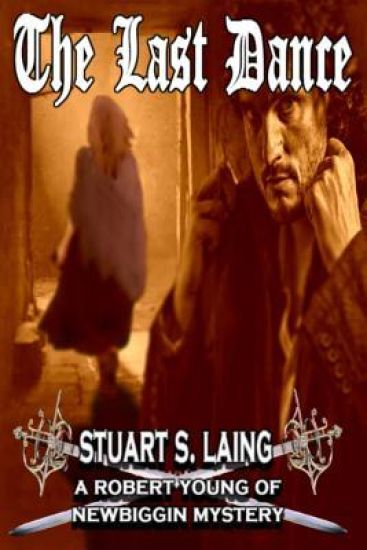
Zachary Hunter's client list ranges from Zoe Horowitz, a seemingly nice Jewish girl who hires him to find her fianc e, to a Russian Mafia crime boss who runs the mob from prison. Marissa Juliette Baristono, a beautiful, award winning interior designer, has been with Hunter since back in the day, when neither of them had anything. These days they share their lives with Owen, an Irish Wolfhound weighing something north of 150 pounds. An elephant tusk, long an urban legend, but which, if it actually existed, would command a fortune on the illicit art market because of the perfectly executed erotic carvings rumored to be covering it, suddenly surfaces. It is being smuggled into the U.S. in a Mexican cartel's van. The van gets into an accident, and one of the cartel's guards steals the tusk in the ensuing confusion. The thief cuts a separate deal with two rival mob bosses for the sale of the same tusk, virtually guaranteeing that one of them will think he's been cheated and will come after him. Desperate, he hires Hunter to get the tusk to one boss and persuade the other not to kill him. It's a tough enough assignment without more, but it becomes even more complicated when Hunter learns that not only does each of the mob bosses and the cartel think the tusk belongs to them, but, for much different reasons, so does the Russian Mafia, the CIA, the FBI, and LAPD. With them involved, it's no holds barred, and anything can happen
""There are many aspects to this task of rabbinic training, but four closely related questions rise to the surface as requiring primary attention. The first is a question of description: What ought to be the functions performed by a messianic Jewish rabbi? The second is a question of legitimacy: What similarities exist between the functions performed by messianic Jewish rabbis and rabbis in the wider Jewish context such that the rabbinate in both contexts may legitimately be seen to be variations on the same theme, and the messianic Jewish rabbinate therefore legitimately a rabbinate? The third is a question of differentiation: How and why are the functions performed by a messianic Jewish rabbi contextually particularistic and therefore different from those performed byChristian clergy? In other words, how is a messianic rabbi more than just a Protestant Pastor with switched labels? The fourth is a question of biblicity: Is there biblical justification or precedent for the proposed paradigm of the rabbi as a surrogate priest? Each of these questions emerges from messianic Judaism's interaction with different but overlapping audiences. The question of description is addressed primarily to the messianic Jewish context. The question of legitimacy is addressed primarily to the wider Jewish world. The question of differentiation is addressed primarily to the church world. The question of biblicity is addressed both to the messianic Jewish context and the church world. And in all cases, looking over our shoulder is the general public."" --from the Prologue
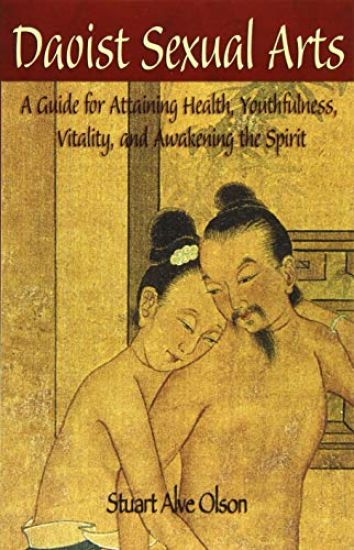
The subject of Daoist sexual teachings and practices has often been confusing to Western readers. This confusion is a result of how Daoism has intrinsically bound sexuality with spirituality and internal alchemy, making the language of its literature difficult to grasp by Western readers. In Daoist Sexual Arts, Stuart Alve Olson demystifies this specialized language through his insightful instructional notes and comments, culled from his many years of intense study and practice of Daoist arts. This book presents two of the most important texts of Daoist restorative and transformative sexual alchemy teachings (The Immortaless He Xiangu on the Correct Course for Female Practice and The Immortal Zhang Sanfeng's Summary on Gathering the True Root-Power), augmented with excerpts and insights from a variety of Daoist schools, all of which makes this book a valuable source guide for anyone interested in Daoist health, longevity, sexual-spiritual philosophy, and internal alchemy teachings. This work pays great attention to issues concerning sexual health and practices for women, as well as delving into methods for couples and advice for men. In the end, this book is about bringing harmony, not only in sexual partnerships, but for the individual as well. Those who practice sexual arts from any tradition will find this book both informative and enlightening.
Exam board: AQALevel: A-levelSubject: Computer ScienceFirst teaching: September 2016First exams: Summer 2017 (AS); Summer 2018 (A-level)Covering what you really need to know for AQA A-level Computer Science- in just 120 pages- this revision guide makes revision easy - whether you're getting started early or you need to do some last-minute cramming. - Find key facts at your fingertips with quick summaries of the content, concepts and terms from the AQA A-level Computer Science specification - Get better grades in your exams with tips on exam technique, mistakes to avoid and important things to remember- Revise and practise using end-of-topic questions and synoptic questions at the end of each section- Benefit from the knowledge of experienced teacher and Master Teacher for CAS, Stuart Davison
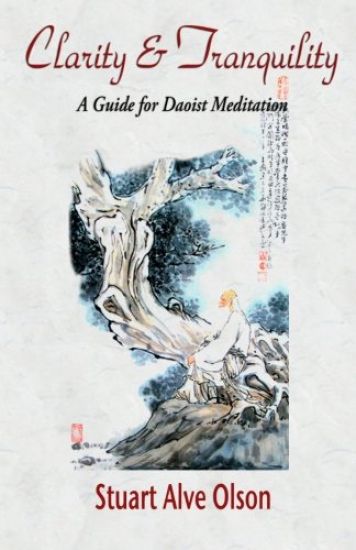
Clarity & Tranquility: A Guide for Daoist Meditation is an in-depth work on the method of Tranquil Sitting, a crucial and important practice for all Daoist practitioners. Stuart Alve Olson's introduction provides a great deal of valuable advice, history, and purpose for Tranquil Sitting. The main body of the work is divided into three integral sections that provide a comprehensive overview for anyone seriously seeking to practice meditation, whether one is a beginner or a longtime practitioner. Each section is distinct, yet they all work together to ensure the meditation practitioner has not only the insight of purpose for Daoist meditation, but the correct method. The Supreme Exalted One's Clarity and Tranquility of the Constant Scripture is a central and key text on Daoist meditation. During the Song dynasty (960-1279 CE), Bai Yuchan (Jade Toad immortal) said the following on its importance, "The main theme of this text is to reveal that the attainment of clarity and tranquility are the source conditions for obtaining immortality." In 1927, Li Qingyun, the 250-Year-Old Man, gave the following advice on Tranquil Sitting, "Meditation is the first important rule for the fundamentals of longevity. This stabilizes the Jing Essence], concentrates the Shen Spirit], and controls the Vital-Energy Qi]." Clarity & Tranquility, along with Refining the Elixir and The Seen and Unseen are all companion works to Olson's Being Daoist: The Way of Drifting with the Current, which focuses on the philosophical foundations of Daoism. Whereas Clarity & Tranquility confines itself to the practice and philosophy of Tranquil Sitting meditation, Refining the Elixir addresses the Daoist Internal Alchemy teachings, and The Seen and Unseen presents the practice of Daoist contemplative meditation. Stuart Alve Olson is also working on two other key meditation texts: The Yellow Court Scripture and The Secret of the Golden Flower.