
Kirjahaku
Etsi kirjoja tekijän nimen, kirjan nimen tai ISBN:n perusteella.
1000 tulosta hakusanalla T. Whitmore
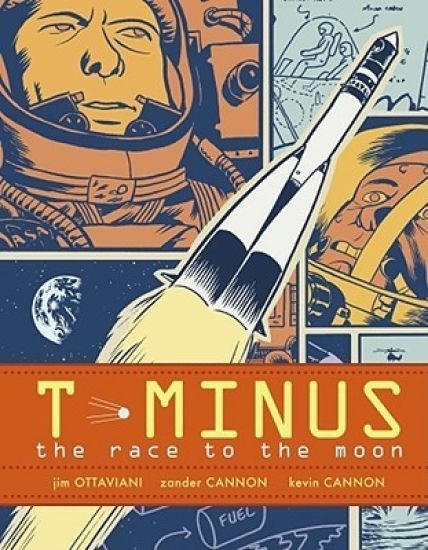
Graphic fictionalized retelling of the moon landing.In T-Minus the exciting story of two world superpowers racing to land a man on the moon is depicted through compelling comics artwork, taking readers through the history of the race and turning the engineers and astronauts involved into vivid and real characters. The story unfolds through the eyes of the figures working behind the scenes to make this miracle happen, showing every triumph and catastrophe along the way, and culminating in the dramatic event itself.
![Tell It All: The Story of a Life's Experience in Mormonism: An Autobiography: [Publisher's Dummy] / By Mrs. T.B.H. Stenhouse.](/covers/9781418162481.jpg)
Tell It All: The Story of a Life's Experience in Mormonism: An Autobiography: [Publisher's Dummy] / By Mrs. T.B.H. Stenhouse.
T. B. H. B. 1829 Stenhouse
University of Michigan Library
1899
sidottu

Constructive geometry of plane curves. With numerous examples, by T. H. Eagles.
T. H. (Thomas Henry) Eagles
University of Michigan Library
1899
sidottu
Traité De Géométrie Descriptive, Par T. Chollet. and P. Mineur.
T Chollet
University of Michigan Library
2006
pokkari

T. Butler King's report on California. Message from the President of the United States, transmitting the report of T. Butler King, esq., heretofore appointed ... and special agent to California ...
T Butler King
University of Michigan Library
2011
pokkari

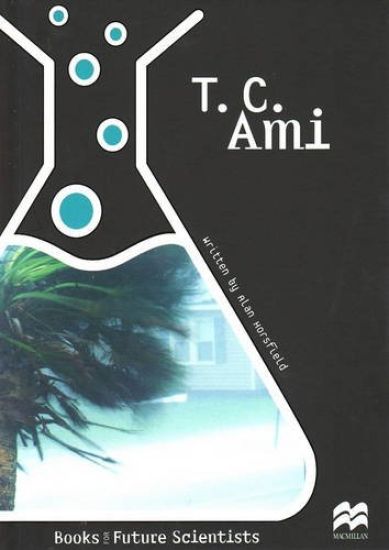
T.C. Ami
Macmillan Education Australia
2012
nidottu
Hurricane Hales is battering the small island. On the island Harley and his family have no choice but to try and ride it out. Can they survive? And what will happen to Scruffy the dog? Reading Age: 9.4 years Genre: Adventure Subject: Earth Science - Cyclones
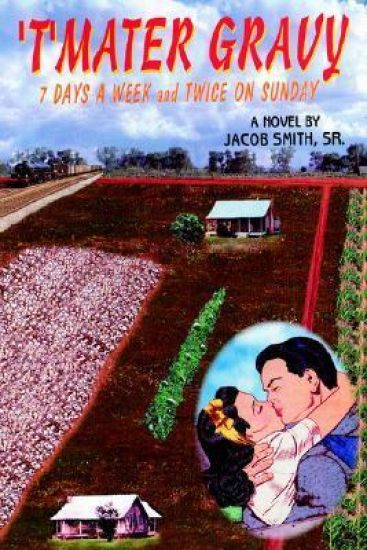
Jacob Smith's classic novel is a mixture of fiction with non fiction. It is about a young man named Marcus Webster, who was born into absolute poverty. Was reading, writing his first book of diaries and doing intricate math problems at age three. By the age of nine, had graduated from a major university and become an absolute genius and millionaire Also read how and why this young boy genius became a father at age 9. His obsession of love for his 1st cousin Elizabeth as he describes in his diaries will leave one's imagination going full swing. This novel is a must for the reader of the impossible. One surely would especially enjoy reading one episode in the book which relates to young Marcus's grandpa Lucas. It involves a snuff spiting contest where bets were placed on a contestant who could spit on a quarter placed in a 6 inch circle from a base line fifteen feet away. It was an event held every year on the town's square in Manistee County. Alabama. It brings to mind the short story about Mark Twain's "The Celebrated Jumping Frog of Calaveras County". You will no doubt really enjoy this one of a kind novel. Did certain events really take place in the book as described by Jacob Smith? Was Hadrian the 1st century Roman Emperor really the father of young Marcus as depicted in the book. No doubt you will be fascinated with this fantastic novel.
The Poems of T. S. Eliot: Collected and Uncollected Poems Volume 1
T. S. Eliot
Johns Hopkins University Press
2015
sidottu
A monumental event in Eliot scholarship. Winner of the CHOICE Outstanding Academic Title of the Choice ACRL, Pegasus Award for Criticism of the Poetry MagazineThis critical edition of T. S. Eliot's Poems establishes a new text of the Collected Poems 1909-1962, rectifying accidental omissions and errors that have crept in during the century since Eliot's astonishing debut, "The Love Song of J. Alfred Prufrock." As well as the masterpieces, the edition contains the poems of Eliot's youth, which were rediscovered only decades later, others that circulated privately during his lifetime, and love poems from his final years, written for his wife Valerie Eliot.Christopher Ricks and Jim McCue have provided a commentary that illuminates the imaginative life of each poem. Calling upon Eliot's critical writings, as well as his drafts, letters, and other original materials, they illustrate not only the breadth of Eliot's interests and the range of his writings, but how it was that the author of "Gerontion" came to write "Triumphal March" and then Four Quartets. Thanks to the family and friends who recognized Eliot's genius and preserved his writings from an early age, the archival record is exceptionally complete, enabling us to follow in unique detail the progress of a mind that never ceased exploring.This first volume respects Eliot's decisions by opening with his Collected Poems 1909-1962 as he arranged and issued it, shortly before his death fifty years ago. This is followed by poems uncollected but either written for or suitable for publication, and by a new reading text of the drafts of The Waste Land. The volume concludes with the commentary on all of these poems.The second volume opens with the two books of verse of other kinds that Eliot issued, Old Possum's Book of Practical Cats and his translation of St.-John Perse's Anabase. Different again are the verses informal, improper, or clubmanlike. Each of these sections has its own commentary. Finally, pertaining to the entire edition, there is a textual history that contains not only variants from all known drafts and the many printings but also extended passages amounting to hundreds of lines of compelling verse."The more we know of Eliot, the better."--Ezra Pound
The Poems of T. S. Eliot: Practical Cats and Further Verses Volume 2
T. S. Eliot
Johns Hopkins University Press
2015
sidottu
A monumental event in Eliot scholarship. Pegasus Award for Criticism 2016This critical edition of T. S. Eliot's Poems establishes a new text of the Collected Poems 1909-1962, rectifying accidental omissions and errors that have crept in during the century since Eliot's astonishing debut, "The Love Song of J. Alfred Prufrock." As well as the masterpieces, the edition contains the poems of Eliot's youth, which were rediscovered only decades later, others that circulated privately during his lifetime, and love poems from his final years, written for his wife Valerie Eliot. Christopher Ricks and Jim McCue have provided a commentary that illuminates the imaginative life of each poem. Calling upon Eliot's critical writings, as well as his drafts, letters, and other original materials, they illustrate not only the breadth of Eliot's interests and the range of his writings, but how it was that the author of "Gerontion" came to write "Triumphal March" and then Four Quartets. Thanks to the family and friends who recognized Eliot's genius and preserved his writings from an early age, the archival record is exceptionally complete, enabling us to follow in unique detail the progress of a mind that never ceased exploring. Following the collected and uncollected poems of the first volume, this second volume opens with the two books of verse of other kinds that Eliot issued: the children's verse of Old Possum's Book of Practical Cats and his translation of St.-John Perse's Anabase. This volume then gathers the verses Eliot contributed to the learnedly lighthearted exchanges of Noctes Binanian and others for intimate friends or written off the cuff. Each of these sections has its own commentary. Finally, and pertaining to the entire edition, there is a comprehensive textual history that contains not only variants from all known drafts and the many printings but also extended passages amounting to hundreds of lines of compelling verse."I do not know for certain how much of my own mind he invented."--William Empson
T. S. Eliot's Dialectical Imagination
Jewel Spears Brooker
Johns Hopkins University Press
2019
sidottu
What principles connect—and what distinctions separate—“The Love Song of J. Alfred Prufrock,” The Waste Land, and Four Quartets?The thought-tormented characters in T. S. Eliot’s early poetry are paralyzed by the gap between mind and body, thought and action. The need to address this impasse is part of what drew Eliot to philosophy, and the failure of philosophy to appease his disquiet is the reason he gave for abandoning it. In T. S. Eliot’s Dialectical Imagination, Jewel Spears Brooker argues that two of the principles that Eliot absorbed as a PhD student at Harvard and Oxford were to become permanent features of his mind, grounding his lifelong quest for wholeness and underpinning most of his subsequent poetry. The first principle is that contradictions are best understood dialectically, by moving to perspectives that both include and transcend them. The second is that all truths exist in relation to other truths. Together or in tandem, these two principles—dialectic and relativism—constitute the basis of a continual reshaping of Eliot’s imagination. The dialectic serves as a kinetic principle, undergirding his impulse to move forward by looping back, and the relativism supports his ingrained ambivalence. Brooker considers Eliot’s poetry in three blocks, each represented by a signature masterpiece: “The Love Song of J. Alfred Prufrock,” The Waste Land, and Four Quartets. She correlates these works with stages in the poet’s intellectual and spiritual life: disjunction, ambivalence, and transcendence. Using a methodology that is both inductive—moving from texts to theories—and comparative—juxtaposing the evolution of Eliot’s mind as reflected in his philosophical prose and the evolution of style as seen in his poetry—Brooker integrates cultural and biographical contexts. The first book to read Eliot’s poems alongside all of his prose and letters, T. S. Eliot’s Dialectical Imagination will revise received readings of his mind and art, as well as of literary modernism.