

Kirjahaku
Etsi kirjoja tekijän nimen, kirjan nimen tai ISBN:n perusteella.
1000 tulosta hakusanalla Toni Strubell

Sexual interpretations for all 78 tarot cards, including reverse meanings. Toni Allen has worked as a professional tarot card reader for nearly 30 years and these interpretations are drawn from practical experience. Toni outlines a variety of sexual preferences and activities that can be seen for each card during a reading when the questioner is enquiring about sex or relationship. Interpretations for each Court Card offer insight into what type of person someone may be involved with; and sexual compatibility. Examples of card combinations are included to aid in depth understanding of how a reading will work in practice. Suitable for beginners and more advanced tarot readers. This book contains sexually explicit material and is only suitable for adults. Other tarot books by Toni Allen - The System of Symbols, a new way to look at tarot
Comprehensive coverage explaining the correlation and synergy between Next Generation Networks and the existing standardized technologies This book focuses on Next Generation Networks (NGN); in particular, on NGN architectures, protocols and services, including technologies, regulation and business aspects. NGN provides convergence between the traditional telecommunications and the Internet, and it is globally standardized by the ITU (International Telecommunication Union), where ITU is the United Nations specialized agency for Information and Communication Technologies – ICTs. The convergence towards the NGN is based on the Internet technologies, and the introductory chapters cover the Internet fundamentals of today, including architectures, protocols (IPv4, IPv6, TCP, DNS, etc.), Internet services (WWW, e-mail, BitTorrent, Skype, and more), as well as Internet governance. Further, the prerequisite for convergence of all ICT services over single network architectures is broadband access to the Internet. Hence, the book includes architectures of fixed broadband Internet access networks, such as DSL (Digital Subscriber Line) networks, cable networks, FTTH (Fiber To The Home), next generation passive and active optical networks, and metro Ethernet. It also covers network architectures for next generation (4G) mobile and wireless networks (LTE/LTE-Advanced, and Mobile WiMAX 2.0), then Fixed Mobile Convergence - FMC, next generation mobile services, as well as business and regulatory aspects for next generation mobile networks and services. Comprehensive coverage explaining the correlation and synergy between Next Generation Networks and the existing standardized technologiesFocuses on Next Generation Networks (NGN) as defined by the ITU, including performance, service architectures and mechanisms, common IMS (IP Multimedia Subsystem), control and signalling protocols used in NGN, security approaches, identity management, NGN Service Overlay Networks, and NGN business modelsExamines the most important NGN services, including QoS-enabled VoIP, IPTV over NGN, web services in NGN, peer-to-peer services, Ubiquitous Sensor Network (USN) services, VPN services in NGN, Internet of things and web of thingsIncludes the transition towards NGN from the PSTN (Public Switched Telephone Networks) and from the best-effort Internet via the same Internet accessExplores advanced topics such as IPv6-based NGN, network virtualization, and future packet based networks, as well as business challenges and opportunities for the NGN evolved networks and services Essential reading for engineers and employees from regulatory bodies, government organisations, telecommunication companies, ICT companies.
Provides extensive coverage of standardized QoS technologies for fixed and mobile ultra-broadband networks and services—bringing together technical, regulation, and business aspects The Quality of Service (QoS) has been mandatory for traditional telecommunication services such as telephony (voice) and television (TV) since the first half of the past century, however, with the convergence of telecommunication networks and services onto Internet technologies, the QoS provision remains a big challenge for all ICT services, not only for traditional ones. This book covers the standardized QoS technologies for fixed and mobile ultra-broadband networks and services, including the business aspects and QoS regulation framework, which all will have high impact on the ICTs in the current and the following decade. QoS for Fixed and Mobile Ultra-Broadband starts by introducing readers to the telecommunications field and the technology, and the many aspects of both QoS and QoE (Quality of Experience). The next chapter devotes itself to Internet QoS, starting with an overview of numerous technology protocols and finishing with business and regulatory aspects. The next three chapters look at QoS in NGN and Future Networks, QoS for fixed ultra-broadband, and QoS for mobile ultra-broadband. The book also provides readers with in-depth accounts of services in fixed and mobile ultra-broadband; broadband QoS parameters, KPIs, and measurements; network neutrality; and the QoS regulatory framework. Comprehensively covers every aspect of QoS technology for fixed and mobile ultra-broadband networks and services, including the technology, the many regulations, and their applications in businessExplains how the QoS is transiting from the traditional telecom world to an all-IP worldPresents all the fundamentals of QoS regulation, as well as SLA regulation QoS for Fixed and Mobile Ultra-Broadband is an excellent resource for managers, engineers, and employees from regulators, ICT government organizations, telecommunication companies (operators, service providers), ICT companies, and industry. It is also a good book for students and professors from academia who are interested in understanding, implementation, and regulation of QoS for fixed and mobile ultra-broadband.
The nature and content of Kemalist ideology in Turkey during the last twenty years is analysed in this book. In order to place the current manifestations of this Turkish official modernising ideology in the two-part context of globalisation and the re-sacralisation of the world, Contemporary Kemalism scrutinises the texts of five prominent Kemalist intellectuals. After defining the unquestioned ideological premises of Kemalism, such as its implied liberal philosophy of history, and its idea about human nature, the book describes Kemalism’s vision of the ideal society. Kemalism’s close relationship to social democracy and neo-nationalism is then discussed in detail. Also included is an analysis of contemporary Kemalism’s relation to earlier Kemalist articulations. The study demonstrates that various previous assumptions, both Western and Turkish, concerning Kemalism’s nature and content are too simplistic, and thus unable to account for the endurance of this ideology and its continuing relevancy in present-day Turkey. Inviting the reader to contemplate contemporary Kemalism’s ambiguous relationship with the Western world, this book will be of value to scholars and researchers with an interest in Middle Eastern Politics, Modernization Theory and Political Ideology.

More centrally focused on the Caribbean than any other survey of the region, Caribbean History examines a wide range of topics to give students a thorough understanding of the region's history. The text favors a traditional, largely chronological approach to the study of Caribbean history, however, because it is impossible to be entirely chronological in the complex agglomeration of often disparate historical experiences, some thematic chapters occupy the broadly chronological framework. The author creates a readable narrative for undergraduates that contains the most recent scholarship and pays particular attention to the U.S.-Caribbean connection to more fully relate to students.
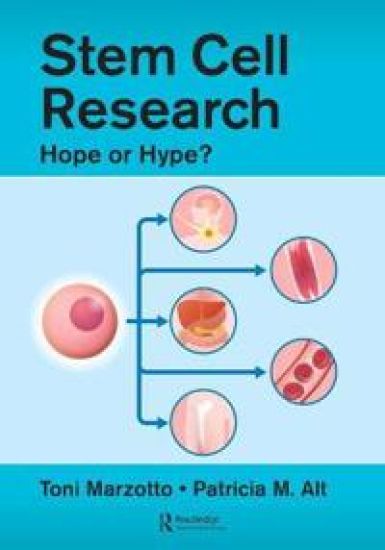
Stem Cell Research takes a multi-disciplinary approach to the topic of human embryonic stem cell research, starting with the breakthrough discovery up through the present day controversy. The book invites the reader to join the conversation by providing a well balanced approach to many of the issues surrounding the development of this controversial scientific field. It includes the thoughts and experiences of scientists, journalists and ethicists as it tried to approach the topic through a variety of different academic disciplines.The book will help the non-scientist understand the biology, research regulations and funding; and simultaneously it will help the scientist better comprehend the full spectrum of ethical, religious, and policy debates.
Relational Treatment of Trauma: Stories of loss and hope is the culmination of over 35 years of psychotherapy with children and adults, many of whom have suffered the effects of physical, emotional, or sexual abuse. It addresses a gap in the literature on the treatment of trauma and chronic loss that are ubiquitous parts of life in foster care. While "trauma-informed care" has received considerable attention recently, there is little that focuses on the consequences of repeated, unexpected, and unexplained or unexplainable losses of caregivers. Relational Treatment of Trauma explores the ways in which those experiences arise in the therapeutic relationship and shows how to help clients build the trust necessary for establishing healthier, and more satisfying and hopeful relationships.Toni Heineman introduces and reinforces the concept of the relationship as the most powerful agent of therapeutic change. She highlights the ways in which clinicians can build and sustain a relationship with clients whose experience of trauma can make them wary of trusting, illustrating this theme throughout the book with compelling case vignettes.The book is especially valuable for psychoanalysts, clinical psychologists, psychiatrists, social workers, and family therapists working with those who have suffered traumatic loss. It is essential reading for clinicians in the early part of their career, working with traumatized individuals for the first time.Dr. Heineman has practiced in San Francisco for over 35 years, working with children, adults, and families. She is the founder and executive director of A Home Within. Dr. Heineman presents and publishes widely.
Relational Treatment of Trauma: Stories of loss and hope is the culmination of over 35 years of psychotherapy with children and adults, many of whom have suffered the effects of physical, emotional, or sexual abuse. It addresses a gap in the literature on the treatment of trauma and chronic loss that are ubiquitous parts of life in foster care. While "trauma-informed care" has received considerable attention recently, there is little that focuses on the consequences of repeated, unexpected, and unexplained or unexplainable losses of caregivers. Relational Treatment of Trauma explores the ways in which those experiences arise in the therapeutic relationship and shows how to help clients build the trust necessary for establishing healthier, and more satisfying and hopeful relationships.Toni Heineman introduces and reinforces the concept of the relationship as the most powerful agent of therapeutic change. She highlights the ways in which clinicians can build and sustain a relationship with clients whose experience of trauma can make them wary of trusting, illustrating this theme throughout the book with compelling case vignettes.The book is especially valuable for psychoanalysts, clinical psychologists, psychiatrists, social workers, and family therapists working with those who have suffered traumatic loss. It is essential reading for clinicians in the early part of their career, working with traumatized individuals for the first time.Dr. Heineman has practiced in San Francisco for over 35 years, working with children, adults, and families. She is the founder and executive director of A Home Within. Dr. Heineman presents and publishes widely.
Just as we generally pay scant attention to the potential dangers of nuclear power and nuclear war, until quite recently, scholars have made limited critical attempts to understand the cultural manifestations of the nuclear status quo. Films that feature nuclear issues most often simplify and trivialize the subject. They also convey a sense of the ambivalence and anxiety that pervades cultural responses to our nuclear capability. The production of popular narrative films with nuclear topics largely conforms to periods of heightened nuclear awareness or fear, such as the fear of fallout from nuclear testing manifested in the atomic creatures in science fiction movies of the late 1950s. By their very numbers, and through a set of recurring stylistic and narrative conventions, nuclear films reflect a deep-seated cultural anxiety. This study includes detailed textual analysis of films that depict nuclear issues including the development and use of the first atomic bombs, nuclear testing and the fear of fallout, nuclear power, the Cold War arms race, loose nukes, and future nuclear war and its aftermath.(Includes bibliographic references, index, filmography, choronology; Illustrated)

Construction Des Viaducs, Ponts-Aqueducs, Ponts Et Ponceaux En Maconnerie (1852)
Toni Fontenay
KESSINGER PUBLISHING, LLC
2010
pokkari


Being immortal has its downfalls. The recurrence of loss, the memories, and the continual need for a new identity before everyone questions why he looks so young. From the start he knew that Richard Ridley didn't feel safe; dying in infancy, and apparently unloved. He has no intention of being Richard. But then a man turns up claiming to be from the Special Investigation Department; and he's forced to take on Richard's identity, or be locked up...forever. All the department wants is for him to help them find other immortals. He's terrified at having his life controlled by others, but cannot rest until he's discovered why Richard's short life upsets him so much. Defying the department's instructions he sets about investigating his history. Uncovering Richard's past proves dangerous, even for an immortal.

The day my world fell apart I found myself lying in a crumpled heap, sobbing on the kitchen floor - everything had been destroyed. This is my journey of taking a step of faith and walking daily in love and forgiveness.

Crumble or Stand: The Workbook is a reflective approach to my book Crumble or Stand: The Power of Forgiveness. This is a ten-session workbook offering you key elements from Crumble or Stand: The Power of Forgiveness, with the aim to give you ideas of how you can try to put some of its principles into practice in your own life. This can be used on your own, with a small group, or with someone you trust.

A dissertation for the MFA program at MECA, 2013. Examines the author's evolving understanding and use of Gothic themes in her work.




The son of an Italian aristocrat and career diplomat, 74-year-old Toni Muzi Falconi recalls over fifty years as an international Public Relations professional and scholar. As CEO of the most successful PR consultancy of the '80s in Italy, and equally at ease with North American giants such as Steve Jobs and Leonard Cohen, Toni's narrative in Biased Memoirs of a Public Relator is unusually candid: from politics to journalism, earnouts and transcontinental business deals, the personal voice of one man never fades against the background of ideologies, history, individuals' ambitions, exotic cultures, and the rise and fall of business empires, at home as abroad. Work and personal life are tightly weaved to create a vibrant, passionate and colourful fabric; the entire point of the Biased Memoirs is not to consign to history a point of view through a professional's 'spin', rather to use the narrator's own experience to cut through it, and tell of an incredible career.