Kirjojen hintavertailu. Mukana 12 461 846 kirjaa ja 12 kauppaa.

Kirjahaku

Etsi kirjoja tekijän nimen, kirjan nimen tai ISBN:n perusteella.

1000 tulosta hakusanalla Volker Mahnkopp

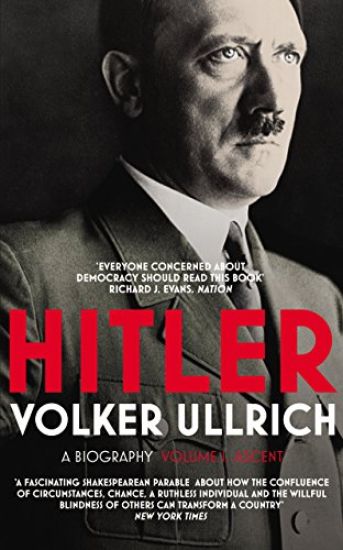
Hitler: Volume I

Hitler: Volume I

Volker Ullrich

Vintage Publishing
2018
pokkari
While charting in detail Hitler's life from his childhood to the eve of the Second World War against the politics of the times, the author unveils the man behind the public persona: his charming and repulsive traits, his talents and weaknesses, his deep-seated insecurities and murderous passions.
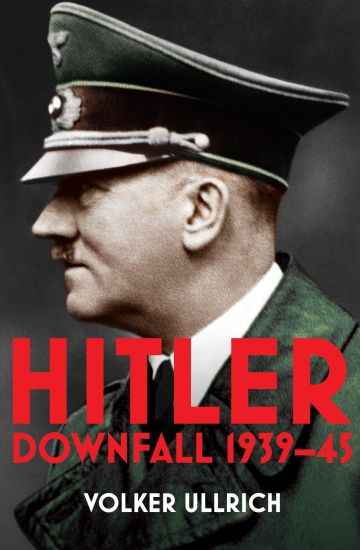
Hitler: Volume II

Hitler: Volume II

Volker Ullrich

Vintage
2021
nidottu
'Meticulous... Probably the most disturbing portrait of Hitler I have ever read' Dominic Sandbrook, Sunday TimesBy the summer of 1939 Hitler was at the zenith of his power. Yet despite initial triumphs in the early stages of war, the Führer's fortunes would turn dramatically as the conflict raged on. Realising that victory was lost, and with Soviet troops closing in on his Berlin bunker, Hitler committed suicide in April 1945; one week later, Nazi Germany surrendered. His murderous ambitions had not only annihilated his own country, but had cost the lives of millions across Europe. In the final volume of this landmark biography, Volker Ullrich argues that the very qualities - and the defects - that accounted for Hitler's popularity and rise to power were what brought about his ruin. A keen strategist and meticulous military commander, he was also a deeply insecure gambler who could be shaken by the smallest setback, and was quick to blame subordinates for his own disastrous mistakes.Drawing on a wealth of new sources and scholarship, this is the definitive portrait of the man who dragged the world into chaos.
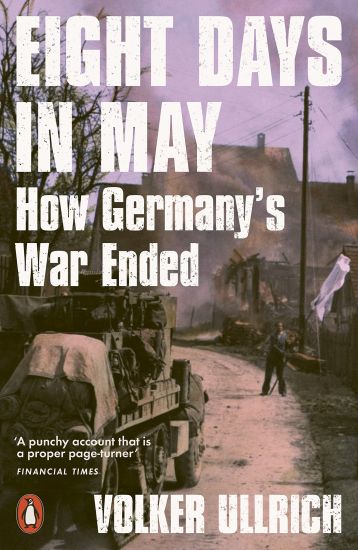
Eight Days in May

Eight Days in May

Volker Ullrich

PENGUIN BOOKS LTD
2022
pokkari
'Superb' David Aaronovitch, The Times 'A punchy account that is a proper page-turner' Financial Times 'The last days of the Third Reich have often been told, but seldom with the verve, perception and elegance of Volker Ullrich's rich narrative' Richard Overy, author of The Bombing War 1 May 1945. The world did not know it yet, but the final week of the Third Reich's existence had begun. Hitler was dead, but the war had still not ended. Everything had both ground to a halt and yet remained agonizingly uncertain. Volker Ullrich's remarkable book takes the reader into a world torn between hope and terror, violence and peace. Ullrich describes how each day unfolds, with Germany now under a new Führer, Admiral Dönitz, based improbably in the small Baltic town of Flensburg. With Hitler dead, Berlin in ruins and the war undoubtedly lost, the process by which the fighting would end remained horrifyingly unclear. Many major Nazis were still on the loose, wild rumours continued to circulate about a last stand in the Alps and the Western allies falling out with the Soviet Union. All over Europe, millions of soldiers, prisoners, slave labourers and countless exhausted, grief-stricken and often homeless families watched and waited for the war's end. Eight Days in May is the story of people, in Erich Kästner's striking phrase, stuck in 'the gap between no longer and not yet'. 'A fast-paced, brilliant recounting of the turbulent last days of the Third Reich, with all the energy and chaos of a Jackson Pollock canvas' Helmut Walser Smith, author of Germany: A Nation in its Time
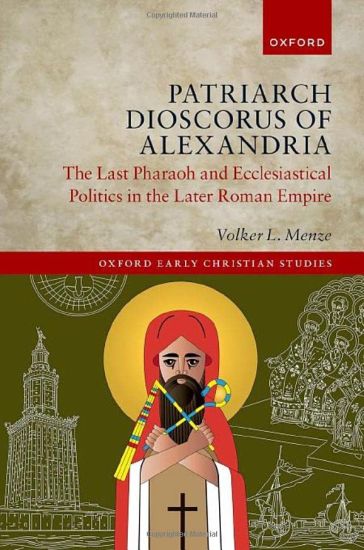
Patriarch Dioscorus of Alexandria

Patriarch Dioscorus of Alexandria

Volker L. Menze

Oxford University Press
2023
sidottu
Patriarch Dioscorus of Alexandria: The Last Pharaoh of Alexandria and Ecclesiastical Politics in the Later Roman Empire offers a thorough revision of the historical role of Dioscorus as patriarch of Alexandria between 444 and 451 CE. One of the major protagonists of the Christological controversy, Dioscorus was hailed a saint in Eastern Church traditions which opposed the Council of Chalcedon in 451. Yet Western Church traditions remember him as a heretic and violent villain, and much scholarship maintains this image of Dioscorus as 'ruthless and ambitious', a 'tyrant-bishop' feared by his opponents-the 'Attila of the Eastern Church'. This book breaks with these negative stereotypes and offers the first serious historical analysis of Dioscorus as ecclesiastical politician and reformer. It discusses the discrepancy that theologically Dioscorus was a loyal follower of his famous predecessor Cyril of Alexandria (412-444) while politically he was the leading figure of the anti-Cyrillian party in Alexandria. Analysing Dioscorus' role as president of the Second Council of Ephesus in 449 and his downfall and deposition at the Council of Chalcedon in 451, Menze also offers a much-needed new reading of the acts of these two general councils. Reappraising the life and role of Dioscorus ultimately shows how the Christological controversy of the fifth century can only be fully understood against the background of imperial politics-and its mechanisms for implementing 'Orthodoxy'-in the Later Roman Empire.
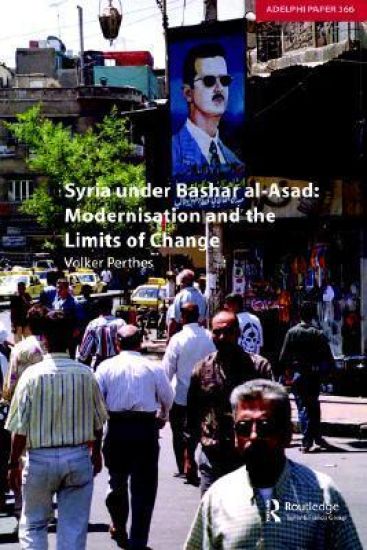
Syria under Bashar al-Asad

Syria under Bashar al-Asad

Volker Perthes

Oxford University Press Inc
2005
nidottu
Syria entered a new phase with the death of its long-serving leader, Hafiz al-Asad, and the accession of his son Bashar in 2000. While the new president has disappointed much of the hopes for political opening which he himself has created, Syria is clearly undergoing a process of change. The author analyses the factors of economic and political change in the country, and gives a portrait of its new leadership.
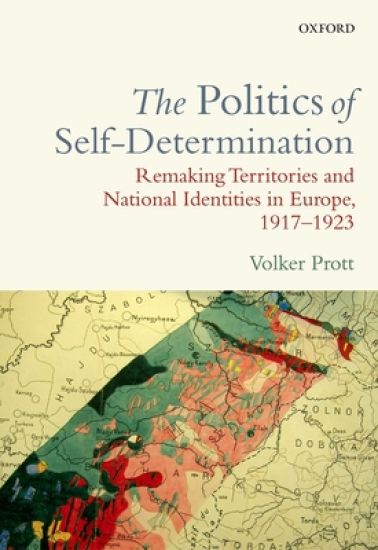
The Politics of Self-Determination

The Politics of Self-Determination

Volker Prott

Oxford University Press
2016
sidottu
The Politics of Self-Determination examines the territorial restructuring of Europe between 1917 and 1923, when a radically new and highly fragile peace order was established. It opens with an exploration of the peace planning efforts of Great Britain, France, and the United States in the final phase of the First World War. It then provides an in-depth view on the practice of Allied border drawing at the Paris Peace Conference of 1919, focussing on a new factor in foreign policymaking-academic experts employed by the three Allied states to aid in peace planning and border drawing. This examination of the international level is juxtaposed with two case studies of disputed regions where the newly drawn borders caused ethnic violence, albeit with different results: the return of Alsace-Lorraine to France in 1918-19, and the Greek-Turkish War between 1919 and 1922. A final chapter investigates the approach of the League of Nations to territorial revisionism and minority rights, thereby assessing the chances and dangers of the Paris peace order over the course of the 1920s and 1930s. Volker Prott argues that at both the international and the local levels, the 'temptation of violence' drove key actors to simplify the acclaimed principle of national self-determination and use ethnic definitions of national identity. While the Allies thus hoped to avoid uncomfortable decisions and painstaking efforts to establish an elusive popular will, local elites, administrations, and paramilitary leaders soon used ethnic notions of identity to mobilise popular support under the guise of international legitimacy. Henceforth, national self-determination ceased to be a tool of peace-making and instead became an ideology of violent resistance.
The Definition of Logical Validity

The Definition of Logical Validity

Volker Halbach

Oxford University Press
2025
sidottu
According to the semantic definition of logical consequence or validity, an argument is logically valid if, and only if, the conclusion is true under all interpretations under which also all premisses are true. The semantic definition is only a general pattern, and Volker Halbach presents a specific way of spelling out this definition. In contrast to the predominant approaches, truth is taken to be a primitive notion, which is not reduced away by a mathematical definition. An interpretation of a sentence is obtained by replacing non-logical terms uniformly with arbitrary other terms of the same grammatical kind. This conception of interpretations is in line with naïve and straightforward understandings of interpretations that hark back at least to the middle ages. The resulting definition of logical validity combines two advantages: first, it is universal in the sense that it applies not only to a restricted language, but to the entire in which the definition is stated. This is in contrast to definitions of logical validity in higher-order languages. Secondly, it admits the intended interpretation, that is, the interpretation of sentences at their face value without any re-interpretation. Thus, logical consequence is trivial preserving truth. The usual model-theoretic definition lacks this property, although it has always taken to be fundamental to logical consequence and warrants its usefulness in philosophy.
Justinian and the Making of the Syrian Orthodox Church

Justinian and the Making of the Syrian Orthodox Church

Volker L. Menze

Oxford University Press
2008
sidottu
The Council of Chalcedon in 451 divided eastern Christianity, with those who were later called Syrian Orthodox among the Christians in the near eastern provinces who refused to accept the decisions of the council. These non-Chalcedonians (still better known under the misleading term Monophysites) separated from the church of the empire after Justin I attempted to enforce Chalcedon in the East in 518. Volker L. Menze historicizes the formation of the Syrian Orthodox Church in the first half of the sixth century. This volume covers the period from the accession of Justin to the second Council of Constantinople in 553. Menze begins with an exploration of imperial and papal policy from a non-Chalcedonian, eastern perspective, then discusses monks, monasteries and the complex issues surrounding non-Chalcedonian church life and sacraments. The volume concludes with a close look at the working of "collective memory" among the non-Chalcedonians and the construction of a Syrian Orthodox identity. This study is a histoire évènementielle of actual religious practice, especially concerning the Eucharist and the diptychs, and of ecclesiastical and imperial policy which modifies the traditional view of how emperors (and in the case of Theodora: empresses) ruled the late Roman/early Byzantine empire. By combining this detailed analysis of secular and ecclesiastical politics with a study of long-term strategies of memorialization, the book also focuses on deep structures of collective memory on which the tradition of the present Syrian Orthodox Church is founded.
The Logic Manual

The Logic Manual

Volker Halbach

Oxford University Press
2010
sidottu
The Logic Manual is a clear and concise introduction to logic for beginning philosophy students. It offers a complete introductory course, guiding the reader carefully through the topics in logic that are most important for the study of philosophy. It covers propositional and predicate logic with and without identity. It includes an account of the semantics of these languages including definitions of truth and satisfaction. Natural deduction is used as a proof system. Volker Halbach introduces the essential concepts through examples and informal explanations as well as through abstract definitions. The Logic Manual provides the best entry to the general abstract way of thinking about language, logic, and semantics which is characteristic of contemporary philosophy. Exercises, examples, and sample examination papers are provided on an accompanying website.
The Logic Manual

The Logic Manual

Volker Halbach

Oxford University Press
2010
nidottu
The Logic Manual is a clear and concise introduction to logic for beginning philosophy students. It offers a complete introductory course, guiding the reader carefully through the topics in logic that are most important for the study of philosophy. It covers propositional and predicate logic with and without identity. It includes an account of the semantics of these languages including definitions of truth and satisfaction. Natural deduction is used as a proof system. Volker Halbach introduces the essential concepts through examples and informal explanations as well as through abstract definitions. The Logic Manual provides the best entry to the general abstract way of thinking about language, logic, and semantics which is characteristic of contemporary philosophy. Exercises, examples, and sample examination papers are provided on an accompanying website.
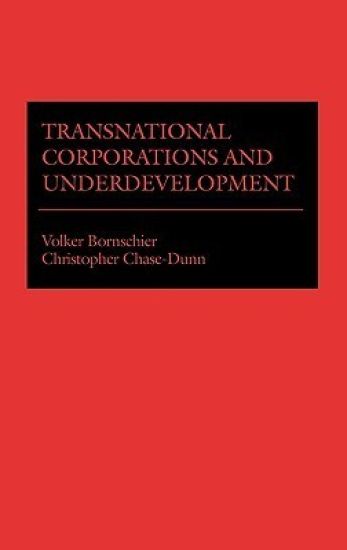
Transnational Corporations and Underdevelopment.

Transnational Corporations and Underdevelopment.

Volker Bornschier; Christophe C. Dunn

Praeger Publishers Inc
1985
sidottu
Do investments by multinational corporations in less developed countries enhance or hinder economic development in those countries? This volume presents a re-evaulation of twenty-seven of the most important studies which were carried out to answer this question. The authors attempt to resolve the disparate findings which show that investment promotes short-run growth but in the long run retards growth. They also present a careful empirical analysis of the intervening political, social, and economic mechanisms through which the effects of investment are transmitted. The volume will clarify much speculation which has taken place about the world-systems perspective and will point the way toward more research which can resolve disputed areas of this theory.
Preparing for Peace

Preparing for Peace

Volker Franke

Praeger Publishers Inc
1999
sidottu
Since the end of the Cold War, U.S. military forces have participated in an increasingly complex array of military operations, from disaster relief and peacekeeping to deadly combat. The unique nature of many of these missions calls into question what it means to be a soldier and may require adjustments not only in military doctrine, but also in the military's combat-oriented warrior identity. Franke examines the extent to which individuals who will lead U.S. forces in the 21st century are prepared cognitively to shift among mission requirements.Using survey methods, Franke explores the social, political, and professional attitudes and values of cadets at the U.S. Military Academy at West Point. By comparing cadets' responses across classes, he assesses the effects of military socialization on their commitment to the military's dual-mission purpose and their cognitive preparation for combat and non-combat assignments. By developing a dynamic model of social identity, Franke extends the applicability of social identity theory from the experimental laboratory environment to a genuine social field setting. Assessing the dynamic relationship between identity, values, and attitudes for identifications that are normatively meaningful to respondents, he illustrates the importance of individuals' identification with social groups for their behavioral choices.