
Kirjahaku
Etsi kirjoja tekijän nimen, kirjan nimen tai ISBN:n perusteella.
1000 tulosta hakusanalla W Graham Scroggie
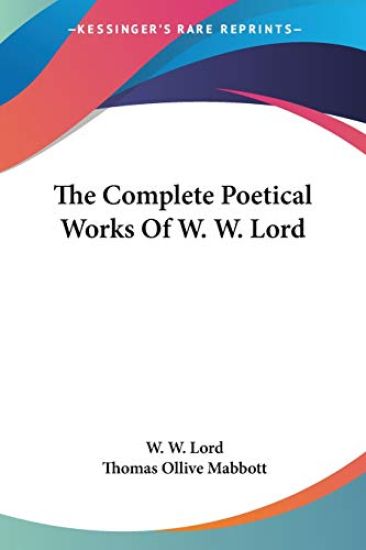
The Complete Poetical Works of W. W. Lord
W. W. Lord; Thomas Ollive (EDT) Mabbott
Kessinger Pub
2007
pokkari


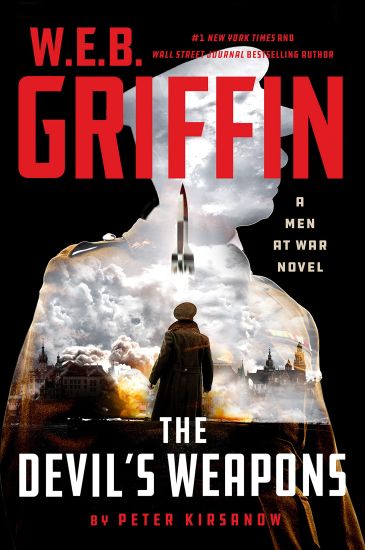
Dick Canidy and the agents of the OSS scour war torn Poland looking for a rocket scientist who holds the secrets to the Nazis most dangerous weapon in this new entry in W.E.B. Griffin's New York Times bestselling Men at War series. April 1940. By terms of the Soviet Nazi Nonaggression pact, the two dictatorships divided the helpless nation of Poland. Now, the Russians are rounding up enemies of the state in their occupation zone, but one essential target slips away. Dr. Sebastian Kapsky had spent years working with Walter Riedel and Werner von Braun in the early days of rocket science, but as a man with a conscience he refused to continue when he saw the perversion of their work by the Nazis. That makes him the most knowledgeable person about German superweapons outside of Germany. The Germans want him. The Soviets are desperate to grab him, but Wild Bill Donovan knows there's only one man who can find him in the middle of a war zone and get him out--Dick Canidy.

The W.E.R.K. IT girl curriculum is designed to help develop positive self-esteem, independence, and sisterhood. Inside every girl lies something hidden, an untapped layer of potential waiting to be unleashed.

The Public Life Of W. F. Wallett, The Queen's Jester: An Autobiography (1870)
W. F. Wallet
KESSINGER PUBLISHING, LLC
2008
nidottu



W.B. Yeats (Embellished Manuscripts Collection) Ultra Lined Hardcover Journal (Wrap Closure)
Paperblanks
2016
sidottu
We honour the genius of William Butler Yeats (1865–1939) and his masterful and devastating poem “Easter, 1916,” in this Paperblanks journal emblazoned with his handwriting. “Easter, 1916” is a powerful expression of the artist coming to terms with the tragic events of the Easter Rising rebellion staged in Ireland in 1916.


This book provides a new interpretation of the life of W.E.B. Du Bois, one of the most important African American scholars and thinkers of the 20th century.This revealing biography captures the full life of W.E.B. Du Bois—historian, sociologist, author, editor, and a leader in the fight to bring African Americans more fully into the American landscape as well as a forceful proponent of their leaving America altogether and returning to Africa. Drawing on extensive research and including new primary documents, sidebars, and analysis, Gerald Horne and Charisse Burden-Stelly offer a portrait of this remarkable man, paying special attention to the often-overlooked radical decades at the end of Du Bois's life. The book also highlights Du Bois's relationships with and influence on civil rights activists, intellectuals, and freedom fighters, among them Booker T. Washington, Marcus Garvey, Shirley Graham Du Bois, Louise Thompson Patterson, William Alphaeus Hunton, and Martin Luther King, Jr. The biography includes a selection of primary source documents, including personal letters, speeches, poems, and newspaper articles, that provide insight into Du Bois's life based on his own words and analysis.
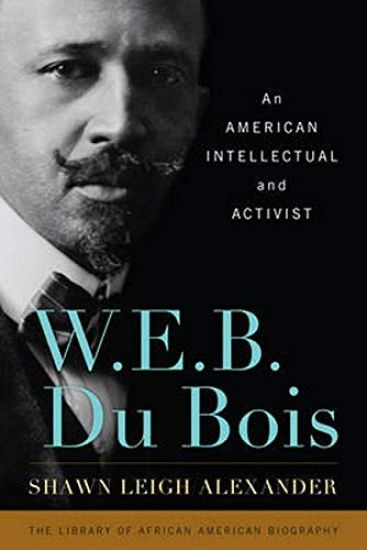
W. E. B. Du Bois was one of the most prolific African American authors, scholars, and leaders of the twentieth century, but none of his previous biographies have so practically and comprehensively introduced the man and his impact on American history as noted historian Shawn Alexander's W. E. B. Du Bois: An American Intellectual and Activist. Alexander tells Du Bois’ story in a clear and concise manner, exploring his racial strategy, civil rights activity, journalistic career, and his role as an international spokesman. The book also captures Du Bois’s life as a historian, sociologist, artist, propagandist, and peace activist, while providing space for the voices of his chief critics: Booker T. Washington, Marcus Garvey, Walter White, the Young Turks of the NAACP—not to mention the federal government’s characterization of his ever-radicalizing beliefs, particularly after World War II. Alexander’s analysis traces the development of Du Bois' thought over time, beginning with his formative years in New England and ending with his death in Ghana. Paying significantly more attention to the many pivotal and previously unexamined intellectual moments in his life, this biography illustrates the experiences that helped bend and mold the indispensable thinker that W.E.B. Du Bois became: the kind whose crowning achievement is his continued relevance in contemporary culture, from classrooms to curbsides.

W. E. B. Du Bois was one of the most prolific African-American authors, scholars, and leaders of the twentieth century. In this book, Alexander’s traces the development of Du Bois' thought over time. Paying significantly more attention to the many pivotal and previously unexamined intellectual moments in his life, this biography illustrates the experiences that helped bend and mold the indispensable thinker that W. E. B. Du Bois became: the kind whose crowning achievement is his continued relevance in contemporary culture, from classrooms to curbsides.

“The problem of the Twentieth Century is the problem of the color-line.” This quote is among the most prophetic in American history. It was written by W. E. B. DuBois for the Exhibition of American Negroes displayed at the 1900 Paris Exposition. They are words whose force echoed throughout the Twentieth Century. W.E.B. DuBois put together a groundbreaking exhibit about African Americans for the 1900 World’s Fair in Paris. For the first time, this book takes readers through the exhibit. With more than 200 black-and-white images throughout, this book explores the diverse lives of African Americans at the turn of the century, from challenges to accomplishments. DuBois confronted stereotypes in many ways in the exhibit, and he provided irrefutable evidence of how African Americans had been systematically discriminated against. Though it was only on display for a few brief months, the award-winning Exhibit of American Negroes represents the great lost archive of African American culture from the beginning of the twentieth century.