Kirjojen hintavertailu. Mukana 11 244 527 kirjaa ja 12 kauppaa.

Kirjahaku

Etsi kirjoja tekijän nimen, kirjan nimen tai ISBN:n perusteella.

1000 tulosta hakusanalla W. Neumann

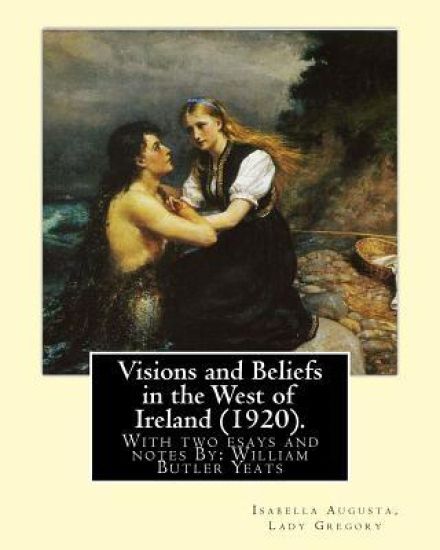
Visions and Beliefs in the West of Ireland (1920). By: Lady Gregory, and By: W. B. Yeats: With two esays and notes By: William Butler Yeats ( 13 June
This material collected over a period of more than twenty years proved to be a valuable source not only for Gregory's own plays but also for Yeats' work. A classic, it presents many aspects of the supernatural seers, healers, charms, banshees, forths, the evil eye and contains a treasure trove of Irish folk-beliefs from the late nineteenth and early twentieth centuries.. Isabella Augusta, Lady Gregory ( 15 March 1852 - 22 May 1932) was an Irish dramatist, folklorist and theatre manager. With William Butler Yeats and Edward Martyn, she co-founded the Irish Literary Theatre and the Abbey Theatre, and wrote numerous short works for both companies. Lady Gregory produced a number of books of retellings of stories taken from Irish mythology. Born into a class that identified closely with British rule, her conversion to cultural nationalism, as evidenced by her writings, was emblematic of many of the political struggles to occur in Ireland during her lifetime. Lady Gregory is mainly remembered for her work behind the Irish Literary Revival. Her home at Coole Park, County Galway, served as an important meeting place for leading Revival figures, and her early work as a member of the board of the Abbey was at least as important for the theatre's development as her creative writings. Lady Gregory's motto was taken from Aristotle: "To think like a wise man, but to express oneself like the common people." Early life and marriage: Gregory was born at Roxborough, County Galway, the youngest daughter of the Anglo-Irish gentry family Persse. Her mother, Frances Barry, was related to Viscount Guillamore, and her family home, Roxborough, was a 6,000-acre (24 km ) estate located between Gort and Loughrea, the main house of which was later burnt down during the Irish Civil War. She was educated at home, and her future career was strongly influenced by the family nurse (i.e. nanny), Mary Sheridan, a Catholic and a native Irish speaker, who introduced the young Augusta to the history and legends of the local area. She married Sir William Henry Gregory, a widower with an estate at Coole Park, near Gort, on 4 March 1880 in St Matthias' Church, Dublin. Sir William, who was 35 years her elder, had just retired from his position as Governor of Ceylon (now Sri Lanka), having previously served several terms as Member of Parliament for County Galway. He was a well-educated man with many literary and artistic interests, and the house at Coole Park housed a large library and extensive art collection, both of which Lady Gregory was eager to explore. He also had a house in London, where the couple spent a considerable amount of time, holding weekly salons frequented by many leading literary and artistic figures of the day, including Robert Browning, Lord Tennyson, John Everett Millais and Henry James. Their only child, Robert Gregory, was born in 1881. He was killed during the First World War, while serving as a pilot, an event which inspired Yeats's poems "An Irish Airman Foresees His Death," "In Memory of Major Robert Gregory," and "Shepherd and Goatherd.". William Butler Yeats ( 13 June 1865 - 28 January 1939) was an Irish poet and one of the foremost figures of 20th-century literature. A pillar of both the Irish and British literary establishments, he helped to found the Abbey Theatre, and in his later years served as an Irish Senator for two terms. Yeats was a driving force behind the Irish Literary Revival along with Lady Gregory, Edward Martyn and others....
The Children's Plutarch: Tales of the Greeks (1910). By: Frederick James Gould, introduction By: W. D. Howells: Frederick James Gould (19 Decem
Frederick James Gould (19 December 1855 - 6 April 1938) was an English teacher, writer, and pioneer secular humanist. Early life and career: He was born in Brighton, the son of William James Gould and his wife Julia, who were evangelicalist Anglicans.He grew up in London, and at the age of seven was sent to study and sing in the choir at St George's Chapel, Windsor Castle. He then went to school at Chenies, Buckinghamshire, where he became a day and Sunday school teacher. At the age of fifteen, he thought he heard voices in his head exclaiming "How wonderful is the love of God ", following which he studied theology "in a kind of devout fury". However, after he was appointed head teacher at Great Missenden church school in 1877, he began to develop doubts about his own religious faith.In 1879 he moved to London, married, and began working as a teacher in publicly funded board schools in poorer parts of the East End. By the early 1880s he had become actively involved in the Secularist movement.He was transferred from the school in Bethnal Green to Limehouse in 1887, after his published notes in the Secular Review were seen by his employers, the London School Board, and he was exempted from teaching the Bible. He later asked to be allowed to resume Bible teaching, to stress its ethical rather than supernatural elements, but this was refused. William Dean Howells ( March 1, 1837 - May 11, 1920) was an American realist novelist, literary critic, and playwright, nicknamed "The Dean of American Letters". He was particularly known for his tenure as editor of The Atlantic Monthly, as well as for his own prolific writings, including the Christmas story "Christmas Every Day" and the novels The Rise of Silas Lapham and A Traveler from Altruria. Early life and family: William Dean Howells was born on March 1, 1837 in Martinsville, Ohio (now known as Martins Ferry, Ohio) to William Cooper Howells and Mary Dean Howells, the second of eight children. His father was a newspaper editor and printer who moved frequently around Ohio. In 1840, the family settled in Hamilton, Ohio, where his father oversaw a Whig newspaper and followed Swedenborgianism.Their nine years there were the longest period that they stayed in one place. The family had to live frugally, although the young Howells was encouraged by his parents in his literary interests. He began at an early age to help his father with typesetting and printing work, a job known at the time as a printer's devil. In 1852, his father arranged to have one of his poems published in the Ohio State Journal without telling him. Early career: In 1856, Howells was elected as a clerk in the State House of Representatives. In 1858, he began to work at the Ohio State Journal where he wrote poetry and short stories, and also translated pieces from French, Spanish, and German. He avidly studied German and other languages and was greatly interested in Heinrich Heine. In 1860, he visited Boston and met with writers James Thomas Fields, James Russell Lowell, Oliver Wendell Holmes, Sr., Nathaniel Hawthorne, Henry David Thoreau, and Ralph Waldo Emerson. He became a personal friend to many of them, including Henry Adams, William James, Henry James, and Oliver Wendell Holmes, Jr. In 1860 Howells wrote Abraham Lincoln's campaign biography Life Of Abraham Lincoln and subsequently gained a consulship in Venice. He married Elinor Mead on Christmas Eve 1862 at the American embassy in Paris. She was a sister of sculptor Larkin Goldsmith Mead and architect William Rutherford Mead of the firm McKim, Mead, and White. Among their children was architect John Mead Howells..........
The lady of the Aroostook (NOVEL) By: W.D.Howells: Novel (World's classic's)

The lady of the Aroostook (NOVEL) By: W.D.Howells: Novel (World's classic's)

W. D. Howells

Createspace Independent Publishing Platform
2017
nidottu
The Lady of The Aroostook is a novel written by William Dean Howells in 1879. It was published in Cambridge, Massachusetts by H. O. Houghton and Company. PLOT: The story begins in South Bradfield, Massachusetts, with the main character, Lydia Blood, accompanied by her Aunt Maria and her grandfather Deacon Latham on their family farm. Both of Lydia's parents had died of illness when Lydia was young and she is now, at the age of nineteen, being sent to live with her other aunt, on her father's side of the family, Aunt Josephine, in Venice, Italy. Lydia was not only blessed with good looks and good smarts, but she also was blessed with a beautiful singing voice which she is going to cultivate in Venice and attempt to make a career out of. Her Aunt Josephine wrote to her grandfather suggesting that Lydia should come to Venice to live with her. She also suggested that he should go to Boston to find a ship to bring Lydia to Europe, which is how he found Captain Jenness and the Aroostook. Lydia and her grandfather travel to Boston where the Aroostook, a large and beautiful ship, awaits to take Lydia and several other passengers to Trieste. While looking for the wharf that the Aroostook is anchored at, Lydia and her grandfather become lost and decide to rest for a minute. During their rest they encounter two men who ask if Lydia is all right because she looks very pale and distraught. Her grandfather ensures the men that she is just tired from traveling and they leave. Lydia is angered that they would ask this question because she felt that they did not have the right to ask such a question. Finally the captain of the Aroostook, Captain Jenness, finds Lydia and her grandfather and shows them to the ship. Captain Jenness is a warm and confident man and he assures Lydia that she will be right at home on the Aroostook being that he has two daughters of his own who travel with him quite a lot. Lydia leaves her grandfather and boards the ship. Her room is the stateroom on the ship, the largest and most elegant room that Captain Jenness had designed for his wife. ......... William Dean Howells ( March 1, 1837 - May 11, 1920) was an American realist novelist, literary critic, and playwright, nicknamed "The Dean of American Letters". He was particularly known for his tenure as editor of The Atlantic Monthly, as well as for his own prolific writings, including the Christmas story "Christmas Every Day" and the novels The Rise of Silas Lapham and A Traveler from Altruria. Early life and family: William Dean Howells was born on March 1, 1837 in Martinsville, Ohio (now known as Martins Ferry, Ohio) to William Cooper Howells and Mary Dean Howells, the second of eight children. His father was a newspaper editor and printer who moved frequently around Ohio. In 1840, the family settled in Hamilton, Ohio, where his father oversaw a Whig newspaper and followed Swedenborgianism.Their nine years there were the longest period that they stayed in one place. The family had to live frugally, although the young Howells was encouraged by his parents in his literary interests. He began at an early age to help his father with typesetting and printing work, a job known at the time as a printer's devil. In 1852, his father arranged to have one of his poems published in the Ohio State Journal without telling him...............
The Undiscovered Country (1880). By: W.D.Howells: Willam Dean Howells was a novelist, short story writer, magazine editor, and mentor who wrote for va
A father uses his daughter to try to prove his belief in spiritualism. When his efforts fail, they retreat to a Shaker community to recover from the debacle.......... William Dean Howells ( March 1, 1837 - May 11, 1920) was an American realist novelist, literary critic, and playwright, nicknamed "The Dean of American Letters". He was particularly known for his tenure as editor of The Atlantic Monthly, as well as for his own prolific writings, including the Christmas story "Christmas Every Day" and the novels The Rise of Silas Lapham and A Traveler from Altruria. Early life and family: William Dean Howells was born on March 1, 1837 in Martinsville, Ohio (now known as Martins Ferry, Ohio) to William Cooper Howells and Mary Dean Howells, the second of eight children. His father was a newspaper editor and printer who moved frequently around Ohio. In 1840, the family settled in Hamilton, Ohio, where his father oversaw a Whig newspaper and followed Swedenborgianism.Their nine years there were the longest period that they stayed in one place. The family had to live frugally, although the young Howells was encouraged by his parents in his literary interests. He began at an early age to help his father with typesetting and printing work, a job known at the time as a printer's devil. In 1852, his father arranged to have one of his poems published in the Ohio State Journal without telling him. Early career: In 1856, Howells was elected as a clerk in the State House of Representatives. In 1858, he began to work at the Ohio State Journal where he wrote poetry and short stories, and also translated pieces from French, Spanish, and German. He avidly studied German and other languages and was greatly interested in Heinrich Heine. In 1860, he visited Boston and met with writers James Thomas Fields, James Russell Lowell, Oliver Wendell Holmes, Sr., Nathaniel Hawthorne, Henry David Thoreau, and Ralph Waldo Emerson. He became a personal friend to many of them, including Henry Adams, William James, Henry James, and Oliver Wendell Holmes, Jr. In 1860 Howells wrote Abraham Lincoln's campaign biography Life Of Abraham Lincoln and subsequently gained a consulship in Venice. He married Elinor Mead on Christmas Eve 1862 at the American embassy in Paris. She was a sister of sculptor Larkin Goldsmith Mead and architect William Rutherford Mead of the firm McKim, Mead, and White. Among their children was architect John Mead Howells. Editorship and other literary pursuits: The Howells returned to America in 1865 and settled in Cambridge, Massachusetts. He wrote for various magazines, including the Atlantic Monthly and Harper's Magazine. In January 1866, James Fields offered him a position as assistant editor at the Atlantic Monthly; he accepted after successfully negotiating for a higher salary, though he was frustrated by Fields' close supervision. Howells was made editor in 1871, after five years as assistant editor, and he remained in this position until 1881. In 1869, he met Mark Twain with whom he formed a longtime friendship. But his relationship with journalist Jonathan Baxter Harrison was more important for the development of his literary style and his advocacy of Realism. Harrison wrote a series of articles for the Atlantic Monthly during the 1870s on the lives of ordinary Americans.Howells gave a series of twelve lectures on "Italian Poets of Our Century" for the Lowell Institute during its 1870-71 season. He published his first novel Their Wedding Journey in 1872, but his literary reputation soared with the realist novel A Modern Instance (1882), which described the decay of a marriage. His 1885 novel The Rise of Silas Lapham became his best known work, describing the rise and fall of an American entrepreneur of the paint business. His social views were also strongly represented in the novels Annie Kilburn (1888), A Hazard of New Fortunes (1890), and An Imperative Duty (1891).....
Annie Kilburn, a novel . By: W.D.Howells: William Dean Howells ( March 1, 1837 - May 11, 1920) was an American realist novelist, literary critic, a
After the death of Judge Kilburn his daughter came back to America. They had been eleven winters in Rome, always meaning to return, but staying on from year to year, as people do who have nothing definite to call them home. Toward the last Miss Kilburn tacitly gave up the expectation of getting her father away, though they both continued to say that they were going to take passage as soon as the weather was settled in the spring. At the date they had talked of for sailing he was lying in the Protestant cemetery, and she was trying to gather herself together, and adjust her life to his loss. This would have been easier with a younger person, for she had been her father's pet so long, and then had taken care of his helplessness with a devotion which was finally so motherly, that it was like losing at once a parent and a child when he died, and she remained with the habit of giving herself when there was no longer any one to receive the sacrifice............ William Dean Howells ( March 1, 1837 - May 11, 1920) was an American realist novelist, literary critic, and playwright, nicknamed "The Dean of American Letters". He was particularly known for his tenure as editor of The Atlantic Monthly, as well as for his own prolific writings, including the Christmas story "Christmas Every Day" and the novels The Rise of Silas Lapham and A Traveler from Altruria. Early life and family: William Dean Howells was born on March 1, 1837 in Martinsville, Ohio (now known as Martins Ferry, Ohio) to William Cooper Howells and Mary Dean Howells, the second of eight children. His father was a newspaper editor and printer who moved frequently around Ohio. In 1840, the family settled in Hamilton, Ohio, where his father oversaw a Whig newspaper and followed Swedenborgianism.Their nine years there were the longest period that they stayed in one place. The family had to live frugally, although the young Howells was encouraged by his parents in his literary interests. He began at an early age to help his father with typesetting and printing work, a job known at the time as a printer's devil. In 1852, his father arranged to have one of his poems published in the Ohio State Journal without telling him. Early career: In 1856, Howells was elected as a clerk in the State House of Representatives. In 1858, he began to work at the Ohio State Journal where he wrote poetry and short stories, and also translated pieces from French, Spanish, and German. He avidly studied German and other languages and was greatly interested in Heinrich Heine. In 1860, he visited Boston and met with writers James Thomas Fields, James Russell Lowell, Oliver Wendell Holmes, Sr., Nathaniel Hawthorne, Henry David Thoreau, and Ralph Waldo Emerson. He became a personal friend to many of them, including Henry Adams, William James, Henry James, and Oliver Wendell Holmes, Jr. In 1860 Howells wrote Abraham Lincoln's campaign biography Life Of Abraham Lincoln and subsequently gained a consulship in Venice. He married Elinor Mead on Christmas Eve 1862 at the American embassy in Paris. She was a sister of sculptor Larkin Goldsmith Mead and architect William Rutherford Mead of the firm McKim, Mead, and White. Among their children was architect John Mead Howells. Editorship and other literary pursuits: The Howells returned to America in 1865 and settled in Cambridge, Massachusetts. He wrote for various magazines, including the Atlantic Monthly and Harper's Magazine. In January 1866, James Fields offered him a position as assistant editor at the Atlantic Monthly; he accepted after successfully negotiating for a higher salary, though he was frustrated by Fields' close supervision....
Modern Italian poets: essays and versions (1887). By: W .D. Howells: essays and versions, with portraits.
William Dean Howells ( March 1, 1837 - May 11, 1920) was an American realist novelist, literary critic, and playwright, nicknamed "The Dean of American Letters". He was particularly known for his tenure as editor of The Atlantic Monthly, as well as for his own prolific writings, including the Christmas story "Christmas Every Day" and the novels The Rise of Silas Lapham and A Traveler from Altruria. Early life and family: William Dean Howells was born on March 1, 1837 in Martinsville, Ohio (now known as Martins Ferry, Ohio) to William Cooper Howells and Mary Dean Howells, the second of eight children. His father was a newspaper editor and printer who moved frequently around Ohio. In 1840, the family settled in Hamilton, Ohio, where his father oversaw a Whig newspaper and followed Swedenborgianism.Their nine years there were the longest period that they stayed in one place. The family had to live frugally, although the young Howells was encouraged by his parents in his literary interests. He began at an early age to help his father with typesetting and printing work, a job known at the time as a printer's devil. In 1852, his father arranged to have one of his poems published in the Ohio State Journal without telling him. Early career: In 1856, Howells was elected as a clerk in the State House of Representatives. In 1858, he began to work at the Ohio State Journal where he wrote poetry and short stories, and also translated pieces from French, Spanish, and German. He avidly studied German and other languages and was greatly interested in Heinrich Heine. In 1860, he visited Boston and met with writers James Thomas Fields, James Russell Lowell, Oliver Wendell Holmes, Sr., Nathaniel Hawthorne, Henry David Thoreau, and Ralph Waldo Emerson. He became a personal friend to many of them, including Henry Adams, William James, Henry James, and Oliver Wendell Holmes, Jr. In 1860 Howells wrote Abraham Lincoln's campaign biography Life Of Abraham Lincoln and subsequently gained a consulship in Venice. He married Elinor Mead on Christmas Eve 1862 at the American embassy in Paris. She was a sister of sculptor Larkin Goldsmith Mead and architect William Rutherford Mead of the firm McKim, Mead, and White. Among their children was architect John Mead Howells. Editorship and other literary pursuits: The Howells returned to America in 1865 and settled in Cambridge, Massachusetts. He wrote for various magazines, including the Atlantic Monthly and Harper's Magazine. In January 1866, James Fields offered him a position as assistant editor at the Atlantic Monthly; he accepted after successfully negotiating for a higher salary, though he was frustrated by Fields' close supervision. Howells was made editor in 1871, after five years as assistant editor, and he remained in this position until 1881. In 1869, he met Mark Twain with whom he formed a longtime friendship. But his relationship with journalist Jonathan Baxter Harrison was more important for the development of his literary style and his advocacy of Realism. Harrison wrote a series of articles for the Atlantic Monthly during the 1870s on the lives of ordinary Americans.Howells gave a series of twelve lectures on "Italian Poets of Our Century" for the Lowell Institute during its 1870-71 season. He published his first novel Their Wedding Journey in 1872, but his literary reputation soared with the realist novel A Modern Instance (1882), which described the decay of a marriage. His 1885 novel The Rise of Silas Lapham became his best known work, describing the rise and fall of an American entrepreneur of the paint business. His social views were also strongly represented in the novels Annie Kilburn (1888), A Hazard of New Fortunes (1890), and An Imperative Duty (1891)..........
April Hopes (1888). By: W .D. Howells: William Dean Howells ( March 1, 1837 - May 11, 1920) was an American realist novelist, literary critic,
From his place on the floor of the Hemenway Gymnasium Mr. Elbridge G. Mavering looked on at the Class Day gaiety with the advantage which his stature, gave him over most people there. Hundreds of these were pretty girls, in a great variety of charming costumes, such as the eclecticism of modern fashion permits, and all sorts of ingenious compro-mises between walking dress and ball dress. It struck him that the young men on whose arms they hung, in promenading around the long oval within the crowd of stationary spectators, were very much younger than students used to be, whether they wore the dress-coats of the Seniors or the cut-away of the Juniors and Sophomores; and the young girls themselves did not look so old as he remembered them in his day. There was a band playing somewhere, and the galleries were well filled with spectators seated at their ease, and intent on the party-coloured turmoil of the floor, where from time to time the younger promenaders broke away from the ranks into a waltz, and after some turns drifted back, smiling and controlling their quick breath, and resumed their promenade. The place was intensely light, in the candour of a summer day which had no reserves; and the brilliancy was not broken by the simple decorations. Ropes of wild laurel twisted up the pine posts of the aisles, and swung in festoons overhead; masses of tropical plants in pots were set along between the posts on one side of the room; and on the other were the lunch tables, where a great many people were standing about, eating chicken and salmon salads, or strawberries and ice-cream, and drinking claret-cup.................. William Dean Howells ( March 1, 1837 - May 11, 1920) was an American realist novelist, literary critic, and playwright, nicknamed "The Dean of American Letters". He was particularly known for his tenure as editor of The Atlantic Monthly, as well as for his own prolific writings, including the Christmas story "Christmas Every Day" and the novels The Rise of Silas Lapham and A Traveler from Altruria. Early life and family: William Dean Howells was born on March 1, 1837 in Martinsville, Ohio (now known as Martins Ferry, Ohio) to William Cooper Howells and Mary Dean Howells, the second of eight children. His father was a newspaper editor and printer who moved frequently around Ohio. In 1840, the family settled in Hamilton, Ohio, where his father oversaw a Whig newspaper and followed Swedenborgianism.Their nine years there were the longest period that they stayed in one place. The family had to live frugally, although the young Howells was encouraged by his parents in his literary interests. He began at an early age to help his father with typesetting and printing work, a job known at the time as a printer's devil. In 1852, his father arranged to have one of his poems published in the Ohio State Journal without telling him..........................
The Shadow of a Dream (1890). By: W .D. Howells: William Dean Howells ( March 1, 1837 - May 11, 1920) was an American realist novelist, literary criti
William Dean Howells ( March 1, 1837 - May 11, 1920) was an American realist novelist, literary critic, and playwright, nicknamed "The Dean of American Letters". He was particularly known for his tenure as editor of The Atlantic Monthly, as well as for his own prolific writings, including the Christmas story "Christmas Every Day" and the novels The Rise of Silas Lapham and A Traveler from Altruria. Early life and family: William Dean Howells was born on March 1, 1837 in Martinsville, Ohio (now known as Martins Ferry, Ohio) to William Cooper Howells and Mary Dean Howells, the second of eight children. His father was a newspaper editor and printer who moved frequently around Ohio. In 1840, the family settled in Hamilton, Ohio, where his father oversaw a Whig newspaper and followed Swedenborgianism.Their nine years there were the longest period that they stayed in one place. The family had to live frugally, although the young Howells was encouraged by his parents in his literary interests. He began at an early age to help his father with typesetting and printing work, a job known at the time as a printer's devil. In 1852, his father arranged to have one of his poems published in the Ohio State Journal without telling him. Early career: In 1856, Howells was elected as a clerk in the State House of Representatives. In 1858, he began to work at the Ohio State Journal where he wrote poetry and short stories, and also translated pieces from French, Spanish, and German. He avidly studied German and other languages and was greatly interested in Heinrich Heine. In 1860, he visited Boston and met with writers James Thomas Fields, James Russell Lowell, Oliver Wendell Holmes, Sr., Nathaniel Hawthorne, Henry David Thoreau, and Ralph Waldo Emerson. He became a personal friend to many of them, including Henry Adams, William James, Henry James, and Oliver Wendell Holmes, Jr. In 1860 Howells wrote Abraham Lincoln's campaign biography Life Of Abraham Lincoln and subsequently gained a consulship in Venice. He married Elinor Mead on Christmas Eve 1862 at the American embassy in Paris. She was a sister of sculptor Larkin Goldsmith Mead and architect William Rutherford Mead of the firm McKim, Mead, and White. Among their children was architect John Mead Howells. Editorship and other literary pursuits: The Howells returned to America in 1865 and settled in Cambridge, Massachusetts. He wrote for various magazines, including the Atlantic Monthly and Harper's Magazine. In January 1866, James Fields offered him a position as assistant editor at the Atlantic Monthly; he accepted after successfully negotiating for a higher salary, though he was frustrated by Fields' close supervision. Howells was made editor in 1871, after five years as assistant editor, and he remained in this position until 1881. In 1869, he met Mark Twain with whom he formed a longtime friendship. But his relationship with journalist Jonathan Baxter Harrison was more important for the development of his literary style and his advocacy of Realism. Harrison wrote a series of articles for the Atlantic Monthly during the 1870s on the lives of ordinary Americans.Howells gave a series of twelve lectures on "Italian Poets of Our Century" for the Lowell Institute during its 1870-71 season. He published his first novel Their Wedding Journey in 1872, but his literary reputation soared with the realist novel A Modern Instance (1882), which described the decay of a marriage. His 1885 novel The Rise of Silas Lapham became his best known work, describing the rise and fall of an American entrepreneur of the paint business. His social views were also strongly represented in the novels Annie Kilburn (1888), A Hazard of New Fortunes (1890), and An Imperative Duty (1891).....
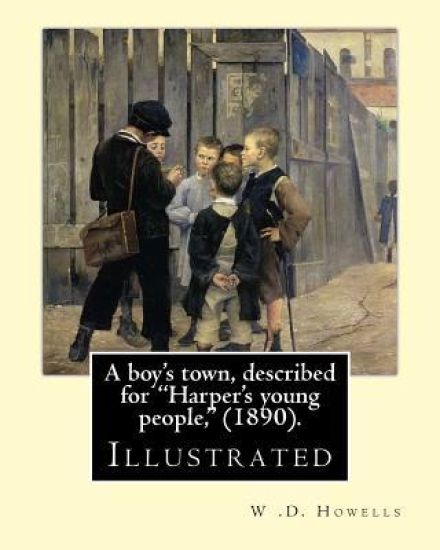
A boy's town, described for "Harper's young people," (1890). By: W .D. Howells (ILLUSTRATED): William Dean Howells ( March 1, 1837 - May 11, 1920) was
Describes the typical adventures of a mid-nineteenth-century boy from his third to eleventh years...... William Dean Howells ( March 1, 1837 - May 11, 1920) was an American realist novelist, literary critic, and playwright, nicknamed "The Dean of American Letters". He was particularly known for his tenure as editor of The Atlantic Monthly, as well as for his own prolific writings, including the Christmas story "Christmas Every Day" and the novels The Rise of Silas Lapham and A Traveler from Altruria. Early life and family: William Dean Howells was born on March 1, 1837 in Martinsville, Ohio (now known as Martins Ferry, Ohio) to William Cooper Howells and Mary Dean Howells, the second of eight children. His father was a newspaper editor and printer who moved frequently around Ohio. In 1840, the family settled in Hamilton, Ohio, where his father oversaw a Whig newspaper and followed Swedenborgianism.Their nine years there were the longest period that they stayed in one place. The family had to live frugally, although the young Howells was encouraged by his parents in his literary interests. He began at an early age to help his father with typesetting and printing work, a job known at the time as a printer's devil. In 1852, his father arranged to have one of his poems published in the Ohio State Journal without telling him. Early career: In 1856, Howells was elected as a clerk in the State House of Representatives. In 1858, he began to work at the Ohio State Journal where he wrote poetry and short stories, and also translated pieces from French, Spanish, and German. He avidly studied German and other languages and was greatly interested in Heinrich Heine. In 1860, he visited Boston and met with writers James Thomas Fields, James Russell Lowell, Oliver Wendell Holmes, Sr., Nathaniel Hawthorne, Henry David Thoreau, and Ralph Waldo Emerson. He became a personal friend to many of them, including Henry Adams, William James, Henry James, and Oliver Wendell Holmes, Jr. In 1860 Howells wrote Abraham Lincoln's campaign biography Life Of Abraham Lincoln and subsequently gained a consulship in Venice. He married Elinor Mead on Christmas Eve 1862 at the American embassy in Paris. She was a sister of sculptor Larkin Goldsmith Mead and architect William Rutherford Mead of the firm McKim, Mead, and White. Among their children was architect John Mead Howells. Editorship and other literary pursuits: The Howells returned to America in 1865 and settled in Cambridge, Massachusetts. He wrote for various magazines, including the Atlantic Monthly and Harper's Magazine. In January 1866, James Fields offered him a position as assistant editor at the Atlantic Monthly; he accepted after successfully negotiating for a higher salary, though he was frustrated by Fields' close supervision.
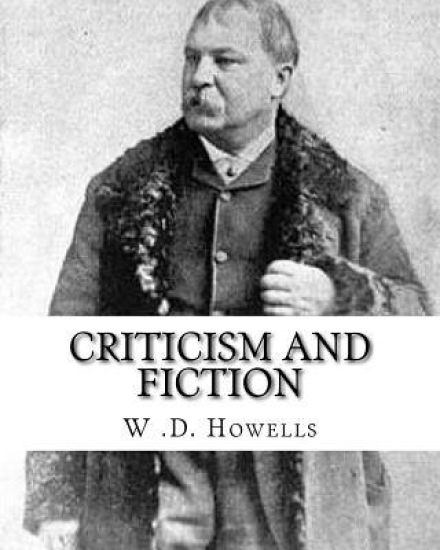
Criticism and fiction, By: W .D. Howells: William Dean Howells ( March 1, 1837 - May 11, 1920) was an American realist novelist, literary critic,
William Dean Howells ( March 1, 1837 - May 11, 1920) was an American realist novelist, literary critic, and playwright, nicknamed "The Dean of American Letters". He was particularly known for his tenure as editor of The Atlantic Monthly, as well as for his own prolific writings, including the Christmas story "Christmas Every Day" and the novels The Rise of Silas Lapham and A Traveler from Altruria. Early life and family: William Dean Howells was born on March 1, 1837 in Martinsville, Ohio (now known as Martins Ferry, Ohio) to William Cooper Howells and Mary Dean Howells, the second of eight children. His father was a newspaper editor and printer who moved frequently around Ohio. In 1840, the family settled in Hamilton, Ohio, where his father oversaw a Whig newspaper and followed Swedenborgianism.Their nine years there were the longest period that they stayed in one place. The family had to live frugally, although the young Howells was encouraged by his parents in his literary interests. He began at an early age to help his father with typesetting and printing work, a job known at the time as a printer's devil. In 1852, his father arranged to have one of his poems published in the Ohio State Journal without telling him. Early career: In 1856, Howells was elected as a clerk in the State House of Representatives. In 1858, he began to work at the Ohio State Journal where he wrote poetry and short stories, and also translated pieces from French, Spanish, and German. He avidly studied German and other languages and was greatly interested in Heinrich Heine. In 1860, he visited Boston and met with writers James Thomas Fields, James Russell Lowell, Oliver Wendell Holmes, Sr., Nathaniel Hawthorne, Henry David Thoreau, and Ralph Waldo Emerson. He became a personal friend to many of them, including Henry Adams, William James, Henry James, and Oliver Wendell Holmes, Jr. In 1860 Howells wrote Abraham Lincoln's campaign biography Life Of Abraham Lincoln and subsequently gained a consulship in Venice. He married Elinor Mead on Christmas Eve 1862 at the American embassy in Paris. She was a sister of sculptor Larkin Goldsmith Mead and architect William Rutherford Mead of the firm McKim, Mead, and White. Among their children was architect John Mead Howells. Editorship and other literary pursuits: The Howells returned to America in 1865 and settled in Cambridge, Massachusetts. He wrote for various magazines, including the Atlantic Monthly and Harper's Magazine. In January 1866, James Fields offered him a position as assistant editor at the Atlantic Monthly; he accepted after successfully negotiating for a higher salary, though he was frustrated by Fields' close supervision...........
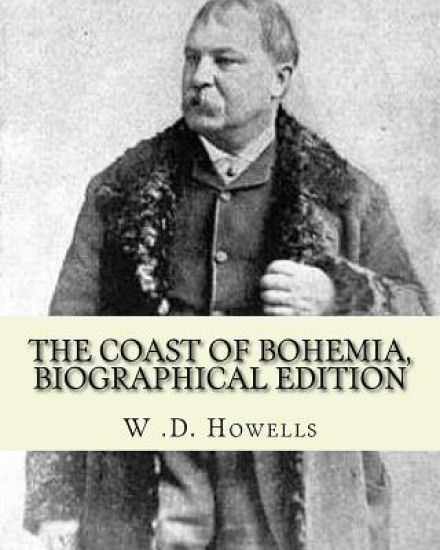
The coast of Bohemia By: W .D. Howells (Biographical edition): William Dean Howells ( March 1, 1837 - May 11, 1920) was an American realist nov
William Dean Howells ( March 1, 1837 - May 11, 1920) was an American realist novelist, literary critic, and playwright, nicknamed "The Dean of American Letters". He was particularly known for his tenure as editor of The Atlantic Monthly, as well as for his own prolific writings, including the Christmas story "Christmas Every Day" and the novels The Rise of Silas Lapham and A Traveler from Altruria. Early life and family: William Dean Howells was born on March 1, 1837 in Martinsville, Ohio (now known as Martins Ferry, Ohio) to William Cooper Howells and Mary Dean Howells, the second of eight children. His father was a newspaper editor and printer who moved frequently around Ohio. In 1840, the family settled in Hamilton, Ohio, where his father oversaw a Whig newspaper and followed Swedenborgianism.Their nine years there were the longest period that they stayed in one place. The family had to live frugally, although the young Howells was encouraged by his parents in his literary interests. He began at an early age to help his father with typesetting and printing work, a job known at the time as a printer's devil. In 1852, his father arranged to have one of his poems published in the Ohio State Journal without telling him. Early career: In 1856, Howells was elected as a clerk in the State House of Representatives. In 1858, he began to work at the Ohio State Journal where he wrote poetry and short stories, and also translated pieces from French, Spanish, and German. He avidly studied German and other languages and was greatly interested in Heinrich Heine. In 1860, he visited Boston and met with writers James Thomas Fields, James Russell Lowell, Oliver Wendell Holmes, Sr., Nathaniel Hawthorne, Henry David Thoreau, and Ralph Waldo Emerson. He became a personal friend to many of them, including Henry Adams, William James, Henry James, and Oliver Wendell Holmes, Jr. In 1860 Howells wrote Abraham Lincoln's campaign biography Life Of Abraham Lincoln and subsequently gained a consulship in Venice. He married Elinor Mead on Christmas Eve 1862 at the American embassy in Paris. She was a sister of sculptor Larkin Goldsmith Mead and architect William Rutherford Mead of the firm McKim, Mead, and White. Among their children was architect John Mead Howells. Editorship and other literary pursuits: The Howells returned to America in 1865 and settled in Cambridge, Massachusetts. He wrote for various magazines, including the Atlantic Monthly and Harper's Magazine. In January 1866, James Fields offered him a position as assistant editor at the Atlantic Monthly; he accepted after successfully negotiating for a higher salary, though he was frustrated by Fields' close supervision. Howells was made editor in 1871, after five years as assistant editor, and he remained in this position until 1881. In 1869, he met Mark Twain with whom he formed a longtime friendship. But his relationship with journalist Jonathan Baxter Harrison was more important for the development of his literary style and his advocacy of Realism. Harrison wrote a series of articles for the Atlantic Monthly during the 1870s on the lives of ordinary Americans.Howells gave a series of twelve lectures on "Italian Poets of Our Century" for the Lowell Institute during its 1870-71 season. He published his first novel Their Wedding Journey in 1872, but his literary reputation soared with the realist novel A Modern Instance (1882), which described the decay of a marriage. His 1885 novel The Rise of Silas Lapham became his best known work, describing the rise and fall of an American entrepreneur of the paint business. His social views were also strongly represented in the novels Annie Kilburn (1888), A Hazard of New Fortunes (1890), and An Imperative Duty (1891).............
The mouse-trap, and other farces By: W .D. Howells: Illustrated

The mouse-trap, and other farces By: W .D. Howells: Illustrated

W. D. Howells

Createspace Independent Publishing Platform
2017
nidottu
William Dean Howells ( March 1, 1837 - May 11, 1920) was an American realist novelist, literary critic, and playwright, nicknamed "The Dean of American Letters". He was particularly known for his tenure as editor of The Atlantic Monthly, as well as for his own prolific writings, including the Christmas story "Christmas Every Day" and the novels The Rise of Silas Lapham and A Traveler from Altruria. Early life and family: William Dean Howells was born on March 1, 1837 in Martinsville, Ohio (now known as Martins Ferry, Ohio) to William Cooper Howells and Mary Dean Howells, the second of eight children. His father was a newspaper editor and printer who moved frequently around Ohio. In 1840, the family settled in Hamilton, Ohio, where his father oversaw a Whig newspaper and followed Swedenborgianism.Their nine years there were the longest period that they stayed in one place. The family had to live frugally, although the young Howells was encouraged by his parents in his literary interests. He began at an early age to help his father with typesetting and printing work, a job known at the time as a printer's devil. In 1852, his father arranged to have one of his poems published in the Ohio State Journal without telling him. Early career: In 1856, Howells was elected as a clerk in the State House of Representatives. In 1858, he began to work at the Ohio State Journal where he wrote poetry and short stories, and also translated pieces from French, Spanish, and German. He avidly studied German and other languages and was greatly interested in Heinrich Heine. In 1860, he visited Boston and met with writers James Thomas Fields, James Russell Lowell, Oliver Wendell Holmes, Sr., Nathaniel Hawthorne, Henry David Thoreau, and Ralph Waldo Emerson. He became a personal friend to many of them, including Henry Adams, William James, Henry James, and Oliver Wendell Holmes, Jr. In 1860 Howells wrote Abraham Lincoln's campaign biography Life Of Abraham Lincoln and subsequently gained a consulship in Venice. He married Elinor Mead on Christmas Eve 1862 at the American embassy in Paris. She was a sister of sculptor Larkin Goldsmith Mead and architect William Rutherford Mead of the firm McKim, Mead, and White. Among their children was architect John Mead Howells. Editorship and other literary pursuits: The Howells returned to America in 1865 and settled in Cambridge, Massachusetts. He wrote for various magazines, including the Atlantic Monthly and Harper's Magazine. In January 1866, James Fields offered him a position as assistant editor at the Atlantic Monthly; he accepted after successfully negotiating for a higher salary, though he was frustrated by Fields' close supervision. Howells was made editor in 1871, after five years as assistant editor, and he remained in this position until 1881. In 1869, he met Mark Twain with whom he formed a longtime friendship. But his relationship with journalist Jonathan Baxter Harrison was more important for the development of his literary style and his advocacy of Realism. Harrison wrote a series of articles for the Atlantic Monthly during the 1870s on the lives of ordinary Americans.Howells gave a series of twelve lectures on "Italian Poets of Our Century" for the Lowell Institute during its 1870-71 season....