Kirjojen hintavertailu. Mukana 11 717 486 kirjaa ja 12 kauppaa.

Kirjahaku

Etsi kirjoja tekijän nimen, kirjan nimen tai ISBN:n perusteella.

1000 tulosta hakusanalla William A. Cook

Galileo, the Jesuits, and the Medieval Aristotle
The conventional opposition of scholastic Aristotelianism and humanistic science has been increasingly questioned in recent years, and in these articles William Wallace aims to demonstrate that a progressive Aristotelianism in fact provided the foundation for Galileo's scientific discoveries. The first series of articles supply much of the documentary evidence that has led the author to the sources for Galileo's early notebooks: they show how Galileo, while teaching or preparing to teach at Pisa, actually appropriated much of his material from Jesuit lectures given at the Collegio Romano in 1598-90. The next articles then trace a number of key elements in Galileo's later work, mainly relating to logical methodology and natural philosophy, back to sources in medieval Aristotelian thought, notably in the writings of Albert the Great and Thomas Aquinas. La mise en opposition conventionnelle entre l’aristotélisme scolastique et la science humaniste a été de plus en plus remise en question durant les dernières années. Tout au long de ces articles, William Wallace tente de démontrer que l’aristotélisme progressif a en fait pourvu le fondement des découvertes scientifiques de Galilée. Le premier groupe d’articles fournit la plupart des preuves documentées qui ont mené l’auteur aux sources des premiers cahiers de notes de Galilée; on y voit comment celui-ci, alors qu’il enseignait, ou s’apprêtait à enseigner à Pise, s’était en fait approprié quantité de donneés issues de cours magistraux jésuites qui avaient été donnés au Collegio Romano entre 1588 et 90. Les études suivantes retracent à leur tour un certain nombre d’elements-clef des travaux ultérieurs de Galilée, se rapportant plus particulièrement à la méthodologie logique et a la philosophie naturelle, jusqu’à leurs sources dans la pensée aristotélicienne du Moyen Age, notamment dans les écrits d’Albert le Grand et de Thomas d’Aquin.
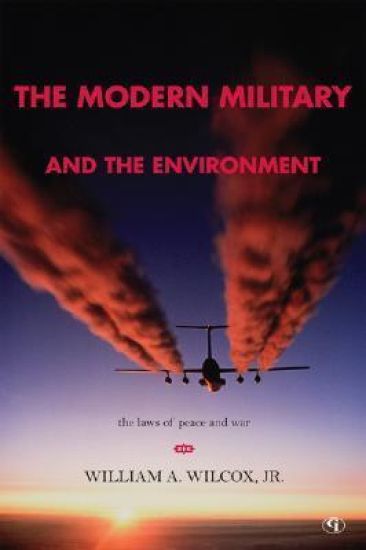
The Modern Military and the Environment

The Modern Military and the Environment

William A. Wilcox

Government Institutes Inc.,U.S.
2007
nidottu
The battle is an old one: man versus nature. And in modern society, man includes the military. Machines. Chemicals. Who wins the battle and at what cost? This practical analysis of the conflict between national security requirements and environmental responsibility looks at just that. William Wilcox examines the most common environmental issues that the military faces during wartime and peacetime and provides an introduction to the legal authorities, including statutes, regulations, and executive orders, governing the application of environmental law to military activities. It also illuminates the tension between environmentalists and regulators concerned with the damages that military development, testing, and training operations inflict on the environment and military leaders dedicated to using actual field conditions to prepare soldiers for war. In addition, this book addresses environmentalists' desire for greater accountability from the military, which has a history of dumping, spilling, stockpiling, and launching harmful chemicals. Although some exemptions from environmental compliance have been granted to the military, federal agencies are sometimes held to higher standards than private sector companies. Wilcox, an experienced environmental attorney and former military attorney, focuses on the legal framework in which environmental issues are addressed and examines how policy translates into legal application. He also examines the changing relationship between the military and the environment by exploring environmental law as it applies to the military domestically and the impact of international environmental law on combat operations. In addition to addressing such environmental laws as the National Environmental Policy Act and the Resource Conservation and Recovery Act, the author provides an overview of the laws governing access to information concerning the military's impact on the environment. Other topics covered include civil penalties and sovereign immunity, water rights,
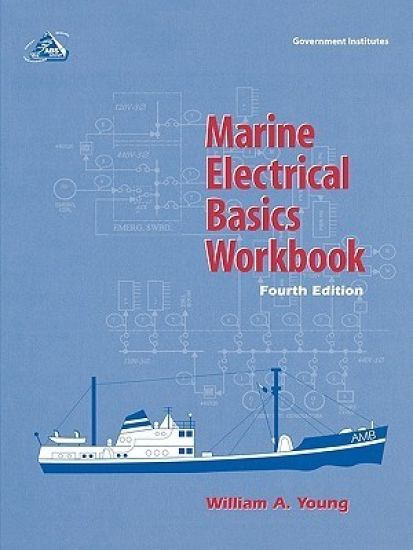
Marine Electrical Basics Workbook

Marine Electrical Basics Workbook

William A. Young

Government Institutes Inc.,U.S.
2000
nidottu
Updated with the 2000 rules, the Fourth Edition provides shipyard electricians and electrical designers with the step-by-step instruction they need to design and install electrical systems on marine installations, whether shipboard or offshore. Written for novices, this workbook offers three modules of skill level: Fundamentals, Intermediate, and Advanced. Within each module, the author provides five lessons filled with detailed outlines, diagrams, charts, formulas, examples, solutions, blank worksheets, and study guides for increased understanding. Suitable for use as either a course text or as a self-help guide, this workbook examines current rules and regulations of the American Bureau of Shipping, United States Coast Guard, National Electronic Code, and Institute of Electrical and Electronic Engineers 45. Using this information, readers will acquire a basic knowledge of task requirements, including basic ship construction as well as power-and-lighting-system building and installation. Featuring the editorial revisions of the "ABS Rules for Building and Classing Steel Vessels," this edition addresses changes made to the American Bureau of Shipping's (ABS) rules, including the re-numbering and re-organization of all section numbers. For ease-of-reference, the author includes a chart of both the new ABS rules and the old ABS rules used throughout the workbook.
Merchant Marine Officers’ Handbook

Merchant Marine Officers’ Handbook

William A MacEwen

Schiffer Publishing Ltd
2009
sidottu
This handbook, first issued in 1942, is designed to be used as a textbook or a study guide for the “hawsepiper.” The twenty-five chapters contain information on electronics, celestial navigation, rules of the road, engineering, etc.,—that will be helpful to the third mate, experienced mariner, or student preparing for a licensing examination.
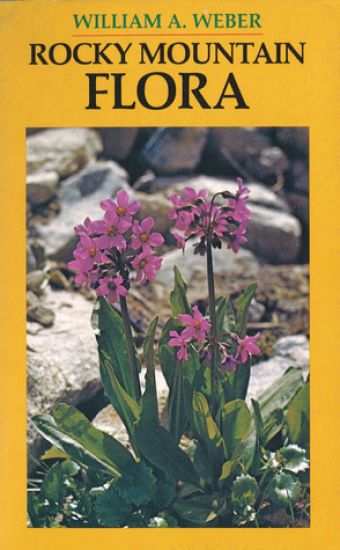
Rocky Mountain Flora

Rocky Mountain Flora

William A. Weber

University Press of Colorado
1991
nidottu
The Front Range of Colorado is one of America's most famous and spectacular summer playgrounds. Not among the least of the scenic attractions to be found here are the lavish displays of wild flowers in the mountain meadows and alpine heights, the vast expanses of cool, green forested lands, the brilliant splashes of autumn colour of our aspens and sumacs, and the endless rolling grasslands of the eastern plains. There are very few places in the United States where so many types of vegetation are crowded into such a relatively small area, and where in the space of a few minutes time one may alternately bake in the climate of the desert, and shiver in the climate of the far north. Learning to recognise the plants is a first step toward understanding a flora. The species descriptions, delicate line drawings, colour photographs, plant keys, reference materials, and glossary in Rocky Mountain Flora offer an outstanding starting point for the pursuit of botany in the Rockies.
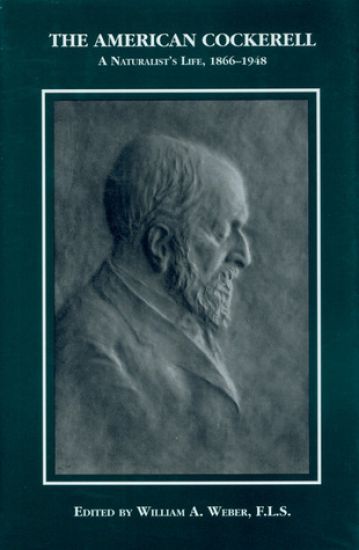
The American Cockerell

The American Cockerell

William A. Weber; Theodore D. A. Cockerell

University Press of Colorado
2000
sidottu
In "The American Cockerell: A Naturalist's Life", botanist William A. Weber pulls together pieces of the life of T D A 'Theo' Cockerell, a man who was an internationally known scientist, a prolific writer, and a highly regarded teacher at the University of Colorado in Boulder. The elder brother of the noted scholar Sir Sydney Cockerell, Theo laboured in relative obscurity in America while his brothers and their families were basking in the limelight of smart British society. His contribution to the understanding of wild bees is monumental - he catalogued over 900 species in Colorado alone, and he assiduously collected them wherever he travelled. By 1938 he had published the names and descriptions of 5,480 new species and subspecies. He was also an early supporter of women's rights, a Morrisian socialist, an avid reader, and author of almost 4,000 published scientific papers, book reviews, and discussions of social issues.
Quest for Harmony

Quest for Harmony

William A. Young

Hackett Publishing Co, Inc
2006
pokkari
Provides a basic introduction to the cultures and spiritual teachings of four Native American nations: Delaware, Cherokee, Sioux, Navajo; and also discusses such critical issues as the pan-national spiritual movements and the environment.
Quest for Harmony

Quest for Harmony

William A. Young

Hackett Publishing Co, Inc
2006
sidottu
Quest for Harmony provides a basic understanding of the cultures and spiritual teachings of four Native American nations--Lenape (Delaware), Ani'-Yun'-wiya (Cherokee), Lakota (Sioux), and Dine (Navajo). The text is always sympathetic, respectful, and, when possible, presented in the voices of Native Americans. Each nation is described in terms of its name, traditional location(s), present population, language, and traditional social organization. At least one story of origin is provided for each nation, followed by a survey of its history from earliest documented times until recent times.At the heart of each chapter, the spiritual worldview and rituals of the nation being discussed are introduced, with sections on cosmology, gods and spirits, rituals, and other issues particular to that nation. Critical issues common to Native Americans such as the pannational spiritual movements and the environment are also covered. Quest for Harmony makes clear that not only are Native American spiritual traditions very much alive, they are also in the midst of a dramatic revival.
Never Look Back

Never Look Back

William A. Renzi; Mark D. Roehrs

M.E. Sharpe
1991
sidottu
50 years ago, Japan attacked Pearl Harbour and brought a reluctant America into World War II. Armed with fresh materials, which have become available only in the last decade, Renzi and Roehrs take a critical look at the decisive Japanese-American episodes in "The Great Pacific War". Unlike standard histories of World War II, "Never Look Back" includes the Japanese perspective, bringing to light challenging facts: in "Operation Flying Elephant" the Japanese attempted to cause forest fires in the American West by releasing hydrogen-filled balloons. When Americans of Japanese ancestry were interned during the conflict, word reached Japan of their plight and resulted in even greater mistreatment of American POWs in Japan. It is argued that Japan did not surrender because of the atomic bombing of Hiroshima and Nagasaki or because of the conventional firebombing or because of the US submarine campaign, but because the USSR entered the war.
Underground Mining Methods

Underground Mining Methods

William A. (EDT) Hustrulid; Richard L. (EDT) Bullock

Society for Mining, Metallurgy, and Exploration
2001
sidottu
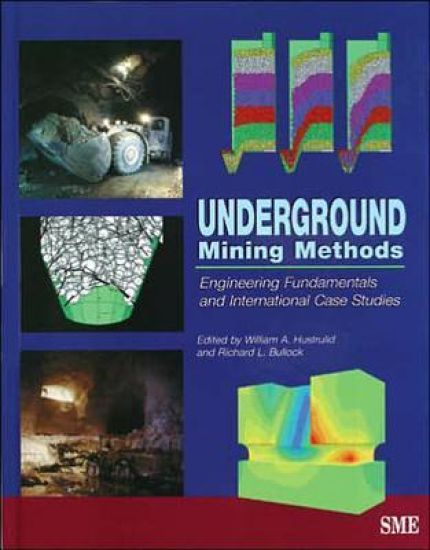
Underground Mining Methods presents the latest principles and techniques in use today. Reflecting the international and diverse nature of the industry, a series of mining case studies is presented covering the commodity range from iron ore to diamonds extracted by operations located in all corners of the world. Industry experts have contributed 77 chapters. This book is certain to become a standard for every practicing mining engineer and student alike. Sections include: General Mine Design Considerations, Room-and-Pillar Mining of Hard Rock/Soft Rock, Longwall Mining of Hard Rock, Shrinkage Stoping, Sublevel Stoping, Cut-and-Fill Mining, Sublevel Caving, Panel Caving, Foundations for Design, and Underground Mining Looks to the Future.
Thomas Hardy And The Law

Thomas Hardy And The Law

William A. Davis

University of Delaware Press
2002
sidottu
'Thomas Hardy and the Law' argues that Hardy's extensive legal research and experience drove his writing of fiction throughout his career. The book studies Hardy's legal research and friendships, his work as a Dorchester magistrate, actual Victorian law cases from which he drew novel material, nineteenth-century legal reform, the legal ""machinery"" of the novels, and Hardy's position as an advocate for the reform of marriage laws.