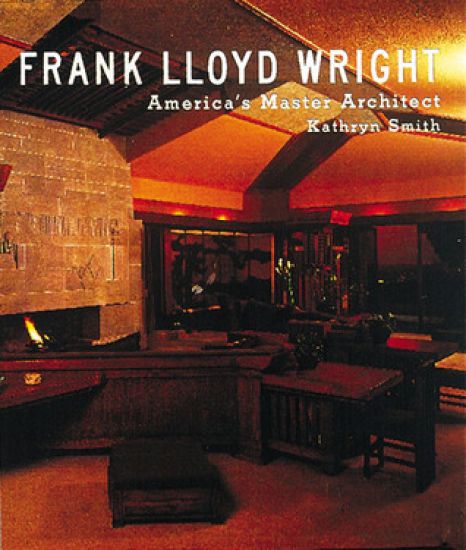
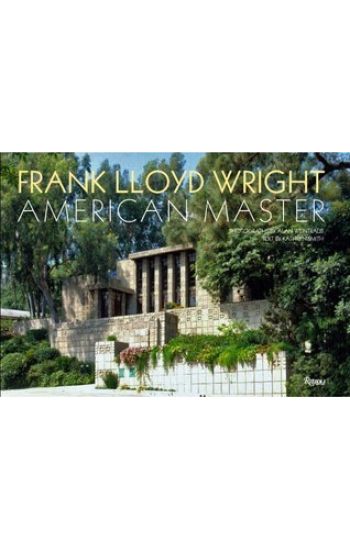
This diminutive survey features all aspects of Wright's art, from lowslung Prairie houses to the dramatic, seminal Fallingwater, to larger projects such as his two homes, Taliesin and Taliesin West, culminating in that icon of modernism, New York's Guggenheim Museum. This satisfying volume is complete with drawings and rarely seen works from Wright's own Asian art collection.
Frank Lloyd Wright (1867-1959) is unquestionably America's most celebrated architect. Even today, almost forty years after his death, he continues to tower over the architectural landscape. In fact, his career was so long and his accomplishments so varied it can be difficult still to grasp the full range of Wright's achievement. In this refreshing new study, Wright scholar Kathryn Smith does just that, exploring the grace and beauty found in all facets of Wright's work: from office desks and chairs to his first residential commissions, from magazine cover designs to major public buildings. The concise text and brilliant color photographs chart Wright's entire career, beginning with his apprenticeship to Adler and Sullivan before the turn of the century. Readers witness the Prairie period, Wright's years in Japan and California, his major designs of the late 1920s and 1930s, his Usonian houses, and the monumental late works of his last decades. Smith shows examples of Wright's drawings, furniture, and decorative arts, too, supplementing our understanding of Wright's aesthetic. The book concludes with a glimpse at the architect's seldom-seen collection of Asian art, which once comprised tens of thousands of pieces - a source of much inspiration and edification for the architect and his students, and a key to understanding Wright's views on art and nature. Here is a broad portrait of the master builder who sought the title "greatest architect of all time." Although it may never be possible to fully assess Wright's legacy, Kathryn Smith's authoritative book is a fitting testament to his lasting genius.
Frank Lloyd Wright and Ralph Waldo Emerson: Transforming the American Mind is an interdisciplinary volume of literary and cultural scholarship that examines the link between two pivotal intellectual and artistic figures. It probes the degree to which the transcendentalist author influenced the architect's campaign against dominant strains of American thought. Inspired by Emerson's writings on the need to align exterior expression with interior self, Wright believed that architecture was not first and foremost a matter of accommodating spatial needs, but a tool to restore intellectual and artistic freedom, too often lost in the process of modernization.Ayad Rahmani shows that Emerson's writings provide an avenue for interpreting Wright's complex approach to country and architecture. The two thinkers cohered around a common concern for a nation derailed by nefarious forces that jeopardized the country's original promise. In Emerson's condemnations of slavery and inequality, Wright found inspiration for seeking redress against the humiliations suffered by the modern worker, be it at the hands of an industrial manager or an office boss. His designs sought to challenge dehumanizing labor practices and open minds to the beauty and science of agriculture and the natural world. Emerson's example helped Wright develop architecture that aimed less at accommodating a culture of clients and more at raising national historical awareness while also arguing for humane and equitable policies.Frank Lloyd Wright and Ralph Waldo Emerson presents a new approach to two vital thinkers whose impact on American society remains relevant to this day.
This is the firsthand account of a young couple who in 1936 challenged Wright to produce a decent house for $5,000. Wright responded with the innovations--floor heating, flat roof, concrete floor, solid walls, grouping of utilities, carport, garden-centered floor plan--that made their house the revolutionary 'Usonia Number One.'
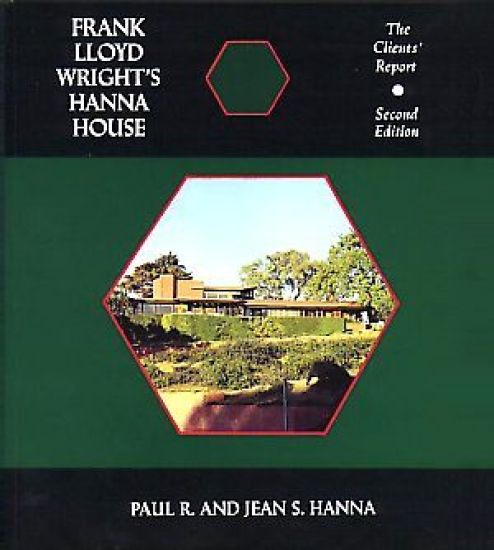
The Hanna house is a milestone in Frank Lloyd Wright s career and one of the acknowledged masterworks of 20th-century architecture. The Hannas tell how they came to commission Wright, how they received his ingenious yet provocative designbased on a hexagonal pattern like a bee s honeycomband how it was built all within their means. In this reprint of the 1981 MIT edition they also tell what it meant to live and enjoy life in this unprecedented structure that was eventually given to Stanford University."
One hundred years from now, people will look at his ideas, his principles, his forms, and seewith wonder and amazementthat those ideas are still fresh, vibrant, applicable, and intensely prophetic. Olgivanna Lloyd Wright (1969).Nearly twenty years later, this exhibition of Frank Lloyd Wright s principles and forms validates Mrs. Wright s prophecy highlighting his ideasthe foundation of his achievement.Part 1 of the book, prepared by Bruce Brooks Pfeiffer, contains four sections defined by Wright s own words: The Destruction of the Box: The Freedom of Space; The Nature of the Site; Materials and Methods; and The Architecture of Democracy. The 150 illustrations in this part (86 in full color), are dazzling visions of what was but is no more, what was planned but never built, as well as those architectural treasures that continue to enrich and challenge our society. The illustrations are accompanied by quotations from Frank Lloyd Wright that demonstrate how his ideas found expression in his designs.Part 2 contains 5 essays that serve to increase our awareness and appreciation of Frank Lloyd Wright s contribution: Jack Quinan, Frank Lloyd Wright in 1893: The Chicago Context; Aaron Green, Organic Architecture: The Principles of Frank Lloyd Wright; E. T. Casey, Structure in Organic Architecture; Narciso Menocal, Frank Lloyd Wright s Architectural Democracy: An American Jeremiad; and Bruce Brooks Pfeiffer, The Second Career: 19241959. An appendix provides full descriptions of the works in part 1, including notes on media, methods, and measurements."
In the last ten years of his life, Frank Lloyd Wright became a respected public figure honored throughout the world. The shift from maverick to honoree changed his architecture, which became simpler and more sensuous.This decade also saw an incredible increase in production from Wright. Between the ages of 82 and 92, he designed the Price Tower, the Beth Shalom Synagogue, the Dallas Theater Center, the Guggenheim Museum, and at the time of his death, there were 86 projects in various stages of completion in the drafting room.The Crowning Decade views Wright's final years from five perspectives: as Wright saw himself; as the outside world saw him; as he appears in the private memoirs of Olgivanna Lloyd Wright; as his daughter, Iovanna Wright, saw him; and in a composite portrait by his Taliesin Fellows.
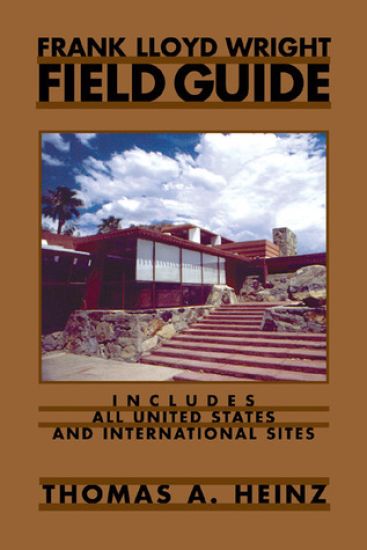
Frank Lloyd Wright Field Guide provides the first complete visitors' guide to all of Wright's buildings in the United States and around the world. This new, single-volume edition is written and compiled by architect and Frank Lloyd Wright expert Thomas A. Heinz, AIA. In a highly readable and informative style. Heinz presents each building page by page, providing brief histories and background details, information on accessibility and viewing, and driving directions. Every entry is accompanied by a photograph and location map Buildings are arranged geographically. A cross-referenced index enables each building to be easily accessed by location or client or building name.
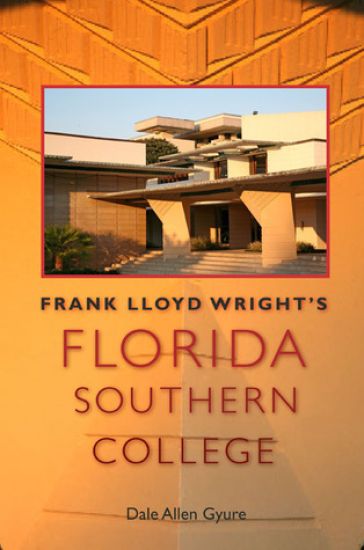
"Florida Southern College is a signature point in the visioning of American education. Now, Frank Lloyd Wright's genius is documented, revealing how he translated nature's 'occult symmetry' into organic architecture reflecting democratic ideals. Wright belongs to the pantheon of similar utopian aspirants--Flagler, Fischer, Merrick, Nolan, Disney--who came to Florida to express visions of modern life."--Bruce Stephenson, author of Visions of Eden"Dale Gyure has crafted the first thoughtful examination of Frank Lloyd Wright's Child of the Sun campus. This book serves as a benchmark for future studies of Mr. Wright at Florida Southern College."--Randall M. MacDonald, coauthor of The Buildings of Frank Lloyd Wright at Florida Southern CollegeFlorida Southern College in Lakeland boasts the largest single-site collection of Frank Lloyd Wright architecture in the world. With eleven buildings planned and designed by Wright, the campus forms a rich tableau for examining the architect's philosophy and design practice.In this fully illustrated volume, Dale Allen Gyure tells the engaging story of the ambitious project from beginning to end. The college's dynamic president, Ludd M. Spivey, wanted the grounds and buildings redesigned to embody a modern and distinctly American expression of Protestant theology. Informed by Spivey's vision, his own early educational experience, and his architectural philosophy, Wright conceived the "Child of the Sun" complex.Much like Thomas Jefferson's famous plan for the University of Virginia, the academic village that Wright designed for Florida Southern College expresses a dramatic and personal statement about education in a democratic society. Little studied to date, this significant campus and its history are finally given the attention they deserve in this fascinating volume.
Frank Lloyd Wright designed and realized over 500 buildings between 1886 and 1959 for a wide range of clients. In Frank Lloyd Wright's Pope-Leighey House, architect Steven Reiss presents the updated and detailed story of one of Wright’s few Virginia commissions. Designed and built for Loren and Charlotte Pope and later purchased by Marjorie and Robert Leighey, the Pope-Leighey House stands as a stunning example of an innovative form of shelter—which Wright called Usonian—for families beset by the Great Depression. Here, and elsewhere, Wright offered a unique and unprecedented approach for homes that would be small yet architecturally significant, carefully sited, and constructed of readily available local materials. He believed that anyone with an acre of land should have the opportunity to own a Usonian home. Set in Northern Virginia, the Pope-Leighey House has an unusual history in that it has been moved twice, first to the grounds of the National Trust’s Woodlawn to rescue it from the path of Route 66 in Falls Church, then to re-site it to better correspond to its original orientation. Wright’s mission was to remind us that ""we need to see life in simpler terms."" In this amply illustrated book, Reiss echoes Wright’s reminder that small, carefully built structures should be the starting point of sustainable and environmentally responsible house design.
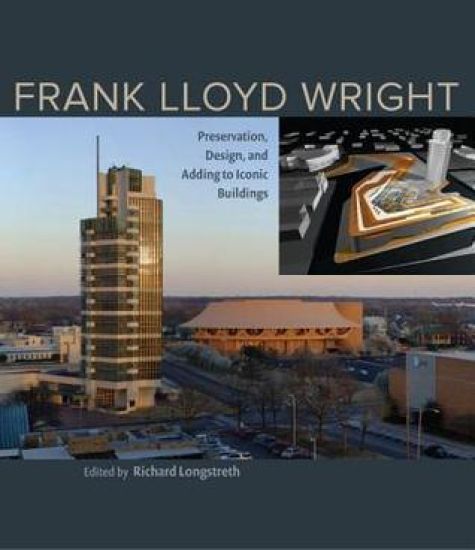
The buildings of Frank Lloyd Wright are not immune to the social and environmental forces that affect all architecture. Because of the popular recognition and historical significance of his work, however, the stakes are unusually high when his buildings are modified in any way. Any additions or changes must meet the highest standards; how exactly this can be achieved is the debate that fuels this compelling new book. The essays collected here are authored by many of the top professionals in the fields of architecture and preservation. Some of the contributors worked directly on the buildings discussed and provide invaluable firsthand accounts of these projects. This is the most thorough discussion of modifying Wright’s works published to date and a fascinating commentary on preserving our architectural legacy.Contributors:Richard Longstreth on additions to historic buildings, de Teel Patterson Tiller on design in historic districts, Sidney K. Robinson on Taliesin, Anne Biebel and Mary Keiran Murphy on the Hillside School, Mark Hertzberg on the S. C. Johnson Administration Building, Dale Allen Gyure on Florida Southern College, Neil Levine on the Guggenheim Museum, Scott W. Perkins on the Price Tower, Tom Kubala on the First Unitarian Meeting House, Eric Jackson-Forsberg on the Darwin Martin House, Lynda S. Waggoner on Fallingwater, Patrick J. Mahoney on Graycliff, Thomas Templeton Taylor on the Westcott House.
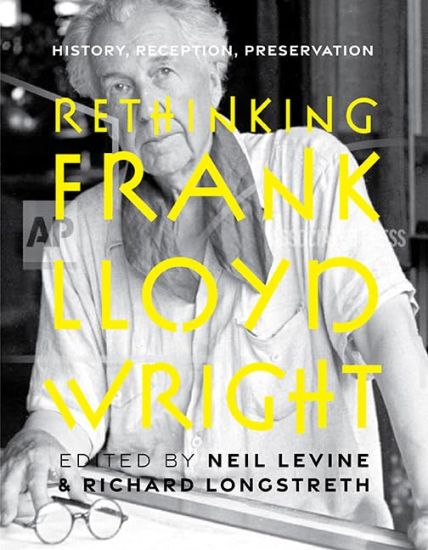
Among the general public, Frank Lloyd Wright remains the best-known American architect of the twentieth century. And yet his larger-than-life profile in the popular realm contrasts sharply with his near invisibility in academic and professional circles. In Rethinking Frank Lloyd Wright, Neil Levine and Richard Longstreth have assembled a group of eminent scholars to address this most puzzling paradox of the great architect’s career.In a series of engaging and well-illustrated essays, the contributors draw on their wide-ranging understanding of modern architecture to reveal the ways in which Wright continues to play an instrumental role in domestic and international spheres, making the case for reevaluating his popular and professional reputations. Prompted by the transfer of the architect’s archive from its home at Taliesin West in Scottsdale, Arizona, to the Avery Library at Columbia University and the Museum of Modern Art, this volume revisits Wright’s relevance for a contemporary audience.ContributorsBarry Bergdoll, Columbia University · Daniel Bluestone, Boston University · Jean-Louis Cohen, New York University · Cammie McAtee, independent scholar · Neil Levine, Harvard University · Dietrich Neumann, Brown University · Timothy M. Rohan, University of Massachusetts Amherst · Richard Longstreth, George Washington University · Jack Quinan, University at Buffalo · Alice Thomine-Berrada, École des Beaux-Arts
In Frank Lloyd Wright’s Pope-Leighey House, architect Steven M. Reiss presents the updated and detailed story of one of Wright’s few Virginia commissions. Designed and built for Loren and Charlotte Pope and later purchased by Marjorie and Robert Leighey, the Pope-Leighey House stands as a stunning example of an innovative form of shelter—which Wright called Usonian—for families beset by the Great Depression. Here, and elsewhere, Wright offered a unique and unprecedented approach for homes that would be small yet architecturally significant, carefully sited, and constructed of readily available local materials. He believed that anyone with an acre of land should have the opportunity to own a Usonian home. In this amply illustrated book, Reiss echoes Wright’s reminder that small, carefully built structures should be the starting point of sustainable and environmentally responsible house design.
In The Poetry of James Wright the author traces Wright's formal evolution and concentrates on his consistent themes: the artist's role in society, the artist's search for poetic and personal identities, the power of poetry as fortification against the onslaughts of time, and the definition of a good and humane action. Charting the poet's evolution from his first book, The Green Wall, to the last collections, This Journey, Elkins discusses one major book I each chapter, explicating the more important poems in detail and explaining how each volume is part of a progression from youthful imitator to mature innovator. Wright's individual struggle, taking place as it did in the last half of the 20th century in America, dramatizes the central problems of the creative individual in a late industrial society who is trying to turn a life into are. Wright worked in the great tradition of the adamant individualists in our literary heritage, and, like all of his formidable ancestors, he refused to trust the socialized self he found attached to his soul, refused to be diminished or circumscribed by any society's definition of himself. The effect of reading and studying his complete work is the recognition that Wright is a major 20th century American poet whose apparent simplicity and occasional sentimentality can obscure the complexity and maturity of his courageous confrontation with the problems of living and writhing in contemporary America.
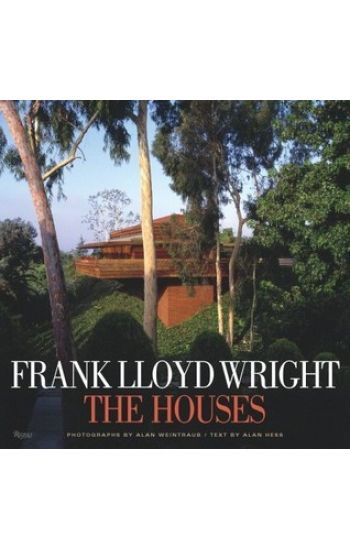
Frank Lloyd Wright is not only synonymous with architecture, his name is also synonymous with the American house in the twentieth century. In particular, his residential work has been the subject of continuing interest and controversy. Wright's Fallingwater (1935), the seminal masterpiece perched over a waterfall deep in the Pennsylvania highlands, is perhaps the best-known private house in the history of the world. In fact, Wright's houses-from his Prairie style Robie House (1906) in Chicago, to the Storer (1923) and Freeman (1923) houses in Los Angeles, and Taliesen West (1937) in the Arizona desert-are all touchstones of modern architecture. For the first time, all 289 extant houses are shown here in exquisite color photographs. Along with Weintraub's stunning photos and a selection of floor plans and archival images, the book includes text and essays by several leading Wright scholars. Frank Lloyd Wright: The Houses is an event of great importance and a major contribution to the literature on this titan of modern architecture.
Frank Lloyd Wright presents a stunning overview of the work of this towering American genius, encompassing the entirety of Wright’s long and extraordinarily prolific career. From his earliest work, such as the Home and Studio in Oak Park, IL, of 1889, to the wonderfully evocative textile block houses of Los Angeles of the mid-1920s, to such seminal masterpieces as Fallingwater, of 1935, in the Pennsylvania wilderness, and the Solomon R. Guggenheim Museum, of 1956, in New York, the book offers an extraordinarily abundant trove of architectural riches. Featuring more than a hundred discrete works, from the well known to the obscure, expertly discussed in the text of highly respected Wright scholar Kathryn Smith, Frank Lloyd Wright weaves a gorgeous tapestry that will engage the mind and delight the eye.