Kirjojen hintavertailu. Mukana 12 390 323 kirjaa ja 12 kauppaa.

Kirjahaku

Etsi kirjoja tekijän nimen, kirjan nimen tai ISBN:n perusteella.

1000 tulosta hakusanalla "Civilization"

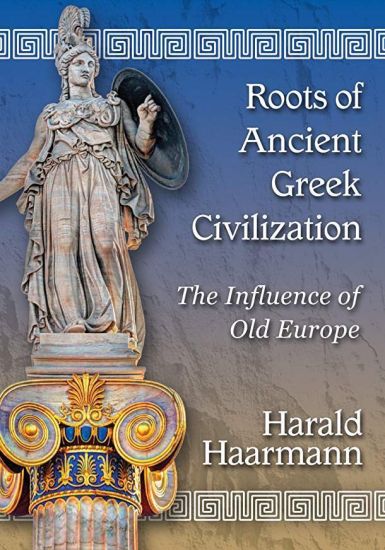
Roots of Ancient Greek Civilization

Roots of Ancient Greek Civilization

Harald Haarmann

McFarland Co Inc
2014
pokkari
Contrary to a prevalent belief of the Western world, that democracy, agriculture, theater and the arts were the attainments of Classical Greek civilization, these were actually a Bronze Age fusion of earlier European concepts and Hellenic ingenuity. This work considers both the multicultural wellspring from which these ideas flowed and their ready assimilation by the Greeks, who embraced these hallmarks of civilization, and refined them to the level of sophistication that defines classical antiquity.
The Death of Industrial Civilization

The Death of Industrial Civilization

Joel Jay Kassiola

State University of New York Press
1990
pokkari
The Death of Industrial Civilization explains how the contemporary ecological crisis within industrial society is caused by the values inherent in unlimited economic growth and competitive materialism. Kassiola shows that the limits-to-growth critique of industrial civilization is the most effective stance against what seems to be a dominant and invincible social order. He prescribes the social changes that must be implemented in order to transform industrial society into a sustainable and more satisfying one.
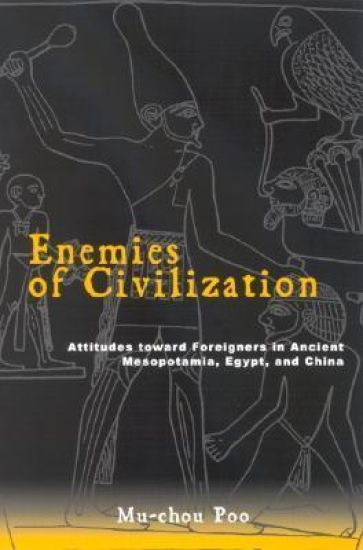
Enemies of Civilization

Enemies of Civilization

Mu-chou Poo

State University of New York Press
2005
sidottu
Looks at how foreigners were regarded in three ancient civilizations, finding that cultural, not biophysical, differences were key in distinguishing "us" from "them."Enemies of Civilization is a work of comparative history and cultural consciousness that discusses how "others" were perceived in three ancient civilizations: Mesopotamia, Egypt, and China. Each civilization was the dominant culture in its part of the world, and each developed a mind-set that regarded itself as culturally superior to its neighbors. Mu-chou Poo compares these societies' attitudes toward other cultures and finds differences and similarities that reveal the self-perceptions of each society.Notably, this work shows that in contrast to modern racism based on biophysical features, such prejudice did not exist in these ancient societies. It was culture rather than biophysical nature that was the most important criterion for distinguishing us from them. By examining how societies conceive their prejudices, this book breaks new ground in the study of ancient history and opens new ways to look at human society, both ancient and modern.
Enemies of Civilization

Enemies of Civilization

Mu-chou Poo

State University of New York Press
2005
pokkari
Looks at how foreigners were regarded in three ancient civilizations, finding that cultural, not biophysical, differences were key in distinguishing "us" from "them."Enemies of Civilization is a work of comparative history and cultural consciousness that discusses how "others" were perceived in three ancient civilizations: Mesopotamia, Egypt, and China. Each civilization was the dominant culture in its part of the world, and each developed a mind-set that regarded itself as culturally superior to its neighbors. Mu-chou Poo compares these societies' attitudes toward other cultures and finds differences and similarities that reveal the self-perceptions of each society.Notably, this work shows that in contrast to modern racism based on biophysical features, such prejudice did not exist in these ancient societies. It was culture rather than biophysical nature that was the most important criterion for distinguishing us from them. By examining how societies conceive their prejudices, this book breaks new ground in the study of ancient history and opens new ways to look at human society, both ancient and modern.
The Ethical Crises of Civilization

The Ethical Crises of Civilization

Leslie M. Lipson

SAGE Publications Inc
1993
nidottu
From the crisis confronting the former Yugoslav state to an increase in crime in our cities, humanity today has arrived at a perilous crossroad. According to Leslie Lipson, we have arrived at a critical stage in human history, a stage framed in a lowering of ethical standards. The Ethical Crises of Civilization examines those periods in history where similar crossroads occurred, crossroads that could serve as examples for confronting--and solving--today's problems. Lipson argues that through such an examination of the past, humanity might be able to comprehend what is at stake and be impelled to collective and individual action. The Ethical Crises of Civilization is a book that should be read by all scholars and students in a wide array of disciplines, including history, political science, religious studies, philosophy, anthropology, and sociology. About this volume . . . "This book is written in the tradition of Spengler and Toynbee, but my focus differs sharply from theirs. I am attempting to evaluate the course of civilization--its benefits and its curses--at a time when its potentiality for either good or evil has been vastly increased. My study has drawn principally on the record of four major civilizations still in existence today--the Chinese, Indian, Islamic, and Western. The values and the standards of judgement are those of a humanist emphasizing our needs in this life in this world and not believing in salvation in some other existence. I consider that the present system of government by so-called nation-states is becoming obsolete and will be replaced in the Twenty-First Century, and that the organized religious are responsible for dividing humanity into separate, and often hostile, groupings." -- Leslie Lipson, Ph.D. Praise for this volume . . . "Professor Lipson draws on his deep interest in history to assess the progress of civilizations toward increasing their ethical content. He sees a growing awareness of ethical choices (advance) as well as a growing danger of civilizations' self-destruction (melt-down). He argues that it is the obligation of a scholar to contribute to the understanding of both ethical issues and values. The author treats this difficult subject matter with impressive knowledge, humor, originality, and with literary grace. --World Affairs Council of Northern California "An important and quite original contribution to the large and growing literature on the general theory of civilization, going back in about the last 100 years to Hegel, Spengler, Brooks Adams, Albert Schweitzer, Arnold Toynbee, and so on. . . . Makes an important contribution to this discipline, bringing many new ideas into it. . . . It has an easy, almost conversational style. . ." --Kenneth E. Boulding, late of the University of Colorado at Boulder, Distinguished Professor of Economics "This book attempts something which is very unfashionable in our days: It examines, sympathetically but critically, the thesis that history is 'progressive,' that civilizations are improving because their ethical content is increasing. . . . And [the author] does it with wit, verve, and a marvelous style that makes almost every sentence a joy to read. He also displays a most impressive knowledge of history and literature. . . . This is an unusual book. Despite the difference between my taste and the author's, I found it to be an original, courageous, and highly enlightening inquiry into a subject that cries out for serious treatment, not merely tracts that celebrate the end of communism or proclaim the beginning of a new age in which western values no longer dominate, or even serve as guidelines in non-western parts of the world. Its lack of conventionality, its intellectual originality . . . ought to appeal to historically-minded people who are tired of having their values and judgements debunked by the sound bites of particularistic notions of ethics." --Ernst B. Haas, Robson Research Professor of Government, University of California at Berkeley "Professor Leslie Lipson's newest book, The Ethical Crises of Civilization: Moral Meltdown or Advance?,is a sweeping examination of the major moral transitions in human history." --World Affairs Council of Northern California About the author . . . Interpreting the course of human history, and using the past as a guide to the present and the future, has been Leslie Lipson's abiding intellectual interest. In addition to his 33 years of service as Professor of Political Science at the University of California, Berkeley, he is known in the United States and abroad as an author, visiting lecturer, and consultant to international agencies. He has worked for the United Nations in Brazil and for the Atlantic Institute in Paris; he founded the academic discipline of political science in New Zealand; and he has lectured under the auspices of the U.S.I.A. at universities in Europe and Asia. His best-known book, The Great Issues of Politics, in print since 1954 and now in its ninth edition, has been translated into eight languages and is studied in universities worldwide. His other major work, The Democratic Civilization, has also been widely translated and is considered by many to be a classic in its field. Of his many articles, some have been in the Encyclopedia Britannica (1969 edition) and in Unesco's Dictionary of the Social Sciences. Other articles have appeared in professional journals of several countries and in other media. Leslie Lipson came to the United States as a Commonwealth Fund Fellow from Balliol College, Oxford University, where he was a senior scholar, and took his doctorate in political science at the University of Chicago. The University of California has honored him with the award of the "Berkeley Citation." In addition to his academic pursuits, he is known nationally for his 13 years of participation in the Public Broadcasting System's weekly televised program, "World Press," on which he reported the press of Great Britain.
Masquerade and Civilization

Masquerade and Civilization

Castle Terry

Stanford University Press
1987
pokkari
Public masquerades were a popular and controversial form of urban entertainment in England for most of the eighteenth century. They were held regularly in London and attended by hundreds, sometimes thousands, of people from all ranks of society who delighted in disguising themselves in fanciful costumes and masks and moving through crowds of strangers. The authors shows how the masquerade played a subversive role in the eighteenth-century imagination, and that it was persistently associated with the crossing of class and sexual boundaries, sexual freedom, the overthrow of decorum, and urban corruption. Authorities clearly saw it as a profound challenge to social order and persistently sought to suppress it. The book is in two parts. In the first, the author recreates the historical phenomenon of the English masquerade: the makeup of the crowds, the symbolic language of costume, and the various codes of verbal exchange, gesture, and sexual behavior. The second part analyzes contemporary literary representations of the masquerade, using novels by Richardson, Fielding, Burney, and Inchbald to show how the masquerade in fiction reflected the disruptive power it had in contemporary life. It also served as an indispensable plot-catalyst, generating the complications out of which the essential drama of the fiction emerged. An epilogue discusses the use of the masquerade as a literary device after the eighteenth century. The book contains some 40 illustrations.
Istanbul and the Civilization of the Ottoman Empire

Istanbul and the Civilization of the Ottoman Empire

Bernard Lewis

University of Oklahoma Press
1972
nidottu
On Tuesday, May 29, 1453, the young Sultan Mehemmed, known to history as -the Conqueror, - launched the final assault against the walls of Constantinople and added that imperial capital, as coping stone; to the Empire that his fathers had conquered. As the Sultan's Imam intoned the Muslim creed within the walls of Hagia Sophia, the Greek cathedral become a Turkish mosque, and the curtain went up on a new era. In this, the ninth volume of The Centers of Civilization Series, Bernard Lewis describes the city and its civilization in the great age of the Ottoman Sultanate, between the fifteenth and seventeenth centuries.Under the Ottomans, the city once again became the center of a vest empire and of a flourishing civilization. The conquerors did not destroy the captured Christian city, but took care to preserve and embellish; they added four Muslim minarets to Hagia Sophia, built many fine mosques and palaces of their own, and transformed the shrunken remnant of the Byzantine city into a new and splendid imperial capital.The great new Muslim city of Istanbul which they created became a center of cultural as well we political life. It was the gateway between East and West, the place where Asia and Europe clashed and blended. It was the seat of the Sultans and the Grand Viziers, of the government of the Ottoman Empire. No less interesting than the concepts of government and the Muslim religion practiced by the Ottoman Turks were the imperial place and household and the people of the city.Mr. Lewis relies upon the first-hand accounts of Turkish historians and poets and European travelers, thus enabling the reader to see the city, its people, and their life through the eyes of contemporary participants and observers.
Tragedy and Civilization

Tragedy and Civilization

Segal Charles

University of Oklahoma Press
1999
nidottu
Drawing on comprehensive analyses of all of Sophocles' plays, on structuralist anthropology, and on other extensive work on myth and tragedy, Charles Segal examines Sophocles both as a great dramatic poet and as a serious thinker. He shows how Sophoclean tragedy reflects the human condition in its constant and tragic struggle for order and civilized life against the ever-present threat of savagery and chaotic violence, both within society and within the individual. For this edition Segal also provides a new preface discussing recent developments in the study of Sophocles.
Eros and Civilization

Eros and Civilization

Herbert Marcuse

BEACON PRESS
2025
sidottu
A dazzling collectible edition of one of the most groundbreaking thinkers of the 20th century's incisive philosophical analysis of western civilization "Herbert Marcuse taught me that it was possible to be an academic and an activist, a scholar and a revolutionary." - Angela Davis Originally published in 1955, Herbert Marcuse's Eros and Civilization has been deemed by the New York Times "the most significant general treatment of psychoanalytic theory since Freud himself ceased publication." In this classic work, the internationally celebrated social theorist, philosopher, and political activist interrogates Freud's statement that civilization is based on the permanent subjugation of the human instincts to interpret the basic trends of western civilization. What emerges is an in-depth examination of the philosophical and sociological implications of Freud's reconstruction of the prehistory of mankind. Challenging the widespread repression of his time, Marcuse imagines a utopian civilization emphasizing liberation and play. Known as the "father of the New Left," Marcuse's incisive critique of capitalist society and analysis of consumerism and social repression remain more relevant than ever.
Milestones in Western Civilization

Milestones in Western Civilization

Joan Mickelson-Gaughan

Scarecrow Press
1991
nidottu
This three-volume anthology contains excerpts and full-length articles from the primary source materials in European history. The first volume runs from Homer through the Middle Ages; the second from the Renaissance through the age of Napoleon; and the third from 1825 to the present. Documents have been selected on the basis of their inherent historical value, their ability to illuminate a particular period, and their readability. Volume I covers the formation of Greece; Greek philosophy and art; the Hellenistic Age; the early and late Roman Republic; early Christianity; the early Middle Ages; Charlemagne; medieval society; the development of medieval states; reform and revival within the Church; the schools and scholasticism and medieval culture. When appropriate, the entire text of such items as a charter from a medieval guild, the English bill of Rights, documents related to the French Revolution, the World Wars, and the Russian Revolution will be reprinted. Now in paperback, Volume II covers the fourteenth century, the Renaissance, the Reformation, the scientific revolution, the Enlightenment, the Age of Power, enlightened despotism, the French Revolution, and Napoleon.
The Price of Civilization: Reawakening American Virtue and Prosperity
NEW YORK TIMES BESTSELLER - NAMED ONE OF THE BEST BOOKS OF THE YEAR BY THE GUARDIAN AND PUBLISHERS WEEKLY "Succinct, humane, and politically astute . . . Sachs lays out a detailed path to reform, regulation, and recovery."--The American Prospect In this forceful and impassioned book, Jeffrey D. Sachs offers a searing and incisive diagnosis of our country's economic ills, and an urgent call for Americans to restore the core virtues of fairness, honesty, and foresight as the foundations of national prosperity. Sachs finds that both political parties--and many leading economists--have missed the big picture, profoundly underestimating globalization's long-term effects and offering shortsighted solutions. He describes a political system that is beholden to big donors and influential lobbyists and a consumption-driven culture that suffers shortfalls of social trust and compassion. He bids readers to reclaim the virtues of good citizenship and mindfulness toward the economy and each one another. Most important, he urges each of us to accept the price of civilization, so that together we restore America to its great promise. The Price of Civilization is a masterly road map for prosperity, founded on America's deepest values and on a rigorous understanding of the twenty-first-century world economy. With a new Preface by the author"Half a century ago J. K. Galbraith's The Affluent Society changed the political consciousness of a generation. . . . Jeffrey Sachs's new book is a landmark in this great and essentially American tradition. . . . Sachs by his life and his writing goes far to restore one's wavering faith in the informing inspiration of the post-1945 new dawn, faith in economics, faith in America and faith in humanity."--The Spectator "Stimulating . . . a must-read for every concerned citizen . . . a] hard-hitting brief for a humane economy."--Publishers Weekly (starred review) "Sachs's book is loaded with information and anecdotes and] proposals that would make it harder for the powerful to rig the system for their benefit."--Scientific American "An eloquent call for American civic renewal based on moderation, compassion, and cooperation across the lines of class, ethnicity, and ideology."--CNN Money "Compelling . . . This is an important book."--Financial Times
Knowledge And Civilization

Knowledge And Civilization

Barry Allen

Westview Press Inc
2003
nidottu
Knowledge and Civilization advances detailed criticism of philosophy's usual approach to knowledge and describes a redirection, away from textbook problems of epistemology, toward an ecological philosophy of technology and civilization. Rejecting theories that confine knowledge to language or discourse, Allen situates knowledge in the greater field of artifacts, technical performance, and human evolution. His wide ranging considerations draw on ideas from evolutionary biology, archaeology, anthropology, and the history of cities, art, and technology.
Keen's Latin American Civilization, Volume 1

Keen's Latin American Civilization, Volume 1

Robert M Buffington

Westview Press Inc
2015
nidottu
The tenth edition of Keen's Latin American Civilization inaugurates a new era in the history of this classic anthology by dividing it into two volumes. This first volume retains most of the colonial period sources from the ninth edition but with some significant additions including two new sets of images (representations of Brazilian cannibals and 'casta paintings' of mixed race families), an alternative conquest narrative, two new readings on imperial governance, and three new readings on gender and sexuality, including selections from the autobiography of a Spanish nun who took on a male persona to fight as a soldier in the American colonies. The 88 excerpts in volume one provide foundational and often riveting first-hand accounts of life in colonial Latin America. Concise introductions for chapters and excerpts provide essential context for understanding the primary sources.
Medicine and Western Civilization

Medicine and Western Civilization

Stephanie Kiceluk

Rutgers University Press
1995
nidottu
This fabulous anthology is sure to be a core text for history of medicine and social science classes in colleges across the country. In order to demonstrate how medical research has influenced Western cultural perspectives, the editors have collected original works from 61 different authors around nine major themes (among them "Anatomy and Destiny," "Psyche and Soma," and "The Construction of Pain, Suffering, and Death"). The authors range from Aristotle, the Bible, and Louis Pasteur, to Masters and Johnson, Ernest Hemingway, and Simone de Beauvoir. The primary sources selected to illustrate the themes are well chosen and contrast with each other nicely. However, the brief background material for the selections center around the authors and offer little or no discussion about the selections' relevance to the topics at hand. This book would be best read in a class or group where the texts' meaning in relation to each other can be discussed, but the book can stand alone if the reader is prepared to do some critical thinking.
Teaching Jewish Civilization

Teaching Jewish Civilization

Moshe Davis

New York University Press
1995
sidottu
Recent years have witnessed an unprecedented growth in the study of Jewish civilization throughout the world. Globally, over 1,300 universities and colleges offer courses on some aspect of Jewish civilization. Some universities in areas which had little contact with Jewish heritage, such as the former Soviet Union, the Pacific Rim, and Africa, are increasingly introducing such studies into their course offerings. This volume addresses the challenge of developing courses of study about Jewish civilizations appropriate for different peoples in many parts of the world at the same time. The more than 60 selections cover a broad range of conceptual, historical, thematic, pedagogic, and administrative areas and address the basic issues which confront university Jewish civilization studies. Such concerns as the incorporation of Jewish studies into general disciplines, the re-introduction of Jewish civilization studies into non- Western organizational university structures, and the place of Israeli universities in serving an ever-increasing number of universities abroad are addressed as the contributors elucidate the objectives, progress, achievements, and still unfulfilled goals of these programs. Of special utility is a world register of Jewish studies programs which provides a comprehensive global profile of institutions engaged in teaching Jewish history and civilization.