Kirjojen hintavertailu. Mukana 11 699 587 kirjaa ja 12 kauppaa.

Kirjahaku

Etsi kirjoja tekijän nimen, kirjan nimen tai ISBN:n perusteella.

1000 tulosta hakusanalla "Polymers"

Resorbable Fiber-Forming Polymers for Biotextile Applications

Resorbable Fiber-Forming Polymers for Biotextile Applications

Chirag R. Gajjar; Martin W. King

Springer International Publishing AG
2014
nidottu
This book summarizes the properties and applications of conventional and commercially available fiber-forming, bioresorbable polymers, as well as those currently under study, for use as biotextiles. Factors affecting the performance of these biomaterials are presented, and precautionary measures to reduce premature, hydrolytic degradation during manufacturing and processing are discussed. Because of the structural requirements of medical devices and the technological advancements in synthetic fibers and textile technology, the new field of "Biotextiles" has evolved to exploit the potential of various woven, knitted, braided and non-woven textile structures for biomedical applications. Textile substrates provide certain unique mechanical properties to the medical device and because of an inherently high level of porosity, they can encourage cell growth and promote migration and proliferation. Bioresorbable devices that assist in the repair and regeneration of damaged tissues have in recent years replaced many of the permanent prosthetic devices. Thus, the topic of “Bioresorbable Biomaterials” generates much interest and research activity in the field of biomaterials science today. For this reason, the use of bioresorbable polymers as fibers is currently dominating the field of resorbable biomaterials for applications from sutures to tissue engineering scaffolds.
Porous Carbons – Hyperbranched Polymers – Polymer Solvation
The series Advances in Polymer Science presents critical reviews of the present and future trends in polymer and biopolymer science. It covers all areas of research in polymer and biopolymer science including chemistry, physical chemistry, physics, material science. The thematic volumes are addressed to scientists, whether at universities or in industry, who wish to keep abreast of the important advances in the covered topics. Advances in Polymer Science enjoy a longstanding tradition and good reputation in its community. Each volume is dedicated to a current topic, and each review critically surveys one aspect of that topic, to place it within the context of the volume. The volumes typically summarize the significant developments of the last 5 to 10 years and discuss them critically, presenting selected examples, explaining and illustrating the important principles, and bringing together many important references of primary literature. On that basis, future research directions in the area can be discussed. Advances in Polymer Science volumes thus are important references for every polymer scientist, as well as for other scientists interested in polymer science - as an introduction to a neighboring field, or as a compilation of detailed information for the specialist. Review articles for the individual volumes are invited by the volume editors. Single contributions can be specially commissioned. Readership: Polymer scientists, or scientists in related fields interested in polymer and biopolymer science, at universities or in industry, graduate students.
Smart Nanohybrids of RAFT Polymers and Inorganic Particles

Smart Nanohybrids of RAFT Polymers and Inorganic Particles

Bastian Ebeling

Springer International Publishing AG
2015
sidottu
This doctoral thesis explains the synthesis and characterization of novel, smart hybrid nanomaterials. Bastian Ebeling combines in this work synthetic polymers with inorganic nanoparticles from silica or gold. The first chapters offer a comprehensive introduction to basics of polymer science and the applied methodologies. In following chapters, the author describes in detail how he systematically tailored the polymers using reversible addition-fragmentation chain transfer polymerization (RAFT) for combination with inorganic nanoparticles. This work also unravels mechanistic, thermodynamic, and structural aspects of all building blocks and reaction steps. The method described here is simple to perform and opens up pathways to new sets of nanohybrid materials with potential applications as sensors, in energy conversion, or catalysis. Readers will find a unique picture of the step-by step formation of new complex nanomaterials. It offers polymer scientists a systematic guide to the formation and synthesis of a new class of responsive nanomaterials.
Flows in Polymers, Reinforced Polymers and Composites

Flows in Polymers, Reinforced Polymers and Composites

Christophe Binetruy; Francisco Chinesta; Roland Keunings

Springer International Publishing AG
2015
nidottu
This book gives a detailed and practical introduction to complex flows of polymers and reinforced polymers as well as the flow of simple fluids in complex microstructures.Over the last decades, an increasing number of functional and structural parts, made so far with metals, has been progressively reengineered by replacing metallic materials by polymers, reinforced polymers and composites. The motivation for this substitution may be the weight reduction, the simpler, cheaper or faster forming process, or the ability to exploit additional functionalities.The present Brief surveys modern developments related to the multi-scale modeling and simulation of polymers, reinforced polymers, that involve a flowing microstructure and continuous fiber-reinforced composites, wherein the fluid flows inside a nearly stationary multi-scale microstructure. These developments concern both multi-scale modeling, defining bridges between the micro and macro scales - with special emphasis on the mesoscopic scale at which kinetic theory descriptions apply and advanced simulation techniques able to address efficiently the ever more complex and detailed models defined at different scales.This book is addressed to students (Master and doctoral levels), researchers and professionals interested in computational rheology and material forming processes involving polymers, reinforced polymers and composites. It provides a unique coverage of the state of the art in these multi-disciplinary fields.
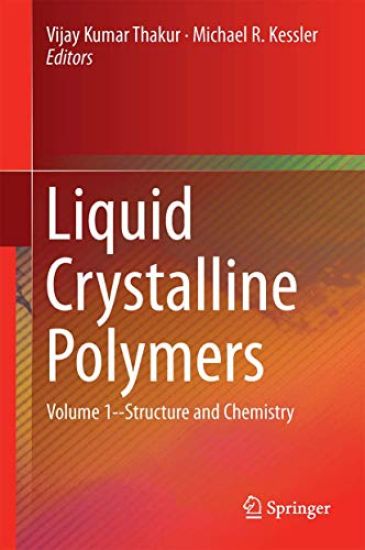
Liquid Crystalline Polymers

Liquid Crystalline Polymers

Springer International Publishing AG
2015
sidottu
This book introduces various applications of liquid crystalline polymers as the emerging new class of high performance novel materials. The authors detail the advantageous properties of these LCs including optical anisotropic, transparency and easy control over structure. This interdisciplinary work includes valuable input from international projects with special focus on the use of liquid crystalline polymers and/or nanocomposites.
Molecularly Imprinted Polymers in Biotechnology

Molecularly Imprinted Polymers in Biotechnology

Springer International Publishing AG
2015
sidottu
Controlled radical polymerization techniques for molecular imprinting, by Mark E. ByrneFrom bulk polymers to nanoparticles, by Lei YePost-imprinting and in-cavity functionalization, by Toshifumi TakeuchiCharacterization of MIPs (affinity, selectivity, site heterogeneity…), by Richard AnsellTheoretical aspects and computer modelling, by Ian NichollsMIPs in aqueous environments, by Bin LuMIPs for binding macromolecules, by Kenneth J. SheaSolid phase extraction, by Ecevit YilmazSensors, by Sergey A. PiletskyMIPs for catalysis and synthesis, by Marina ResminiWastewater treatment, by Bo MattiassonMIPs as tools for bioassays, biotransformation and drug delivery, by Meiping Zhao
Liquid Crystalline Polymers

Liquid Crystalline Polymers

Springer International Publishing AG
2015
sidottu
This book introduces anisotropic innovations in liquid crystalline polymers as well as new nanocomposite materials and testing techniques. The authors detail the newest discoveries of material properties, material types and phases, and material characterization. This interdisciplinary work creates valuable links that strengthen the approach to the evolving field of liquid crystalline polymers/ materials.
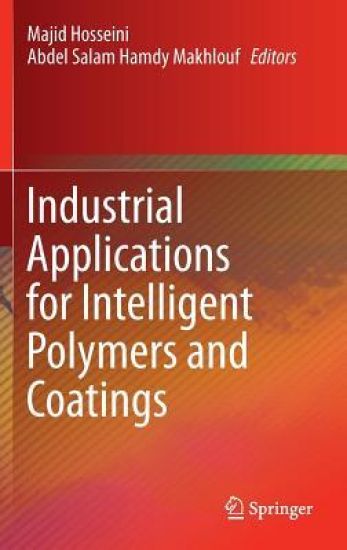
Industrial Applications for Intelligent Polymers and Coatings
This book is a comprehensive collaboration on intelligent polymers and coatings for industrial applications by worldwide researchers and specialists. The authors cover the basis and fundamental aspects of intelligent polymers and coatings, challenges, and potential mechanisms and properties. They include recent and emerging industrial applications in medical, smart textile design, oil and gas, electronic, aerospace, and automobile industries as well as other applications including microsystems, sensors, and actuators, among others. The authors discuss the potential for future research in these areas for improvement and growth of marketable applications of intelligent polymers and coatings.
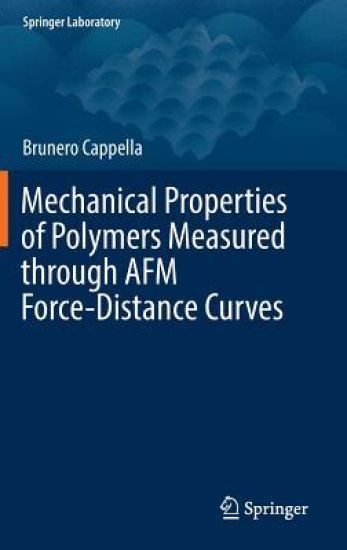
Mechanical Properties of Polymers Measured through AFM Force-Distance Curves

Mechanical Properties of Polymers Measured through AFM Force-Distance Curves

Brunero Cappella

Springer International Publishing AG
2016
sidottu
This Springer Laboratory volume is a practical guide for scientists and students dealing with the measurement of mechanical properties of polymers at the nanoscale through AFM force-distance curves.In the first part of the book the reader will find a theoretical introduction about atomic force microscopy, focused on force-distance curves, and mechanical properties of polymers. The discussion of several practical issues concerning the acquisition and the interpretation of force-distance curves will help scientists starting to employ this technique.The second part of the book deals with the practical measurement of mechanical properties of polymers by means of AFM force-distance curves. Several "hands-on" examples are illustrated in a very detailed manner, with particular attention to the sample preparation, data analysis, and typical artefacts. This section gives a complete overview about the qualitative characterization and quantitative determination of the mechanical properties of homogeneous polymer samples, polymer brushes, polymer thin films, confined polymer samples, model blends and microstructured polymer blends through AFM force-distance curves. The book also introduces to new approaches and measurement techniques, like creep compliance and force modulation measurements, pointing out approximations, limitations and issues requiring further confirmation.
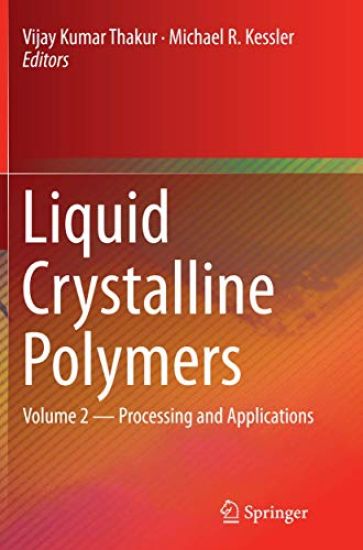
Liquid Crystalline Polymers

Liquid Crystalline Polymers

Springer International Publishing AG
2016
nidottu
This book introduces various applications of liquid crystalline polymers as the emerging new class of high performance novel materials. The authors detail the advantageous properties of these LCs including optical anisotropic, transparency and easy control over structure. This interdisciplinary work includes valuable input from international projects with special focus on the use of liquid crystalline polymers and/or nanocomposites.
Porous Carbons – Hyperbranched Polymers – Polymer Solvation
The series Advances in Polymer Science presents critical reviews of the present and future trends in polymer and biopolymer science. It covers all areas of research in polymer and biopolymer science including chemistry, physical chemistry, physics, material science. The thematic volumes are addressed to scientists, whether at universities or in industry, who wish to keep abreast of the important advances in the covered topics. Advances in Polymer Science enjoy a longstanding tradition and good reputation in its community. Each volume is dedicated to a current topic, and each review critically surveys one aspect of that topic, to place it within the context of the volume. The volumes typically summarize the significant developments of the last 5 to 10 years and discuss them critically, presenting selected examples, explaining and illustrating the important principles, and bringing together many important references of primary literature. On that basis, future research directions in the area can be discussed. Advances in Polymer Science volumes thus are important references for every polymer scientist, as well as for other scientists interested in polymer science - as an introduction to a neighboring field, or as a compilation of detailed information for the specialist. Review articles for the individual volumes are invited by the volume editors. Single contributions can be specially commissioned. Readership: Polymer scientists, or scientists in related fields interested in polymer and biopolymer science, at universities or in industry, graduate students.
Molecularly Imprinted Polymers in Biotechnology

Molecularly Imprinted Polymers in Biotechnology

Springer International Publishing AG
2016
nidottu
Controlled radical polymerization techniques for molecular imprinting, by Mark E. ByrneFrom bulk polymers to nanoparticles, by Lei YePost-imprinting and in-cavity functionalization, by Toshifumi TakeuchiCharacterization of MIPs (affinity, selectivity, site heterogeneity…), by Richard AnsellTheoretical aspects and computer modelling, by Ian NichollsMIPs in aqueous environments, by Bin LuMIPs for binding macromolecules, by Kenneth J. SheaSolid phase extraction, by Ecevit YilmazSensors, by Sergey A. PiletskyMIPs for catalysis and synthesis, by Marina ResminiWastewater treatment, by Bo MattiassonMIPs as tools for bioassays, biotransformation and drug delivery, by Meiping Zhao
Liquid Crystalline Polymers

Liquid Crystalline Polymers

Springer International Publishing AG
2016
nidottu
This book introduces anisotropic innovations in liquid crystalline polymers as well as new nanocomposite materials and testing techniques. The authors detail the newest discoveries of material properties, material types and phases, and material characterization. This interdisciplinary work creates valuable links that strengthen the approach to the evolving field of liquid crystalline polymers/ materials.
Smart Nanohybrids of RAFT Polymers and Inorganic Particles

Smart Nanohybrids of RAFT Polymers and Inorganic Particles

Bastian Ebeling

Springer International Publishing AG
2016
nidottu
This doctoral thesis explains the synthesis and characterization of novel, smart hybrid nanomaterials. Bastian Ebeling combines in this work synthetic polymers with inorganic nanoparticles from silica or gold. The first chapters offer a comprehensive introduction to basics of polymer science and the applied methodologies. In following chapters, the author describes in detail how he systematically tailored the polymers using reversible addition-fragmentation chain transfer polymerization (RAFT) for combination with inorganic nanoparticles. This work also unravels mechanistic, thermodynamic, and structural aspects of all building blocks and reaction steps. The method described here is simple to perform and opens up pathways to new sets of nanohybrid materials with potential applications as sensors, in energy conversion, or catalysis. Readers will find a unique picture of the step-by step formation of new complex nanomaterials. It offers polymer scientists a systematic guide to the formation and synthesis of a new class of responsive nanomaterials.
Controlling the Morphology of Polymers

Controlling the Morphology of Polymers

Springer International Publishing AG
2016
sidottu
This book focuses on controlling morphology of different scales for polymers. The authors explain the need for successful control of morphology to yield target macroscopic physical properties in the application of polymers to diverse areas such as engineering materials, nanodielectrics and photonic crystals. The book combines specialized chapters with an introduction to the morphology of polymers and the range of experimental techniques available to evaluate it.
Nano-size Polymers

Nano-size Polymers

Springer International Publishing AG
2016
sidottu
This book details all current techniques for converting bulk polymers into nano-size materials. The authors highlight various physical and chemical approaches for preparation of nano-size polymers. They describe the properties of these materials and their extensive potential commercial applications.
Topological Interactions in Ring Polymers

Topological Interactions in Ring Polymers

Davide Michieletto

Springer International Publishing AG
2016
sidottu
Ring polymers are one of the last big mysteries in polymer physics, and this thesis tackles the problem of describing their behaviour when interacting in dense solutions and with complex environments and reports key findings that help shed light on these complex issues. The systems investigated are not restricted to artificial polymer systems, but also cover biologically inspired ensembles, contributing to the broad applicability and interest of the conclusions reached. One of the most remarkable findings is the unambiguous evidence that rings inter-penetrate when in dense solutions; here this behaviour is shown to lead to the emergence of a glassy state solely driven by the topology of the constituents. This novel glassy state is unconventional in its nature and, thanks to its universal properties inherited from polymer physics, will attract the attention of a wide range of physicists in the years to come.
Organic Radical Polymers

Organic Radical Polymers

Sanjoy Mukherjee; Bryan W. Boudouris

Springer International Publishing AG
2017
nidottu
This book provides a detailed introduction to organic radical polymers and open-shell macromolecules. Functional macromolecules have led to marked increases in a wide range of technologies, and one of the fastest growing of these fields is that of organic electronic materials and devices. To date, synthetic and organic electronic device efforts have focused almost exclusively on closed-shell polymers despite the promise of open-shell macromolecules in myriad applications. This text represents the first comprehensive review of the design, synthesis, characterization, and device applications of open-shell polymers. In particular, it will summarize the impressive synthetic and device performance efforts that have been achieved with respect to energy storage, energy conversion, magnetic, and spintronic applications. By combining comprehensive reviews with a wealth of informative figures, the text provides the reader with a complete “molecules-to-modules” understanding of the state of the art in open-shell macromolecules. Moreover, the monograph highlights future directions for open-shell polymers in order to allow the reader to be part of the community that continues to build the field. In this way, the reader will gain a rapid understanding of the field and will have a clear pathway to utilize these materials in next-generation applications.
International Congress on Polymers in Concrete (ICPIC 2018)
This volume collects the proceedings from the International Congress of Polymers in Concrete 2018 (ICPIC), held under the theme “Polymers for Resilient and Sustainable Concrete Infrastructure.” ICPIC 2018 provides an opportunity for researchers and specialists working in the fields of polymers to exchange ideas and follow the latest progress in the use of polymers in concrete infrastructure. It also showcases the use of polymers and polymer concrete in sustainable and resilient development, and provides a platform for local and overseas suppliers, developers, manufacturers and contractors using polymers, polymer concrete and polymer composites in concrete structures to develop new business opportunities and follow the latest developments in the field. The International Congress of Polymers in Concrete is an international forum that has taken place every three years for the last 40 years with the objective of following progress in the field of polymers and their use in concrete and construction. Following 15 successful congresses held in London (1975), Austin (1978), Koriyama (1981), Darmstadt (1984), Brighton (1987), Shanghai (1990), Moscow (1992), Oostende (1995), Bologna (1998), Honolulu (2001), Berlin (2004), Chuncheon (2007), Funchal (2010), Shanghai (2013) and Singapore (2015), the 16th ICPIC will take place in Washington, DC, from April 29 to May 1st, 2018.
Industrial Applications for Intelligent Polymers and Coatings
This book is a comprehensive collaboration on intelligent polymers and coatings for industrial applications by worldwide researchers and specialists. The authors cover the basis and fundamental aspects of intelligent polymers and coatings, challenges, and potential mechanisms and properties. They include recent and emerging industrial applications in medical, smart textile design, oil and gas, electronic, aerospace, and automobile industries as well as other applications including microsystems, sensors, and actuators, among others. The authors discuss the potential for future research in these areas for improvement and growth of marketable applications of intelligent polymers and coatings.