Kirjojen hintavertailu. Mukana 11 342 296 kirjaa ja 12 kauppaa.

Kirjahaku

Etsi kirjoja tekijän nimen, kirjan nimen tai ISBN:n perusteella.

1000 tulosta hakusanalla "Protest"

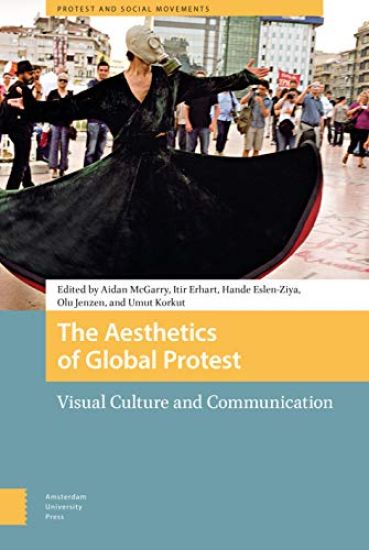
The Aesthetics of Global Protest

The Aesthetics of Global Protest

Amsterdam University Press
2019
sidottu
Protestors across the world use aesthetics in order to communicate their ideas and ensure their voices are heard. This book looks at protest aesthetics, which we consider to be the visual and performative elements of protest, such as images, symbols, graffiti, art, as well as the choreography of protest actions in public spaces. Through the use of social media, protestors have been able to create an alternative space for people to engage with politics that is more inclusive and participatory than traditional politics. This volume focuses on the role of visual culture in a highly mediated environment and draws on case studies from Europe, Thailand, South Africa, USA, Argentina, and the Middle East in order to demonstrate how protestors use aesthetics to communicate their demands and ideas. It examines how digital media is harnessed by protestors and argues that all protest aesthetics are performative and communicative.
The Political Economy of Protest and Patience

The Political Economy of Protest and Patience

Greskovits Bela

Central European University Press
1998
nidottu
Why did Eastern Europeans protest less about the brutal social consequences of systematic change than the people of Latin America a decade earlier? Why has the regionwide authoritarian or populist turnabout not occured? Why has democracy in these countries proved to be crisis-proof? In what ways has the economic crisis impacted on the politics of the region? In addressing these questions, this text uses a comparative analysis of the structures, institutions, cultures, and actors shaping both the Eastern European and the Latin American transformations, and argues that structural, institutional, and cultural factors have put a brake on destabilizing collective actions and have paved the way for the emergence of the enduring, low-level equilibrium between incomplete democracy and imperfect market economy which seems set to characterize the Eastern European experience for the foreseeable future.
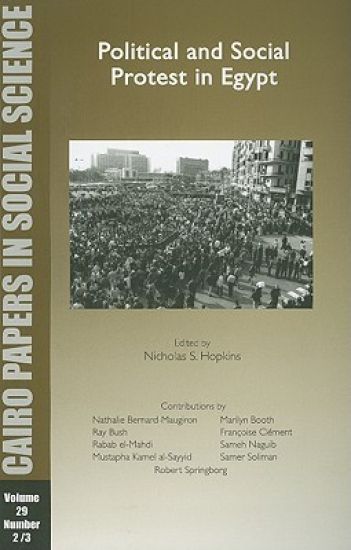
Political and Social Protest in Egypt

Political and Social Protest in Egypt

The American University in Cairo Press
2009
nidottu
This contains collected papers which chronicles the history of Egyptian protest groups over the last three decades."Cairo Papers in Social Science" first appeared in 1977, the year that witnessed the famous bread riots in Egypt. As the journal celebrates its 30th anniversary, Egypt also seems to be at a crossroads, as new forms of protest have been developing with the aim of challenging the existing order and inducing change. This issue includes a collection of papers delivered at Cairo Papers 30th Anniversary Symposium that deal with the different protest groups that have been active in Egypt in the last three decades, including the Kefaya movement, the Negm-Imam phenomenon, the feminist movement, Coptic activism, and the Muslim Brotherhood, as well as workers' protests, rural resistance, and the judges' call for reform.Contributors include: Nathalie Bernard-Maugiron, Marilyn Booth, Ray Bush, Francoise Clement, Rabab al-Mahdi, Sameh Naguib, Mustapha Kamel al-Sayyid, Samer Soliman, and Robert Springborg.
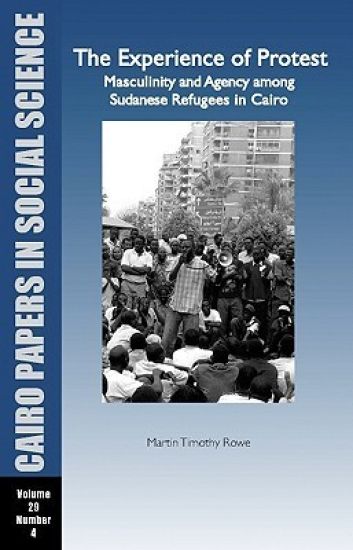
THE EXPERIENCE OF PROTEST

THE EXPERIENCE OF PROTEST

The American University in Cairo Press
2010
nidottu
In the autumn of 2005, a group of young male Sudanese refugees organized a protest against the policies of the UNHCR in Cairo. Using the protest as a vehicle for exploring the difficulties encountered by young Sudanese men, and their motivations for initiating or joining the protest, this study examines the ways in which pursuit of personal and collective agency intersect with ideals of masculine respectability and attainment.
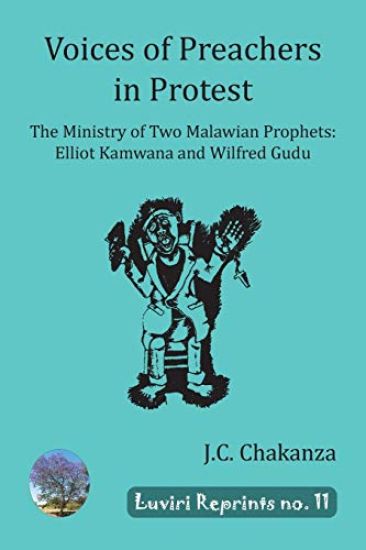
Voices of Preachers in Protest

Voices of Preachers in Protest

Joseph Chaphadzika Chakanza

Luviri Press
2018
pokkari
Ever since the modern state of Malawi came into existence more than a hundred years ago, religion has played its role in the history of the country, and has interacted with politics and society in many ways, such as with the early Blantyre Mission, the Chilembwe Rising, and the struggle against the Federation of Rhodesia and Nyassaland. This book presents two preachers, Elliot Kamwana and Wilfred Gudu, who, in their different ways and at different times, challenged British colonial power which ruled over Malawi at that time.
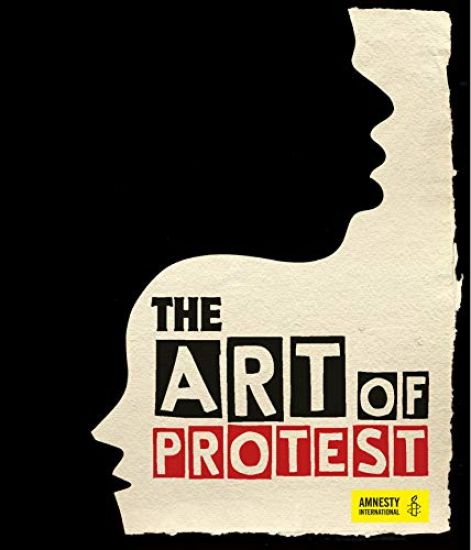
The Art of Protest: A Visual History of Dissent and Resistance
Presented in collaboration with Amnesty International, this stunning collection of more than a hundred posters charts a visual journey across more than a century of political and social activism. From the suffragettes of the early twentieth century to the upheavals of the 1960s and 1970s to contemporary, social-media-driven demonstrations of dissent and resistance, this illustrative history features iconic art from the archives of Amnesty International, work by world-renowned artists, and spontaneous posters from short-lived print collectives and activists on the ground. The Art of Protest covers key campaigns, global and local, including the refugee and climate crises, women's empowerment, nuclear disarmament, LGBTQ activism, Black Lives Matter, and issues around war and the misuse of the world's resources. These are images that have pushed boundaries as they give voice to the marginalized and confront those who would deny people their rights to peace and equality.
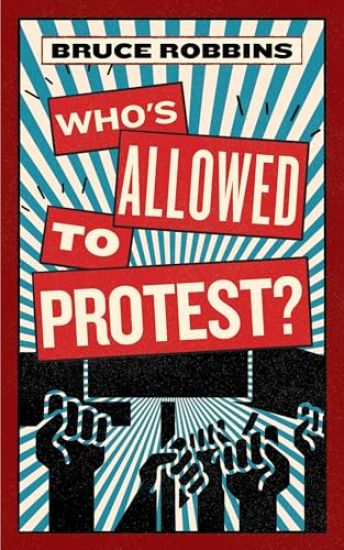
Who's Allowed to Protest?

Who's Allowed to Protest?

Bruce Robbins

Melville House Publishing
2026
nidottu
WHO'S ALLOWED TO PROTEST? is the essential guide for understanding why some political voices are amplified, others are silenced, and how the fight over "who's too elite" to dissent will determine our democratic fates. Why do charges of "privilege" haunt every new protest wave? In this electrifying blend of short history and manifesto, Columbia University professor Bruce Robbins picks apart the insult that demonstrators are merely elite status-seekers--and shows why the same complaints surfaced against Vietnam-era marchers, Iraq War protesters, and, most recently, the Gaza encampments that shook campuses nationwide. Robbins spars with contemporary critics, like David Brooks and Musa al-Gharbi, who insist that campus activists are secretly angling for elite credentials. Along the way, he recounts his own run-ins with university discipline boards and offers a reckoning with what it really costs--financially, socially, and personally--to stand against abuses of power.
Media and Feminist Protest in Iran

Media and Feminist Protest in Iran

Layla May

Springer International Publishing AG
2025
nidottu
This book provides an analysis of social media and women’s resistance in Iran with relevance to similar polities. The author examines how Iranian women continue to fight against the regime’s gender discriminatory laws and protest the government in public squares and in virtual spaces. The book presents a critical approach to technology’s role in politics and society and an in-depth analysis of authoritarianism and its relationship to social media harms and state violence. With a particular focus on images, hashtags, and other digital content, it calls for a rethinking of the concepts of crime, culture, and control in the technosocial world. The author draws on conceptual contributions from the fields of criminology, philosophy, psychology, technology and media studies.
Rights and Protest: IB History Online Course Book: Oxford IB Diploma Programme

Rights and Protest: IB History Online Course Book: Oxford IB Diploma Programme

Peter Clinton; Mark Rogers

Oxford University Press
2015
lisenssiavain
Drive critical, engaged historical learning. Helping learners more deeply understand historical concepts, the student-centred approach of this new Course Book enables broader, big picture understanding. Developed directly with the IB and fully supporting the new syllabus for first examination 2017, the clear, structured format helps you logically and easily progress through the new course content. Cover the new syllabus in the right level of depth, with rich, thorough subject content. Developed directly with the IB, with the most comprehensive support for the new syllabus. Truly engage learners with topical, relevant material that convincingly connects learning with the modern, global world. Streamline your planning, with a clear and thorough structure helping you logically progress through the syllabus. Decipher source evaluation, refine and progress analytical thinking and fully embed vital Paper 1 skills, strengthening exam performance. Integrate approaches to learning with ATLs like thinking, communication, research and social skills built directly into learning. Help learners think critically about improving performance with extensive examiner insight and samples based on the latest exam format. The online Course Book will be available on Oxford Education Bookshelf until 2023. Access is facilitated via a unique code, which is sent in the mail. The code must be linked to an email address, creating a user account. Access may be transferred once to a new user, once the initial user no longer requires access. You will need to contact your local Educational Consultant to arrange this.
The Typography of Protest

The Typography of Protest

Theo Inglis

BATSFORD
2026
sidottu
A timely, compelling and affecting history of graphic design being used as a form of rebellion and resistance. Design has long been a means of self-expression, but it is also a fundamental vehicle for change in an increasingly visual world. The Typography of Protest is an illustrated history of how famous designers and determined individuals have used art to dismantle hatred and ignite change. The designers, groups and collectives featured in this book differ in age, race, gender and belief but all are resolute in confronting political and social injustice and inequality through their design and typography. From the bold feminist collages of Barbara Kruger to Emory Douglas’s defining posters for the Black Panther Party during the Civil Rights era and Keith Haring breaking the silence surrounding AIDS, to Guerrilla Girls exposing racial and sexual inequality in the art world, typography has long been a powerful tool for upsetting the status quo. This thought-provoking book shines a light on the often revolutionary work of artists involved in a diverse range of social and political movements.
33 Revolutions Per Minute: A History of Protest Songs, from Billie Holiday to Green Day
From one of the most prominent music critics writing today, a page-turning and wonderfully researched history of protest music in the twentieth century and beyondNowhere does pop music collide more dramatically with the wider world than in the protest song, which forces its way into the news and prompts conversations from Washington to Westminster. Rather than being merely a worthy adjunct to the business of pop, protest music is woven into its DNA. When you listen to Bob Dylan, Stevie Wonder, Public Enemy, or the Clash, you are not sitting down to a dusty seminar; you are hearing pop music at its most thrillingly alive. 33 Revolutions Per Minute is the story of protest music told in 33 songs. An incisive history of a wide and shape-shifting genre, Dorian Lynskey's authoritative book takes us from the days of Billie Holliday crooning "Strange Fruit" before shocked audiences to Vietnam-era crowds voicing their resentment at the sounds of Bob Dylan to the fracas over the Dixie Chicks' comments against George W. Bush during the Iraq War.For anyone who enjoyed Alex Ross's The Rest is Noise, Bob Dylan's Chronicles, or Simon Reynolds' Rip It Up and Start Again, 33 Revolutions Per Minute is an absorbing and moving portrait of a century when music was the people's truest voice.
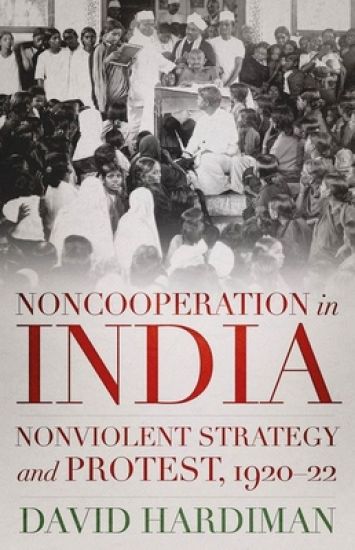
Noncooperation in India: Nonviolent Strategy and Protest, 1920-22
The Noncooperation Movement of 1920-22, led by Mahatma Gandhi, challenged every aspect of British rule in India. It was supported by people from all levels of the social hierarchy and united Hindus and Muslims in a way never again achieved by Indian nationalists. It was remarkably nonviolent. In all, it was one of the major mass protests of modern times. Yet there are almost no accounts of the entire movement, although many aspects of it have been covered by local-level studies. This volume both brings together and builds on these studies, looking at fractious all-India debates over strategy; the major grievances that drove local-level campaigns; the ways leaders braided together these streams of protest within a nationalist agenda; and the distinctive features of popular nonviolence for a righteous cause. David Hardiman's previous volume, The Nonviolent Struggle for Indian Freedom, examined the history of nonviolent resistance in the Indian nationalist movement. The present volume takes his study forward to examine the culmination of this first surge of struggle. While the campaign of 1920-22 did not achieve its desired objective of immediate self-rule, it did succeed in shaking to the core the authority of the British in India.
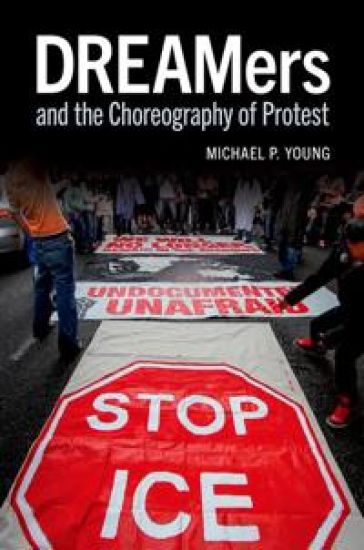
DREAMers and the Choreography of Protest

DREAMers and the Choreography of Protest

Michael P. Young

OXFORD UNIVERSITY PRESS INC
2024
sidottu
DREAMers and the Choreography of Protest chronicles the history of the DREAMers--the term used to describe undocumented immigrants brought to the United States as children. Based on interviews with lead activists, extensive archival research, and years of ethnographic study, Michael P. Young details the making of the DREAMer, the early organizing of undocumented youth on college campuses cooperating with nonprofit organizations, and the independent organizing of an online network of radical undocumented youth. Tracing a sequence of escalating protests--from sit-ins to detention center infiltrations and border crossing actions--Young argues that this later network of DREAMer activists pushed the immigrant rights movement away from the elite-driven, insider politics of immigration reform toward radical direct action organized by and for undocumented immigrants. In one of the first accounts of the radical factions of DREAMer activism, Young provides a detailed and engrossing counternarrative of DREAMer history that offers some pragmatic lessons for activists and the allied supporters of social movements.