Kirjojen hintavertailu. Mukana 11 699 587 kirjaa ja 12 kauppaa.

Kirjahaku

Etsi kirjoja tekijän nimen, kirjan nimen tai ISBN:n perusteella.

1000 tulosta hakusanalla Aaron Gerrity

Truth and Social Reality

Truth and Social Reality

Aaron M. Griffith

Oxford University Press
2025
sidottu
Truth and Social Reality: A Metaphysical Inquiry presents a new theory of social truth and social construction. The book weds truthmaker theory with recent work in social ontology, arguing that social truths are true in virtue of socially constructed portions of the world. It focuses on the construction of human social kinds like gender, race, class, and disability. The book offers novel accounts of social construction, realism, social kind pluralism, social context, the context-dependency of social truth, and social vagueness. Overall, Truth and Social Reality presents a realist picture of the social world on which there are objective truths about the way things are in the social world. Social truth is not socially constructed, despite being grounded in a socially constructed reality. The theory it provides nonetheless captures the contingency, alterability, and vagueness of the social world and the context dependency of social truth. The book also addresses the relationships between truth, power, and justice. It argues that truth itself is not a tool of oppression, as some maintain. Rather, truth and truth-telling play an essential role in upending oppression and achieving justice. Truth and Social Reality rebuts the cynicism of the "post-truth" age by defending the possibility and value of social truth.
Nietzsche's Aesthetics

Nietzsche's Aesthetics

Aaron Ridley

Oxford University Press
2026
sidottu
In this collection of eighteen essays, two-thirds of them appearing here for the first time, Aaron Ridley addresses the full range of Nietzsche's aesthetics, from his discussions of tragedy, music, and language to his conceptions of taste, beauty, and the sublime. Some of the essays are exegetical; some are critical (hence the 'quarrels' referred to in the title); some bring his thought into contact with other thoughts and thinkers; while others bring him into contact with specific artists and their art. Intended equally for specialists and students, this volume contributes to the study of an aspect of Nietzsche's philosophy that remains surprisingly under-explored.
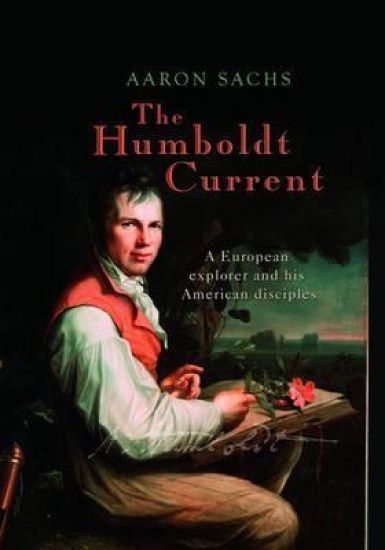
The Humboldt Current

The Humboldt Current

Aaron Sachs

Oxford University Press
2007
sidottu
While everyone has heard of the 'Humboldt Current', few know anything of the man after whom it was named. Yet Alexander von Humboldt was a towering figure of his time - scientist, explorer, and polymath, imbued with Enlightenment ideas - and he left a profound impact on the intellectual life of 19th century America. Aaron Sachs' colourful intellectual history rescues Humboldt from obscurity, and reveals the impact of a single European on both American thought and the environmental movement. Aaron Sachs traces Humboldt's legacy by focusing not only on the man himself but on the lives of other remarkable individuals who took their lead from him - explorers of the American mid-West, alienated Romantics, seminal American writers and artists, who together laid the groundwork for the great ecological tradition in 19th century America.
Ethnicity and Argument in Eusebius' Praeparatio Evangelica

Ethnicity and Argument in Eusebius' Praeparatio Evangelica

Aaron P. Johnson

Oxford University Press
2006
sidottu
Eusebius' magisterial Praeparatio Evangelica (written sometime between AD 313 and 324) offers an apologetic defence of Christianity in the face of Greek accusations of irrationality and impiety. Though brimming with the quotations of other (often lost) Greek authors, the work is dominated by a clear and sustained argument. Against the tendency to see the Praeparatio as merely an anthology of other sources or a defence of monotheistic religion against paganism, Aaron P. Johnson seeks to appreciate Eusebius' contribution to the discourses of Christian identity by investigating the constructions of ethnic identity (especially Greek) at the heart of his work. Analysis of his `ethnic argumentation' exhibits a method of defending Christianity by construing its opponents as historically rooted nations, whose place in the narrative of world history serves to undermine the legitimacy of their claims to ancient wisdom and piety.
Fairness in Practice

Fairness in Practice

Aaron James

Oxford University Press Inc
2013
nidottu
If the global economy seems unfair, how should we understand what a fair global economy would be? What ideas of fairness, if any, apply, and what significance do they have for policy and law? Working within the social contract tradition, this book argues that fairness is best seen as a kind of equity in practice. The global economy as we know it is organized by an international social practice in which countries mutually rely upon common markets. This practice generates shared responsibilities of "structural equity," independently of humanitarian, human rights, or other justice concerns, for how benefits and burdens are distributed across different societies and their social classes. Equity in the practice of trade requires not only compensation of people harmed by their exposure to global economic forces, but also equal division of the "gains of trade," across and within societies, unless still greater gains flow to developing countries. Fairness therefore calls for strong social insurance schemes, international capital controls, policy flexibility for developing countries, and more-all as the "fair price" of free trade.
Rethinking Jewish Philosophy

Rethinking Jewish Philosophy

Aaron W. Hughes

Oxford University Press Inc
2014
sidottu
Jewish thought is, in many ways, a paradox. Is it theology or is it philosophy? Does it use universal methods to articulate Judaism's particularity or does it justify Judaism's particularity with appeals to illuminating the universal? These two sets of claims are difficult if not impossible to reconcile, and their tension reverberates throughout the length and breadth of Jewish philosophical writing, from Saadya Gaon in the ninth century to Emmanuel Levinas in the twentieth. Rather than assume, as most scholars of Jewish philosophy do, that the terms "philosophy" and "Judaism" simply belong together, Hughes explores the juxtaposition and the creative tension that ensues from their cohabitation, examining adroitly the historical, cultural, intellectual, and religious filiations between Judaism and philosophy. Breaking with received opinion, this book seeks to challenge the exclusionary, particularist, and essentialist nature that is inherent to the practice of something problematically referred to as "Jewish philosophy." Hughes begins with the premise that Jewish philosophy is impossible and begins the process of offering a sophisticated and constructive rethinking of the discipline that avoids the traditional extremes of universalism and particularism.
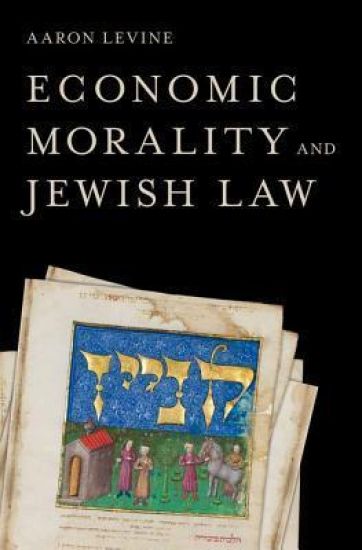
Economic Morality and Jewish Law

Economic Morality and Jewish Law

Aaron Levine

Oxford University Press Inc
2012
sidottu
Economic Morality and Jewish Law compares the way in which welfare economics and Jewish law determine the propriety of an economic action, whether by a private citizen or the government. Espousing what philosophers would call a consequentialist ethical system, welfare economics evaluates the worthiness of an economic action based on whether the action would increase the wealth of society in the long run. In sharp contrast, Jewish law espouses a deontological system of ethics. Within this ethical system, the determination of the propriety of an action is entirely a matter of discovering the applicable rule in Judaism's code of ethics. This volume explores a variety of issues implicating morality for both individual commercial activity and economic public policy. Issues examined include price controls, the living wage, the lemons problem, short selling, and Ronald Coase's seminal theories on negative externalities. To provide an analytic framework for the study of these issues, the work first delineates the normative theories behind the concept of economic morality for welfare economics and Jewish law, and presents a case study illustrating the deontological nature of Jewish law. The book introduces what for many readers will be a new perspective on familiar economic issues. Despite the very different approaches of welfare economics and Jewish law in evaluating the worthiness of an economic action, the author reveals a remarkable symmetry between the two systems in their ultimate prescriptions for certain economic issues.
Do You Really Need Back Surgery?

Do You Really Need Back Surgery?

Aaron G. Filler

Oxford University Press Inc
2013
nidottu
Most people have back surgery to relieve pain, but all too often it doesn't help. For the half million people who undergo back surgery each year, and the additional million who are seriously contemplating it, Do You Really Need Back Surgery?, Second Edition, is a godsend--an informed, reliable guide to when you should consider surgery and when you should not. Written by an internationally recognized expert in nerve and spinal surgery, this highly readable guide covers everything back patients need to know to make informed decisions about their treatment. The book discusses the details of spinal anatomy; explains the difference between acute, chronic, and recurring pain; shows how to keep the spine healthy; and defines such terms as spurs, stenosis, and slippage. It also reveals what clues your physician uses to predict whether a given type of pain is likely to go away with rest and exercise, and which types may become emergencies. Dr. Filler discusses the risks of surgery, the decisions you may be faced with and what options you have, and your expectations for recovery. He provides detailed explanations of the wide array of spinal injections and surgeries, including discectomies and fusions, as well as innovative procedures such as electrothermic and laser techniques and artificial disks. He explains the various medical imaging and diagnostic tests available and even covers the complexities of health insurance. The new and extensively revised edition of this book is expanded to cover the impact of dozens of new advanced technologies in spinal diagnostics and treatment that have emerged in the eight years since the original very successful edition. Advances in new types of pain medications and new types of surgeries that minimize recovery time and achieve better outcomes are explained. In addition, this book examines the problems in the case of a few new devices in spinal surgery where money from medical device manufacturers has led to distorted research that had to be withdrawn. A major change from the previous edition is the inclusion of two chapters that describe a series of different nerve entrapment syndromes that can cause headache, neck, shoulder and arm pain as well as causing buttock and leg pain - but are not caused by spine problems. This includes information about piriformis syndrome causing sciatic, thoracic outlet syndrome causing shoulder and neck pain and about pudendal nerve entrapments causing groin and pelvis pains. From Pilates to pedicle screws, and from osteoporosis to spina bifida, Do You Really Need Back Surgery?, Second Edition, covers all the questions your doctor usually doesn't have the time to answer. Featuring almost 100 illustrations, it is an essential manual for every neck or back pain sufferer.
Abrahamic Religions

Abrahamic Religions

Aaron W. Hughes

Oxford University Press Inc
2012
sidottu
Recent years have witnessed the emergence of a virtual cottage industry in all things ''Abrahamic.'' Directly proportionate to the rise of religious exclusivism, perhaps best epitomized by the attacks of 9/11 and the problems now plaguing the Middle East and Afghanistan, there has been a real desire both to find and map a set of commonalities between Judaism, Christianity, and Islam. This is often done, however, for the sake of interfaith dialogue, rather than scholarship. Recently, however, the term "Abrahamic religions" has been used with exceeding frequency in the academy. We now regularly encounter academic books, conferences, and even positions (including endowed chairs) devoted to the so-called "Abrahamic religions." But what exactly are "Abrahamic religions"? Although many perceive him as the common denominator of Judaism, Christianity and Islam, Abraham remains deceptively out of reach. An ahistorical figure, some contend he holds the seeds for historical reconciliation. Touted as symbol of ecumenicism, Abraham can just as easily function as one of division and exclusivity. Like our understanding of Abraham, the category "Abrahamic religions" is vague and nebulous. Usually lost in contemporary discussions is a set of crucial questions: Whence does the term "Abrahamic religions" derive? Who created it and for what purposes? What sort of intellectual work is it perceived to perform? In order to answer these and related questions, Aaron Hughes examines the creation and dissemination of this category in Abrahamic Religions. Part genealogical and part analytical, his study seeks to raise and answer questions about the appropriateness and usefulness of employing "Abrahamic religions" as a vehicle for understanding and classifying data. In so doing, this monograph can be taken as a case study that examines the construction of categories within the academic study of religion, showing how the categories we employ can become more an impediment than an expedient to understanding.
Misbehaving Science

Misbehaving Science

Aaron Panofsky

University of Chicago Press
2014
sidottu
Behavior genetics has always been a breeding ground for controversies. From the "criminal chromosome" to the "gay gene," claims about the influence of genes like these have led to often vitriolic national debates about race, class, and inequality. Many behavior geneticists have encountered accusations of racism and have had their scientific authority and credibility questioned, ruining reputations, and threatening their access to coveted resources. In Misbehaving Science, Aaron Panofsky traces the field of behavior genetics back to its origins in the 1950s, telling the story through close looks at five major controversies. In the process, Panofsky argues that persistent, ungovernable controversy in behavior genetics is due to the broken hierarchies within the field. All authority and scientific norms are questioned, while the absence of unanimously accepted methods and theories leaves a foundationless field, where disorder is ongoing. Critics charge behavior geneticists with political motivations; champions say they merely follow the data where they lead. But Panofsky shows how pragmatic coping with repeated controversies drives their scientific actions. Ironically, behavior geneticists' struggles for scientific authority and efforts to deal with the threats to their legitimacy and autonomy have made controversy inevitable-and in some ways essential-to the study of behavior genetics.
Misbehaving Science

Misbehaving Science

Aaron Panofsky

University of Chicago Press
2014
nidottu
Behavior genetics has always been a breeding ground for controversies. From the "criminal chromosome" to the "gay gene," claims about the influence of genes like these have led to often vitriolic national debates about race, class, and inequality. Many behavior geneticists have encountered accusations of racism and have had their scientific authority and credibility questioned, ruining reputations, and threatening their access to coveted resources. In Misbehaving Science, Aaron Panofsky traces the field of behavior genetics back to its origins in the 1950s, telling the story through close looks at five major controversies. In the process, Panofsky argues that persistent, ungovernable controversy in behavior genetics is due to the broken hierarchies within the field. All authority and scientific norms are questioned, while the absence of unanimously accepted methods and theories leaves a foundationless field, where disorder is ongoing. Critics charge behavior geneticists with political motivations; champions say they merely follow the data where they lead. But Panofsky shows how pragmatic coping with repeated controversies drives their scientific actions. Ironically, behavior geneticists' struggles for scientific authority and efforts to deal with the threats to their legitimacy and autonomy have made controversy inevitable-and in some ways essential-to the study of behavior genetics.
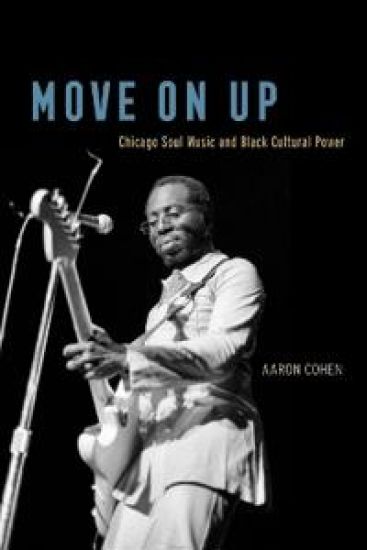
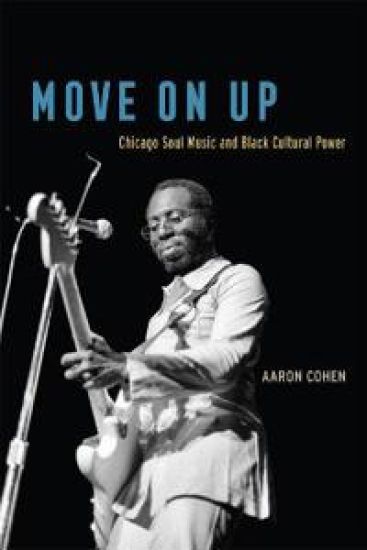
Move on Up

Move on Up

Aaron Cohen

University of Chicago Press
2019
sidottu
Curtis Mayfield. The Chi-Lites. Chaka Khan. Chicago's place in the history of soul music is rock solid. But for Chicagoans, soul music in its heyday from the 1960s to the 1980s was more than just a series of hits: it was a marker and a source of black empowerment. In Move On Up, Aaron Cohen tells the remarkable story of the explosion of soul music in Chicago. Together, soul music and black-owned businesses thrived. Record producers and song-writers broadcast optimism for black America's future through their sophisticated, jazz-inspired productions for the Dells and many others. Curtis Mayfield boldly sang of uplift with unmistakable grooves like "We're a Winner" and "I Plan to Stay a Believer." Musicians like Phil Cohran and the Pharaohs used their music to voice Afrocentric philosophies that challenged racism and segregation, while Maurice White of Earth, Wind, and Fire and Chaka Khan created music that inspired black consciousness. Soul music also accompanied the rise of African American advertisers and the campaign of Chicago's first black mayor, Harold Washington, in 1983. This empowerment was set in stark relief by the social unrest roiling in Chicago and across the nation: as Chicago's homegrown record labels produced rising stars singing songs of progress and freedom, Chicago's black middle class faced limited economic opportunities and deep-seated segregation, all against a backdrop of nationwide deindustrialization. Drawing on more than one hundred interviews and a music critic's passion for the unmistakable Chicago soul sound, Cohen shows us how soul music became the voice of inspiration and change for a city in turmoil.
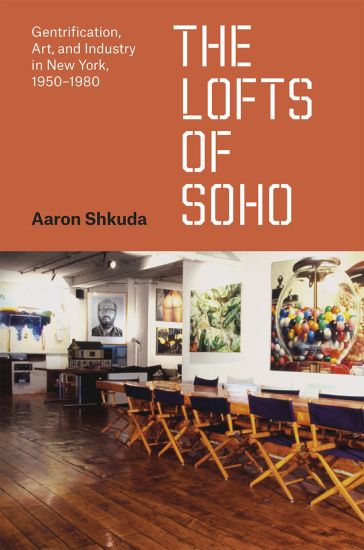
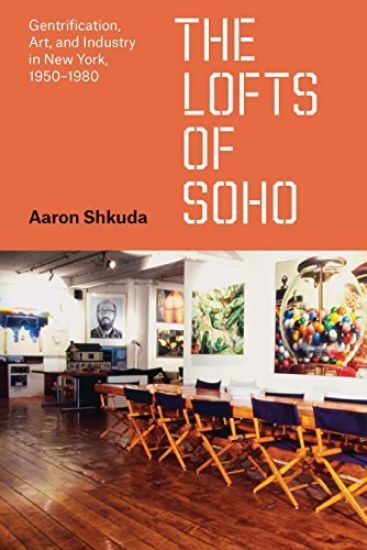
The Lofts of SoHo

The Lofts of SoHo

Aaron Shkuda

University of Chicago Press
2016
sidottu
American cities entered a new phase when, beginning in the 1950s, artists and developers looked upon a decaying industrial zone in Lower Manhattan and saw, not blight, but opportunity: cheap rents, lax regulation, and wide open spaces. Thus, SoHo was born. From 1960 to 1980, residents transformed the industrial neighborhood into an artist district, creating the conditions under which it evolved into an upper-income, gentrified area. Introducing the idea—still potent in city planning today—that art could be harnessed to drive municipal prosperity, SoHo was the forerunner of gentrified districts in cities nationwide, spawning the notion of the creative class. In The Lofts of SoHo, Aaron Shkuda studies the transition of the district from industrial space to artists’ enclave to affluent residential area, focusing on the legacy of urban renewal in and around SoHo and the growth of artist-led redevelopment. Shkuda explores conflicts between residents and property owners and analyzes the city’s embrace of the once-illegal loft conversion as an urban development strategy. As Shkuda explains, artists eventually lost control of SoHo’s development, but over several decades they nonetheless forced scholars, policymakers, and the general public to take them seriously as critical actors in the twentieth-century American city.
The Idols of ISIS

The Idols of ISIS

Aaron Tugendhaft

University of Chicago Press
2020
sidottu
In 2015, the Islamic State released a video of men smashing sculptures in Iraq’s Mosul Museum as part of a mission to cleanse the world of idolatry. This book unpacks three key facets of that event: the status and power of images, the political importance of museums, and the efficacy of videos in furthering an ideological agenda through the internet. Beginning with the Islamic State’s claim that the smashed objects were idols of the “age of ignorance,” Aaron Tugendhaft questions whether there can be any political life without idolatry. He then explores the various roles Mesopotamian sculpture has played in European imperial competition, the development of artistic modernism, and the formation of Iraqi national identity, showing how this history reverberates in the choice of the Mosul Museum as performance stage. Finally, he compares the Islamic State’s production of images to the ways in which images circulated in ancient Assyria and asks how digitization has transformed politics in the age of social media. An elegant and accessibly written introduction to the complexities of such events, The Idols of ISIS is ideal for students and readers seeking a richer cultural perspective than the media usually provides.
The Arc of Love

The Arc of Love

Aaron Ben-Ze'ev

University of Chicago Press
2019
sidottu
Is love best when it is fresh? For many, the answer is a resounding "yes." The intense experiences that characterize new love are impossible to replicate, leading to wistful reflection and even a repeated pursuit of such ecstatic beginnings. Aaron Ben-Ze'ev takes these experiences seriously, but he's also here to remind us of the benefits of profound love--an emotion that can only develop with time. In The Arc of Love, he provides an in-depth, philosophical account of the experiences that arise in early, intense love--sexual passion, novelty, change--as well as the benefits of cultivating long-term, profound love--stability, development, calmness. Ben-Ze'ev analyzes the core of emotions many experience in early love and the challenges they encounter, and he offers pointers for weathering these challenges. Deploying the rigorous analysis of a philosopher, but writing clearly and in an often humorous style with an eye to lived experience, he takes on topics like compromise, commitment, polyamory, choosing a partner, online dating, and when to say "I love you." Ultimately, Ben-Ze'ev assures us, while love is indeed best when fresh, if we tend to it carefully, it can become more delicious and nourishing even as time marches on.
Move on Up

Move on Up

Aaron Cohen

University of Chicago Press
2019
pokkari
Curtis Mayfield. The Chi-Lites. Chaka Khan. Chicago's place in the history of soul music is rock solid. But for Chicagoans, soul music in its heyday from the 1960s to the 1980s was more than just a series of hits: it was a marker and a source of black empowerment. In Move On Up, Aaron Cohen tells the remarkable story of the explosion of soul music in Chicago. Together, soul music and black-owned businesses thrived. Record producers and song-writers broadcast optimism for black America's future through their sophisticated, jazz-inspired productions for the Dells and many others. Curtis Mayfield boldly sang of uplift with unmistakable grooves like "We're a Winner" and "I Plan to Stay a Believer." Musicians like Phil Cohran and the Pharaohs used their music to voice Afrocentric philosophies that challenged racism and segregation, while Maurice White of Earth, Wind, and Fire and Chaka Khan created music that inspired black consciousness. Soul music also accompanied the rise of African American advertisers and the campaign of Chicago's first black mayor, Harold Washington, in 1983. This empowerment was set in stark relief by the social unrest roiling in Chicago and across the nation: as Chicago's homegrown record labels produced rising stars singing songs of progress and freedom, Chicago's black middle class faced limited economic opportunities and deep-seated segregation, all against a backdrop of nationwide deindustrialization. Drawing on more than one hundred interviews and a music critic's passion for the unmistakable Chicago soul sound, Cohen shows us how soul music became the voice of inspiration and change for a city in turmoil.
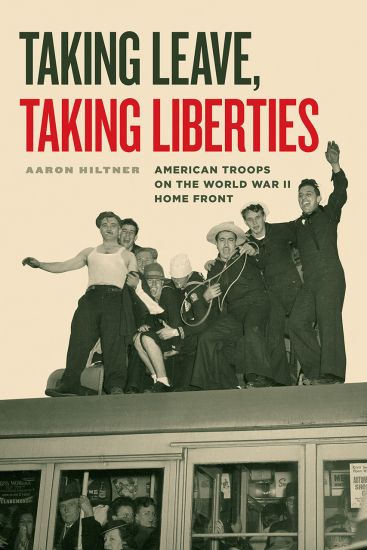
Taking Leave, Taking Liberties

Taking Leave, Taking Liberties

Aaron Hiltner

University of Chicago Press
2020
sidottu
American soldiers overseas during World War II were famously said to be "overpaid, oversexed, and over here." But the assaults, rapes, and other brutal acts didn't only happen elsewhere, far away from a home front depicted as safe and unscathed by the "good war." To the contrary, millions of American and Allied troops regularly poured into ports like New York and Los Angeles while on leave. Euphemistically called "friendly invasions," these crowds of men then forced civilians to contend with the same kinds of crime and sexual assault unfolding in places like Britain, France, and Australia. With unsettling clarity, Aaron Hiltner reveals what American troops really did on the home front. While GIs are imagined to have spent much of the war in Europe or the Pacific, before the run-up to D-day in the spring of 1944 as many as 75% of soldiers were stationed in US port cities, including more than three million who moved through New York City. In these cities, largely uncontrolled soldiers sought and found alcohol and sex, and the civilians living there--women in particular--were not safe from the violence fomented by these de facto occupying armies. Troops brought their pocketbooks and demand for "dangerous fun" to both red-light districts and city centers, creating a new geography of vice that challenged local police, politicians, and civilians. Military authorities, focused above all else on the war effort, invoked written and unwritten legal codes to grant troops near immunity to civil policing and prosecution. The dangerous reality of the life on the home front was well known at the time--even if it has been subsequently buried it beneath nostalgia for the "greatest generation." Drawing on previously unseen military archival records, Hiltner recovers a mostly forgotten chapter of WWII history, demonstrating that the war's ill effects were felt all over--including by those supposedly safe back home.
The Idols of ISIS

The Idols of ISIS

Aaron Tugendhaft

University of Chicago Press
2020
nidottu
In 2015, the Islamic State released a video of men smashing sculptures in Iraq’s Mosul Museum as part of a mission to cleanse the world of idolatry. This book unpacks three key facets of that event: the status and power of images, the political importance of museums, and the efficacy of videos in furthering an ideological agenda through the internet. Beginning with the Islamic State’s claim that the smashed objects were idols of the “age of ignorance,” Aaron Tugendhaft questions whether there can be any political life without idolatry. He then explores the various roles Mesopotamian sculpture has played in European imperial competition, the development of artistic modernism, and the formation of Iraqi national identity, showing how this history reverberates in the choice of the Mosul Museum as performance stage. Finally, he compares the Islamic State’s production of images to the ways in which images circulated in ancient Assyria and asks how digitization has transformed politics in the age of social media. An elegant and accessibly written introduction to the complexities of such events, The Idols of ISIS is ideal for students and readers seeking a richer cultural perspective than the media usually provides.
The Lofts of SoHo

The Lofts of SoHo

Aaron Shkuda

THE UNIVERSITY OF CHICAGO PRESS
2024
nidottu
A groundbreaking look at the transformation of SoHo. American cities entered a new phase when, beginning in the 1950s, artists and developers looked upon a decaying industrial zone in Lower Manhattan and saw, not blight, but opportunity: cheap rents, lax regulation, and wide open spaces. Thus, SoHo was born. From 1960 to 1980, residents transformed the industrial neighborhood into an artist district, creating the conditions under which it evolved into an upper-income, gentrified area. Introducing the idea—still potent in city planning today—that art could be harnessed to drive municipal prosperity, SoHo was the forerunner of gentrified districts in cities nationwide, spawning the notion of the creative class. In The Lofts of SoHo, Aaron Shkuda studies the transition of the district from industrial space to artists’ enclave to affluent residential area, focusing on the legacy of urban renewal in and around SoHo and the growth of artist-led redevelopment. Shkuda explores conflicts between residents and property owners and analyzes the city’s embrace of the once-illegal loft conversion as an urban development strategy. As Shkuda explains, artists eventually lost control of SoHo’s development, but over several decades they nonetheless forced scholars, policymakers, and the general public to take them seriously as critical actors in the twentieth-century American city.
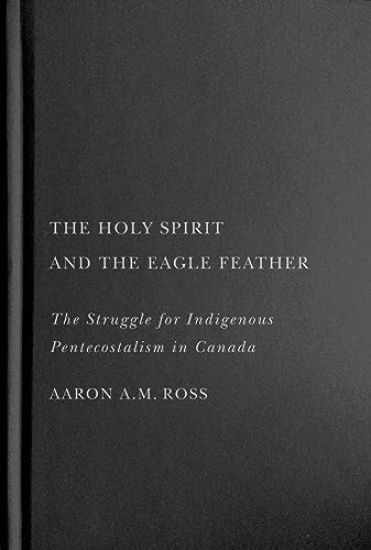
The Holy Spirit and the Eagle Feather

The Holy Spirit and the Eagle Feather

Aaron A.M. Ross

MCGILL-QUEEN'S UNIVERSITY PRESS
2023
sidottu
Pentecostalism is one of the fastest-growing religious movements in the world. In Canada, it is the most rapidly growing Christian group among Indigenous people, with approximately one in ten Pentecostals in the country being Indigenous. Pentecostalism has become a religious force in many Indigenous communities, where congregations are most often led by Indigenous ministers – an achievement that took many decades. The Holy Spirit and the Eagle Feather traces the development of Indigenous Pentecostalism in Canada. Exploring the history of twentieth-century missionization, with particular attention to the Pentecostal Assemblies of Canada’s Northland Mission, founded in 1943, Aaron Ross shows how the denomination’s Euro-Canadian leaders, who believed themselves to be supporters of Indigenous-led churches, struggled to relinquish control of mission management and finances. Drawing on interviews with contemporary figures in the movement, he describes how Indigenous Pentecostals would come to challenge the mission’s eurocentrism over decades, eventually entering positions of leadership in the church. This process required them to confront the painful vestiges of colonialism and to grapple with the different philosophies and theologies of Pentecostalism and Indigenous traditional spiritualities. In doing so they indigenized the movement and forged a new identity, as Indigenous and Pentecostal.Indigenous Pentecostals now occupy key roles in the church and serve as political, cultural, and economic leaders in their communities. The Holy Spirit and the Eagle Feather tells the story of how they overcame the church’s colonial impulses to become religious leaders, as well as agents for decolonization and reconciliation.