Kirjojen hintavertailu. Mukana 11 244 527 kirjaa ja 12 kauppaa.

Kirjahaku

Etsi kirjoja tekijän nimen, kirjan nimen tai ISBN:n perusteella.

1000 tulosta hakusanalla Adrian Rodriguez

The Policy Making Process in the Criminal Justice System
How the state ‘deals with’ crime and criminality is a major issue for all students of criminology and criminal justice. This book offers a fresh perspective on the policy making process in the criminal justice system of England and Wales by presenting a detailed overview of both the theory behind it and how it plays out in practise with contemporary policy examples. The key features of this text include a detailed analysis of the basic political concepts surrounding the relationship between the citizen and the state as well as an overview of the state departments, organizations and individuals who are instrumental in creating and influencing policy. This book also analyses how criminal justice policy is interpreted and implemented on the street and comprises a range of discussion points and suggested further readings. By taking a unique criminal justice focussed approach to policy making, this text is perfect for the undergraduate taking modules in criminology, criminal justice, policing, the voluntary sector and social and public policy. It will also be of interest to those who are taking more vocational routes and practitioners.
Becoming a Successful Early Career Researcher

Becoming a Successful Early Career Researcher

Adrian Eley; Jerry Wellington; Stephanie Pitts; Catherine Biggs

Routledge
2012
nidottu
Not that long ago there were fairly clear divisions between researchers at different stages throughout their career, starting with doctoral students then progressing to postdoctoral workers and finishing with academic staff. However, more recently the term Early Career Researcher (ECR) has been introduced partly as a response to their growing importance which has been reflected by their increased respect and status shown by national, international and funding bodies. There are several common features of an ECR’s job including the need to establish a professional identity and develop into an independent researcher, competing for grants and increasing one’s output of research publications; this book offers proven practical advice to help ECRs kick-start a successful academic career.With advice on:Choosing research topicsMaking best use of a Research Supervisor/MentorDeveloping your research writingGetting published: journals and booksWriting a research grant/fellowshipBecoming a supervisorBecoming a teacher, andDeveloping your career This guide will help academics at the start of their career no matter what discipline they are engaged in… Arts, Humanities, Sciences or Social Sciences. For example, in sciences and engineering, ECRs are commonly part of a large research team and often have to work in collaborative groups; requiring strong interpersonal skills but can lead to tension in the interaction with one’s supervisor or mentor. In contrast, in the arts and humanities and perhaps the social sciences, an ECR is more likely to be an independent scholar with a requirement to work alone, leading to a different type of relationship (but not necessarily any less stressful) with one’s supervisor or mentor.Using case studies from across the subject areas to illustrate key points and give suitable examples this vital guide will help all early career academics.
Becoming a Successful Early Career Researcher

Becoming a Successful Early Career Researcher

Adrian Eley; Jerry Wellington; Stephanie Pitts; Catherine Biggs

Routledge
2012
sidottu
Not that long ago there were fairly clear divisions between researchers at different stages throughout their career, starting with doctoral students then progressing to postdoctoral workers and finishing with academic staff. However, more recently the term Early Career Researcher (ECR) has been introduced partly as a response to their growing importance which has been reflected by their increased respect and status shown by national, international and funding bodies. There are several common features of an ECR’s job including the need to establish a professional identity and develop into an independent researcher, competing for grants and increasing one’s output of research publications; this book offers proven practical advice to help ECRs kick-start a successful academic career.With advice on:Choosing research topicsMaking best use of a Research Supervisor/MentorDeveloping your research writingGetting published: journals and booksWriting a research grant/fellowshipBecoming a supervisorBecoming a teacher, andDeveloping your career This guide will help academics at the start of their career no matter what discipline they are engaged in… Arts, Humanities, Sciences or Social Sciences. For example, in sciences and engineering, ECRs are commonly part of a large research team and often have to work in collaborative groups; requiring strong interpersonal skills but can lead to tension in the interaction with one’s supervisor or mentor. In contrast, in the arts and humanities and perhaps the social sciences, an ECR is more likely to be an independent scholar with a requirement to work alone, leading to a different type of relationship (but not necessarily any less stressful) with one’s supervisor or mentor.Using case studies from across the subject areas to illustrate key points and give suitable examples this vital guide will help all early career academics.
Class, States and International Relations
This book provides an outline and a critique of neo-Gramscian international relations theory, from a Marxist perspective. Focusing on the pioneering work of Robert Cox, but also drawing on the wider neo-Gramscian literature, this book presents a comprehensive account of neo-Gramscian international relations theory. It highlights the neo-Gramscian critique of mainstream Realist theory and the theoretical innovations that resulted from the mobilisation of Gramsci’s ideas and Cox’s emphasis on the social forces underpinning forms of state and world orders. The author explains how this is especially relevant in the current period of war and crisis, when the international dimensions of social existence continue to exercise a major influence over ‘domestic’ politics and economics, and when the interest in Marxism can be expected to grow. The book continues to provide a critique of the neo-Gramscians and of what the author argues is their one-sided reading of Gramsci. Placing coercion at the centre of a mode of production analysis of world order, the author elaborates a Marxist alternative to neo-Gramscianism that provides more robust explanations of world order dynamics and change.Using a combination of IR theory and historical explanation, including of contemporary world order dynamics and US power, this book will appeal to both students and scholars of International Relations, international studies, and international history.
Paediatrics, Psychiatry and Psychoanalysis
How do children and parents shape clinical practice? How can clinicians learn from the impact of their patients upon them? How do we recognise if health care practices are adversely affecting health care?Children's health problems can place enormous strain on both children and their families. Whether symptoms are acute or chronic, assessment and treatment can be confusing and frightening even when the illness itself is not dangerous. Understanding the impact of illness on emotions, relationships and development is an essential part of providing good health care services. For health care professionals it is necessary to understand how their clinical practice affects their patients and how this reciprocal relationship shapes good or bad practice.Introducing key psychoanalytic concepts Adrian Sutton illustrates through detailed clinical studies how psychoanalytic theory can be applied in a health care setting involving children and their families. Paediatrics, Psychiatry and Psychoanalysis specifically describes the impact of the patient on the professional, how conscious and unconscious elements need to be taken into account, and to what extent these can influence practice enhancing diagnostic and therapeutic treatment.Paediatrics, Psychiatry and Psychoanalysis is an exploration of the central importance of the patient-doctor relationship and how the psychodynamics of this relationship are crucial in providing information that can aid treatment. It will be of interest to child mental health professionals – psychoanalysts, psychotherapists, psychiatrists, psychologists, nurses, paediatric practitioners and those working in social welfare and educational settings.
Paediatrics, Psychiatry and Psychoanalysis
How do children and parents shape clinical practice? How can clinicians learn from the impact of their patients upon them? How do we recognise if health care practices are adversely affecting health care?Children's health problems can place enormous strain on both children and their families. Whether symptoms are acute or chronic, assessment and treatment can be confusing and frightening even when the illness itself is not dangerous. Understanding the impact of illness on emotions, relationships and development is an essential part of providing good health care services. For health care professionals it is necessary to understand how their clinical practice affects their patients and how this reciprocal relationship shapes good or bad practice.Introducing key psychoanalytic concepts Adrian Sutton illustrates through detailed clinical studies how psychoanalytic theory can be applied in a health care setting involving children and their families. Paediatrics, Psychiatry and Psychoanalysis specifically describes the impact of the patient on the professional, how conscious and unconscious elements need to be taken into account, and to what extent these can influence practice enhancing diagnostic and therapeutic treatment.Paediatrics, Psychiatry and Psychoanalysis is an exploration of the central importance of the patient-doctor relationship and how the psychodynamics of this relationship are crucial in providing information that can aid treatment. It will be of interest to child mental health professionals – psychoanalysts, psychotherapists, psychiatrists, psychologists, nurses, paediatric practitioners and those working in social welfare and educational settings.
The Anatomy of Adolescence (Psychology Revivals)

The Anatomy of Adolescence (Psychology Revivals)

Adrian Furnham; Barrie Gunter

Routledge
2013
sidottu
Originally published in 1989, this is a unique reference source to the social attitudes of British adolescents of the time. The authors, both experienced researchers, draw on a sample of over 2,000 adolescents from all over the British Isles, including Northern Ireland and the north of Scotland as well as the south of England and Wales. They provide one of the most comprehensive reviews of the 1980s, with the results summarized in tables supported by clear commentaries.The contents range widely over key issues of the time, covering attitudes to politics and government, crime and law enforcement, sex roles and race, religion and the paranormal, health and the environment, school, work and unemployment, and home entertainment media. Some of the book’s findings are unexpected: young people are surprisingly conservative about the role of men and women, for instance, yet they have radical ideas about certain institutions, like the monarchy. Altogether the book gives a clear and revealing snapshot of the attitudes of young Britons of the time.
The Anatomy of Adolescence (Psychology Revivals)

The Anatomy of Adolescence (Psychology Revivals)

Adrian Furnham; Barrie Gunter

Routledge
2014
nidottu
Originally published in 1989 this is a unique reference source to the social attitudes of British adolescents of the time. The authors, both experienced researchers, draw on a sample of over 2,000 adolescents from all over the British Isles, including Northern Ireland and the north of Scotland as well as the south of England and Wales. They provide one of the most comprehensive reviews of the 1980s, with the results summarized in tables supported by clear commentaries.The contents range widely over key issues of the time, covering attitudes to politics and government, crime and law enforcement, sex roles and race, religion and the paranormal, health and the environment, school, work and unemployment, and home entertainment media. Some of the book’s findings are unexpected: young people are surprisingly conservative about the role of men and women, for instance, yet they have radical ideas about certain institutions, like the monarchy. Altogether the book gives a clear and revealing snapshot of the attitudes of young Britons of the time.
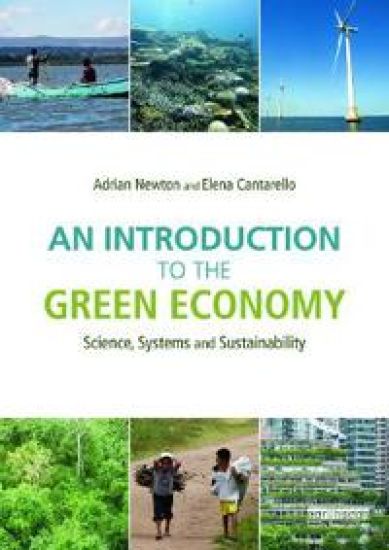
An Introduction to the Green Economy

An Introduction to the Green Economy

Adrian C. Newton; Elena Cantarello

Routledge
2014
sidottu
The green economy is widely seen as a potential solution to current global economic and environmental crises, and a potential mechanism by which sustainable development might be achieved in practice. Considerable investments are now being made into the development of green technology, renewable energy, biodiversity conservation, resource efficiency, recycling of materials and green infrastructure.This textbook provides a comprehensive introduction to the green economy, using a strongly interdisciplinary approach based on environmental science, rather than treating it as a sub-set of economics. The scientific principles of sustainability are presented, which provide the foundations of the green economy, with a particular focus on systems-based approaches. Examples of real-world case studies are used to illustrate how the green economy can be achieved in practice. In this way, the authors provide a thorough overview of both the principles and practice of the green economy, drawing from a wide range of disciplines including ecology, geography, social science, psychology, sustainability science, environmental science, law and economics.The emphasis is on presenting results of the latest research, derived from leading scientific journals. Rather than focusing on a single definition of what constitutes a ‘green economy’, the book introduces readers to the diversity of opinion that exists, and engages them in what is an active, on-going debate. This reflects the fact that many aspects of the green economy, and sustainable development more generally, are currently contested. In particular, the book will help readers to strengthen their ability to critically evaluate the evidence for and against the views presented, and to actively contribute to the future development of the green economy.
An Introduction to the Green Economy

An Introduction to the Green Economy

Adrian C. Newton; Elena Cantarello

Routledge
2014
nidottu
The green economy is widely seen as a potential solution to current global economic and environmental crises, and a potential mechanism by which sustainable development might be achieved in practice. Considerable investments are now being made into the development of green technology, renewable energy, biodiversity conservation, resource efficiency, recycling of materials and green infrastructure.This textbook provides a comprehensive introduction to the green economy, using a strongly interdisciplinary approach based on environmental science, rather than treating it as a sub-set of economics. The scientific principles of sustainability are presented, which provide the foundations of the green economy, with a particular focus on systems-based approaches. Examples of real-world case studies are used to illustrate how the green economy can be achieved in practice. In this way, the authors provide a thorough overview of both the principles and practice of the green economy, drawing from a wide range of disciplines including ecology, geography, social science, psychology, sustainability science, environmental science, law and economics.The emphasis is on presenting results of the latest research, derived from leading scientific journals. Rather than focusing on a single definition of what constitutes a ‘green economy’, the book introduces readers to the diversity of opinion that exists, and engages them in what is an active, on-going debate. This reflects the fact that many aspects of the green economy, and sustainable development more generally, are currently contested. In particular, the book will help readers to strengthen their ability to critically evaluate the evidence for and against the views presented, and to actively contribute to the future development of the green economy.
Fundraising Management

Fundraising Management

Adrian Sargeant; Elaine Jay

Routledge
2014
nidottu
Applying the principles of marketing to nonprofit organizations and the fundraising sector is vital for the modern fundraiser who wants to increase profitability and diversify their fundraising efforts in this challenging industry. This comprehensive how-to guide provides a thorough grounding in the principles underpinning professional practices and critically examines the key issues in fundraising policy, planning and implementation. This new edition of Fundraising Management builds on the successful previous editions by including modern perspectives on organizational behaviour, extended coverage of digital fundraising and donor behaviour, including an examination of group influences on behaviour, and a new chapter on the use of social media for supporter engagement and retention. Combining scholarly analysis with practical real life examples, Fundraising Management has been endorsed by the Institute of Fundraising, and is mapped to the Certificate and Diploma in Fundraising, making it the definitive guide to best practice both in the UK and globally. This is a clear, problem-solving guide that no fundraising student or professional should be without.
The Political Thought of Andre Gorz
Andre Gorz is one of the most important contemporary socialist thinkers. He has acquired a reputation as an iconoclastic theorist who poses radical questions about the future of the Left. This is the first full length assessment of his work which critically evaluates all of his writings from the 1950s to the 1990s.
Peasants in the Pacific

Peasants in the Pacific

Adrian C Mayer

Routledge
2013
nidottu
This is Volume X of eighteen in a collection on the Sociology of Development. Originally published in 1961 this is the second edition of a study of Fiji Indian Rural Society, looking at the areas of Vunioki and Delanikoro and Namboulima.
Conspiracy, Revolution, and Terrorism from Victorian Fiction to the Modern Novel
Drawing on critical and theoretical work by Miller, Boone, Foucault, Jameson, and others, as well as cultural history, affect theory, and contemporary psychiatric literature, the author defines and explores what he calls the Victorian "conspiracy narrative tradition"--a tradition which embraces classic Victorian works like Bleak House, Great Expectations, Villette, and The Moonstone, as well as later Victorian and Edwardian novels by James, Conrad, and Chesterton, and early spy thrillers such as The Riddle of the Sands and The Thirty-Nine Steps. In reading these works as instances of a single literary tradition, the conspiracy narrative tradition, the author traces how the representation of conspiracy changes in nineteenth-century British literature and argues that many of these changes occur in response to significant Victorian-era developments, such as the European revolutions of 1848-49, the rise of British law enforcement agencies, the growth of Irish Fenian terrorism, and the fin-de-siècle waning of the British Empire. The book also explores the roles that conspiratorial indeterminacy and irony play in shaping the Victorian conspiracy narrative tradition and examines how modern works by Proust, Kafka, and Pynchon appropriate elements from Victorian conspiracy narratives. Finally, in using recent work on affect theory as well as studies of paranoia by Freud, Shapiro, and Meissner, the book traces how Victorian works fashion the paranoid subject, a discursive process that ultimately leads to the emergence of the modern fictional conspiracy theorist.
Conspiracy, Revolution, and Terrorism from Victorian Fiction to the Modern Novel
Drawing on critical and theoretical work by Miller, Boone, Foucault, Jameson, and others, as well as cultural history, affect theory, and contemporary psychiatric literature, the author defines and explores what he calls the Victorian "conspiracy narrative tradition"--a tradition which embraces classic Victorian works like Bleak House, Great Expectations, Villette, and The Moonstone, as well as later Victorian and Edwardian novels by James, Conrad, and Chesterton, and early spy thrillers such as The Riddle of the Sands and The Thirty-Nine Steps. In reading these works as instances of a single literary tradition, the conspiracy narrative tradition, the author traces how the representation of conspiracy changes in nineteenth-century British literature and argues that many of these changes occur in response to significant Victorian-era developments, such as the European revolutions of 1848-49, the rise of British law enforcement agencies, the growth of Irish Fenian terrorism, and the fin-de-siècle waning of the British Empire. The book also explores the roles that conspiratorial indeterminacy and irony play in shaping the Victorian conspiracy narrative tradition and examines how modern works by Proust, Kafka, and Pynchon appropriate elements from Victorian conspiracy narratives. Finally, in using recent work on affect theory as well as studies of paranoia by Freud, Shapiro, and Meissner, the book traces how Victorian works fashion the paranoid subject, a discursive process that ultimately leads to the emergence of the modern fictional conspiracy theorist.
Couples, Conflict and Change

Couples, Conflict and Change

Adrian James

Routledge
1986
nidottu
The A3 process is a way to look with new eyes at a specific problem identified by direct observation or experience. It offers a structure that begins by always defining the issue through the eyes of the customer.In A3 Problem Solving for Healthcare Cindy Jimmerson explains an essential tool borrowed from the Toyota Production System, which is an extension of work identified with the well-known Value Stream Map. She offers an easy-to-learn problem-solving method that can be used in every aspect of healthcare to identify, understand, and improve processes that don't support workers in doing their good work. In this compelling book you get: The expertise of a recognized industry expert in Lean principles A practical, easy-to-use workbook Concepts illustrated with numerous A3s in various stages of development Explanation of how to extend the VSM philosophy to a more focused perspective An extensive exploration of the A3 problem-solving tool in healthcare the first book to do so Through case studies and actual A3s, this book illustrates the simplicity and completeness of the A3 tool and its applications to regulatory documentation as well as activities of daily work.
Sound Foundations

Sound Foundations

Adrian Underhill

Macmillan Education
1994
nidottu
Dealing with phonology, this is part of a series for teachers, trainers and academic managers which aims to promote development by dealing with professional topics in a personal way, in order to deepen understanding, raise self-awareness, and encourage self-direction and choice.
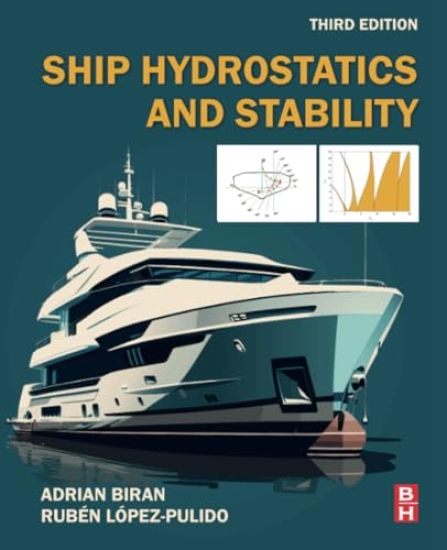
Ship Hydrostatics and Stability

Ship Hydrostatics and Stability

Adrian Biran; Rubén López-Pulido

Elsevier - Health Sciences Division
2024
nidottu
Ship Hydrostatics and Stability, Third Edition, is a comprehensive guide to understanding ship hydrostatics in ship design and ship performance, taking you from first principles through basic and applied theory to contemporary mathematical techniques for ship design and project approval. Real-life examples are used to explain the theory and calculations using MATLAB and Excel. The new edition of this trusted resource covers new naval architecture regulations, such as a Second-Generation Intact Stability Code (SGISC), and new case studies. Extensive reference to computational techniques is made throughout, and downloadable MATLAB files accompany the book to support your own hydrostatics and stability calculations. The book also includes tables of notations and technical terms, as well as indexes in English, French, German, Italian, and Spanish.