

Kirjahaku
Etsi kirjoja tekijän nimen, kirjan nimen tai ISBN:n perusteella.
1000 tulosta hakusanalla Al Leone
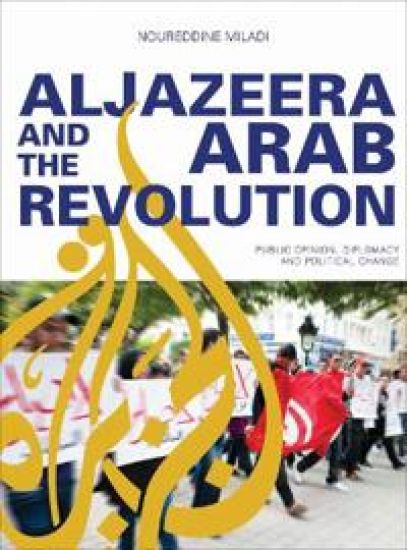
In late 2010, Tunisians began protesting the government of then president Zine el-Abidine Ben Ali; on January 14, 2011, their protests forced the dictatorial leader to resign. Further democratic uprisings, which came to be known as the Arab Spring, soon spread across the region, leading to the ouster of Egyptian president Hosni Mubarak and Libyan leader Muammar al-Qaddafi. Throughout it all, experts have argued, Arab satellite TV and especially Al Jazeera helped to sustain revolutions by broadcasting these events live throughout the Arab World. "Al-Jazeera and Arab Revolution "tells the story of how the network came to have such influence.Tracing the emergence of Al Jazeera from its emergence in 1996, Noureddine Miladi contends that the satellite channel began a new era of Arab broadcasting, revolutionizing Arabs ideas of the news and even Arab consciousness itself. To support this argument, he draws on a wealth of interviews with relevant journalists, policy makers, and political activists who speak to Al-Jazeera s impact on public opinion and politics. The resulting portrait depicts a channel that has become an international force in its own right, challenging Arab as well as some Western powers and fueling political change in the Arab world."

The mid-life crisis becomes the lifetime's crisis. The fling becomes the affair, the affair becomes the love affair. The love affair becomes the murder. Set within the chateaux and vineyards of Southern France, 'Al's Well' is a story of many kinds of love: of sexual passion and emotional desperation; of cravings for romance and danger and fulfilment; of lusts simultaneously for the intimate and the superficial; of proscribed love buttressing married love. At one level, 'Al's Well' is the tale of the adulterous affair between the sassy American, Trove, and the geeky Englishman, Mike. At another, it chronicles the consequent deepening of the relationship of Trove with her sculptor husband, Al. At all levels, 'Al's Well' is love under the microscope - but a microscope of lenses either chortling with laughter or crumpled in tears or both. Gregory Dark already enjoys a reputation for prose of enormous wit, charm and beauty. These qualities are again in abundance in this, his first book of which love is the central theme.

Yucatan, Santiago del Chile, Rapa Nui, le isole della Polinesia francese, la Nuova Zelanda del nord, Sydney, Cairns ed il centro rosso dell'Australia. Una storia vera di un viaggio attorno al mondo, con zaini in spalla e prenotazioni effettuate via internet. 10 tappe per cercare di placare la curiosita di vedere altri paesaggi, di sentire altre culture, di capire altre persone, ma anche un'occasione per una visione meno sfuocata del microcosmo lasciato per mesi. Ogni tappa e accompagnata da una fotografia introduttiva. ********************************************* Yucatan, Santiago of the Chile, Rapa Nui, French Polynesia, north New Zeland, Sydney, Cairns and the red center of Australia. Based on the real history of a round-the-world travel, with ready backpacks and internet reservations. 10 stops in order to calm odwn curiosity towards other landscapes, cultures and people. It is also an occasion for a less out-of-focus vision of the microcosm left for months. Each chapter, one photographe.
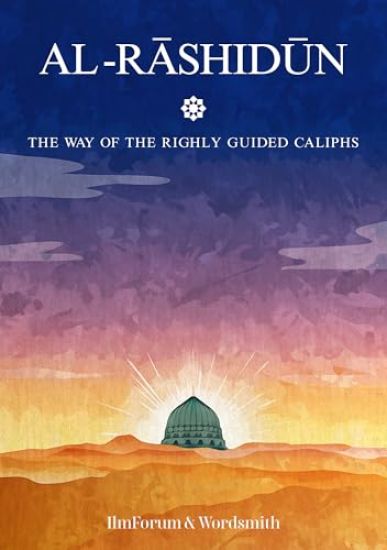
Al-Rashidun
Kube Publishing Ltd
2025
pokkari
The legacy of the greatest teacher the world has known, the greatest man to ever walk the Earth, the Messenger of Allah, is attested to by the greatness of his students: the ?a?abah. None more so than his four successors, the four men famed as the Rightly Guided Caliphs. The Blessed Prophet’s words and deeds have reached us from across the centuries and still inspire billions. It was these men who were charged with carrying those teachings to others, and within one short century spread them across the breadth of the world.This book collects the teachings of these great men; their words and their actions; how they lived and how they died. Each of them was a giant upon whose shoulders the great scholars and sages; the orators and leaders; the warriors and heroes; the ascetics and mystics in every age of this Ummah have built their places in the halls of history. Each of them was shaped for greatness by the blessed hands of the Beloved in a singular and unique manner. Together, they built a community, an empire, and a legacy that shall inspire this Ummah until the end of time.
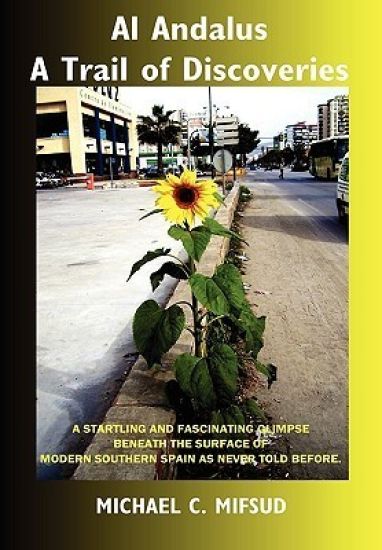
The book is different, in all respects, to all that has been written about the charismatic people of southern Spain. It looks at regularly overlooked corners of the culture and brings to life much that puzzles the northern visitors. The ease with which it can be read and the various layers of understanding help to absorb a difficult subject that academics tend to condense into facts and figures. Each chapter can be read in any order and each is self-sufficient in its potrayal, like a cameo with its own frame. Chapter headings are in Spanish and relate to the essence of the chapter, prompting the reader, where necessary, to find out what it means. If it is to be categorized, this book is an alternative and hard look at a surprisingly complex and highly cultured people who have gone unnoticed for too long.
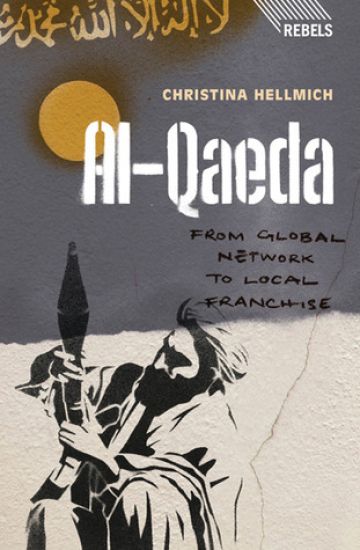
Since the attacks of September 11th 2001 and up to and beyond Osama bin Ladin's death, al-Qaeda has come to embody the new enigmatic face of terrorism, dominating discussions of national and international security. Yet in spite of the attention it receives, conflicting assumptions about the group abound. Is al-Qaeda a rigidly structured organization, a global network of semi-independent cells, a franchise, or simply an idea whose time has come? What is meant by talk of the ‘global Salafi jihad’ that is confronting the West? What are the implications of bin Ladin's death? Christina Hellmich offers a critical examination of the widely-held notions regarding the origins and manifestations of al-Qaeda and the sources on which they rely, mapping the organisation’s alleged transition from what began as a regional struggle against the Soviets in Afghanistan to the increasingly leaderless jihad of the post-9/11 world. Rather than just providing yet another biography of al-Qaeda, Hellmich forensically examines discrepancies between the most common explanations and to the limits of what can realistically be known. Drawing on a wide variety of sources, 'al-Qaeda: From Global Network to Local Franchise' offers a penetrating insight into an organization which, for all its notoriety, is one of the least-understood of our time.

Over the past two decades, the rapid development of nanochemistry and nanotechnology has allowed the synthesis of various materials and oxides in the form of nanopowders making it possible to produce new energetic compositions and nanomaterials. This book has a bottom-up structure, from nanomaterials synthesis to the application fields. Starting from aluminum nanoparticles synthesis for fuel application, it proposes a detailed state-of-the art of the different methods of preparation of aluminum-based reactive nanomaterials. It describes the techniques developed for their characterization and, when available, a description of the fundamental mechanisms responsible for their ignition and combustion. This book also presents the possibilities and limitations of different energetic nanomaterials and related structures as well as the analysis of their chemical and thermal properties. The whole is rounded off with a look at the performances of reactive materials in terms of heat of reaction and reactivity mainly characterized as the self-sustained combustion velocity. The book ends up with a description of current reactive nanomaterials applications underlying the promising integration of aluminum-based reactive nanomaterial into micro electromechanical systems.

Iberia is a special place of colliding myths over its Islamic past and the Christian reconquista, the Inquisition and massive expulsion of Muslims and Jews some five centuries ago. Long a land of emigrants and explorers, it has now become home to Europe's latest, rapidly growing Muslim communities. Al Andalus Rediscovered focuses on Iberia's new Muslims, including boatpeople, students, women and clerics, and how they are faring in a largely Roman Catholic region. Also featured are the Spanish and Portuguese officials, academics, NGOs and ordinary citizens who are trying to find better ways to integrate Muslims and other immigrants, despite domestic and European pressures for tougher counter-measures. Nor does Howe neglect the events of March 11, 2004, when Madrid was the site of the most devastating terrorist attack by Muslim extremists in Europe, or the stated ambition of Al Qaeda to recover Al Andalus for Islam. Her book seeks to answer the basic questions: whether an Iberian model of a humane immigration policy is possible in 'fortress' Europe and whether the partisans of the Andalusian spirit of tolerance and diversity can prevail at this time of economic hardship and heightened radicalism in both the Islamic World and the West.
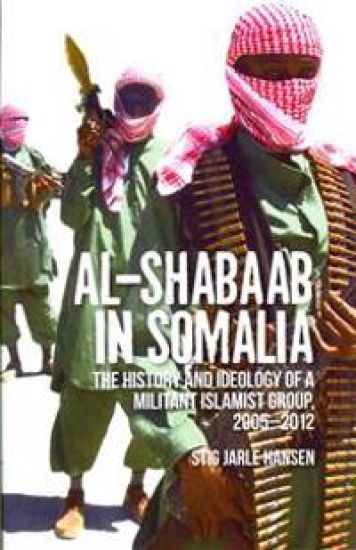
Since early 2007 a new breed of combatants has appeared on the streets of Mogadishu and other towns in Somalia: the 'Shabaab', or youth, the only self-proclaimed branch of al-Qaeda to have gained acceptance (and praise) from Ayman al-Zawahiri and 'AQ centre' in Afghanistan. Itself an offshoot of the Islamic Courts Union, which split in 2006, Shabaab has imposed Sharia law and is also heavily influenced by local clan structures within Somalia itself. It remains an infamous and widely discussed, yet little-researched and understood, Islamist group. Hansen's remarkable book attempts to go beyond the media headlines and simplistic analyses based on alarmist or localist narratives and, by employing intensive field research conducted within Somalia, as well as on the ground inter- views with Shabaab leaders themselves, explores the history of a remarkable organisation, one that has survived predictions of its collapse on several occasions. Hansen portrays al-Shabaab as a hybrid Islamist organisation that combines a strong streak of Somali nationalism with the rhetorical obligations of international jihadism, thereby attracting a not insignificant number of foreign fighters to its ranks. Both these strands of Shabaab have been inadvertently boosted by Ethiopian, American and African Union attempts to defeat it militarily, all of which have come to nought.

Since early 2007 a new breed of combatants has appeared on the streets of Mogadishu and other towns in Somalia: the 'Shabaab', or youth, the only self-proclaimed branch of al-Qaeda to have gained acceptance (and praise) from Ayman al-Zawahiri and 'AQ centre' in Afghanistan. Itself an offshoot of the Islamic Courts Union, which split in 2006, Shabaab has imposed Sharia law and is also heavily influenced by local clan structures within Somalia itself. It remains an infamous and widely discussed, yet little-researched and understood, Islamist group. Hansen's remarkable book attempts to go beyond the media headlines and simplistic analyses based on alarmist or localist narratives and, by employing intensive field research conducted within Somalia, as well as on the ground inter- views with Shabaab leaders themselves, explores the history of a remarkable organisation, one that has survived predictions of its collapse on several occasions. Hansen portrays al-Shabaab as a hybrid Islamist organisation that combines a strong streak of Somali nationalism with the rhetorical obligations of international jihadism, thereby attracting a not insignificant number of foreign fighters to its ranks. Both these strands of Shabaab have been inadvertently boosted by Ethiopian, American and African Union attempts to defeat it militarily, all of which have come to nought.
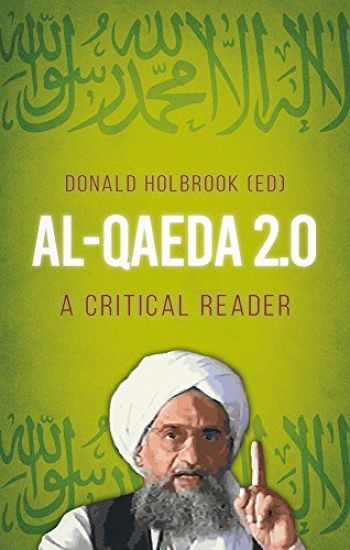
On 16 June 2011, three days before his sixtieth birthday, Ayman al-Zawahiri was declared the new leader of Al- Qaeda, replacing the fallen Osama bin Laden. The veteran Egyptian jihadist had little of his predecessor's charisma and enjoyed much less popularity, respect and celebrity. Yet, as scores of jihadi commanders from different organisations have succumbed to their enemies' missiles, bombs and bullets, Zawahiri has soldiered on. His tenure as Al-Qaeda's leader has been marked by some of its darkest and most challenging moments, which have threatened the viability and future of Al-Qaeda's central leadership. The gravest such development has been the emergence of Islamic State as a separate and rival jihadist entity. The best way to gauge Zawahiri's response to these threats is by studying the official statements and public communiques that he has issued since taking the reins. This book provides the reader with professional translations of Zawahiri's key statements during his first five years as leader of Al-Qaeda.These official communications are introduced and contextualised to provide the reader with a comprehensive sourcebook, outlining the Al-Qaeda leadership's stance on the challenges to its existence since the death of bin Laden.

The only comprehensive introduction to al-Farabi - the first Islamic philosopher to translate the works of Plato and Aristotle. This new survey from a leading scholar documents the philosopher's life, writings and achievements.

This accessible biography treats al-Ma'mum (786-833) as the product of his age, which was a formative period in the development of Islamic law and theology. It presents him in his many facets: rebel, rationalist, scientist, poet, politician, warrior, inquisitor, and self-proclaimed defender of the faith. Drawing on contemporary sources, some friendly and others hostile, it offers a comprehensive portrait of a fascinating figure in Islamic history.

This exhaustive and yet enthralling study considers the life and work of al-Mutanabbi (915-965), often regarded as the greatest of the classical Arab poets. A revolutionary at heart and often imprisoned or forced into exile throughout his tumultuous life, al-Mutanabbi wrote both controversial satires and when employed by one of his many patrons, laudatory panegyrics. Employing an ornate style and use of the ode, al-Mutanabbi was one of the first to successfully move away from the traditionally rigid form of Arabic verse, the ‘qasida’.

Al-Suhrawardi
Oneworld Publications
2011
sidottu

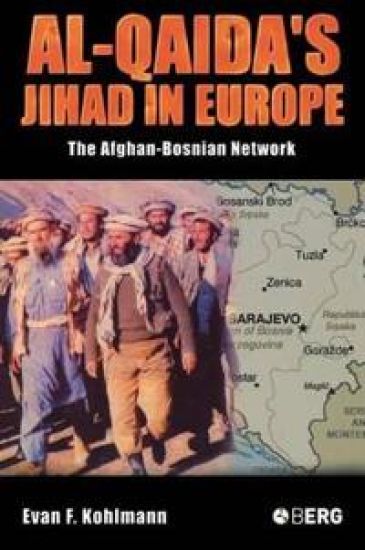
Why did so many of the September 11th hijackers spend time in Germany? How did terrorist sleeper cells plant themselves in cities such as London, Paris, Rome, and Hamburg? This is the first book to uncover the secret history of how Europe was systematically infiltrated by the ranks of the most dangerous terrorist organization on earth. Terrorist analyst Evan F. Kohlmann argues that the key to understanding Al-Qaida's European cells lies in the Bosnian war of the 1990s. Using the Bosnian war as their cover, Afghan-trained Islamic militants loyal to Usama Bin Laden convened in the Balkans in 1992 to establish a European domestic terrorist infrastructure in order to plot their violent strikes against the United States. As the West and the United Nations looked on with disapproval, the fanatic foreign mujahideen, or holy warriors, wreaked havoc across southern Europe, taking particular aim at UN peacekeepers and even openly fighting with Bosnian Muslims at times. Within a few months of the war's end, home-grown terrorist sleeper cells appeared on the streets of Europe's cities. Al-Qaida's Jihad in Europe unveils a new angle to the deadly international terrorist organization and includes recently declassified American and European intelligence reports, secret Al-Qaida records and internal documents, and interviews with notorious figures such as London-based Bin Laden sympathizer Abu Hamza Al-Masri.
Why did so many of the September 11th hijackers spend time in Germany? How did terrorist sleeper cells plant themselves in cities such as London, Paris, Rome, and Hamburg? This is the first book to uncover the secret history of how Europe was systematically infiltrated by the ranks of the most dangerous terrorist organization on earth. Terrorist analyst Evan F. Kohlmann argues that the key to understanding Al-Qaida's European cells lies in the Bosnian war of the 1990s. Using the Bosnian war as their cover, Afghan-trained Islamic militants loyal to Usama Bin Laden convened in the Balkans in 1992 to establish a European domestic terrorist infrastructure in order to plot their violent strikes against the United States. As the West and the United Nations looked on with disapproval, the fanatic foreign mujahideen, or holy warriors, wreaked havoc across southern Europe, taking particular aim at UN peacekeepers and even openly fighting with Bosnian Muslims at times. Within a few months of the war's end, home-grown terrorist sleeper cells appeared on the streets of Europe's cities. Al-Qaida's Jihad in Europe unveils a new angle to the deadly international terrorist organization and includes recently declassified American and European intelligence reports, secret Al-Qaida records and internal documents, and interviews with notorious figures such as London-based Bin Laden sympathizer Abu Hamza Al-Masri.

What's his real political record? This is the first unsparing look at the man whom his parents raised from birth to be president of the United States. Inside these pages, you will find: . How Al Gore and his father got on the payroll of one of America's most ruthless tycoons, Armand Hammer . How Al Gore has relentlessly exploited his sister's death and son's accident for personal political advantage . How Al Gore violated the most basic journalistic ethics by helping the cops run a sting operation on a black politician in Nashville . How Al Gore played midwife to the MX missile . How Al Gore became a soul brother of Newt Gingrich . How Al Gore race-baited Jesse Jackson and introduced George Bush to Willie Horton . How Al Gore shopped his vote in support of the Gulf War to get prime-time coverage for his speech . How Al Gore pushed Clinton into destroying the New Deal . How Al Gore plotted to stop Democrats from recapturing Congress in 1996 in order to keep his rival Dick Gephard from becoming Speaker of the House . How Al Gore leached campaign from nearly every corporate lobbyist in DC, and broke pledge after pledge to protect the environment

Al-Ghazali (1058-1111 CE) is arguably one of the most influential thinkers in the history of Islam and his writings have received greater scholarly attention in the West than those of any other Muslim scholar. This study explores and important dimension of his thought that has not yet been fully examined, namely, his polemical engagement with the Ismailis of the Fatimid and early Alamut periods. Al-Ghazali's debate with the Ismailis constitutes an important chapter in the history of Muslim thought and this book also explores the wider intellectual and political significance of this encounter, and especially the light it sheds on the central tensions and questions of the age in which al-Ghazali lived.