Kirjojen hintavertailu. Mukana 11 342 296 kirjaa ja 12 kauppaa.

Kirjahaku

Etsi kirjoja tekijän nimen, kirjan nimen tai ISBN:n perusteella.

1000 tulosta hakusanalla Al Olinde

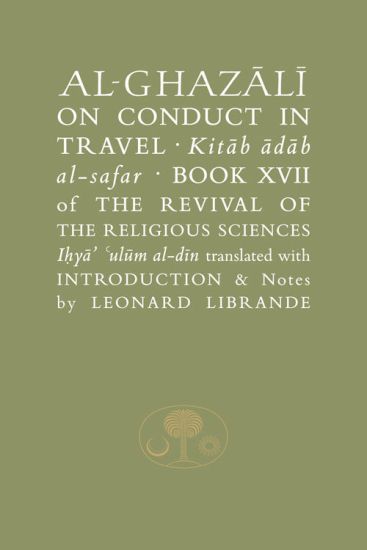
Al-Ghazali on Conduct in Travel

Al-Ghazali on Conduct in Travel

Abu Hamid Al-Ghazali

The Islamic Texts Society
2015
nidottu
"Al-Ghazali on Conduct in Travel" is a translation of the seventeenth book of the "Revival of the Religious Sciences" (Ihya Ulum al-Din), which is widely regarded as the greatest work of Muslim spirituality. In "Al-Ghazali on Conduct in Travel", Abu Hamid al-Ghazali uncovers, as elsewhere in the "Revival", the mystical and religious dimension of one of humanity's most basic needs: in this instance, travel.---In Chapter One, Ghazali begins by providing the reader with the four reasons for travel, which include for the quest for knowledge and to flee from harm and danger. The advantages gained from travelling are also described by Ghazali-for example, the disciplining of the soul through exposure to the harsh conditions of travel as well as the acquisition of virtue and self-knowledge. Ghazali then explains what the seven proper conducts of travels-both outward conduct and inward conduct-consist of. In Chapter Two, Ghazali provides a practical chapter on the use of religious concessions while travelling, and concludes with a final chapter on how the traveller is to establish the proper direction and times for prayer. "Al-Ghazali on Conduct in Travel" will be of interest to all those wishing to explore the disciplining qualities of everyday activities applied here to the spiritual dimension of travelling.---In this new edition, the Islamic Texts Society has included the translation of Abu Hamid al-Ghazali's own Introduction to the "Revival of the Religious Sciences" which gives the reasons that caused him to write the work, the structure of the whole of the Revival and places each of the chapters in the context of the others.
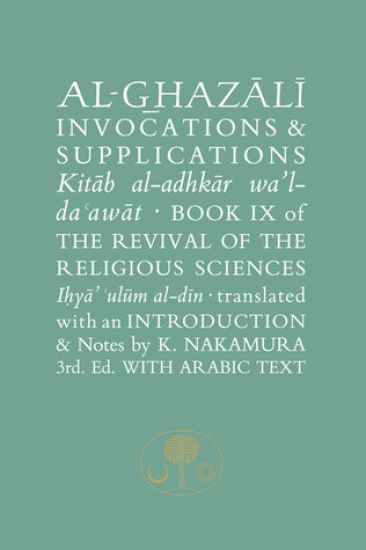
Al-Ghazali on Invocations and Supplications

Al-Ghazali on Invocations and Supplications

Abu Hamid Al-Ghazali

The Islamic Texts Society
2010
sidottu
Written by Abu Hamid Ghazali in the 11th century, "The Revival of the Religious Sciences" is one of the most authoritative texts in Islamic religious literature. Offering a deeper understanding of Islam and its practices, this record contains the only English translation of an essential section from this magnum opus. Admired for the author's analytical approach and detailed exploration of the psychological and spiritual effects of prayer, this compendium will not only interest academics, but also Muslims who wish to recite the prayers in the original Arabic.
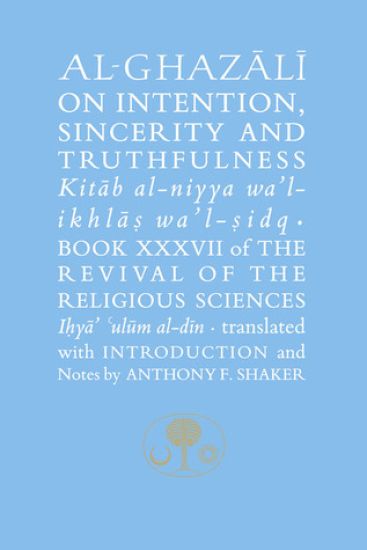
Al-Ghazali on Intention, Sincerity and Truthfulness

Al-Ghazali on Intention, Sincerity and Truthfulness

Abu Hamid al-Ghazali

The Islamic Texts Society
2013
sidottu
Al-Ghazali on Intention, Sincerity & Truthfulness is the thirty-seventh chapter of the Revival of the Religious Sciences. It falls in the section dealing with the virtues. Here Ghazali deals with the very important subject of intention, which is of crucial importance in Islam. He asks: 'How can someone ignorant of the meaning of intention verify his own intention; or how can someone ignorant of the meaning of sincerity verify his own sincerity; or how can someone sincerely claim truthfulness if he has not verified its meaning'In the Book of Intention, Sincerity & Truthfulness, Ghazali gives a response to each of these questions by expounding the reality and levels of intention, sincerity and truthfulness, those acts which affirm them and those acts which mar them. As in all his writings, Ghazali bases his arguments on the Qur'an, the example of the Prophet and the sayings of numerous scholars and Sufis.
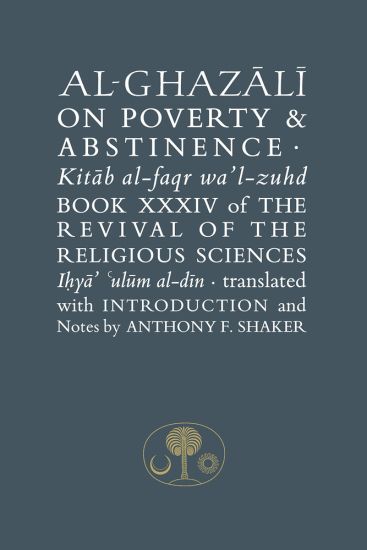
Al-Ghazali on Poverty and Abstinence

Al-Ghazali on Poverty and Abstinence

Abu Hamid al-Ghazali

The Islamic Texts Society
2019
sidottu
Al-Ghazali on Poverty and Abstinence is the thirty-fourth chapter of the Revival of the Religious Sciences. It falls in the section dealing with the virtues. Ghazali traces poverty and abstinence back to the Prophet Muhammad who exhorted the faithful to love the poor and described this love as a key to heaven. But behind the Prophet's love of the poor lay his legendary humility, and the life of poverty on which Ghazali expatiates in this treatise refers to what every devoted follower of the Prophet is meant to adopt, not simply an accidental state of destitution that might befall anyone. What is true piety? What spiritual infirmities impede the path of poverty? These are the questions that preoccupy Ghazali in the Book on Poverty and Abstinence. His aim in this chapter is to teach the ordinary believer about inner purification through inner poverty and abstinence. The result is a rich tapestry of practises, thoughts, concepts and anecdotes drawn from some of the most fascinating figures in the tradition of practical ethics in Islam, a tradition that harks back to the enduring examples of pre-Islamic prophets like Jesus, Moses and Joseph.
Al-Ghazali on Poverty and Abstinence

Al-Ghazali on Poverty and Abstinence

Abu Hamid al-Ghazali

The Islamic Texts Society
2019
nidottu
Al-Ghazali on Poverty and Abstinence is the thirty-fourth chapter of the Revival of the Religious Sciences. It falls in the section dealing with the virtues. Ghazali traces poverty and abstinence back to the Prophet Muhammad who exhorted the faithful to love the poor and described this love as a key to heaven. But behind the Prophet's love of the poor lay his legendary humility, and the life of poverty on which Ghazali expatiates in this treatise refers to what every devoted follower of the Prophet is meant to adopt, not simply an accidental state of destitution that might befall anyone. What is true piety? What spiritual infirmities impede the path of poverty? These are the questions that preoccupy Ghazali in the Book on Poverty and Abstinence. His aim in this chapter is to teach the ordinary believer about inner purification through inner poverty and abstinence. The result is a rich tapestry of practises, thoughts, concepts and anecdotes drawn from some of the most fascinating figures in the tradition of practical ethics in Islam, a tradition that harks back to the enduring examples of pre-Islamic prophets like Jesus, Moses and Joseph.
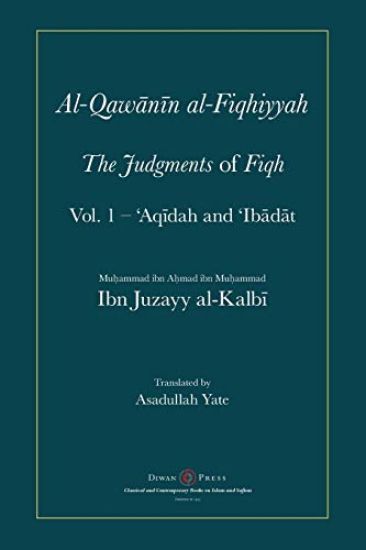
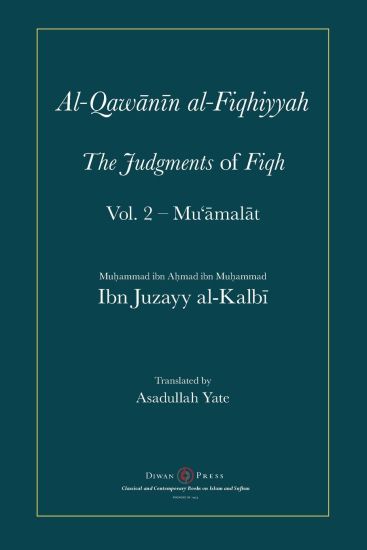
Al-Qawanin al-Fiqhiyyah

Al-Qawanin al-Fiqhiyyah

Abu'l-Qasim Ibn Juzayy Al-Kalbi

Diwan Press
2019
sidottu
"It is the most comprehensive and useful abridgement to be found in Mālikī fiqh." (Farīd al-Anṣārī Mafhūm al-'Ālimiyyah)The works of Ibn Juzayy partake of a particular miraculous quality of the last of the Messengers of Allah, may Allah bless him and them and grant them peace: they unite concision and comprehensiveness.Comprehensively, the author presents both the range of judgments within the school of the People of Madīnah as well as the range of judgments among the madhhabs at large, but with concision in a single modest Arabic volume. He covers not only 'aqīdah and 'ibādāt but also mu'āmalāt, other matters of taṣawwuf, and yet others pertaining to history, i.e. the sīrah of the Messenger ﷺ, the khulafā' and Andalus.His main concern is to say with clarity what the dīn IS, and then to note the legitimate differences, and sometimes the illegitimate ones in order to dismiss them. To show the spectrum of valid differences is vitally important in the age of literalism that says "tell me the ṣaḥīḥ hadith so that I can act on it" or in its Mālikī version, "tell me the well-known judgment (mashhūr)." The author carefully lets the reader know the well-known judgments (mashhūr) but sets them within the spectrum of valid judgments from the luminaries among Mālik's students, such as Ibn al-Qāsim, Ashhab, Aṣbagh, Ibn Wahb and Ibn al-Mājishūn et al, who, it is well to remember, may simply be acting on what they learnt from Mālik himself.Following Ibn Juzayy's own division of his work into two parts, we here publish Volume 1 containing the chapters on 'aqīdah and 'ibādāt, reserving mu'āmalāt for Volume 2.Ibn Juzayy was Abu-l-Qāsim Muḥammad ibn Aḥmad ibn Muḥammad ibn 'Abdullāh ibn Yaḥyā ibn 'Abd ar-Raḥmān ibn Yūsuf ibn Sa'īd ibn Juzayy al-Kalbī. He was born on the 19th Rabī' al-Awwal in 693 AH/1294 CE. He mastered the essential sciences of the dīn, and wrote significant works on tafsīr, hadith, 'aqīdah, taṣawwuf, qirā'āt (recitations and rescensions of the Qur'ān) and uṣūl al-fiqh. He died as a shahīd in the Battle of Tareef on Monday 7th Jumāda-l-Ūlā 741 AH/30th October 1340 CE.Dr. Asadullah Yate (Cantab.) has translated works from Arabic, Persian, German and French, and, in collaboration with others, from Turkish. He teaches Arabic and Fiqh at the Weimar Institute, and is Imam al-Khateeb at the mosque of Stralsund, Germany.
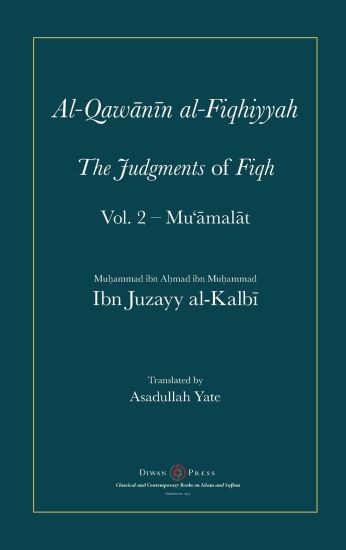
Al-Qawanin al-Fiqhiyyah

Al-Qawanin al-Fiqhiyyah

Abu'l-Qasim Ibn Juzayy Al-Kalbi

Diwan Press
2019
pokkari
"It is the most comprehensive and useful abridgement to be found in Mālikī fiqh." (Farīd al-Anṣārī Mafhūm al-'Ālimiyyah)The works of Ibn Juzayy partake of a particular miraculous quality of the last of the Messengers of Allah, may Allah bless him and them and grant them peace: they unite concision and comprehensiveness.Comprehensively, the author presents both the range of judgments within the school of the People of Madīnah as well as the range of judgments among the madhhabs at large, but with concision in a single modest Arabic volume. He covers not only 'aqīdah and 'ibādāt but also mu'āmalāt, other matters of taṣawwuf, and yet others pertaining to history, i.e. the sīrah of the Messenger ﷺ, the khulafā' and Andalus.His main concern is to say with clarity what the dīn IS, and then to note the legitimate differences, and sometimes the illegitimate ones in order to dismiss them. To show the spectrum of valid differences is vitally important in the age of literalism that says "tell me the ṣaḥīḥ hadith so that I can act on it" or in its Mālikī version, "tell me the well-known judgment (mashhūr)." The author carefully lets the reader know the well-known judgments (mashhūr) but sets them within the spectrum of valid judgments from the luminaries among Mālik's students, such as Ibn al-Qāsim, Ashhab, Aṣbagh, Ibn Wahb and Ibn al-Mājishūn et al, who, it is well to remember, may simply be acting on what they learnt from Mālik himself.Following Ibn Juzayy's own division of his work into two parts, we here publish Volume 1 containing the chapters on 'aqīdah and 'ibādāt, reserving mu'āmalāt for Volume 2.Ibn Juzayy was Abu-l-Qāsim Muḥammad ibn Aḥmad ibn Muḥammad ibn 'Abdullāh ibn Yaḥyā ibn 'Abd ar-Raḥmān ibn Yūsuf ibn Sa'īd ibn Juzayy al-Kalbī. He was born on the 19th Rabī' al-Awwal in 693 AH/1294 CE. He mastered the essential sciences of the dīn, and wrote significant works on tafsīr, hadith, 'aqīdah, taṣawwuf, qirā'āt (recitations and rescensions of the Qur'ān) and uṣūl al-fiqh. He died as a shahīd in the Battle of Tareef on Monday 7th Jumāda-l-Ūlā 741 AH/30th October 1340 CE.Dr. Asadullah Yate (Cantab.) has translated works from Arabic, Persian, German and French, and, in collaboration with others, from Turkish. He teaches Arabic and Fiqh at the Weimar Institute, and is Imam al-Khateeb at the mosque of Stralsund, Germany.
Al-Andalus

Al-Andalus

Howard Headworth

New Generation Publishing
2014
pokkari
La emocionante novela historica de Howard Headworth nos lleva a los anos de 1480 en Espana. Para los espanoles es el amanecer de la epoca dorada del pais. Para los moros de Al-Andalus en el sur, es el principio de una cosecha amarga. Y lejos al oeste, un Nuevo Mundo hace senas.....Descripciones gloriosas de batalles y conflictos, los horrores de la Inquisicion Espanol, el trazo de acontecimientos historicos llevando a la entrada de los Reyes Catolicos en Granada en 1492, una panoplia de caracteres, perfiles de las tradiciones y habilidades de los campesinos musulmanes en Al-Andalus, y finalmente el primer viaje de Cristobal Colon a las Indias, hacen de este libro un singular tesoro.Howard Headworth vive en Almeria, Espana, durante veinte anos. Nacio en Gales y estudio geologia en la universidad alli y en Londres. Usa su gran experiencia como director cientifico asi como su pasion para la historia de su pais adoptivo en esta novela historica.