Kirjojen hintavertailu. Mukana 11 445 834 kirjaa ja 12 kauppaa.

Kirjahaku

Etsi kirjoja tekijän nimen, kirjan nimen tai ISBN:n perusteella.

1000 tulosta hakusanalla Alain Goetzmann

Trump

Trump

Alain Badiou

Polity Press
2019
nidottu
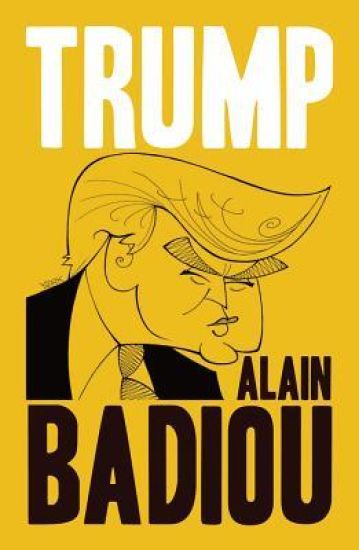
The election of Donald Trump as president of the United States sent shockwaves across the globe. How was such an outcome even possible? In two lectures given at American universities in the immediate aftermath of the election, the leading French philosopher Alain Badiou helps us to make sense of this extraordinary occurrence. He argues that Trump's victory was the symptom of a global crisis made up of four characteristics: the triumph of a brutal form of global capitalism, the decomposition of the established political elite, the growing frustration and disorientation that many people feel today, and the absence of a compelling alternative vision. It was in this context that Trump could emerge as a new kind of political figure that was both inside and outside the political order, a member of the Republican Party who, at the same time, represents something outside the system. The progressive political challenge now is to create something new that offers people a real choice, a radical alternative based on principles of universality and equality. This concise account of the meaning of Trump should be read by everyone who wants to understand what is happening in our world today.
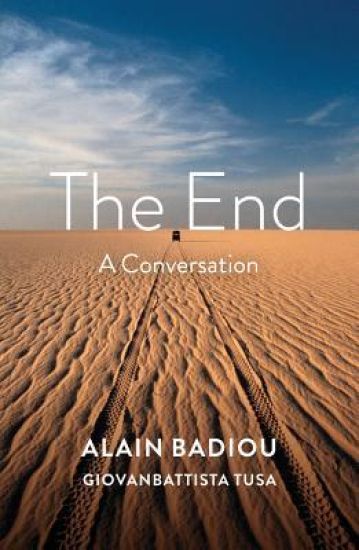
The End

The End

Alain Badiou; Giovanbattista Tusa

Polity Press
2019
sidottu
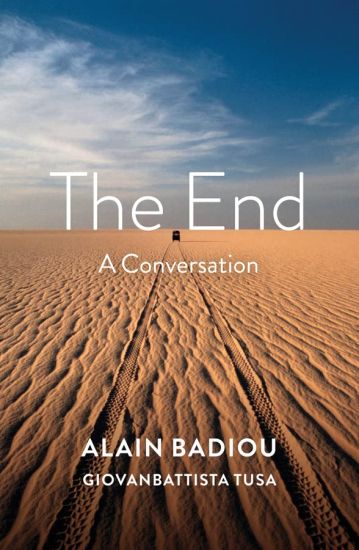
The notion of ‘the end’ has long occupied philosophical thought. In light of the horrors of the twentieth century, some writers have gone so far as to declare the end of philosophy itself, emphasizing the impossibility of thinking after Auschwitz. In this book the distinguished philosopher Alain Badiou, in dialogue with Giovanbattista Tusa, argues that we must renounce ‘the pathos of completion’ and continue to think philosophically. To accept the atrocities of the twentieth century as marking the end of philosophy is intolerable precisely because it buys into the totalizing doctrines of the perpetrators. Badiou contends that philosophical thinking is needed now more than ever to counter the totalizing effects of globalized capitalism, which prescribes no objective for human life other than integration into its system, giving rise to a widespread sense of hopelessness and nihilism. This book will appeal to the many followers of Badiou’s work and to anyone interested in contemporary philosophy and radical political theory.
The End

The End

Alain Badiou; Giovanbattista Tusa

Polity Press
2019
nidottu
The notion of ‘the end’ has long occupied philosophical thought. In light of the horrors of the twentieth century, some writers have gone so far as to declare the end of philosophy itself, emphasizing the impossibility of thinking after Auschwitz. In this book the distinguished philosopher Alain Badiou, in dialogue with Giovanbattista Tusa, argues that we must renounce ‘the pathos of completion’ and continue to think philosophically. To accept the atrocities of the twentieth century as marking the end of philosophy is intolerable precisely because it buys into the totalizing doctrines of the perpetrators. Badiou contends that philosophical thinking is needed now more than ever to counter the totalizing effects of globalized capitalism, which prescribes no objective for human life other than integration into its system, giving rise to a widespread sense of hopelessness and nihilism. This book will appeal to the many followers of Badiou’s work and to anyone interested in contemporary philosophy and radical political theory.
Migrants and Militants

Migrants and Militants

Alain Badiou

Polity Press
2020
sidottu
The question of migration has come to dominate the news agenda in many countries, but what does the word ‘migrant’ really mean today and how should we respond to those who are labelled ‘migrants’? In this short book Alain Badiou argues that our way of thinking about migration should be governed both by an ethical duty to welcome the migrant in the name of hospitality and also by the urgent need to put an end to the global capitalist oligarchy that has produced the migrant as a figure of contemporary crisis. For the ‘migrant,’ argues Badiou, is in fact a nomadic proletarian. Today, our homeland is the world, and any meaningful politics must include those who come to us and who represent the universal nomadic proletariat. Writing with the rigor, clarity, and polemical flair that have made him one of the world’s most influential philosophers, and drawing on a rich body of material including contemporary poetry and the words of an anonymous migrant, Badiou develops a powerful riposte to those who have stoked the fear of migrants and exploited the migration question for political ends.
Migrants and Militants

Migrants and Militants

Alain Badiou

Polity Press
2020
nidottu
The question of migration has come to dominate the news agenda in many countries, but what does the word ‘migrant’ really mean today and how should we respond to those who are labelled ‘migrants’? In this short book Alain Badiou argues that our way of thinking about migration should be governed both by an ethical duty to welcome the migrant in the name of hospitality and also by the urgent need to put an end to the global capitalist oligarchy that has produced the migrant as a figure of contemporary crisis. For the ‘migrant,’ argues Badiou, is in fact a nomadic proletarian. Today, our homeland is the world, and any meaningful politics must include those who come to us and who represent the universal nomadic proletariat. Writing with the rigor, clarity, and polemical flair that have made him one of the world’s most influential philosophers, and drawing on a rich body of material including contemporary poetry and the words of an anonymous migrant, Badiou develops a powerful riposte to those who have stoked the fear of migrants and exploited the migration question for political ends.
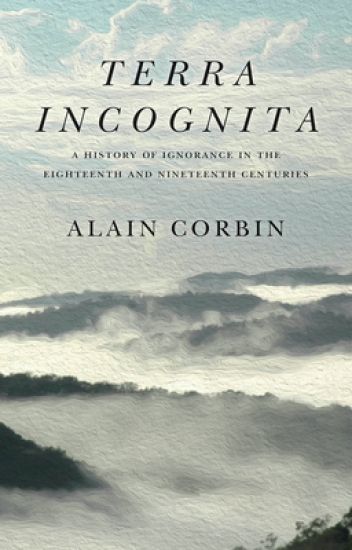
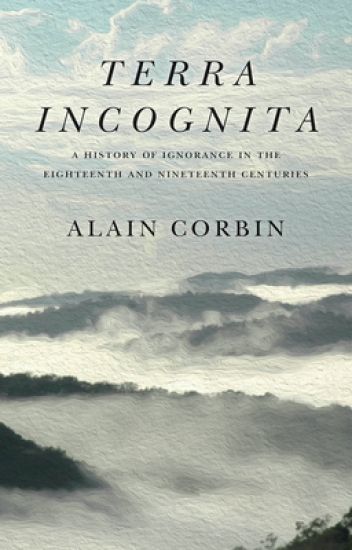
Terra Incognita

Terra Incognita

Alain Corbin

Polity Press
2021
sidottu
Identifying gaps in knowledge is the first duty of any historian who sets out to understand the past. It is impossible fully to understand our forebears without some idea of what they did not know: the history of ignorance is an indispensable part of history itself. Here Alain Corbin focuses on our planet, exploring its mysteries past and present, and the intensity and eventual decline of the modes of terror and wonder it aroused. For thousands of years, humans knew nearly nothing about the earth. Certain locations on the map simply read ‘Terra Incognita’. Corbin recounts the many errors and uncertainties that littered the paths we followed in the attempt to discover the secrets of our blue planet, with a particular focus on the eighteenth and nineteenth centuries when the mysteries of volcanoes, the polar regions, glaciers, the stratosphere and the oceans began to be uncovered. While ignorance stimulated our ancestors’ imagination, Corbin’s history of ignorance reawakens our thirst for knowledge and changes our view of the world.
Terra Incognita

Terra Incognita

Alain Corbin

Polity Press
2021
nidottu
Identifying gaps in knowledge is the first duty of any historian who sets out to understand the past. It is impossible fully to understand our forebears without some idea of what they did not know: the history of ignorance is an indispensable part of history itself. Here Alain Corbin focuses on our planet, exploring its mysteries past and present, and the intensity and eventual decline of the modes of terror and wonder it aroused. For thousands of years, humans knew nearly nothing about the earth. Certain locations on the map simply read ‘Terra Incognita’. Corbin recounts the many errors and uncertainties that littered the paths we followed in the attempt to discover the secrets of our blue planet, with a particular focus on the eighteenth and nineteenth centuries when the mysteries of volcanoes, the polar regions, glaciers, the stratosphere and the oceans began to be uncovered. While ignorance stimulated our ancestors’ imagination, Corbin’s history of ignorance reawakens our thirst for knowledge and changes our view of the world.
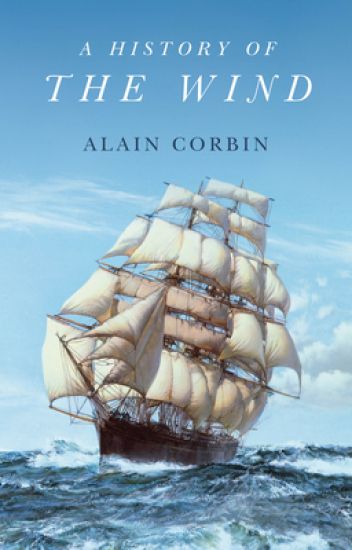
A History of the Wind

A History of the Wind

Alain Corbin

JOHN WILEY AND SONS LTD
2022
sidottu
Everyone knows the wind’s touch, its presence, its force. Sometimes it roars and howls, at other times we hear its wistful sighs and feel its soothing caresses. Since antiquity, humans have borne witness to the wind and relied on it to navigate the seas. And yet, despite its presence at the heart of human experience, the wind has evaded scrutiny in our chronicles of the past. In this brilliantly original volume, Alain Corbin sets out to illuminate the wind’s storied history. He shows how, before the nineteenth century, the noisy emptiness of wind was experienced and described only according to the sensations it provoked. Imagery of the wind featured prominently in literature, from the ancient Greek epics through the Renaissance and romanticism to the modern era, but little was known about where the wind came from and where it went. It was only in the late eighteenth century, with the discovery of the composition of air, that scientists began to understand the nature of wind and its trajectories. From that point on, our understanding of the wind was shaped by meteorology, which mapped the flows of winds and currents around the globe. But while science has enabled us to understand the wind and, in some respects, to harness it, the wind has lost nothing of its mysterious force. It still has the power to destroy, and in the wind’s ethereal presence we can still feel its connection with creation and death.
A New Dawn for Politics

A New Dawn for Politics

Alain Badiou

JOHN WILEY AND SONS LTD
2022
sidottu
What is the relation between politics and the world? It might seem that global capitalism has created one world, but this is an illusion because capitalism creates a world of objects and money that divides human existence into regions separated by fences and walls built to keep some people out. In place of this falsely unified world of global capitalism, we need to assert a fundamental principle – namely, that there is one world of living subjects. This, in Badiou's view, is the categorical imperative of all true politics. The one world of living subjects is the place where an infinity of differences and identities exist. Hence foreigners are not a problem but rather an opportunity and a gift. They bear witness to the youth of the world in its infinite variety, and it is with this youth that the politics of the future rests. Foreignness is the means by which existence is re-evaluated, and all true politics is a new dawn of existence. This collection of essays by Badiou, in which he draws out the political implications of recent events and social movements, will be of value to anyone interested in the great social and political questions of our time.
A New Dawn for Politics

A New Dawn for Politics

Alain Badiou

JOHN WILEY AND SONS LTD
2022
nidottu
What is the relation between politics and the world? It might seem that global capitalism has created one world, but this is an illusion because capitalism creates a world of objects and money that divides human existence into regions separated by fences and walls built to keep some people out. In place of this falsely unified world of global capitalism, we need to assert a fundamental principle – namely, that there is one world of living subjects. This, in Badiou's view, is the categorical imperative of all true politics. The one world of living subjects is the place where an infinity of differences and identities exist. Hence foreigners are not a problem but rather an opportunity and a gift. They bear witness to the youth of the world in its infinite variety, and it is with this youth that the politics of the future rests. Foreignness is the means by which existence is re-evaluated, and all true politics is a new dawn of existence. This collection of essays by Badiou, in which he draws out the political implications of recent events and social movements, will be of value to anyone interested in the great social and political questions of our time.
A History of Rest

A History of Rest

Alain Corbin

JOHN WILEY AND SONS LTD
2024
sidottu
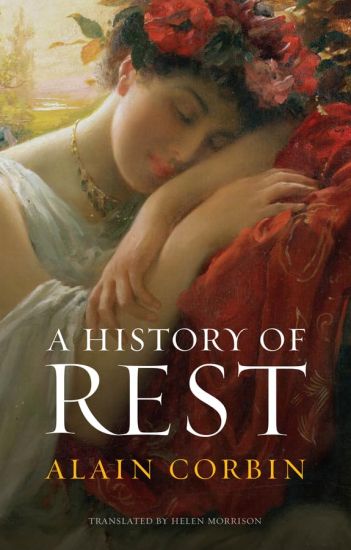
Rest occupies a space outside of sleep and alertness: it is a form of recuperation but also of preparation for what is to come, and is a need felt by human and animal alike. Through the centuries, different and conflicting definitions and forms of rest have blossomed, ranging from heavenly repose to what is prescribed for the modern affliction of burn-out. What has remained constant is its importance: long the subject of art and literature, everyone understands the need not to disturb the aimless, languishing, daydreaming Lotus-eater.Not viewed simply as an antidote for fatigue, for a long time rest was seen as the prelude to eternal life, until everything changed in the nineteenth century and society entered the great ‘age of rest’. At this point, the renowned French historian Alain Corbin explains, rest took on new therapeutic and leisurely qualities, embodied by the new types of human that emerged. The modern epicurean frolicked on beaches and soaked up the rays, while melancholics were rejuvenated in pristine sanatoria, the new temples of rest. Paid holidays and a widespread acceptance of the need to build up the strength sapped during work followed, while the 1950s became the decade of ‘sea, sex and sun’.This new book, as original as Corbin’s other histories of neglected aspects of human life, pans the long evolution of rest in a highly readable and engaging style.
A History of Rest

A History of Rest

Alain Corbin

JOHN WILEY AND SONS LTD
2024
nidottu
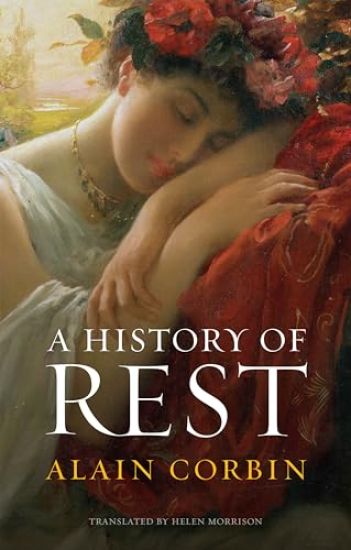
Rest occupies a space outside of sleep and alertness: it is a form of recuperation but also of preparation for what is to come, and is a need felt by human and animal alike. Through the centuries, different and conflicting definitions and forms of rest have blossomed, ranging from heavenly repose to what is prescribed for the modern affliction of burn-out. What has remained constant is its importance: long the subject of art and literature, everyone understands the need not to disturb the aimless, languishing, daydreaming Lotus-eater.Not viewed simply as an antidote for fatigue, for a long time rest was seen as the prelude to eternal life, until everything changed in the nineteenth century and society entered the great ‘age of rest’. At this point, the renowned French historian Alain Corbin explains, rest took on new therapeutic and leisurely qualities, embodied by the new types of human that emerged. The modern epicurean frolicked on beaches and soaked up the rays, while melancholics were rejuvenated in pristine sanatoria, the new temples of rest. Paid holidays and a widespread acceptance of the need to build up the strength sapped during work followed, while the 1950s became the decade of ‘sea, sex and sun’.This new book, as original as Corbin’s other histories of neglected aspects of human life, pans the long evolution of rest in a highly readable and engaging style.
In Praise of Philosophy

In Praise of Philosophy

Alain Badiou

JOHN WILEY AND SONS LTD
2025
sidottu
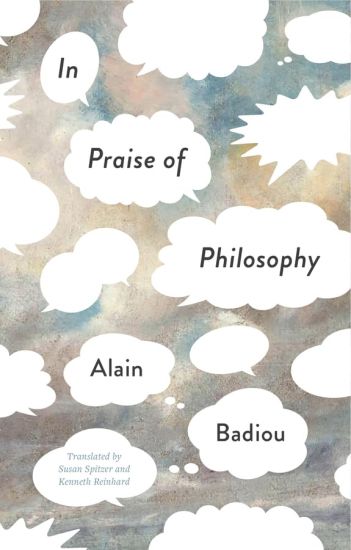
What kind of philosophy do we need for the 21st century? To answer to this question, Alain Badiou imagines a dialogue between Tocéras, an earnest and engaging professor, and various interlocutors from different countries and philosophical cultures – John After from Britain, Amantha from Greece, B’adj Akil from Senegal, Xi La Pong from China and several others. Their conversation takes readers on a playful journey through the history of philosophy framed by the five great questions that have preoccupied Alain Badiou: democracy, freedom, universality, language and being. At the same time, philosophy is presented not as a system or doctrine but as movement and dialogue. The philosopher is not a solitary figure; he is inseparable from his pupils, his disciples and his adversaries. It is only at the end of the journey that he arrives at the written, stable forms of his work. So we are dealing more with a play than a treatise, more with dialogues than monologues, more with a course than a book. The obvious model is Plato's Socrates, who, in founding philosophy as a discipline, ensured that it could be established anywhere in the world. In praise, yes, of philosophy as the public creation of a thought that, inventing itself and transporting itself anywhere, speaking to anyone about anything, invents the theatricalization of being.
In Praise of Philosophy

In Praise of Philosophy

Alain Badiou

JOHN WILEY AND SONS LTD
2025
nidottu
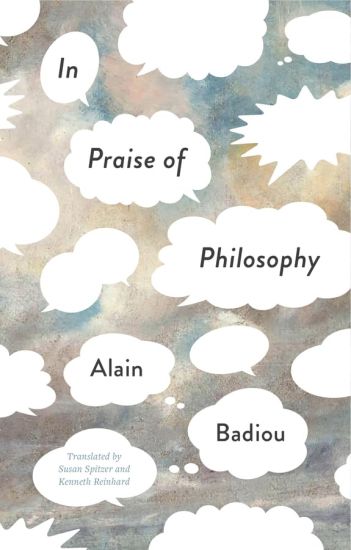
What kind of philosophy do we need for the 21st century? To answer to this question, Alain Badiou imagines a dialogue between Tocéras, an earnest and engaging professor, and various interlocutors from different countries and philosophical cultures – John After from Britain, Amantha from Greece, B’adj Akil from Senegal, Xi La Pong from China and several others. Their conversation takes readers on a playful journey through the history of philosophy framed by the five great questions that have preoccupied Alain Badiou: democracy, freedom, universality, language and being. At the same time, philosophy is presented not as a system or doctrine but as movement and dialogue. The philosopher is not a solitary figure; he is inseparable from his pupils, his disciples and his adversaries. It is only at the end of the journey that he arrives at the written, stable forms of his work. So we are dealing more with a play than a treatise, more with dialogues than monologues, more with a course than a book. The obvious model is Plato's Socrates, who, in founding philosophy as a discipline, ensured that it could be established anywhere in the world. In praise, yes, of philosophy as the public creation of a thought that, inventing itself and transporting itself anywhere, speaking to anyone about anything, invents the theatricalization of being.
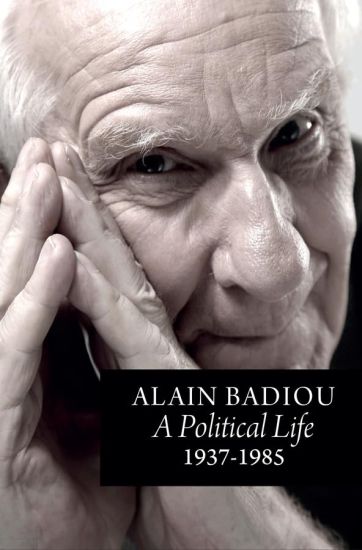
A Political Life: 1937 - 1985

A Political Life: 1937 - 1985

Alain Badiou

JOHN WILEY AND SONS LTD
2025
sidottu
In this book, the renowned philosopher and polymath Alain Badiou tells the story of the first five decades of his life, from 1937 to 1985, setting it within the political history of the twentieth century. Born in Morocco on the eve of catastrophic conflict, Badiou’s childhood and youth were marked by the Second World War and the Algerian War, experiences that would shape his political consciousness. Badiou honed his political convictions as an activist and organiser among students and workers and in solidarity with the Algerian independence movement, but his life was upended and transformed by May ’68 in ways that were profoundly consequential for his philosophical thought. By weaving his philosophical ideas into the narrative of his life, we see how the concepts for which Badiou is well-known – such as subject, being, event and truth – operate in the domain of experience and history. Written in an engaging and often playful style, this book illuminates both the unique trajectory of a major philosopher and the turbulent history of the twentieth century, showing how the latter shaped the thinking of a man who has come to embody the very idea of political commitment and radical political thought.
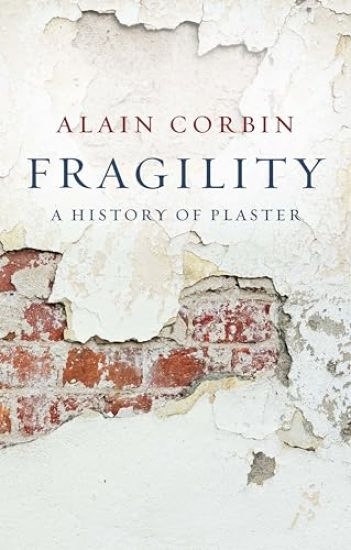
Fragility

Fragility

Alain Corbin

JOHN WILEY AND SONS LTD
2025
sidottu
The distant past is commonly characterized in terms of dominant materials of the time – the Stone Age, the Bronze Age, the Iron Age, etc. Since the dawn of writing, however, characterizing eras in terms of materials has fallen by the wayside, and yet materials have continued to exert a powerful influence on our collective imagination.Viewed from this perspective, France in the period from 1815 to 1855 could be seen as the half-century of plaster. After the French Revolution, plaster was used for a great variety of things: building, moulding, sculpting, decorating. Cheap and easy to use, plaster was everywhere, from Napoleon’s death mask to household ornaments, from walls to elaborate mouldings. Plaster was king – but a fragile king that easily crumbled and fell apart. The age of plaster was also the reign of the ephemeral and the transient, the vulgar and the eclectic, and the men and women of the time struggled to maintain stability and continuity with the past. In the space of a few decades, no fewer than seven political regimes succeeded one another. Plaster – symbol of the ephemeral, the flaking and the vulgar – is the material which defines the first half of the nineteenth century.Written with his characteristic brilliance and eye for unconventional topics, Alain Corbin’s highly original exploration of the role of plaster in history will be of interest to a wide readership.
Fragility

Fragility

Alain Corbin

JOHN WILEY AND SONS LTD
2025
nidottu
The distant past is commonly characterized in terms of dominant materials of the time – the Stone Age, the Bronze Age, the Iron Age, etc. Since the dawn of writing, however, characterizing eras in terms of materials has fallen by the wayside, and yet materials have continued to exert a powerful influence on our collective imagination.Viewed from this perspective, France in the period from 1815 to 1855 could be seen as the half-century of plaster. After the French Revolution, plaster was used for a great variety of things: building, moulding, sculpting, decorating. Cheap and easy to use, plaster was everywhere, from Napoleon’s death mask to household ornaments, from walls to elaborate mouldings. Plaster was king – but a fragile king that easily crumbled and fell apart. The age of plaster was also the reign of the ephemeral and the transient, the vulgar and the eclectic, and the men and women of the time struggled to maintain stability and continuity with the past. In the space of a few decades, no fewer than seven political regimes succeeded one another. Plaster – symbol of the ephemeral, the flaking and the vulgar – is the material which defines the first half of the nineteenth century.Written with his characteristic brilliance and eye for unconventional topics, Alain Corbin’s highly original exploration of the role of plaster in history will be of interest to a wide readership.
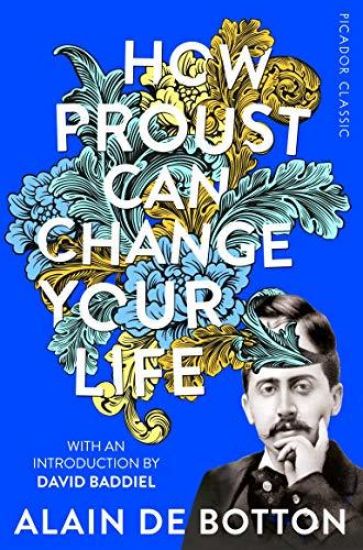
How Proust Can Change Your Life

How Proust Can Change Your Life

Alain de Botton

Picador
2019
pokkari
With an introduction by comedian and novelist David BaddielA novel in seven volumes, Marcel Proust’s In Search of Lost Time is considered a major literary work of the twentieth century. And even more crucially, one that you should have read by now. However, as one of its most distinguishing features is its staggering length, many of us feel intimidated and perhaps, even, fatigued at the thought of diving in. Alain de Botton’s hilarious and unexpected Proustian manual, is then, the perfect antidote to this problem.In How Proust Can Change Your Life, de Botton masterfully distils what Proust says about friendship, reading, being alive and taking your time, and mixes it with his own, no less nourishing commentary. As de Botton rereads Proust for our collective benefit, we see the continued relevance of his work and the rich and varied insights he can offer us, from how to reinvigorate your relationship to being a good host. This is Proust as you’ve never seen him before. He may even change your life.
Governance by Numbers

Governance by Numbers

Alain Supiot

Hart Publishing
2017
sidottu
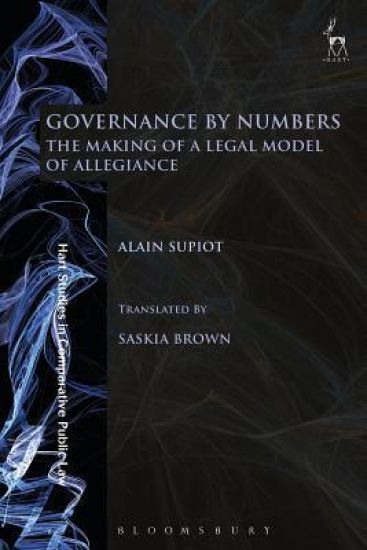
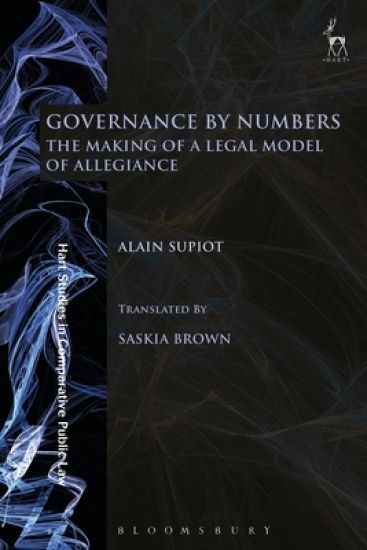
The West's cherished dream of social harmony by numbers is today disrupting all our familiar legal frameworks - the state, democracy and law itself. Its scientistic vision shaped both Taylorism and Soviet Planning, and today, with 'globalisation', it is flourishing in the form of governance by numbers. Shunning the goal of governing by just laws, and empowered by the information and communication technologies, governance champions a new normative ideal of attaining measurable objectives. Programmes supplant legislation, and governance displaces government.However, management by objectives revives forms of law typical of economic vassalage. When a person is no longer protected by a law applying equally to all, the only solution is to pledge allegiance to someone stronger than oneself. Rule by law had already secured the principle of impersonal power, but in taking this principle to extremes, governance by numbers has paradoxically spawned a world ruled by ties of allegiance.
Governance by Numbers

Governance by Numbers

Alain Supiot

Hart Publishing
2020
nidottu
The West's cherished dream of social harmony by numbers is today disrupting all our familiar legal frameworks - the state, democracy and law itself. Its scientistic vision shaped both Taylorism and Soviet Planning, and today, with 'globalisation', it is flourishing in the form of governance by numbers. Shunning the goal of governing by just laws, and empowered by the information and communication technologies, governance champions a new normative ideal of attaining measurable objectives. Programmes supplant legislation, and governance displaces government.However, management by objectives revives forms of law typical of economic vassalage. When a person is no longer protected by a law applying equally to all, the only solution is to pledge allegiance to someone stronger than oneself. Rule by law had already secured the principle of impersonal power, but in taking this principle to extremes, governance by numbers has paradoxically spawned a world ruled by ties of allegiance.