Kirjojen hintavertailu. Mukana 11 342 296 kirjaa ja 12 kauppaa.

Kirjahaku

Etsi kirjoja tekijän nimen, kirjan nimen tai ISBN:n perusteella.

1000 tulosta hakusanalla Alan Simpson

The Brahmin and the Ungrateful Tiger

The Brahmin and the Ungrateful Tiger

Alan Horsfield

Cengage Learning Australia
2003
nidottu
When a brahmin priest rescues a tiger from a cage, he is shocked when the tiger threatens to eat him. The tiger argues that there is no reason why he shouldn't eat the brahmin, because he says that humans are the most ungrateful creatures on earth. The tiger agrees to spare him if the brahmin can find a witness who doesn't believe that all humans are ungrateful.
50 Studies Every Ophthalmologist Should Know

50 Studies Every Ophthalmologist Should Know

Alan Penman; Kimberley Crowder; William M. Watkins

Oxford University Press Inc
2020
nidottu
50 Studies Every Ophthalmologist Should Know presents key studies that have shaped the practice of ophthalmology. Selected using a rigorous methodology, emphasis has been placed on landmark studies which have influenced current ophthalmology practice guidelines. For each study, a concise summary is presented with an emphasis on the results and limitations of the study, and its implications for practice. An illustrative clinical case concludes each review, followed by brief information on other relevant studies. This book is a must-read for ophthalmologists, especially those in training or preparing for board review, as well as anyone who wants to learn more about the data behind clinical practice.
Single-Case Research Designs: Methods for Clinical and Applied Settings
Single-case research has played an important role in developing and evaluating interventions that are designed to alter a particular facet of human functioning. Now thoroughly updated in its third edition, acclaimed author Alan E. Kazdin's Single-Case Research Designs provides a notable contrast to the quantitative methodology approach that pervades the biological and social sciences. While focusing on widely applicable methodologies for evaluating interventions--such as treatment or psychotherapy using applied behavior analysis--this revised edition also encompasses a broader range of research areas that utilize single-case designs, demonstrating the relevance of this methodology to various disciplines, from psychology and medicine to business and industry. This well-written, clear, and thoroughly updated text is ideal for researchers, practitioners, instructors, and students alike.
DNA Demystified

DNA Demystified

Alan McHughen

Oxford University Press Inc
2020
sidottu
DNA, once the exclusive domain of scientists in research labs, is now the darling of popular and social media. With personal genetic testing kits in homes and GMO foods in stores, DNA is an increasingly familiar term. Unfortunately, what people know, or think they know, about DNA and genetics is often confused or incorrect. Contrary to popular belief, for instance, genes don't "skip a generation" and, no, human DNA is not "different" from DNA of other species. With popular misconceptions proliferating in the news and on the internet, how can anyone sort fact from fiction? DNA Demystified satisfies the public appetite for and curiosity about DNA and genetics. Alan McHughen, an accomplished academic and public science advocate, brings the reader up-to-speed on what we know, what we don't, and where genetic technologies are taking us. The book begins with the basic groundwork and a brief history of DNA and genetics. Chapters then cover newsworthy topics, including DNA fingerprinting, using DNA in forensic analyses, and identifying cold-case criminals. For readers intrigued by the proliferation of at-home DNA tests, the text includes fascinating explorations of genetic genealogy and family tree construction-crucial for people seeking their biological ancestry. Other chapters describe genetic engineering in medicine and pharmaceuticals, and the use of those same technologies in creating the far more controversial GMOs in food and agriculture. Throughout, the book raises provocative ethical and privacy issues arising from DNA and genetic technologies. With the author's comprehensive expertise, DNA Demystified offers an informal yet authoritative guide to the genetic marvel of DNA.
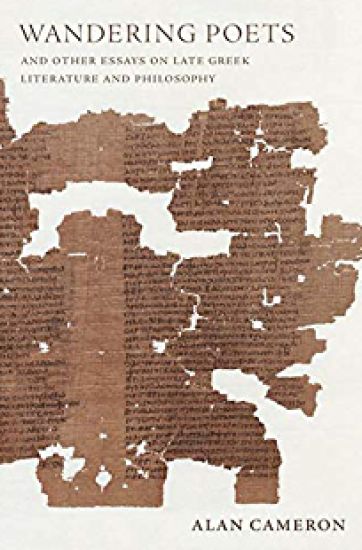
Wandering Poets and Other Essays on Late Greek Literature and Philosophy
This book presents a radically revised version of some of the most important and innovative articles published by Alan Cameron in the field of late antique Greek poetry and philosophy. Much new material has been added to the account of the "Wandering Poets " from early Byzantine Egypt, and earlier judgment on their paganism is nuanced. The story of Cyrus of Panopolis and the empress Eudocia takes into count important recent work on the poetry of Eudocia. Several chapters discuss the date and identity of the influential poet Nonnus. The longest chapter reviews the celebrated story of the so-called closing of the Academy of Athens and the trip of its seven remaining philosophers to the court of the Persian king Chosroes, rejecting the fashionable current idea that they set up a new school at Harran on the Persian border. An entirely new chapter discusses a recently published papyrus containing poems of the Alexandrian epigrammatist Palladas, rejecting the editor's claim that Palladas wrote almost a century earlier than hitherto believed. A concluding chapter discusses recent claims about same-sex marriage in the Roman world.
Better With Age

Better With Age

Alan D. Castel

Oxford University Press Inc
2018
sidottu
We are all aging, yet most adults say they don't feel all that old. Our age is an important number, but it can also be deceiving. After the age of 40, most people say they feel younger than their age, some lie about their age, and many attempt to hide the signs of aging. The psychology of aging tries to make sense of not only how people age, but how our beliefs, behaviors, and expectations influence how well we age. Better with Age addresses the many myths and paradoxes about aging. Often, peoples' expectations of old age do not match what is actually experienced in old age. For example, most people think of old age in terms of decline, grumpiness, aches and pains, but healthy older people report high levels of happiness, focus on positive emotions and enjoy humor. Older people may be forgetful, but selectively remember what is important. By having more experiences to draw on, wisdom and creativity can blossom. Walking and physical exercise, not just brain training exercises, keeps our mind sharp. Old and new habits, hobbies, and friends keep us connected. Retirement is initially confusing, and sometimes avoided, but is often busy and rewarding. Balance, both physical and mental, becomes more important in older age. Successful aging involves leading a productive, healthy, happy life, and can start well before you reach old age. We have older role models who provide inspiring examples of what we can do in older age. This book presents the paradoxes and pleasures of old age, new research and role models of successful aging, and what we can do now to enjoy old age.
American Government: Myths and Realities, 2016 Election Edition

American Government: Myths and Realities, 2016 Election Edition

Alan R. Gitelson; Robert L. Dudley; Melvin J. Dubnick

Oxford University Press
2017
nidottu
We just experienced a historic election--driven more by common political myths and less by its realities--that will impact our political and personal lives for years to come. Rather than dismissing those myths as outright falsehoods, American Government: Myths and Realities, 2016 Election Edition, encourages students to confront their preconceived notions in order to think critically about government and politics. Clearly and distinctively woven into each chapter, the myths-and-realities theme provides a pedagogical framework that engages students with interesting questions while effectively covering the core concepts of American government. Priced at only $79.95, this affordable best seller provides students with definitive coverage of American government while laying out the foundation for today's generation to have a more sophisticated appreciation for our complex, yet exciting, system of governance.
Innovations in Psychosocial Interventions and Their Delivery

Innovations in Psychosocial Interventions and Their Delivery

Alan E. Kazdin

Oxford University Press Inc
2018
sidottu
Millions of children, adolescents, and adults worldwide experience significant mental health problems, for which they receive no treatment whatsoever. Despite decades of world-class, innovative treatment research, growing governmental and public attention to mental health issues, and decreasing stigma around seeking care, the supply of tools and resources available to combat the burdens of mental illness globally are vastly outweighed by demand for services. Innovations in Psychosocial Interventions and Their Delivery provides an integrated and detailed overview of advances, challenges, and necessary new directions with regard to evidence-based psychological interventions. Drawing on diverse fields such as public health, business, entertainment, social policy and law, and other domains that may inform efforts to deliver interventions more effectively, Alan Kazdin explores an assortment of novel and inventive ways to address the world's mental health crisis. Focusing attention on promising scientific developments and the special challenges that emerge in evaluating and delivering such interventions, the book examines opportunities such as trans-diagnostic treatments, inventive uses of technology, complementary approaches, novel methods of dissemination such as task-shifting, and more. The first to bring together such diverse perspectives in an effort to show precisely and practically how treatments could be delivered effectively and in a scalable manner, Innovations in Psychosocial Interventions and Their Delivery has direct and immediate implications for health care systems but also for research and clinical practice in the mental health professions. It will be of keen interest to those in psychology, psychiatry, social work, family studies, counseling, nursing, and healthcare administration.
The Internet Revolution in the Sciences and Humanities

The Internet Revolution in the Sciences and Humanities

Alan G. Gross; Joseph E. Harmon

Oxford University Press Inc
2016
sidottu
The Internet Revolution in the Sciences and Humanities takes a new look at C.P. Snow's distinction between the two cultures, a distinction that provides the driving force for a book that contends that the Internet revolution has sown the seeds for transformative changes in both the sciences and the humanities. It is because of this common situation that the humanities can learn from the sciences, as well as the sciences from the humanities, in matters central to both: generating, evaluating, and communicating knowledge on the Internet. In a succession of chapters, the authors deal with the state of the art in web-based journal articles and books, web sites, peer review, and post-publication review. In the final chapter, they address the obstacles the academy and scientific organizations face in taking full advantage of the Internet: outmoded tenure and promotion procedures, the cost of open access, and restrictive patent and copyright law. They also argue that overcoming these obstacles does not require revolutionary institutional change. In their view, change must be incremental, making use of the powers and prerogatives scientific and academic organizations already have.
The Internet Revolution in the Sciences and Humanities

The Internet Revolution in the Sciences and Humanities

Alan G. Gross; Joseph E. Harmon

Oxford University Press Inc
2016
nidottu
The Internet Revolution in the Sciences and Humanities takes a new look at C.P. Snow's distinction between the two cultures, a distinction that provides the driving force for a book that contends that the Internet revolution has sown the seeds for transformative changes in both the sciences and the humanities. It is because of this common situation that the humanities can learn from the sciences, as well as the sciences from the humanities, in matters central to both: generating, evaluating, and communicating knowledge on the Internet. In a succession of chapters, the authors deal with the state of the art in web-based journal articles and books, web sites, peer review, and post-publication review. In the final chapter, they address the obstacles the academy and scientific organizations face in taking full advantage of the Internet: outmoded tenure and promotion procedures, the cost of open access, and restrictive patent and copyright law. They also argue that overcoming these obstacles does not require revolutionary institutional change. In their view, change must be incremental, making use of the powers and prerogatives scientific and academic organizations already have.
The Invaded

The Invaded

Alan McPherson

Oxford University Press Inc
2016
nidottu
In 1912 the United States sent troops into a Nicaraguan civil war, solidifying a decades-long era of military occupations in Latin America driven by the desire to rewrite the political rules of the hemisphere. In this definitive account of the resistance to the three longest occupations-in Nicaragua, Haiti, and the Dominican Republic-Alan McPherson analyzes these events from the perspective of the invaded themselves, showing why people resisted and why the troops eventually left. Confronting the assumption that nationalism primarily drove resistance, McPherson finds more concrete-yet also more passionate-motivations: hatred for the brutality of the marines, fear of losing land, outrage at cultural impositions, and thirst for political power. These motivations blended into a potent mix of anger and resentment among both rural and urban occupied populations. Rejecting the view that Washington withdrew from Latin American occupations for moral reasons, McPherson details how the invaded forced the Yankees to leave, underscoring day-to-day resistance and the transnational network that linked New York, Havana, Mexico City, and other cities. Political culture, he argues, mattered more than military or economic motives, as U.S. marines were determined to transform political values and occupied peoples fought to conserve them. Occupiers tried to speed up the modernization and centralization of these poor, rural societies and, ironically, to build nationalism where they found it lacking. Based on rarely seen documents in three languages and five countries, this lively narrative recasts the very nature of occupation as a colossal tragedy, doomed from the outset to fail. In doing so, it offers broad lessons for today's invaders and invaded.
Republic of Equals

Republic of Equals

Alan Thomas

Oxford University Press Inc
2017
sidottu
The first book length study of property-owning democracy, Republic of Equals argues that a society in which capital is universally accessible to all citizens is uniquely placed to meet the demands of justice. Arguing from a basis in liberal-republican principles, this expanded conception of the economic structure of society contextualizes the market to make its transactions fair. The author shows that a property-owning democracy structures economic incentives such that the domination of one agent by another in the market is structurally impossible. The result is a renovated form of capitalism in which the free market is no longer a threat to social democratic values, but is potentially convergent with them. It is argued that a property-owning democracy has advantages that give it priority over rival forms of social organization such as welfare state capitalism and market socialist institutions. The book also addresses the currently high levels of inequality in the societies of the developed West to suggest a range of policies that target the "New Inequality" of our times. For this reason, the work engages not only with political philosophers such as John Rawls, Philip Pettit and John Tomasi, but also with the work of economists and historians such as Anthony B. Atkinson, François Bourguignon, Jacob S. Hacker, Lane Kenworthy, and Thomas Piketty.
The Scientific Sublime

The Scientific Sublime

Alan G. Gross

Oxford University Press Inc
2018
sidottu
The sublime evokes our awe, our terror, and our wonder. Applied first in ancient Greece to the heights of literary expression, in the 18th-century the sublime was extended to nature and to the sciences, enterprises that viewed the natural world as a manifestation of God's goodness, power, and wisdom. In The Scientific Sublime, Alan Gross reveals the modern-day sublime in popular science. He shows how the great popular scientists of our time--Richard Feynman, Stephen Hawking, Steven Weinberg, Brian Greene, Lisa Randall, Rachel Carson, Stephen Jay Gould, Steven Pinker, Richard Dawkins, and E. O. Wilson--evoke the sublime in response to fundamental questions: How did the universe begin? How did life? How did language? These authors maintain a tradition initiated by Joseph Addison, Edmund Burke, Immanuel Kant, and Adam Smith, towering 18th-century figures who adapted the literary sublime first to nature, then to science--though with one crucial difference: religion has been replaced wholly by science. In a final chapter, Gross explores science's attack on religion, an assault that attempts to sweep permanently under the rug two questions science cannot answer: What is the meaning of life? What is the meaning of the good life?
The Animal in Ottoman Egypt

The Animal in Ottoman Egypt

Alan Mikhail

Oxford University Press Inc
2017
nidottu
Since humans first emerged as a distinct species, they have eaten, fought, prayed, and moved with other animals. In this stunningly original and conceptually rich book, historian Alan Mikhail puts the history of human-animal relations at the center of transformations in the Ottoman Empire from the sixteenth to the nineteenth centuries. Mikhail uses the history of the empire's most important province, Egypt, to explain how human interactions with livestock, dogs, and charismatic megafauna changed more in a few centuries than they had for millennia. The human world became one in which animals' social and economic functions were diminished. Without animals, humans had to remake the societies they had built around intimate and cooperative interactions between species. The political and even evolutionary consequences of this separation of people and animals were wrenching and often violent. This book's interspecies histories underscore continuities between the early modern period and the nineteenth century and help to reconcile Ottoman and Arab histories. Further, the book highlights the importance of integrating Ottoman history with issues in animal studies, economic history, early modern history, and environmental history. Carefully crafted and compellingly argued, The Animal in Ottoman Egypt tells the story of the high price humans and animals paid as they entered the modern world.
Molecules, Microbes, and Meals

Molecules, Microbes, and Meals

Alan Kelly

Oxford University Press Inc
2019
sidottu
The goal of Molecules, Microbes, and Meals is to provide an overview of the science of food, exploring all aspects of how food products we purchase and consume come to have the characteristics they do. The key focus is on the science underpinning the appearance, flavor, texture and qualities of food, and the transformations that occur when we cook food products. Every food product is a highly complex scientific entity, and a key objective of the book is to show that an understanding of the science of food can enhance our appreciation and wonder at it. Another key theme will be the convergence of science and art in food, and the history of food, whereby we have known how to undertake what are exceptionally scientifically complex activities such as fermentation, pasteurization and cooking long before the scientific basis for what was happening was understood.
Social Research Methods

Social Research Methods

Alan Bryman; Edward Bell; Jennifer Reck; Jessica Fields

OXFORD UNIVERSITY PRESS INC
2022
nidottu
This is a comprehensive text for the research methods course taught out of sociology or other social science disciplines. It covers a wide range of methods and approaches to study design, data collection, and analysis. It is clear, comprehensive, and pays equal attention to both qualitative and quantitative methods, while offering practical, step-by-step advice to students through all stages of the research process. This includes formulating questions, choosing methods, recruiting participants, analyzing the data, and writing up the results. The text also features examples from studies that employ an intersectional analysis, and engages meaningfully with discussions of race, class, gender, sexuality, and disability.
Universal Life

Universal Life

Alan Boss

Oxford University Press Inc
2019
sidottu
After decades of painstaking planning, NASA's first dedicated exoplanet detection mission, the Kepler space telescope, was launched in 2009 from Cape Canaveral. Kepler began a years-long mission of looking for Earth-like planets amongst the millions of stars in the northern constellations of Lyra and Cygnus. Kepler's successful launch meant that it was only a matter of time before we would know just how many Earth-like planets exist in our galaxy. A revolution in thinking about our place in the universe was about to occur, depending on what Kepler found. Are Earths commonplace or rare? Are we likely to be alone in the universe? Only Kepler could start to answer these vexing questions. Universal Life provides a unique viewpoint on the epochal events of the last two decades and the excitement of what will transpire in the coming decades. Author Alan Boss's perspective on this story is unmatched. Boss is the Chair of NASA's Exoplanet Exploration Program Analysis Group, and was also on the Kepler Mission science team. Kepler proved that essentially every star in the night sky has a planetary system, and that most of these systems contain a habitable world, potentially capable of evolving and supporting life. Universal Life summarizes the current state of exoEarth knowledge, and also reveals what will happen next in the post-Kepler world, namely the narrowing of the search for habitable worlds to the stars that are the closest to Earth, those that offer the best chances for future ground- and space-based telescopes to search for, and detect, possible signs of life in their atmospheres. We have come far in the search for life beyond the Earth, but the most exciting phase is about to begin: we may soon be able to prove that we are not alone in the universe.
The Year of Our Lord 1943

The Year of Our Lord 1943

Alan Jacobs

Oxford University Press Inc
2018
sidottu
By early 1943, it had become increasingly clear that the Allies would win the Second World War. Around the same time, it also became increasingly clear to many Christian intellectuals on both sides of the Atlantic that the soon-to-be-victorious nations were not culturally or morally prepared for their success. A war won by technological superiority merely laid the groundwork for a post-war society governed by technocrats. These Christian intellectuals-- Jacques Maritain, T. S. Eliot, C. S. Lewis, W. H. Auden, and Simone Weil, among others--sought both to articulate a sober and reflective critique of their own culture and to outline a plan for the moral and spiritual regeneration of their countries in the post-war world. In this book, Alan Jacobs explores the poems, novels, essays, reviews, and lectures of these five central figures, in which they presented, with great imaginative energy and force, pictures of the very different paths now set before the Western democracies. Working mostly separately and in ignorance of one another's ideas, the five developed a strikingly consistent argument that the only means by which democratic societies could be prepared for their world-wide economic and political dominance was through a renewal of education that was grounded in a Christian understanding of the power and limitations of human beings. The Year of Our Lord 1943 is the first book to weave together the ideas of these five intellectuals and shows why, in a time of unprecedented total war, they all thought it vital to restore Christianity to a leading role in the renewal of the Western democracies.
Capital Markets, Derivatives, and the Law

Capital Markets, Derivatives, and the Law

Alan N. Rechtschaffen

Oxford University Press Inc
2019
sidottu
Dramatic failures in individual markets and institutions sparked a global financial crisis that resulted in political, social, and economic unrest. In the United States, a host of legislative acts have completely reshaped the regulatory landscape. Capital Markets, Derivatives and the Law: Positivity and Preparation investigates the impact of the financial crisis on capital markets and regulation. With an emphasis on the structure and the workings of financial instruments, it considers market evolution after the crisis and the impact of Central Bank policy. In doing so, it provides the reader with the tools to recognize vulnerabilities in capital market trading activities. This edition serves as an essential guide to better understand the legal and business considerations of capital market participation. With useful definitions, case law examples, and expert insight into structures, regulation, and litigation strategies, Capital Markets, Derivatives and the Law: Positivity and Preparation offers readers invaluable tools to make prudent, well-informed decisions.