Kirjahaku
Etsi kirjoja tekijän nimen, kirjan nimen tai ISBN:n perusteella.
1000 tulosta hakusanalla Alberto Rios

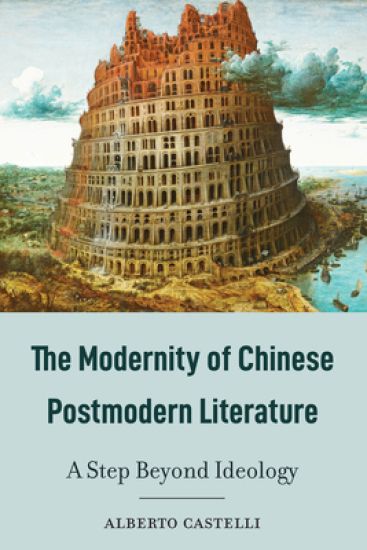
The Modernity of Chinese Postmodern Literature
Alberto Castelli
Peter Lang Publishing Inc
2020
sidottu
The Modernity of Chinese Postmodern Literature is an unprecedented comparative study of postmodern Chinese literature and continental European modernism. This book deconstructs and reconstructs central works of post-1976 Chinese literature and the main texts of European modernism to uncover a striking conceptual similarity between these two literary corpuses. Scholars and postgraduate students in the humanities comprise this work’s primary audience. However, all those interested in contemporary China will find in it an accessible key to decode China’s present and past.

This edited collection brings together a range of essays that examine the maze of Chinese postmodernity. The essays explore the global expansion of capital as a structural crisis represented in art and literature. It ultimately acknowledges the ambiguity of Chinese postmodernity, the overlapping cultural paradigms of Confucian ethics and a capitalist economy, residual of Maoism, socialist relations, and individualist philosophy.

I Don't Want to Go to School!
Alberto Pellai; Barbara Tamborini
Magination Press, (American Psychological Association)
2020
sidottu
Going to school can be a really big deal to a little kid. New routine, new friends, new places, and new faces can be a lot to handle at first! It’s hard for kids to handle that transition and see that school might be fun and that their parent will always come back. This sensitive book will help kid and parents talk about this big step and transition to being apart during the day—and maybe even have fun at school! Includes a Reader’s Note to further explain this common behavioral and emotional stage of childhood.


Sistemi, metodologie, segreti e suggerimenti per avere successo personale/professionale nelle vendite ma anche negli acquisti. La specializzazione (uno dei principi fondamentali dell'Economia); ci si e accorti che per diversi motivi, fattori e limiti era abilitante utilizzare venditori per proporre i propri beni o servizi sul mercato di riferimento, cosi facendo non si distrae parte delle risorse alle altre attivita.

Mi Amigo Juan de Cuba
Alberto Domingo Gonzlez Valds; Alberto Domingo Gonzalez Valdes
Xlibris Corporation
2009
pokkari

A Key To The Exercises In The Combined Spanish Method
Alberto De Tornos
Kessinger Publishing
2008
pokkari

A Key To The Exercises, And A Brief Outline For The Review Of The Rules Contained In The Combined Spanish Method (1899)
Alberto De Tornos
Kessinger Publishing
2008
pokkari

The Argentine In The Twentieth Century (1915)
Alberto B. Martinez; Maurice Lewandowski
KESSINGER PUBLISHING, LLC
2008
nidottu

Two apparently unrelated events, the gruesome murder of two seminarians and strong evidence of paranormal phenomena surrounding a Corsican nun, quickly unfold into a fast-paced story of murder, baroque intrigue, and apocalyptic prophesies. At the center of the maelstrom lies the most deeply guarded secrets of the Roman Catholic Church, the existence of two relics capable of changing the destinies of humanity.Two cardinals and a Jesuit priest engage in a titanic struggle to possess the relics. Such a contest can only end in the death of one or all. Center to the plot an old enmity between the cardinals, the honorable JEAN CLAUDE GUILLOT, the Vatican Secretary of State, and his malignant counterpart and erstwhile friend, the repulsive MARKUS WETEN. But Guillot holds the trump card in the person of NICOLAS MARCH, the Catholic Church foremost exorcist.
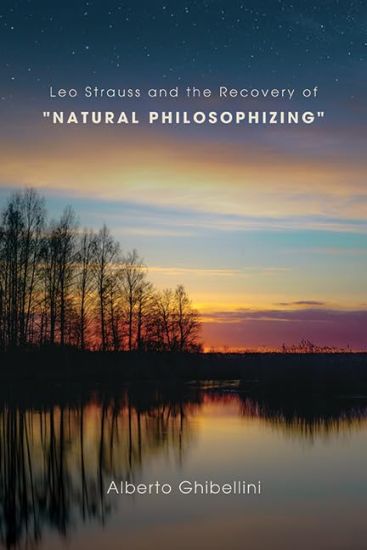
Leo Strauss and the Recovery of "Natural Philosophizing"
Alberto Marco Giovanni Ghibellini
STATE UNIVERSITY OF NEW YORK PRESS
2025
pokkari
Examines how Leo Strauss sought to recover the question of "nature," which he saw as inseparable from genuine philosophy since its inception in ancient Greece.Among the political philosophers of the twentieth century, Leo Strauss is usually singled out for his attempt to revitalize the ancient approach to counter the relativism of both historicism and positivism. It is less commonly underscored, however, that the cornerstone of this attempt is the recovery of the question of "nature," which he regarded as inseparable from genuine philosophy since its inception in ancient Greece. Leo Strauss and the Recovery of "Natural Philosophizing" addresses such a theme, focusing on the theoretical presuppositions that Strauss found at the basis of the acquired inability to raise the question of nature. Prominent among these is the encounter between philosophy and revelation, which, due to their conceptual incompatibility, leads to a condition Strauss metaphorically described as a "second, 'unnatural' cave" characterized by insurmountable "prejudices" rather than "appearance and opinion." These, however, are the starting point of genuine philosophy in the Platonic "first, 'natural' cave," which has to be regained, by way of historical deconstruction of the presuppositions of the second cave, if the "natural philosophizing" embodied by Socratic dialectics is to be reactivated.
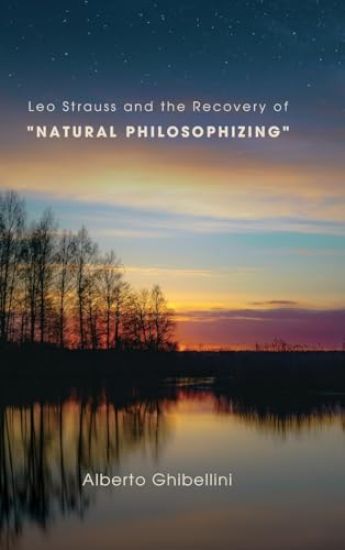
Leo Strauss and the Recovery of "Natural Philosophizing"
Alberto Marco Giovanni Ghibellini
STATE UNIVERSITY OF NEW YORK PRESS
2024
sidottu
Examines how Leo Strauss sought to recover the question of "nature," which he saw as inseparable from genuine philosophy since its inception in ancient Greece.Among the political philosophers of the twentieth century, Leo Strauss is usually singled out for his attempt to revitalize the ancient approach to counter the relativism of both historicism and positivism. It is less commonly underscored, however, that the cornerstone of this attempt is the recovery of the question of "nature," which he regarded as inseparable from genuine philosophy since its inception in ancient Greece. Leo Strauss and the Recovery of "Natural Philosophizing" addresses such a theme, focusing on the theoretical presuppositions that Strauss found at the basis of the acquired inability to raise the question of nature. Prominent among these is the encounter between philosophy and revelation, which, due to their conceptual incompatibility, leads to a condition Strauss metaphorically described as a "second, 'unnatural' cave" characterized by insurmountable "prejudices" rather than "appearance and opinion." These, however, are the starting point of genuine philosophy in the Platonic "first, 'natural' cave," which has to be regained, by way of historical deconstruction of the presuppositions of the second cave, if the "natural philosophizing" embodied by Socratic dialectics is to be reactivated.