
Kirjahaku
Etsi kirjoja tekijän nimen, kirjan nimen tai ISBN:n perusteella.
1000 tulosta hakusanalla Albin Berville
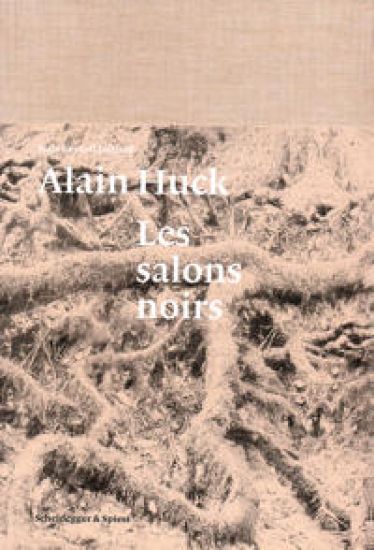
Alain Huck, born 1957, lives and works in francophone Switzerland. Following his degree in Fine Arts at the Ecole cantonale des beaux-arts Lausanne (ECAL) he became a founding member of the M/2 artists collective in Vevey in 1987, with whom he worked for four years. He has been working on his own since 1990, creating a body of polymorphous works in a variety of media: painting, photography, drawing, video, often using text as well. In 2006 Huck started to work on an extensive series of very large-scale charcoal drawings, titled Salons noirs. This corpus now comprises nearly 80 compositions, in which the artist has superimposed different images, combined and confused within a mobile, blurred vision that is occasionally reiterated. This new book for the first time presents the entire series, completed by a selection of other recent works by Alain Huck. Julie Enckell Julliard's essay examines the 'Salons noirs' and suggests ways of approaching them, and also refers to the various relations of Huck's work to that of other artists, such as Albrecht Durer, Arnold Bocklin, Robert Longo, or Gerhard Richter.
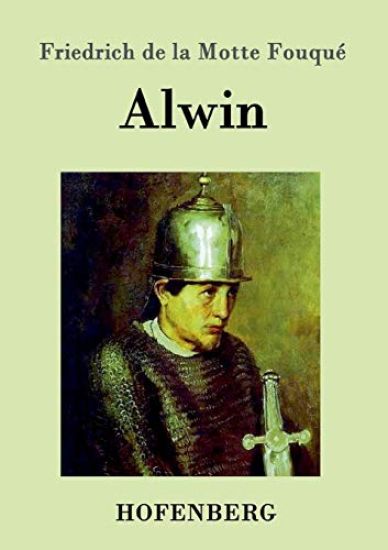
Alwin
Hofenberg
2016
pokkari
Alwin
Hofenberg
2016
sidottu


Alain Laboile: Colour Works
Galerie Vevais
2016
nidottu
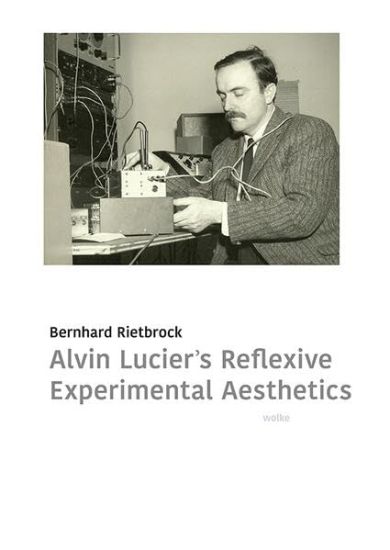
Alvin Lucier's Reflexive Experimental Aesthetics
Bernhard Rietbrock
Wolke Verlagsges. Mbh
2022
nidottu

Vollst ndiger, digital restaurierter Reprint (in Handarbeit hergestellte Faksimile) der Originalausgabe von 1913 (Kleine Ausgabe) mit exzellenter Aufl sung und hervorragender Lesbarkeit.F hrer zur Urauff hrung der Gurrelieder f r Soli, Ch re, Holzbl ser, Blechbl ser, Schlaginstrumente, Harfen/Celesta, Streicher. Text von Jens Peter Jacobsen, deutsche bersetzung von Robert Franz Arnold (Seite 1 bis 13). Die Gurre-Lieder von Arnold Sch nberg sind eine Kantate f r Soli, Chor und Orchester. Die Worte sind einer 1871 entstandenen Novelle des d nischen Dichters Jens Peter Jacobsen (1847 bis 1885) entnommen, in der deutschen bersetzung von Robert Franz Arnold. Die Urauff hrung des Werks erfolgte am 23. Februar 1913 durch das Tonk nstler-Orchester im Gro en Musikvereinssaal in Wien unter der Leitung von Franz Schreker. Es sollte der gr te Erfolg werden, den Arnold Sch nberg je in seinem Leben erringen w rde. Doch der Komponist weigerte sich, den Applaus entgegenzunehmen, worauf sich das Publikum einige Wochen sp ter im sogenannten Skandalkonzert r chte, indem es die Auff hrung zu einem vorzeitigen Ende brachte. Alban Berg (geboren 9. Februar 1885 in Wien, gestorben 24. Dezember 1935 in Wien).Er war ein sterreichischer Komponist. Mit 15 Jahren begann er als Autodidakt zu komponieren. Er studierte bei Arnold Sch nberg sechs Jahre als Privatsch ler Komposition. Am Heiligen Abend 1935 erlag er einer Blutvergiftung.
Alban Berg - erzählender Komponist, komponierender Erzähler
Nicole Jost-Rösch
Edition Text + Kritik
2023
sidottu


Alvin Plantinga's Warrant Theory in Communitarian Perspective
Oliver Jurisic
LAP Lambert Academic Publishing
2019
pokkari
We agree with Plantinga that philosophy needs to clarify and remove obstacles for us to see more clearly that God is our final Truth and Good. But what is more important is that Plantinga recognized that, with philosophical questions about God, epistemology itself cannot answer questions without metaphysics, and will probably never be capable without it, because truth, rationality, and epistemic justification or warrant are not exclusively epistemological questions. They are equally important metaphysical questions, and some claims of communitarian perspective are metaphysical claims hoping to contribute to our quest toward God within our Christian communities as our final end, truth and happiness.
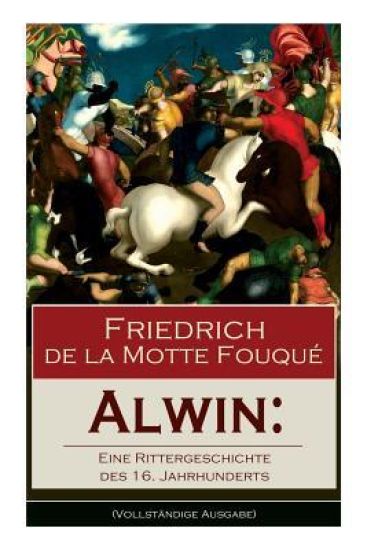
Friedrich de la Motte Fouqu (1777-1843) war einer der ersten deutschen Dichter der Romantik. Aus dem Buch: "Sie ritten in der D mmerung schweigend neben einander hin, bis endlich Thorwald anfing: es ist nicht gut, da die mehrsten Trennungen am fr hen Morgen geschehn. Man hat den langen Tag vor sich, der mit jeder Viertelstunde gleichsam die Glocke zieht, uns zu erinnern, da wir aus dem gewohnten Kreise ger ckt sind, und Alles ver ndert und fremd auf uns zutritt. Und dann die schaurige Morgenk hle nach den Thr nen des Abschieds, meist nach einer schlaflosen Nacht Reiste man gegen Abend fort, so w re Alles besser. Die R ckbleibenden weinten sich auf ihren Kissen ein, und der Wandersmann empf nde auf dem ungewohnten Nachtpfade so viel Wunderliches, ja Ersch tterndes da ihm wenig Zeit bliebe, sich der schmerzlichen Wehmuth hinzugeben. Noch ungerechnet, da ihm die Zeichen der verla nen Heimath nicht so fernher nachblickten, als wollten sie ihn wieder zu sich hin locken."
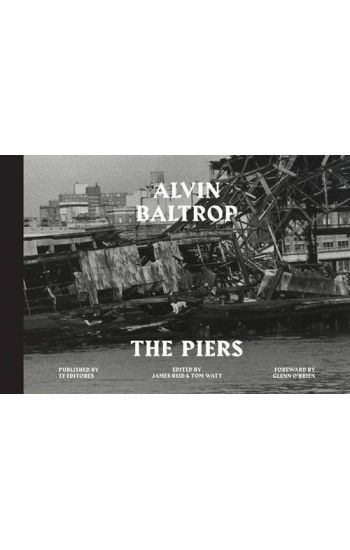
Powerful, lyrical and controversial, Alvin Baltrop's photographs are a groundbreaking exploration of clandestine gay culture in New York in the 1970s and 80s. During that era, the derelict warehouses beneath Manhattan's West Side piers became a lawless, forgotten part of the city that played host to gay cruising, drug smuggling, prostitution and suicides. Baltrop documented this scene, unflinchingly and obsessively capturing everything from fleeting naked figures in mangled architectural environments to scenes of explicit sex and police raids on the piers. His work is little known and underpublished--mainly due to its unflinching subject matter--but while often explicit, his photographs are on a par with those of Nan Goldin, Peter Hujar and Enrique Metenides. While the outside world saw New York as the glamorous playground of Studio 54, Warhol's gang and the disco era, Baltrop photographed the city's gritty flipside; his work is an important part of both gay culture and the history of New York itself. This clothbound volume compiles the "Piers" series in one definitive monograph, a powerful tribute to a long-forgotten world at the city's dilapidated margins.Alvin Baltrop (1948-2004) was born in the Bronx, New York, and spent most of his life living and working in New York City. From 1969 to 1972, he served in the Vietnam War and began photographing his comrades. Upon his return, he enrolled in the School of the Visual Arts in New York, where he studied from 1973 to 1975. After working various jobs--vendor, jewelry designer, printer--he settled on the banks of Manhattan's West Side, where he would produce the bulk of his photographic output.
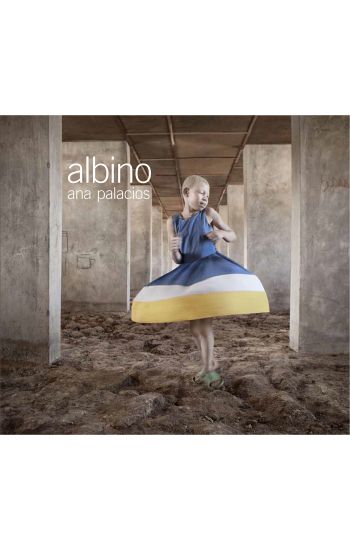
In Albino, photojournalist Ana Palacios takes us inside a shelter for people with albinism and reveals what daily life is like for those living with the genetic condition in Tanzania. As Palacios documents, widespread ignorance of the causes of albinism has fed stigmatization, marginalization, persecution, and prejudice within the country. In addition to the social and physical threats that those with albinism face from other Tanzanians, they must also confront the strong possibility of skin cancer a disease for which effective treatment options can be found in the West, but which in Africa tends to reduce life expectancy for those with albinism to under thirty years. Bearing witness to the efforts of a group of Spanish aid workers to promote health and education in Tanzania, Albino highlights their work on programs to improve patient treatment and training for local doctors. In these subtle, complex, and ultimately optimistic images, Palacios shows the moments of struggle, but also joy, that mark the lives of the residents of the shelter.
Alvin Langdon Coburn
Fundacion Mapfre
2015
sidottu
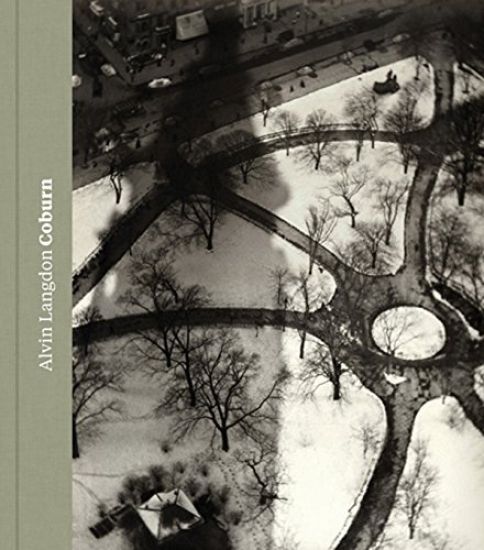
A key American Pictorialist and a crucial innovator in abstract photography, Alvin Langdon Coburn is a fascinating but often neglected figure in the history of American modernism. As early as 1909, Coburn was making futuristic depictions of New York and Pittsburgh, anticipating modernist architectural photography's classic "bird's-eye" view. In 1912, in New York, working with the Cubist artist-poet Max Weber, he developed this idiom a step further, photographing New York from the pinnacles of skyscrapers. The following year he published Men of Mark, which featured portraits of authors, artists and statesmen, including Henri Matisse, Henry James, Mark Twain and Theodore Roosevelt. In 1914 Coburn relocated to London, participating in the British Vorticist movement, led by Wyndham Lewis and Ezra Pound; Coburn's series of multiple exposures and "Vortographs" were the first truly abstract photographs. So why is Coburn not better known today? After 1920 he deliberately withdrew from the photo world (though he never gave up photography) and retired to rural Wales, where he immersed himself in painting, music composition and Freemasonry. In the 1950s he was rediscovered and championed by Beaumont and Nancy Newhall of George Eastman House, to which he bequeathed almost 20,000 prints and negatives along with cameras, correspondence and ephemera. This beautiful volume, published to accompany a show at George Eastman House and drawing on a wide range of public and private collections, reveals his work and legacy for a new generation. Alvin Langdon Coburn (1882–1966) was born in Boston, Massachusetts, in 1882. He was given his first camera at the age of eight, and quickly developed a precocious talent for both visual composition and technical proficiency. He exhibited frequently in both America and Europe from early on in his career, and published several photobooks, including New York (1912), by which time his international reputation was at its peak (George Bernard Shaw even called him "the greatest photographer in the world"). He died in Wales in 1966.
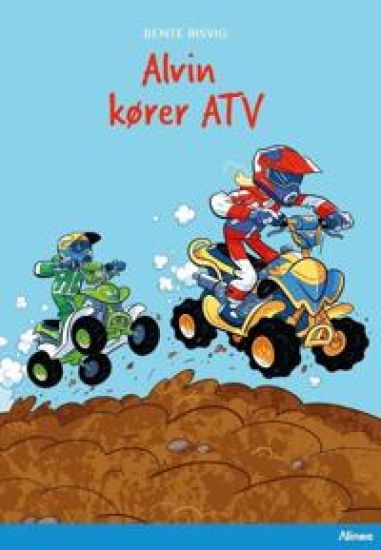
Der står den nye ATV. Den er så sej. Blå, sort og gul. ?Den er flot," siger Alvin. ?Hvor kører du henne?" ?Ude på marken," siger Birk. ?Det er lige her ude ved siden af skoven. Han peger. ?Der er mange huller og meget mudder, så det er rigtig sjovt." Alvin kører ATV er en del af serie FRI, der handler om børn og det, de laver i deres fritid.