Storia del Calcio Italiano Giornata per Giornata Stagione 1993/94: Serie A, Coppa Italia, Nazionale, Coppe Europee, Mondiali, Europei a cura di Alessandro Calaciura Copyright 2022
Avete mai cercato un abbraccio? un amore vero? Vi siete mai innamorati perdutamente di qualcuno o avete sognato di farlo anche se abita in un pianeta distante, anche se disturba il pensiero della gente? Un percorso poetico quello di Alessandro De Chirico, giovane studente genovese, che vuole insegnare che dove esiste amore e tempo non esiste ne razionalita e neppure la purezza delle nostre azioni. Una sola cosa accomuna gli amori piu belli, la nostra voglia di cambiare, di sognare: le panchine. E' in una panchina che scappa il primo bacio, e da una panchina che, quando sei solo, vorresti cambiare veramente.
Storia del calcio Italiano giornata per giornata dal 1991 ai Mondiali del Qatar 2022. Cronologia: Serie A, Nazionale, Campionati del Mondo, Europei, Coppa Italia, Supercoppa Italiana, Champions League, Coppa delle Coppe, Coppa UEFA, Europa League. A cura di Alessandro Calaciura
"Jet elettrici" e la guida completa ai segreti della piu affascinante disciplina del modellismo dinamico. Oggi la tecnica della ventola intubata ci offre l'opportunita di riprodurre jet a costi accessibili, e la scelta di materiale tecnico per il "modellista ventolaro" e vasta, valida e affidabile, se viene usata con criterio. E per fare un jet ormai non c'e piu bisogno di affrontare grosse spese. Il volume spiega tutto quel che c'e da sapere per scegliere, allestire, far volare e ottimizzare un jet edf, insegna le ecniche di pilotaggio, da consigli e trucchi per ottenere il massimo dal tuo jet. Un libro senza astrusi diagrammi e complicate formule matematiche, ma con dentro tutta l'esperienza e la pratica di un grande aeromodellista: Alessandro Ginestri, noto come Staudacher 300 nella community del Barone Rosso, il piu grande forum italiano di aeromodellismo. Questo libro non e stato scritto da uno scienziato per degli specialisti, ma da un praticone per dei praticanti.
Il fortuito ritrovamento di un'opera tardo manierista nel mercato antiquario italiano porta ad ipotizzare, in assenza di firma e documentazione diretta, un'attribuzione stilistica all'artista fiorentino Bartolomeo Gorini (detto "Baccio"), spostatosi nei primi anni del XVII secolo in Sardegna, a Sassari, divenendo uno dei principali artisti del territorio e formatore della successiva generazione di pittori del nord ovest dell'isola. Nel volume si ricostruisce la possibile storia della nascita e committenza dell'opera.
The concepts of economic backwardness, Asiatic despotism and orientalism have strongly influenced perceptions of modernization, democracy and economic growth over the last three centuries. This book provides an original view of Russian and Asian history that views both in a global perspective. Via this analysis, Alessandro Stanziani opens new dimensions in the study of state formation, the global slave trade, warfare and European and Asian growth. After Oriental Despotism questions conventional oppositions between Europe and Asia. By revisiting the history of Eurasia in this context, the book offers a serious challenge to existing ideas about the aims and goals of economic growth.
The concepts of economic backwardness, Asiatic despotism and orientalism have strongly influenced perceptions of modernization, democracy and economic growth over the last three centuries. This book provides an original view of Russian and Asian history that views both in a global perspective. Via this analysis, Alessandro Stanziani opens new dimensions in the study of state formation, the global slave trade, warfare and European and Asian growth. After Oriental Despotism questions conventional oppositions between Europe and Asia. By revisiting the history of Eurasia in this context, the book offers a serious challenge to existing ideas about the aims and goals of economic growth.
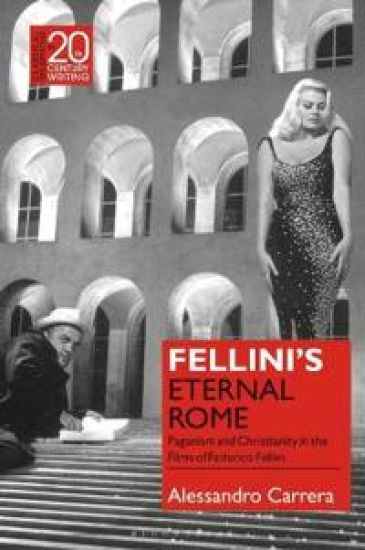
*** Winner of the2019 Flaiano Prize in the category Italian Studies ***In Fellini’s Eternal Rome, Alessandro Carrera explores the co-existence and conflict of paganism and Christianity in the works of Federico Fellini. By combining source analysis, cultural history and jargon-free psychoanalytic film theory, Carrera introduces the reader to a new appreciation of Fellini’s work. Life-affirming Franciscanism and repressive Counter-Reformation dogmatism live side by side in Fellini’s films, although he clearly tends toward the former and resents the latter. The fascination with pre-Christian Rome shines through La Dolce Vita and finds its culmination in Fellini-Satyricon, the most audacious attempt to imagine what the West would be if Christianity had never replaced classical Rome. Minimal clues point toward a careful, extremely subtle use of classical texts and motifs. Fellini’s interest in the classics culminates in Olympus, a treatment of Hesiod’s Theogony for a never-realized TV miniseries on Greek mythology, here introduced for the first time to an English-speaking readership. Fellini’s recurrent dream of the Mediterranean Goddess is shaped by the phantasmatic projection of paganism that Christianity created as its convenient Other. His characters long for a “maternal space” where they will be protected from mortality and left free to roam. Yet Fellini shows how such maternal space constantly fails, not because the Church has erased it, but because the utopia of unlimited enjoyment is a self-defeating fantasy.
"This is the story of a choice. Destiny gave me just two cards, and I will play them blindfolded...Destiny will wait and see, giving me the illusion of a path that I can choose, or will act and show me the one it has determined already...'' The play goes on stage. The success is overwhelming, but it also marks the end of the relationship between the passionate Alex and the enigmatic Lisa. In love and desperately in need of a job, Alex has a life-changing encounter with an old man who lives like a tramp along the South Bank of the Thames. Blinded by the light of a shining world, Lisa turns into an unscrupulous woman, living her life to excess and relying on her breathtaking beauty to fulfill her ambitions. Time goes by, relentlessly, playing with the emotions of Alex and the expectations of Lisa, until undeniable truths, hidden in an old and crumpled book lying on a stall of a little bookshop market, will dramatically affect their life paths.
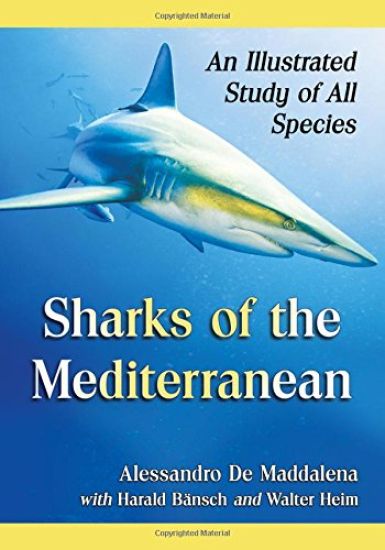
This comprehensive study of sharks of the Mediterranean Sea provides a great deal of information about shark biology, human-shark interactions, recent research, and ecology and conservation in the region. The authors cover classification, common names, morphology, size, reproduction, diet, habitat, distribution, behavior, status and references to source materials for 50 species. Illustrations include dozens of rare photos and detailed author drawings.
Riveting from beginning to end, "The Haunting of Sister Mary Francis Part II", the Second Book of the Demon Nun Trilogy tells of the continuing perilous saga of the troubled Catholic schoolgirl Mary Francis. After a mysterious fire that destroys the Strangeville Museum of Antiquity, Mary Francis is found by a shocked Strangeville Police Chief Edgar Stalwart, her protector and friend. Mary Francis is removed out of a strange hybernation state from the indestructible pentagram clad satanic coffin the Immortal Crypt along with the Cadaver Sword and Infernal Book of Wisdom at her side.The horrified young Catholic schoolgirl is temporarily separated from the terror enducing sword which she fervently claims is evil. She begins being subtly haunted by the demonic objects wanting to reunite with her, and to transform her into the gouged out eyed Sister Mary Francis demon nun spectre. Trying desperately to convalesce Mary Francis back into normalcy is Chief Stalwart's empathetic wife Mrs. Belle Stalwart who finds that the mind of Mary Francis is so volatile that she needs psychological help. Mrs. Stalwart enlists the confidence of Dr. Margaret Martin and Dr. Cyrius Certain of the Illinois Mental Health Facility also known as the Asylum to help save the girl from a great fear that she has of the Cadaver Sword. Becoming friends with Dr. Maggie, Mary Francis confides her deep worry about the Cadaver Sword coming to get her. Dr. Maggie sympathetic but unable to believe in the supernatural world that Mary Francis fervently believes in prepares to have her further committed, but infiltrating the Asylum in disguise is Sister Desdemona Friendship, a historian, fencer, and genial secretary to the pope like Monsignor Reuben Raffinshold with a treasure trove of wisdom to help Mary Francis . Somehow a treacherous journey must take place to get to Magdalena, South America, birthplace of the Magdalena Tomb Sisters, the original Machete Wielding demon nuns whose demented evil spirits now share a psychic connection to Mary Francis. And where aged and heroic Mother Superior Imogen Protector with the mystical Catholic Legends Prophetic Guidebook may have the answer to defeating the Cadaver Sword and a mighty threat, the new super powered sorcerer menace by the name of Mephistopheles Incarnate who will stop at nothing with his army of Faceless Demon Priests, Winged Demon Creatures, and Super Demon Creatures to win this cataclysmic battle between good and evil. It is Alessandro Paolo Perucci's totally absorbing second installment of the Demon Nun Trilogy, "The Haunting of Sister Mary Francis Part II: Magdalena Tomb Sisters and The Everlasting Sword of Restoration."
Per ragioni di Stato Ermengarda, figlia di Desiderio (re dei Longobardi), viene ripudiata come sposa da Carlo Magno. Per vendicarsi, Desiderio vuole fare incoronare i figli di Carlo Magno (avuti dal matrimonio con Ermengarda) rifugiatisi presso di lui. Carlo Magno manda un ultimatum a Desiderio, il quale rifiuta e gli dichiara guerra. Grazie al tradimento di duchi longobardi l'esercito di Carlo Magno avanza verso Verona. Ermengarda, che si era rifugiata presso la sorella Ansberga (Anselperga) nel monastero di San Salvatore a Brescia, viene a conoscenza delle nuove nozze di Carlo Magno e, in preda al delirio, muore. Sempre grazie all'aiuto di traditori, Carlo Magno riesce a conquistare Verona e fa prigioniero Desiderio. Adelchi, che aveva prima cercato inutilmente di opporsi alla guerra contro i Franchi, combatter poi fino alla morte. Condotto in fin di vita alla presenza di Carlo e del padre prigioniero, invoca, prima di morire, clemenza per il padre e lo consola per aver perduto il trono: non aver pi alcun potere infatti non lo obbligher pi "a far torto o subirlo". Adelchi una tragedia manzoniana che mette in scena la caduta del regno longobardo in Italia ad opera dei Franchi nel VIII secolo. Il significato profondo della figura di Adelchi e del suo dialogo con il padre importante e allo stesso tempo innovativo: riflette infatti sul fatto che anche loro, prima di essere stati sconfitti da Carlo e dai Franchi, si erano dovuti imporre su altre popolazioni: in parole povere riflette sulla ciclicit della storia, e da ci ne consegue un miglioramento sul piano morale del personaggio. In quest'opera Manzoni inizia a sviluppare il tema della Divina Provvidenza che sar poi fulcro tematico dei Promessi sposi. Qui la storia contemplata attraverso il dramma interiore dei protagonisti, sublimato in una visione religiosa della vita. Adelchi ed Ermengarda sono spiriti ricchi di contrasti fra ideali e sentimenti (la pace e la gloria per il primo, l'amore ancora vivo del marito per la seconda). Nelle tragedie manzoniane incontriamo due categorie di personaggi. I primi hanno un concreto senso della realt e sono capaci di agire, restando insensibili alle voci del cuore, i secondi invece vivono per alti e nobili ideali, comprendono le angosce e sofferenze degli altri e trovano solo nella morte la piena realizzazione della loro complessa e travagliata personalit . Le due serie di personaggi rappresentano le due esigenze spirituali che Manzoni non riuscito ancora a conciliare. La validit superiore degli ideali nei confronti degli egoismi e, insieme, l'incapacit di realizzarli. Nello scrittore rimasto qualche residuo di giansenismo: Adelchi, prima di morire, dir che sulla terra "non resta che far torto o patirlo". Si tratta del tipico pessimismo giansenistico, a cui si pu opporre una concezione provvidenziale del dolore (la sofferenza un dono di Dio poich prova che non si fatto il male). Il vero superamento si avr quando approder ad un cristianesimo attivo ed eroico mostrando che il bene si pu fare pure tra dolori e sacrifici.