Kirjojen hintavertailu. Mukana 11 447 123 kirjaa ja 12 kauppaa.

Kirjahaku

Etsi kirjoja tekijän nimen, kirjan nimen tai ISBN:n perusteella.

1000 tulosta hakusanalla Alfred P Morgan

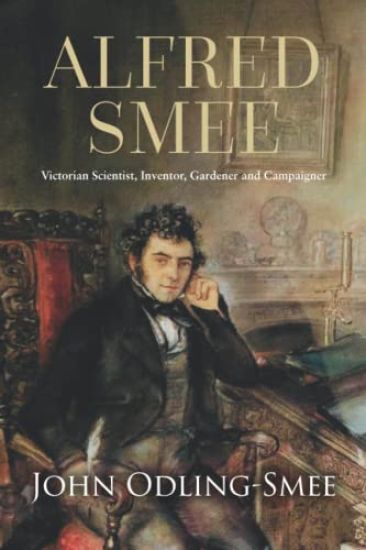
Alfred Smee

Alfred Smee

John Odling-Smee

Mereo Books
2022
pokkari
Alfred Smee (1818-1877) was a doctor, scientist and inventor and also a businessman, campaigner and horticulturalist. His inventions led to his election at age 22 to a Fellowship of the Royal Society. He developed nonfading ink for the Bank of England and better techniques for printing banknotes. Some of his insights into the brain were echoed a century later in computational science. He was chairman of several companies, campaigned for better water and sewage services in London and stood for Parliament. His passion was plants and gardens, and he created a garden of eight acres which he stocked with plants he collected from far and wide. His wide-ranging, full and successful life has now been chronicled by hisgreat-great-grandson, John Odling-Smee.
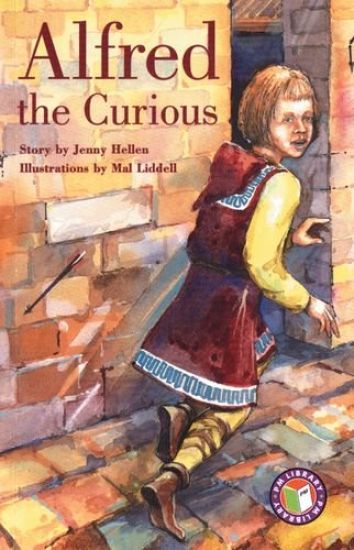
Alfred the Curious

Alfred the Curious

Cengage Learning New Zealand
2000
nidottu
PM is a firm favourite amongst Primary Schools due to its reputation for reading success. Offering over 800 carefully levelled fiction and non-fiction books, PM builds confidence through gradual progression and step-by-step support.
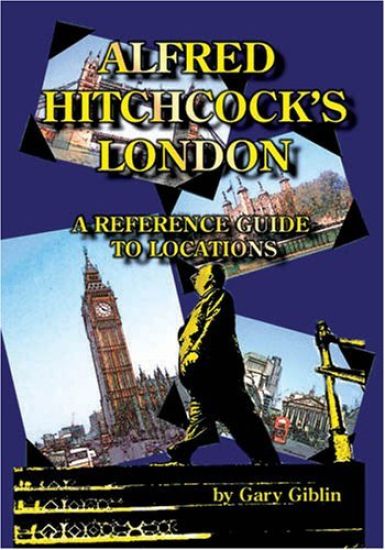
Alfred Hitchcock's London

Alfred Hitchcock's London

Gary Giblin

Midnight Marquee Press, Inc.
2009
nidottu
Good evening, ladies and gentlemen. Tonight you are going to visit one of the world's most famous cities. Here you will see historic palaces, elegant hotels, and magnificent restaurants. If you're lucky, you may even see a corpse floating down the Thames. For tonight we shall visit: ALFRED HITCHCOCK'S LONDON Now you can follow in the footsteps of the most famous film director of all time, from the corridors of Scotland Yard and the stalls of the Royal Albert Hall to the top of Tower Bridge and the dome of St Paul's Cathedral. There was a hardly a corner of London that Hitchcock didn't visit and they're all here--over 200 of them--from the site of his birth in 1899 to the cathedral where he was memorialized in 1980.
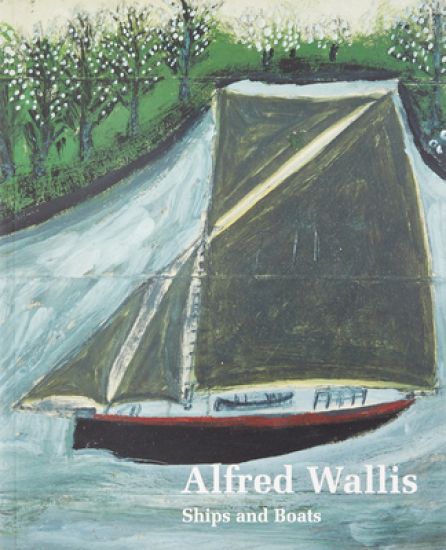
Alfred Wallis Ships & Boats

Alfred Wallis Ships & Boats

KETTLE'S YARD GALLERY
2012
nidottu
Alfred Wallis (1855-1942) is one of the most original and inspiring British artists of the 20th Century. Promoted by the artist Ben Nicholson amongst others, Wallis’s paintings influenced the development of British art between the wars. The directness of Wallis’ vision reflected a lifetime of living by and from the sea. His paintings are of what he knew, remembered and imagined. Yet they are also timeless stories about survival and the nature of our relationship with the world. As Jim Ede commented “Wallis is never local.” With over 70 illustrations, excerpts from letters and texts by Michael Bird, Ben Nicholson and Jim Ede, this book takes a fresh look at this extraordinary artist and his relationship to Kettle's Yard. It includes some of Wallis's best works from the Kettle’s Yard collection including many that are not normally on display, from ambitious paintings such as Saltash to what Wallis knew and loved best: ships and boats. Kettle's Yard, the University of Cambridge's modern and contemporary art gallery, holds the largest public collection of works by Alfred Wallis. Wallis was born in Devon. He was a fisherman and later a scrap-metal merchant in St. Ives. He took up painting in his later years, following the death of his wife in 1922. He was admired by Ben Nicholson and Christopher Wood, who came across his work when visiting St. Ives in 1928 and included it in the Seven & Five Society’s exhibition of 1929. He died in Madron Poorhouse.
Alfred Buckham

Alfred Buckham

Louise Pearson

NATIONAL GALLERIES OF SCOTLAND
2025
nidottu
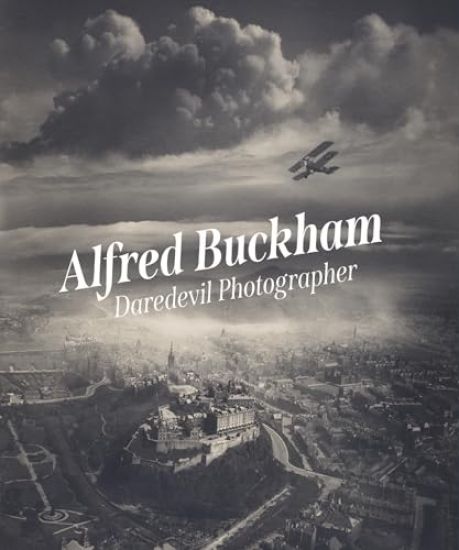
Leaving behind a comprehensive archive, Alfred Buckham wrote in detail about his exploits, including his nine crashes and how, to get the best images, he would stand up while flying in an open biplane, tying his right leg to the seat with a scarf, in order to loop the loop in ‘perfect safety’. But dive a little deeper and there is an even more interesting story – how he created these unbelievable photographs. Using a combination of different negatives, Buckham used his skills in the darkroom to craft stunning images that capture the experience of flight but with a little extra drama. Published to accompany the first major exhibition of Alfred Buckham’s work, this book draws on the photographer’s archive, held by his grandsons, and exciting new acquisitions made by the National Galleries of Scotland including the camera he took to the skies and a selection of the negatives used to craft his most celebrated images.
Alfred Bergel

Alfred Bergel

Anne Weise

TEMPLE LODGE PUBLISHING
2021
nidottu
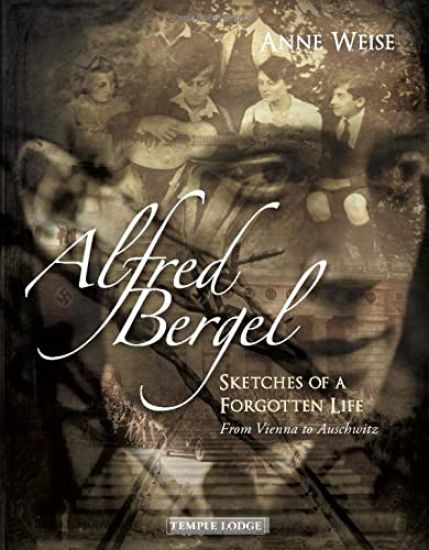
In a remarkable deed of original scholarly research and detailed detective work, Anne Weise recreates sketches of a lost life - of one of the millions of forgotten souls whose lives came to a violent end in the Holocaust. Her focus is Alfred Bergel (1902-1944), an artist and teacher from Vienna who was a close associate of Karl Koenig - the founder of the Camphill Movement for people with special needs - who wrote of Bergel in his youthful diaries as his best friend 'Fredi'. After the annexation of Austria, Alfred Bergel found himself unable to escape the horror of the National Socialist regime. Subsequently, in 1942 he was deported to the Theresienstadt camp. Imprisoned there, he produced numerous artistic works of the inmates of the ghetto and taught drawing, art history and art appreciation - sometimes in collaboration with the Bauhaus artist Friedl Dicker-Brandeis. During this period, he was also forced by the Nazis to produce forgeries of classic art works. One of the central figures of cultural life in the Theresienstadt ghetto, Bergel was eventually transported to the Auschwitz concentration camp in 1944 where, tragically, he was murdered. His name and his work are largely forgotten today, even amongst Holocaust researchers, but Weise succeeds in honouring the life of the Jewish artist by lovingly piecing together his biography, based on numerous personal testimonies by friends and contemporaries and supplemented with documents and many dozens of photos and colour reproductions of Bergel's artistic works. This invaluable recreation of a life provides insight not only into the desperate plight of a single individual, but also illustrates the human will and determination to survive in the context of one of the darkest periods of recent history.
The The Epic Worlds of Alfred Doblin

The The Epic Worlds of Alfred Doblin

Alfred Doblin

Galileo Publishers
2024
nidottu
Of the three great German word-artists of the first half of the 20th century, Alfred D blin remains the least known. The other two are Thomas Mann, whose attitude towards D blin ranged from cautious admiration to violent rage; and Berthold Brecht, who learned much from the ideas of his friend D blin. Anglophone readers have almost no source of information about D blin, or about the few works already translated into English (Berlin Alexanderplatz perhaps excepted). In Germany, reliable editions of D blin trickled out between the 1980s (decades after his death in 1957 ) and the 2010s. Academic lit. crit. scholars enjoy tackling aspects of his life and output in ways attractive to other scholars. But little has been done to promote D blin to a wider pool of readers. For the first time, Adventurous Readers provides the inquisitive reader with a map, compass and rations to sustain them as they proceed through the vividly imagined exotic landscapes of his epic novels. D blin famously declared: 'If a novel can't be cut up into ten pieces like a worm, and each piece lives by itself, it is worthless'. The seventy-two excerpts presented in this book show how he put this maxim into practice. Each deserves close reading, for each brings to life its own vivid world. The excerpts were chosen (from many possible candidates) for their power to entertain, provoke, amuse, cause shudders, and showcase D blin's mastery of styles, moods, and expressive possibilities. After reading through the selection, or even just dipping in, you should be well prepared to tackle a whole epic novel.
Alfred Stevens

Alfred Stevens

Teresa Sladen

The Burlington Press
2025
sidottu
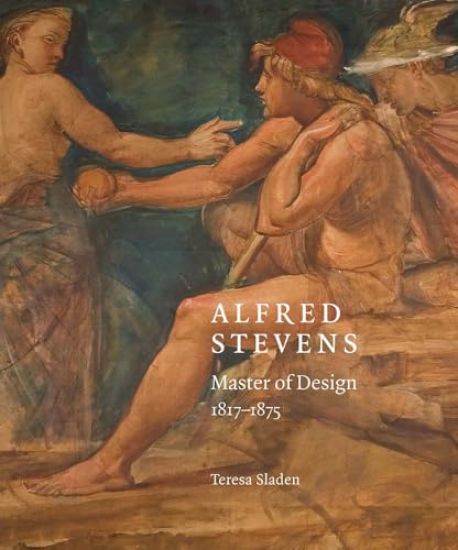
The first book on the English sculptor, designer, and painter Alfred Stevens Few people were aware of Alfred Stevens’s art during his lifetime (1817–1875), but following his early death while still at work on the Wellington Monument in St Paul’s Cathedral, this changed. There was a furious outcry that a man of such genius should have been treated so harshly by the Office of Works during the protracted course of that project. As a result of a campaign, largely led by fellow artists, he became widely known, and between then and the outbreak of the Second World War he was hailed as one of greatest Humanist artists Britain had ever known, a judgement largely based on his grander works of figurative art and his superb draughtsmanship. But then, with the rise of Modernism in the early twentieth century, he came to be seen as someone who had merely aped the art of the Italian Renaissance. His work was dismissed as the last gasp of a movement that was now dead. What those who extolled his work in the late nineteenth and early twentieth century, as well as those who denigrated it in the years that followed, failed to see, however, was that he was a great innovator, someone who had played a crucial part in the development of British art in the nineteenth century. This was achieved in two ways: on the one hand, by designing objects such as stoves, painted decoration, and monumental sculpture whose form was linked to that of the surrounding architecture, he pointed the way to the New Sculpture that was to emerge at the end of the century; on the other, by blurring the line that was then universally drawn between “fine” and “decorative” art, he acted as a precursor of the Arts and Crafts Movement. The study of his work has been hampered by the paucity of documents, scattered in archives in England and Italy, which is one reason why there has been no monograph since Hugh Stannus’s Alfred Stevens (1891).
ALFRED WRIGHT'S AUTOGRAPH BOOK - Replaced by 9781922473400
In 1916 Alfred Wright enlisted in the AIF. After training at the Engineer Officer Training School in Moore Park and at Roseville NSW he embarked aboard HMAT A14 Euripides, headed for Britain. On the way, he bought an autograph book, and over the next four years, more than 100 of the people he met signed it. This is the story of Alfred Wright's war, illuminated by the stories of some of those he met, and of his return to a changed Australia.
Alfred Dreyfus

Alfred Dreyfus

Norman Simms

Academic Studies Press
2011
sidottu
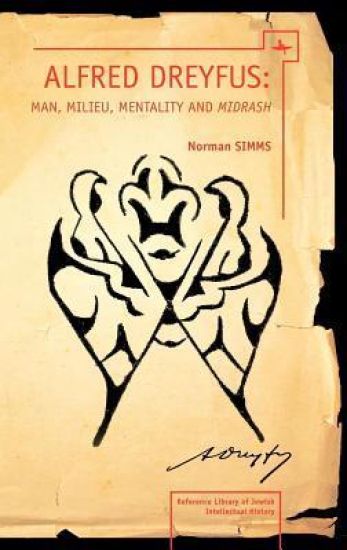
This groundbreaking book focuses on Alfred Dreyfus the man, with emphasis placed on his own writings, including his recently published prison workbooks and his letters to his wife Lucie. Through close reading of these documents, a much more sensitive, intellectual and Jewish man is revealed than was previously suspected. He and Lucie, through their family connections and mutual loyalty, were interested in and supported the artistic, scientific, philosophical and historical movements that formed their Parisian milieu. But as an Alsatian Jew, Alfred was also critical of many aspects of technological and ideological developments, making his mentality one of scepticism as well as idealism. Norman Simms addresses the way Dreyfus perceived the world, challenged many of its assumptions and contextualised it in the style of a rabbinical midrash, a process that created what Alfred called a “phantasmagoria” of the Affair that bears his name, and also interprets the man, his milieu and his mentality in the style of a midrash, a creative, transformative reading.
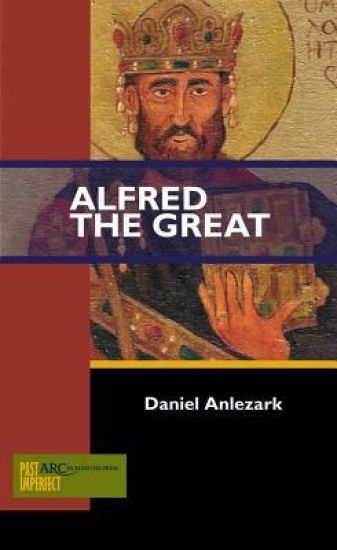
Alfred the Great

Alfred the Great

Daniel Anlezark

Arc Medieval Press
2017
nidottu
Alfred the Great is a rare historical figure from the early Middle Ages, in that he retains a popular image. This image increasingly suffers from the dead white male syndrome, exacerbated by Alfred's association with British imperialism and colonialism, so this book provides an accessible reassessment of the famous ruler of Wessex, informed by current scholarship, both on the king as a man in history, and the king as a subsequent legendary construct. Daniel Anlezark presents Alfred in his historical context, seen through Asser's Life, the Anglo Saxon Chronicle, and other texts associated with the king. The book engages with current discussions about the authenticity of attributions to Alfred of works such as the Old English Boethius and Soliloquies, and explores how this ninth-century king of Wessex came to be considered the Great king of legend.
Alfred Preis Displaced

Alfred Preis Displaced

Axel Schmitzberger

Doppelhouse Press
2022
pokkari
The first publication to catalog the complete works of architect and arts advocate Alfred Preis, a Viennese modernist who fled Nazi-occupied Austria and transformed regional Hawaiian architecture, with his best-known project being the USS Arizona Memorial at Pearl Harbor. Architect, planner, and arts advocate Alfred Preis (1911–1994) dedicated his many creative talents to his beloved, adopted home, Hawai‘i. Born to a Jewish family, raised, and educated in Vienna, Preis became an exile after escaping from Nazi-occupied Austria in 1939 and briefly being interned as an “enemy alien” when the United States entered World War II. Preis emerged as one of Hawai‘i’s leading modern architects in the 1950s and 1960s. His celebrated architectural career spanned twenty-three years. In this time, he designed almost one hundred and eighty completed projects ranging from residences, schools, commercial buildings, and public parks. His new, regionalist vision for architecture and planning were specific to the Hawaiian context, its people, its tropical climate, and its stunning landscape. Preis’s crowning achievement was his design for the famed USS Arizona Memorial at Pearl Harbor in 1962. This is the first publication to examine Alfred Preis’s body of work in architecture, which spans from 1939 to 1963, including not only several acclaimed public projects but also illustrating the transition from a European modern language into a regional modernism, unifying both cultures in distinct and pioneering ways. In later years through his legislative work, Alfred Preis became a visionary advocate and leader for the public arts, creating the first 1% law in the United States, which stipulated that 1% of all public building construction be used for the purchase of public art.
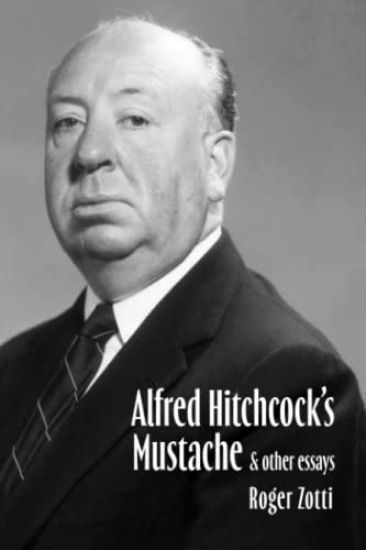
Alfred Hitchcock's Mustache: And Other Essays

Alfred Hitchcock's Mustache: And Other Essays

Roger Zotti

Stillwater River Publications
2022
nidottu
In 1979 Hitchcock was the recipient of the American Film Institute Life Achievement Award. Before presenting the award to him, Oscar winner Ingrid Bergman, who starred in three Hitchcock films-Spellbound (1945), Notorious (1946), and Under Capricorn (1949)-called him "an admirable genius."From "Hitchcock and the Ladies"Atlas told her that " I'm going to] teach you boxing . . . so that you can learn how to go into dark places and not get broken down. If you can learn that bit of the discipline that fighters learn, you can take that onto the stage with you."From "Teddy's Adventures in Trainer Land"The trade that sent Rogers to the Rangers foreshadowed many of the idiotic trades and front office and coaching changes the Whalers made during their NHL existence.From "Trading Mike Rogers"
Alfred Hitchcock's Mustache & Other Essays

Alfred Hitchcock's Mustache & Other Essays

Roger Zotti

Stillwater River Publications
2022
sidottu
In 1979 Hitchcock was the recipient of the American Film Institute Life Achievement Award. Before presenting the award to him, Oscar winner Ingrid Bergman, who starred in three Hitchcock films-Spellbound (1945), Notorious (1946), and Under Capricorn (1949)-called him "an admirable genius."From "Hitchcock and the Ladies" Atlas told her that " I'm going to] teach you boxing . . . so that you can learn how to go into dark places and not get broken down. If you can learn that bit of the discipline that fighters learn, you can take that onto the stage with you."From "Teddy's Adventures in Trainer Land" The trade that sent Rogers to the Rangers foreshadowed many of the idiotic trades and front office and coaching changes the Whalers made during their NHL existence.From "Trading Mike Rogers"
Alfred Kubin

Alfred Kubin

Alfred Kubin

Chosho Publishing
2022
sidottu
Alfred Leopold Isidor Kubin (1877-1959) was an Austrian printmaker, illustrator, and occasional writer. Kubin is considered an important representative of Symbolism and Expressionism and is noted for dark, spectral, symbolic fantasies, often assembled into thematic series of drawings. Originally published in 1950 this work covers his viewpoint on art, the method of his work, and his creative process, with over 100 black and white illustrations from his career as an illustrator.The artist's memoirs recount his troubled youth, which was shadowed by his hatred for his estranged father, his attempted suicide at the grave of his beloved mother, and his mental breakdown during military service. Upon his 1899 enrollment at the Munich Academy, Kubin discovered a world of inspiration in the works of Odilon Redon, Edvard Munch, James Ensor, and Max Klinger, and he vowed to dedicate his life to the creation of similarly imaginative art. The pen-and-ink drawings featured in this compilation include grotesques from his "Dance of Death" sequence, which employs a Renaissance theme to reflect the artist's interpretation of modern society and its rapid changes, as well as illustrations from various works of Edgar Allen Poe. Alfred Kubin is renowned as one of the all-time finest illustrators of fantastic themes, Kubin illustrated more than 70 books, including the works of Dostoyevsky and Poe as well as his own fiction.