Kirjahaku
Etsi kirjoja tekijän nimen, kirjan nimen tai ISBN:n perusteella.
1000 tulosta hakusanalla Alvin Addison
Building Upon the Rock: Following the Savior When the Rain Descends
Alvin R. Wirthlin
Createspace Independent Publishing Platform
2011
nidottu

The Nick Merlin Chronicles: Crime fighting by magic in an alternate universe
Alvin Vogel
Createspace Independent Publishing Platform
2012
nidottu



My Inaugural Address at the Great White Throne Judgment of the Dead
Alvin Miller
Createspace Independent Publishing Platform
2011
nidottu


Contamination control standards and techniques for all phases of the production of high-technology products are spelled out in this applications-orientated guide. Practical cleaning methods for products and process fluids are accompanied by tips on selecting operations based on economy and efficiency. Explanations of contaminant measurement devices cover operation, error sources and remedial methods. Engineers will find vital data on contaminant sources, as well as coverage of operations and procedures that aggravate contaminant effects.


The Battle of The Cruise: The Adventures of The Stick Man
Alvin Au
Createspace Independent Publishing Platform
2012
nidottu
Brian and his friends earned some money from selling a book. They spent the money on a cruise to Shanghai. However, the journey was not as smooth as they thought it could be. You can find out all their adventures in this funny and action-packed book "The Battle of The Cruise".

WE Came to Fight a War: The Story of a B-17 Radio Gunner and his Pilot
Alvin E. Kotler; Jack Flynn
Createspace Independent Publishing Platform
2012
nidottu

In this book, retired university president Alvin J. Schexnider shares the lived experiences that shaped his career and the challenges presented by race. About half of his career was spent at white universities. He details how he navigated those challenges in spite of longstanding policies and practices. He examines how certain events of his youth shaped his views on race including segregation, the execution of a Black man in his hometown, lynching in the South, and the pervasive opposition and violence spawned by the civil rights movement. The second half of his career was spent at historically Black universities (HBCUs) where, as a product of one, he felt a sense of commitment. Schexnider provides a unique lens through which his career evolved from the early days of affirmative action and equal employment opportunity (AA/EEO) to the current era of diversity, equity and inclusion (DEI). The book spotlights the continuing role of race in the recruitment, promotion and retention of Black faculty, the challenges to DEI, and its ability to effect change. It contrasts affirmative action and diversity and argues that diversity is more likely to benefit other ethnic groups rather than Blacks based on current trends in higher education. The book concludes with a chapter on the future of HBCUs, a sector of higher education that is currently receiving unprecedented attention but is likely fleeting. This chapter acknowledges the challenges and opportunities HBCUs face and it offers strategies to put them on a sustainable path to secure their future.
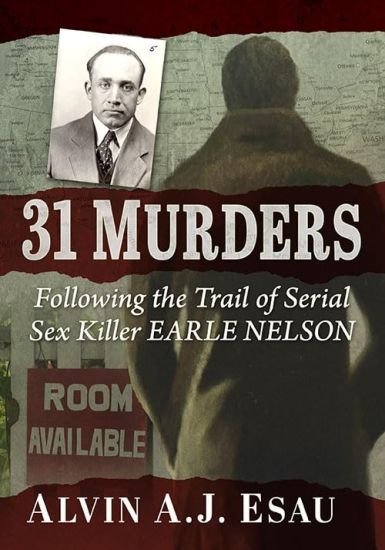
Many decades before Ted Bundy roamed the country there was serial killer Earle Nelson. During the 1920s, this geographically mobile killer went from city to city. His modus operandi involved getting into a house by pretending to be a person looking for a room to rent or inspecting a house that was for sale, and then strangling the landlady, often followed by having sex with the dead body. Robbery was frequently a secondary motive. After Nelson was captured in Canada in 1927, it was commonly reported that he had killed 21 women and a baby during the 1926-27 period. But were these the only cases linked to him? The author examines an additional nine unsolved murders of landladies, two of which have never been dealt with in previous literature. Based on decades of archival research, the author examines all 31 murders, relying on primary sources when available and a wide variety of secondary sources. For each murder, the book provides biographical sketches of the victim, outlines the police investigation and the various suspects, and covers any subsequent attempts to link Nelson to the crime by identification evidence of witnesses or by fingerprints.

In Unruly Comparison, Alvin K. Wong examines queerness in Hong Kong through a transdisciplinary analysis of Sinophone literature, cinema, visual culture, and civil society. Moving beyond Eurocentrism in queer theory and China-centrism in area studies, Wong frames Hong Kong as a model for global comparison by theorizing a method of unruly comparison-acknowledging the incommensurability of cultural texts and queer figures across different temporal and spatial locations. Here, unruly comparison positions Hong Kong as an undefinable time-space that troubles historicist, colonial, and China-centric renderings of the city as merely a site of British colonial legacy, Chinese rule, or global capital. Wong analyzes queer interracial desire in WWII; a cinema of gay male cosmopolitanism; queer intimacy among migrant workers; trans visuality and legality; cross-border sex work; and the queer diaspora of Hong Kong after the 2019 protests. Through Wong’s readings, Hong Kong becomes a queer region of racial, gender, and sexual incommensurability. By foregrounding the friction, asymmetry, and perverse juxtapositions of unruly comparison of Hong Kong with the Sinophone world, Wong reframes key debates in queer theory and East Asian studies.

In Unruly Comparison, Alvin K. Wong examines queerness in Hong Kong through a transdisciplinary analysis of Sinophone literature, cinema, visual culture, and civil society. Moving beyond Eurocentrism in queer theory and China-centrism in area studies, Wong frames Hong Kong as a model for global comparison by theorizing a method of unruly comparison-acknowledging the incommensurability of cultural texts and queer figures across different temporal and spatial locations. Here, unruly comparison positions Hong Kong as an undefinable time-space that troubles historicist, colonial, and China-centric renderings of the city as merely a site of British colonial legacy, Chinese rule, or global capital. Wong analyzes queer interracial desire in WWII; a cinema of gay male cosmopolitanism; queer intimacy among migrant workers; trans visuality and legality; cross-border sex work; and the queer diaspora of Hong Kong after the 2019 protests. Through Wong’s readings, Hong Kong becomes a queer region of racial, gender, and sexual incommensurability. By foregrounding the friction, asymmetry, and perverse juxtapositions of unruly comparison of Hong Kong with the Sinophone world, Wong reframes key debates in queer theory and East Asian studies.

Jamaica has the dubious reputation of producing some of the most cunning people anywhere. Immorality however may be quite another matter. A not too recent research study showed that the Jamaican with the highest IQ was on death row. For many years the Jamaican economy has been stymied by a crime wave that simply refuses to go away. It is generally accepted that crime is the biggest deterrent to economic development in Jamaica. When seven year-old Dennis Pearce solved high school mathematical problems the future for him should have been quite predictable...An upper class home, an educational system steeped in tradition and excellence facing a society inundated with criminal gangs operating at the highest levels along with inept and corrupt policing. Will genius give way to practical reality, or is it morality?