Kirjojen hintavertailu. Mukana 12 184 905 kirjaa ja 12 kauppaa.

Kirjahaku

Etsi kirjoja tekijän nimen, kirjan nimen tai ISBN:n perusteella.

1000 tulosta hakusanalla Ana Eulate

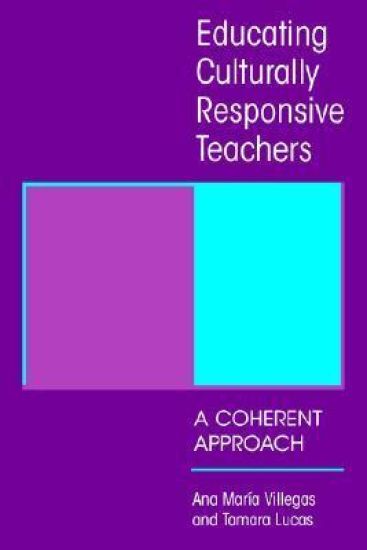
Educating Culturally Responsive Teachers

Educating Culturally Responsive Teachers

Ana Maria Villegas; Tamara Lucas

State University of New York Press
2001
pokkari
Provides a coherent framework for preparing teachers to work with a diverse student population.Offering a conceptual framework and practical strategies for teacher preparation in schools with increasingly diverse racial and ethnic student populations, this book presents a coherent approach to educating culturally responsive teachers. The authors focus on the importance of recruiting and preparing a diverse teaching force, as they propose a vision for restructuring the teacher education curriculum, reconceiving the pedagogy used to prepare prospective teachers, and transforming the institutional context in order to support the curricular and pedagogical changes they recommend.
In Cuba I Was a German Shepherd

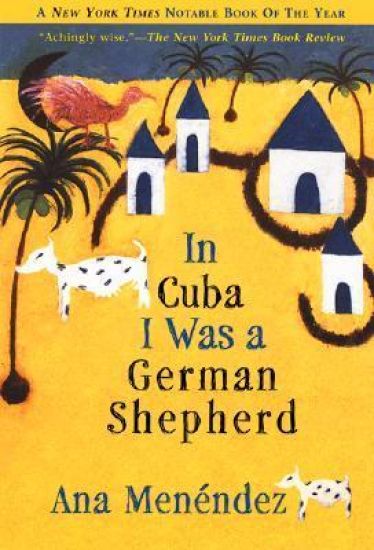
In Cuba I Was a German Shepherd

Ana Menéndez

Grove Press / Atlantic Monthly Press
2002
nidottu
This Pushcart Prize-winning story--a masterpiece of humor and heartbreak--unfolds a series of family snapshots that illuminate the landscape of an exiled community rich in heritage, memory, and longing for the past. At once "tender and sharp-fanged" ("L.A. Weekly").
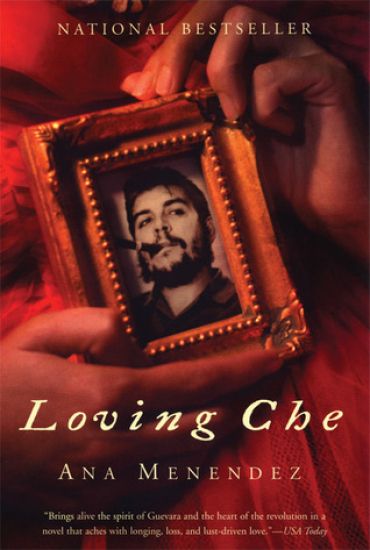
Loving Che

Loving Che

Ana Menendez

Grove Press / Atlantic Monthly Press
2004
nidottu
An elderly woman looks back on the world of revolutionary Cuba as she recalls her intimate, secret love affair with revolutionary Ernesto "Che" Guevara, in the story of a young Cuban woman who finds her search for details about her birth mother in a mysterious parcel containing writings and photographs. By the author of In Cuba I Was a German Shepard. Reprint. 30,000 first printing.
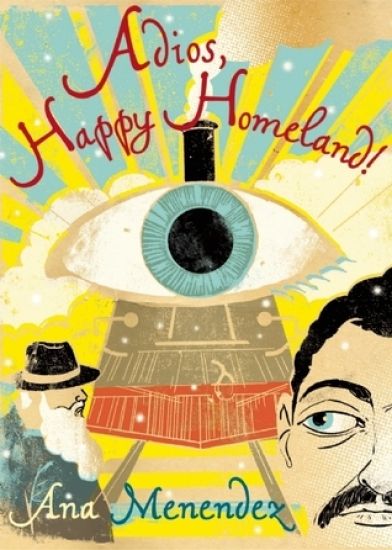
Adios, Happy Homeland!

Adios, Happy Homeland!

Ana Menéndez

Grove Press / Atlantic Monthly Press
2011
muu
In this follow-up to her beloved, prize-winning debut, In Cuba I Was a German Shepherd, a New York Times Notable Book of the Year, Ana Menendez delivers a liberating, magical, and modern take on the idea of migration and flight. Adios, Happy Homeland! is a wildly innovative collection of interlinked tales that challenge our preconceptions of storytelling. This critical look at the life of the Cuban writer pulls apart and reassembles the myths that have come to define her culture, blending illusion with reality and exploring themes of art, family, language, superstition, and the overwhelming need to escape--from the island, from memory, from stereotype, and, ultimately, from the self. We're taken into a sick man's fever dream as he waits for a train beneath a strange night sky, into a community of parachute makers facing the end in a windy town that no longer exists, and onto a Cuban beach where the body of a boy last seen on a boat bound for America turns out to be a giant jellyfish. With Adios Happy Homeland!, Menendez puts a contemporary twist on the troubled history of Cuba and offers a wry and poignant perspective on the conundrum of cultural displacement. Smart, accessible, and literary, it is a captivating portrayal of how stories are translated, (mis)interpreted, and shaped across time and traditions.
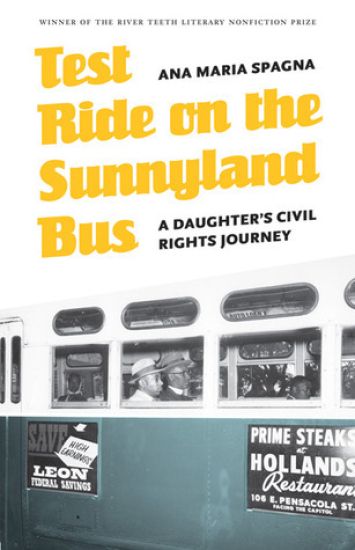
Test Ride on the Sunnyland Bus

Test Ride on the Sunnyland Bus

Ana Maria Spagna

Bison Books
2010
pokkari
Test Ride on the Sunnyland Bus chronicles the story of an American family against the backdrop of one of the civil rights movement's lesser-known stories. In January 1957, Joseph Spagna and five other young men waited to board a city bus called the Sunnyland in Tallahassee, Florida. Their plan was simple but dangerous: ride the bus together—three blacks and three whites—get arrested, and take their case to the U.S. Supreme Court. Fifty years later Ana Maria Spagna sets off on a journey to understand what happened and why. Spagna travels from her remote mountain home in the Pacific Northwest to contemporary Tallahassee, searching for the truth of the incident and her father's involvement. Her journey is complicated by the fact that her father never spoke of the Sunnyland experience and died unexpectedly when she was eleven. Seeking out the other bus riders, now in their seventies, Spagna tries to make sense of their conflicting stories. Her odyssey becomes further troubled by the sudden diagnosis of her mother's terminal cancer. Winner of the River Teeth Literary Nonfiction prize, Test Ride on the Sunnyland Bus deftly weaves cultural and personal history, memoir, and reportage in this fascinating look at a family and a nation's past.
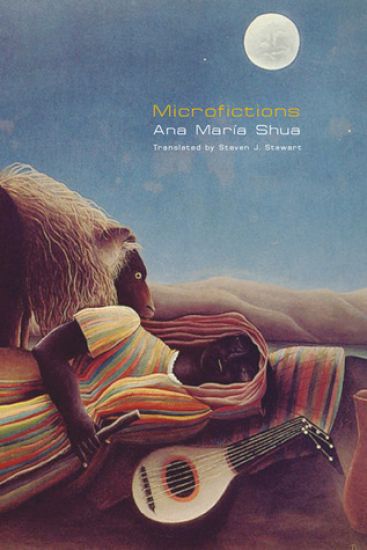
Microfictions

Microfictions

Ana María Shua

University of Nebraska Press
2009
pokkari
Cinderella's sisters surgically modify their feet to win the prince's love. A werewolf gathers up enough courage to visit a dentist. A medium trying to reach the afterworld gets a recorded message. A fox and a badger compete to out-fool each other. Whether writing of insomnia from a mosquito's point of view or showing us what happens after the princess kisses the frog, Ana María Shua, in these fleet and incandescent stories, is nothing if not pithy—except, of course, wildly entertaining. Some as short as a sentence, these microfictions have been selected and translated from four different books. Flashes of insight, cracks of wit, twists of logic, and quirks of language: these are fictions in the distinguished Argentinean tradition of Borges and Cortázar and Denevi, as powerful as they are brief. One of Argentina's most prolific and distinguished writers, and acclaimed worldwide, Shua displays in these microfictions the epitome of her humor, riddling logic, and mastery over our imagination. Now, for the first time in English, the fox transforms itself into a fable, and "the reader is invited to find the tail."
Death As a Side Effect

Death As a Side Effect

Ana María Shua

University of Nebraska Press
2010
pokkari
In Death as a Side Effect, Ana María Shua's brilliantly dark satire transports readers to a dystopic future Argentina where gangs of ad hoc marauders and professional thieves roam the streets while the wealthy purchase security behind fortified concrete walls and the elderly cower in their apartments in fear of being whisked off to state-mandated "convalescent" homes, never to return. Abandoned by his mistress, suffocated by his father, and estranged from his demented mother and ineffectual sister, Ernesto seeks his vanished lover. Hoping to save his dying father from the ministrations of a diabolical health-care system, he discovers that, ultimately, everyone is a patient, and the instruments wielded by the impersonal medical corps cut to the very heart of the social fabric. The world of this novel, with its closed districts, unsafe travel, ubiquitous security cameras, and widespread artificiality and uncertainty, is as familiar as it is strange—and as instructive, in its harrowing way, as it is deeply entertaining. The Spanish edition has been selected by the Congreso de la Lengua Española as one of the one hundred best Latin American novels published in the last twenty-five years.
The Weight of Temptation

The Weight of Temptation

Ana María Shua

University of Nebraska Press
2012
pokkari
Dystopian fantasy, political parable, morality tale—however one reads it, this novel is first and foremost pure Ana María Shua, a work of fiction like no other and a dark pleasure to read. Shua, an Argentinian writer widely celebrated throughout Latin America, frames her complex drama in deceptively simple, straightforward prose. The story takes place at a fat farm called The Reeds, a nightmare world that might not exist but certainly could. The last resort of the overweight wealthy (or sponsored), The Reeds subjects its "campers" to extreme measures—particularly the regimented system of public humiliation imposed by its director, a glib and sharp-minded sadist called the Professor.Into the midst of this methodical madness comes Marina Rubin, who experiences all the excesses of The Reeds. The pervasive cruelty of this refined novel distances it from facile conclusions. Amid the mordant social satire, The Reeds' obese campers are far more than merely victims of the system, subjected to impossible social demands for physical perfection. Out of control, fierce, rebellious, or subjugated, they are recognizable human beings, contending with an unjust but efficient authority in their unique and solitary ways.
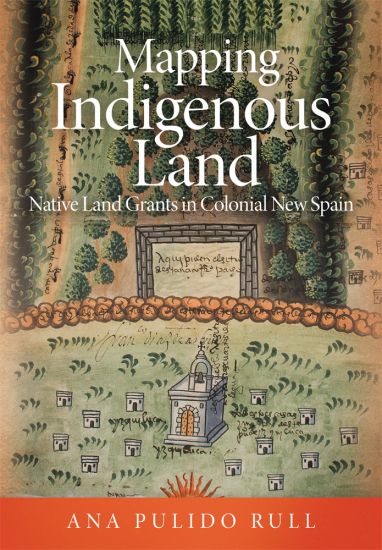
Mapping Indigenous Land

Mapping Indigenous Land

Ana Pulido Rull

University of Oklahoma Press
2020
sidottu
Between 1536 and 1601, at the request of the colonial administration of New Spain, indigenous artists crafted more than two hundred maps to be used as evidence in litigation over the allocation of land. These land grant maps, or mapas de mercedes de tierras, recorded the boundaries of cities, provinces, towns, and places; they made note of markers and ownership, and, at times, the extent and measurement of each field in a territory, along with the names of those who worked it. With their corresponding case files, these maps tell the stories of hundreds of natives and Spaniards who engaged in legal proceedings either to request land, to oppose a petition, or to negotiate its terms. Mapping Indigenous Land explores how, as persuasive and rhetorical images, these maps did more than simply record the disputed territories for lawsuits. They also enabled indigenous communities - and sometimes Spanish petitioners - to translate their ideas about contested spaces into visual form; offered arguments for the defense of these spaces; and in some cases even helped protect indigenous land against harmful requests. Drawing on her own paleography and transcription of case files, author Ana Pulido Rull shows how much these maps can tell us about the artists who participated in the lawsuits and about indigenous views of the contested lands. Considering the mapas de mercedes de tierras as sites of cross-cultural communication between natives and Spaniards, Pulido Rull also offers an analysis of Medieval and Modern Castilian law, its application in colonial New Spain, and the possibilities it opened for the native population. An important contribution to the literature on Mexico's indigenous cartography and colonial art, Pulido Rull's work suggests new ways of understanding how colonial space itself was contested, negotiated, and defined.
The Sock Thief: A Soccer Story

The Sock Thief: A Soccer Story

Ana Crespo

Albert Whitman Company
2024
nidottu
2016 International Latino Book Award: Best Latino Focused Children's Picture Book--BilingualA Brazilian boy in need of a soccer ball comes up with a creative solution.Felipe wants to play soccer with his friends, but it's his turn to bring the ball, and he doesn't have one. So, on the way to school, he makes his own out of socks that he swipes from his neighbors. But Felipe is a considerate sock thief--he leaves delicious mangoes in exchange for each one, and at the end of the day, he returns them all (with thank you notes ).
Watercolor Women Opaque Men

Watercolor Women Opaque Men

Ana Castillo

Northwestern University Press
2017
nidottu
2006 Independent Publisher Book Award for Story Teller of the Year In this updated edition of Ana Castillo’s celebrated novel in verse, featuring a new introduction by Poet Laureate of Texas Carmen Tafolla, we revisit the story’s spirited heroine, known only as “Ella” or “She,” as she takes us through her own epic journey of self-actualization as an artist and a woman. With a remarkable combination of tenderness, lyricism, wicked humor, and biting satire, Castillo dramatizes Ella’s struggle through poverty as a Chicano single mother at the threshold of the twenty-first century, fighting for upward mobility while trying to raise her son to be independent and self-sufficient. Urged on by the gods of the ancients, Ella’s life interweaves with those of others whose existences are often neglected, even denied, by society’s status quo. Castillo’s strong rhythmic voice and exploration of such issues as love, sexual orientation, and cultural identity will resonate with readers today as much as they did upon the book’s original publication more than ten years ago. This expanded edition also includes a short preface by the author, as well as a glossary, a reader’s guide, and a list of additional suggested readings.
What's in a Name

What's in a Name

Ana Luísa Amaral

New Directions Publishing Corporation
2019
nidottu
With the elliptical looping of a butterfly alighting on one’s sleeve, the poems of Ana Lui´sa Amaral arrive as small hypnotic miracles. Spare and beautiful in a way reminiscent both of Szymborska and of Emily Dickinson (it comes as no surprise that Amaral is the leading Portuguese translator of Dickinson), these poems—in Margaret Jull Costa’s gorgeous English versions—seamlessly interweave the everyday with the dreamlike and ask “What’s in a name?”
World

World

Ana Luísa Amaral

NEW DIRECTIONS PUBLISHING CORPORATION
2023
nidottu
World—Ana Luísa Amaral’s second collection with New Directions—offers a new exhilarating set of poems that convey wonder, bemusement and an ever-deepening appreciation of life. Weaving the thread that connects the poem to life, World speaks of our immense human perplexity in the face of everything around us and our oneness with it all. As Amaral notes, all of us, “humans and non-humans, are on the same ontological level, the differences being only a matter of perspective. We are all made of the same stuff as dreams—and stars.” Asked about her thoughts on World, Amaral’s peerless translator Margaret Jull Costa replied: “What I take from this collection of poems is a sense of joy in the ordinary—seeing an ant going about its business, or a bee or a fish, or the feeling of sharing a whole history with a particular table, or watching a very ordinary woman sitting on a train playing with the handle of her handbag. World also brings us meditations on colonisation, slavery and whaling. Like the world, it is full of surprises and full of joy and sadness.” These vibrant, exultant poems invite you to share this marvellous world: Yes, all you need (how easy!) is to say yes.
The Guardians

The Guardians

Ana Castillo

Random House Trade
2008
nidottu
From American Book Award-winning author Ana Castillo comes a suspenseful, moving novel about a sensuous, smart, and fiercely independent woman. Eking out a living as a teacher's aide in a small New Mexican border town, T a Regina is also raising her teenage nephew, Gabo, a hardworking boy who has entered the country illegally and aspires to the priesthood. When Gabo's father, Rafa, disappears while crossing over from Mexico, Regina fears the worst. After several days of waiting and with an ominous phone call from a woman who may be connected to a smuggling ring, Regina and Gabo resolve to find Rafa. Help arrives in the form of Miguel, an amorous, recently divorced history teacher; Miguel's gregarious abuelo Milton; a couple of Gabo's gangbanger classmates; and a priest of wayward faith. Though their journey is rife with challenges and danger, it will serve as a remarkable testament to family bonds, cultural pride, and the human experience Praise for The Guardians NAMED ONE OF THE BEST BOOKS OF THE YEAR BY THE CHICAGO TRIBUNE "An always skilled storyteller, Castillo] grounds her writing in . . . humor, love, suspense and heartache-that draw the reader in."-Chicago Sunday Sun-Times "A rollicking read, with jokes and suspense and joy rides and hearts breaking . . . This smart, passionate novel deserves a wide audience." -Los Angeles Times "What drives the novel is its chorus of characters, all, in their own way, witnesses and guardian angels. In the end, Castillo's unmistakable voice-earthy, impassioned, weaving a 'hybrid vocabulary for a hybrid people'-is the book's greatest revelation."-Time Out New York "A wonderful novel . . . Castillo's most important accomplishment in The Guardians is to give a unique literary voice to questions about what makes up a 'family.' "-El Paso Times "A moving book that is both intimate and epic in its narrative." -Oscar Hijuelos, author of The Mambo Kings Play Songs of Love
New Immigrants, New Land

New Immigrants, New Land

Ana Cristina Braga Martes; Maxine L. Margolis

University Press of Florida
2011
sidottu
"An incisive, nuanced, and multidimensional case study. Martes challenges and revises accepted notions of ethnic solidarity, and emphasizes how much more diversity exists among the Brazilian newcomers than typically has been recognized."--Marilyn Halter, Boston University "Provides a rich and detailed account of the varied motivations and experiences of Brazilian emigrants to the United States. Martes explores a number of topics, including economic strategies unique to the Brazilian community, the roles of Catholic and evangelical Protestant churches in the lives of Brazilian immigrants, and issues of ethnic and racial identity in the United States, where categories of 'race' are conceptualized quite differently than in Brazil."--Cassandra White, Georgia State University Ana Cristina Martes presents a sociodemographic profile of Brazilian immigrants in Boston and addresses the major challenges they face in their efforts to navigate complicated economic relationships in the U.S. Using an ethnographic approach, Martes unpacks the complex intragroup dynamics of this population with particular emphasis on work life, the role of the church, and the always churning issues of racial and ethnic identity formation. Originally published in Portuguese as Brasileiros Nos Estados Unidos, and heavily revised by the author for the English edition, New Immigrants, New Land offers an incisive, nuanced, and multidimensional case study of Brazilians in Massachusetts and the second largest Brazilian immigrant population in the United States.
The Versailles Restaurant Cookbook

The Versailles Restaurant Cookbook

Ana Quincoces; Nicole Valls; Andy Garcia

University Press of Florida
2014
sidottu
For over four decades, Versailles Restaurant has been the heart of the Cuban-American community in Miami. Presidents, politicians, and pop stars routinely stop in for a meal and a photo op. When rumors surfaced that Fidel Castro was ill, the streets around the restaurant became impassable with revelers and news trucks jockeying for position. Versailles has been featured on the Food Network, the Travel Channel, and CNN, and it was named by Time as one of the top ten places to visit in Miami.Ask the die-hard patrons of Versailles why it is their favorite restaurant for breakfast, lunch, dinner, or even a post-party snack at 2 a.m., and they’ll tell you they keep coming back for the tortilla (potato omelet), the plantain chips with mojo, the croquettes, the moros (mixed black beans and rice), and the rabo encendido (oxtail stew). These flavorful recipes have been passed down through the Valls family for generations; they are the traditional dishes abuela used to make.The Versailles Restaurant Cookbook features some of the most beloved recipes from this Miami institution, including fried yucca, vaca frita (shredded beef with onions), lechón asado (roast pork), ropa vieja (shredded beef in tomato sauce), guava pie, and, of course, the one, the only, the original Cuban sandwich.
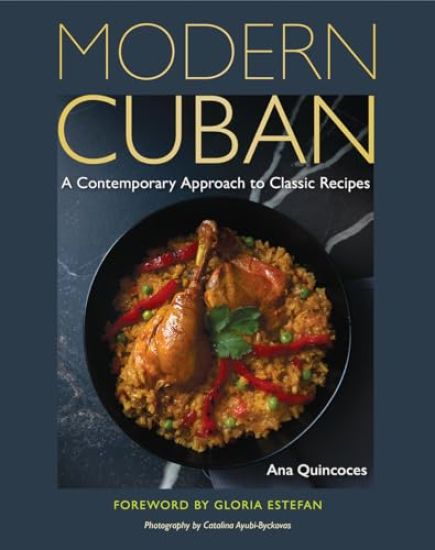
Modern Cuban

Modern Cuban

Ana Quincoces; Gloria Estefan

University Press of Florida
2024
sidottu
Cooking delicious Cuban meals for people of all backgroundsServing up a fresh take on Cuban food, Ana Quincoces reimagines traditional recipes for today’s home chefs in Modern Cuban. This cookbook unites generations by helping readers make timeless dishes that showcase the distinctive flavors of classic Cuban cuisine while crafting meals that are accessible to everyone.Modern Cuban shows how to welcome guests to an inclusive culinary celebration, demonstrating how many of these much-loved recipes can be tweaked or are already good fits for vegetarian, vegan, gluten-free, ketogenic, and other diets. With ingredients and alternatives that are easy to find or already in most home kitchens, learning Cuban cooking has never been so simple! Readers will find instructions for preparing essentials like fragrant sofrito and tangy mojo criollo along with irresistible croquetas, yuca frita (fried yuca), sopa de platano (plantain soup), picadillo (beef hash), buttery guava-filled pastelitos (pastries), flan de coco (coconut flan), and an abundance of other delectable sides, mains, and desserts.Accompanied by beautiful photos that present iconic dishes in a new, modern light, the recipes in this cookbook include Ana Quincoces’s personal memories of her family and the food culture they passed down to her. Modern Cuban is perfect for beginners and advanced cooks alike who want to celebrate Cuban favorites in ways that honor the past and present. Above all, this cookbook is for anyone who enjoys gathering good company for great food that feeds the soul. Buen provecho!
Recognizing The Latino Resurgence In U.s. Religion

Recognizing The Latino Resurgence In U.s. Religion

Ana Maria Diaz-stevens; Anthony M Stevens-Arroyo

Westview Press Inc
1997
nidottu
Emmaus is the biblical episode that recounts how the disciples, who had been unable to recognize the resurrected Jesus even as he traveled with them, finally come to know him as their Lord through his inspirational conversation. In this major new work exploring Latino religion, Ana Mar D-Stevens and Anthony M. Stevens-Arroyo compare a century-old presence of Latinos and Latinas under the U.S. flag to the Emmaus account. They convincingly argue for a new paradigm that breaks with the conventional view of Latinos and Latinas as just another immigrant group waiting to be assimilated into the U.S. The authors suggest instead the concept of a colonized people who now are prepared to contribute their cultural and linguistic heritage to a multicultural and multilingual America.The first chapter provides an overview of the religious and demographic dynamics that have contributed a specifically Latino character to the practice of religion among the 25 million plus members of what will become the largest minority group in the U.S. in the twenty-first century. The next two chapters offer challenging new interpretations of tradition and colonialism, blending theory with multiple examples from historical and anthropological studies on Latinos and Latinas. The heart of the book is dedicated to exploring what the authors call the Latino Religious Resurgence, which took place between 1967 and 1982. Comparing this period to the Great Awakenings of Colonial America and the Risorgimento of nineteenth-century Italy, the authors describe a unique combination of social and political forces that stirred Latinos and Latinas nationally. Utilizing social science theories of social movement, symbolic capital, generational change, a new mentalit and structuration, the authors explain why Latinos and Latinas, who had been in the U.S. all along, have only recently come to be recognized as major contributors to American religion. The final chapter paints an optimistic role for religion, casting it as a binding force in urban life and an important conduit for injecting moral values into the public realm.Offering an extensive bibliography of major works on Latino religion and contemporary social science theory, Recognizing the Latino Resurgence in U.S. Religion makes an important new contribution to the fields of sociology, religious studies, American history, and ethnic and Latino studies.
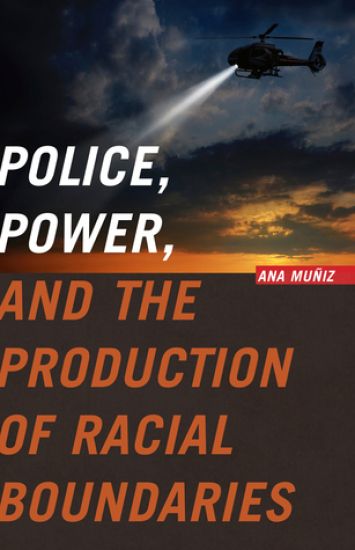
Police, Power, and the Production of Racial Boundaries
Based on five years of ethnography, archival research, census data analysis, and interviews, Police, Power, and the Production of Racial Boundaries reveals how the LAPD, city prosecutors, and business owners struggled to control who should be considered “dangerous” and how they should be policed in Los Angeles. Sociologist Ana Muñiz shows how these influential groups used policies and everyday procedures to criminalize behaviors commonly associated with blacks and Latinos and to promote an exceedingly aggressive form of policing. Muñiz illuminates the degree to which the definitions of “gangs” and “deviants” are politically constructed labels born of public policy and court decisions, offering an innovative look at the process of criminalization and underscoring the ways in which a politically powerful coalition can define deviant behavior. As she does so, Muñiz also highlights the various grassroots challenges to such policies and the efforts to call attention to their racist effects. Muñiz describes the fight over two very different methods of policing: community policing (in which the police and the community work together) and the “broken windows” or “zero tolerance” approach (which aggressively polices minor infractions—such as loitering—to deter more serious crime). Police, Power, and the Production of Racial Boundaries also explores the history of the area to explain how Cadillac-Corning became viewed by outsiders as a “violent neighborhood” and how the city’s first gang injunction—a restraining order aimed at alleged gang members—solidified this negative image. As a result, Muñiz shows, Cadillac-Corning and other sections became a test site for repressive practices that eventually spread to the rest of the city.