
Kirjahaku
Etsi kirjoja tekijän nimen, kirjan nimen tai ISBN:n perusteella.
1000 tulosta hakusanalla Andreas Herrmann
"Whether you are new to the Christian faith, or have been a believer for many years, this book will inspire and equip you to return to the heart of discipleship. I found myself equipped by this message, to make big changes in lots of small, simple, practical ways that anyone can do." Pete Greig, International Director 24–7 Prayer, Senior Pastor Emmaus Rd, Guildford Life, God, and faith contain endless "Terra Incognita", or uncharted territory, just waiting to be discovered. You were made to believe, think, and act with a Newlandic spirit, and to live in a Newlandic way. Regardless of whether you greet new things with enthusiasm or a hint of scepticism, God is Newlandic. He wants to lead you to wide open spaces, to break down barriers that limit you, to broaden your horizons. Boppi identifies four Newlandic territories: our image of God, our own hearts, our relationships, and our interaction with the world. As we let go of fear and begin to apply God’s Newlandic principles, we will begin to see a breathtaking panorama.

Stereo Scene Flow for 3D Motion Analysis
Andreas Wedel; Daniel Cremers
Springer London Ltd
2011
sidottu
This book presents methods for estimating optical flow and scene flow motion with high accuracy, focusing on the practical application of these methods in camera-based driver assistance systems. Clearly and logically structured, the book builds from basic themes to more advanced concepts, culminating in the development of a novel, accurate and robust optic flow method. Features: reviews the major advances in motion estimation and motion analysis, and the latest progress of dense optical flow algorithms; investigates the use of residual images for optical flow; examines methods for deriving motion from stereo image sequences; analyses the error characteristics for motion variables, and derives scene flow metrics for movement likelihood and velocity; introduces a framework for scene flow-based moving object detection and segmentation; includes Appendices on data terms and quadratic optimization, and scene flow implementation using Euler-Lagrange equations, in addition to a helpful Glossary.

Life innovates constantly, producing perfectly adapted species – but there’s a catch. A TIMES AND TELEGRAPH BEST BOOK OF 2023 'Hopeful and fascinating.' THE TIMES Many animals and plants eke out seemingly unremarkable lives. Passive, constrained, modest, threatened. Then, in a blink of evolutionary time, they flourish spectacularly. Once we start to look, these ‘sleeping beauties’ crop up everywhere. But why? Looking at the book of life, from apex predators to keystone crops, and informed by his own cutting-edge experiments, renowned scientist Andreas Wagner demonstrates that innovations can come frequently and cheaply to nature, well before they are needed. We have found prehistoric bacteria that harbour the remarkable ability to fight off 21st-century antibiotics. And human history fits the pattern too, as life-changing technologies are invented only to be forgotten, languishing in the shadows before they finally take off. In probing the mysteries of these sleeping beauties, Wagner reveals a crucial part of nature’s rich and strange tapestry.
Life innovates constantly, producing perfectly adapted species – but there’s a catch. A TIMES AND TELEGRAPH BEST BOOK OF 2023 'Hopeful and fascinating.' THE TIMES Many animals and plants eke out seemingly unremarkable lives. Passive, constrained, modest, threatened. Then, in a blink of evolutionary time, they flourish spectacularly. Once we start to look, these ‘sleeping beauties’ crop up everywhere. But why? Looking at the book of life, from apex predators to keystone crops, and informed by his own cutting-edge experiments, renowned scientist Andreas Wagner demonstrates that innovations can come frequently and cheaply to nature, well before they are needed. We have found prehistoric bacteria that harbour the remarkable ability to fight off 21st-century antibiotics. And human history fits the pattern too, as life-changing technologies are invented only to be forgotten, languishing in the shadows before they finally take off. In probing the mysteries of these sleeping beauties, Wagner reveals a crucial part of nature’s rich and strange tapestry.
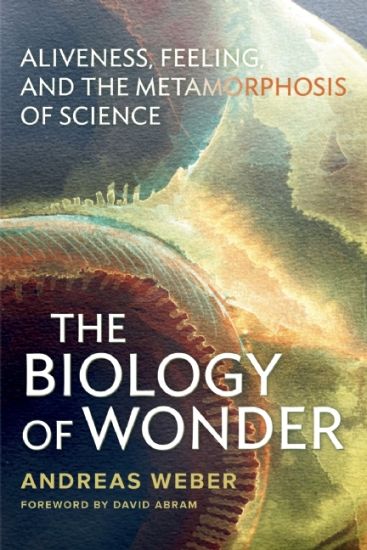
The disconnection between humans and nature is perhaps one of the most fundamental problems faced by our species today. The schism between us and the natural world is arguably the root cause of most of the environmental catastrophes unraveling around us. However, until we come to terms with the depths of our alienation, we will continue to fail to understand that what happens to nature also happens to us. In The Biology of Wonder author Andreas Weber proposes a new approach to the biological sciences that puts the human back in nature. He argues that feelings and emotions, far from being superfluous to the study of organisms, are the very foundation of life. From this basic premise flows the development of a "poetic ecology" which intimately connects our species to everything that surrounds us--showing that subjectivity and imagination are prerequisits of biological existence. The Biology of Wonder demonstrates that there is no separation between us and the world we inhabit, and in so doing it validates the essence of our deep experience. By reconciling science with meaning, expression and emotion, this landmark work brings us to a crucial understanding of our place in the rich and diverse framework of life-a revolution for biology as groundbreaking as the theory of relativity for physics. Dr. Andreas Weber is a German academic, scholar and author. He is a leader in the emerging fields of "biopoetics" and "biosemiotics," and his work has been translated into several languages and published around the globe.
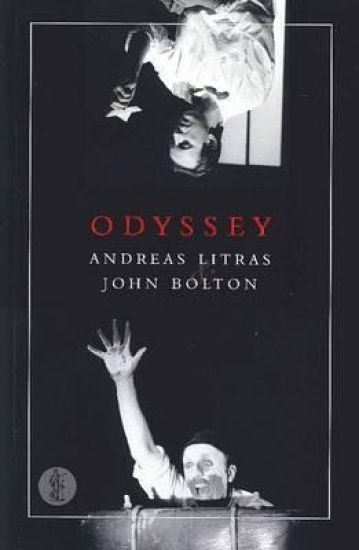
Andreas Litras' remarkable one-hander play Odyssey interweaves three narratives: Homer's Odyssey, the ancient tale, provides the template for an enactment of Litras' parents', Angelo and Paraskevi's migration to Australia; and the performer's personal search for a sense of identity and belonging as the son of Greek immigrants. Litreas weaves the stories of his family through the legend of Odysseus, the hero of the Trojan War. In this beautifully crafted autobiography we witness Greek tragedy, comedy and the everyday. Truly epic drama.
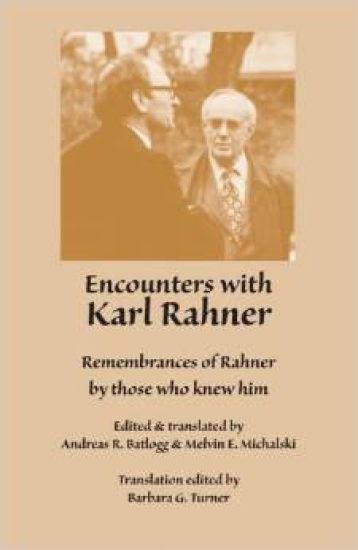
Encounters With Karl Rahner
Andreas R. (EDT) Batlogg; Melvin E. (EDT) Michalski; Barbara G. (EDT) Turner
Marquette Univ Pr
2009
pokkari

A Westerner’s travels among the persecuted and displaced Christian remnant in Iraq and Syria teach him much about faith under fire. Gold Medal Winner, 2018 IPPY Book of the Year Award Silver Medal Winner, 2018 Benjamin Franklin Award Finalist, 2018 ECPA Christian Book Award Inside Syria and Iraq, and even along the refugee trail, they’re a religious minority persecuted for their Christian faith. Outside the Middle East, they’re suspect because of their nationality. A small remnant of Christians is on the run from the Islamic State. If they are wiped out, or scattered to the corners of the earth, the language that Jesus spoke may be lost forever – along with the witness of a church that has modeled Jesus’ way of nonviolence and enemy-love for two millennia. The kidnapping, enslavement, torture, and murder of Christians by the Islamic State, or ISIS, have been detailed by journalists, as have the jihadists' deliberate efforts to destroy the cultural heritage of a region that is the cradle of Christianity. But some stories run deep, and without a better understanding of the religious and historical roots of the present conflict, history will keep repeating itself century after century. Andreas Knapp, a priest who works with refugees in Germany, travelled to camps for displaced people in the Kurdish region of northern Iraq to collect stories of survivors – and to seek answers to troubling questions about the link between religion and violence. He found Christians who today still speak Syriac, a dialect of Aramaic, the language of Jesus. The uprooted remnant of ancient churches, they doggedly continue to practice their faith despite the odds. Their devastating eyewitness reports make it clear why millions are fleeing the Middle East. Yet, remarkably, though these last Christians hold little hope of ever returning to their homes, they also harbor no thirst for revenge. Could it be that they – along with the Christians of the West, whose interest will determine their fate – hold the key to breaking the cycle of violence in the region? Includes sixteen pages of color photographs.

With its loving portrayal of aging, caring for the elderly, and the keen nature of kids’ sensibilities, this is a must-purchase for all libraries serving children. --School Library Journal, Starred Review A quiet story and pleasant music combine for a calming, peaceful, and even uplifting performance. --Kirkus Reviews Did you hear the story about Max, the boy who kidnapped his grandfather from a nursing home? You didn’t see it on the news? Well, let me tell you about it. Max lives in a small town, much smaller than yours. His grandpa is losing his memory, but still remembers quite a bit. You can imagine how they hurried, Max and his grandpa, followed by old Miss Schneider, who insisted on coming along. Why were they in a hurry? Because everyone was after them. Max had skipped school to rescue his grandpa, and they were just starting out on what promised to be one of the best days of their entire lives. A touching story about dementia and the special relationship between grandparents and grandchildren, with full-color illustrations and a read-along CD audiobook featuring twelve classical pieces for children by Georges Bizet and Sergei Prokofiev.
Discover the writings of a leader in the Radical Reformation who sparred with Martin Luther, calling for change “from below.” Although he was not an Anabaptist, the life and thought of Radical Reformer Andreas Bodenstein von Karlstadt (1486–1541) had a strong influence on the Anabaptist movement. In 1534 he joined the faculty at the University of Basel. A professor of biblical studies at Wittenberg, Carlstadt became involved in radical changes that brought him into conflict with Luther. The fifteen tracts translated and edited here by E. J. Furcha represent the first major collection of Carlstadt’s writings in one volume. They give excellent insight into his sound Christian faith and exemplary zeal as a reformer of the church “from below.” This is the eighth volume in the Classics of the Radical Reformation, a series of Anabaptist and Free Church documents translated and annotated under the direction of the Institute of Mennonite Studies.
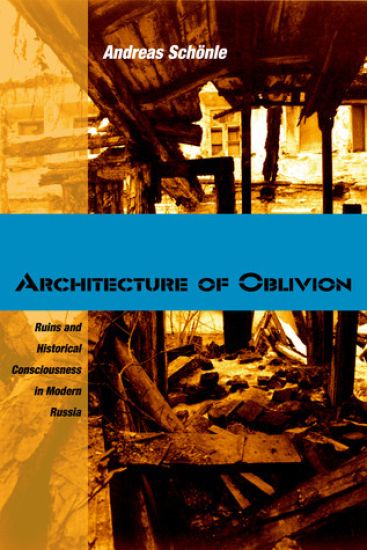
Despite attempts to promote the aesthetics of ruins in Russia—from Catherine the Great's construction of fake ruins in imperial parks to Josef Brodsky's elegiac meditations—ruins have never achieved the status they enjoy in Western Europe. While the Soviet Union was notorious for leveling churches, post-Soviet Russia has only intensified the practice of massive destruction and reconstruction. Architecture of Oblivion examines the role of ruins in the development of Russia's historical consciousness from the eighteenth century to the present. Investigating the meaning and functions ruins have acquired in Russian culture, Schönle looks at ideological reasons for the current disregard for the value of ruins and historical buildings, in particular by political authorities, and reveals how ruins have often become a site of resistance to official ideology and an invitation to map out alternative visions of history and of statehood. An interdisciplinary study of Russia's response to ruins has never been attempted, although the topic of ruins has garnered considerable interest in Western Europe and in the U.S. This original work from a leading authority on the subject will appeal to historians of Russian culture and thought, literature and art scholars, and general readers interested in ruins.
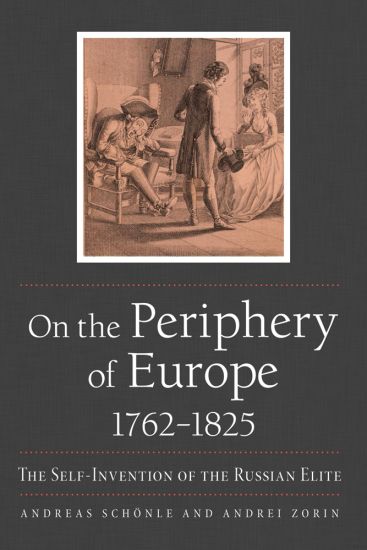
On the Periphery of Europe, 1762–1825
Andreas Schönle; Andrei Zorin
Northern Illinois University Press
2018
pokkari
Throughout the eighteenth century, the Russian elite assimilated the ideas, emotions, and practices of the aristocracy in Western countries to various degrees, while retaining a strong sense of their distinctive identity. In On the Periphery of Europe, 1762–1825, Andreas Schönle and Andrei Zorin examine the principal manifestations of Europeanization for Russian elites in their daily lives, through the import of material culture, the adoption of certain social practices, travel, reading patterns, and artistic consumption. The authors consider five major sites of Europeanization: court culture, religion, education, literature, and provincial life. The Europeanization of the Russian elite paradoxically strengthened its pride in its Russianness, precisely because it participated in networks of interaction and exchange with European elites and shared in their linguistic and cultural capital. In this way, Europeanization generated forms of sociability that helped the elite consolidate its corporate identity as distinct from court society and also from the people. The Europeanization of Russia was uniquely intense, complex, and pervasive, as it aimed not only to emulate forms of behavior, but to forge an elite that was intrinsically European, while remaining Russian. The second of a two-volume project (the first is a multi-authored collection of case studies), this insightful study will appeal to scholars and students of Russian and East European history and culture, as well as those interested in transnational processes.
Provides a description of the principles and practical applications of Fibre Bragg gratings technology. The authors explain the underlying physics and practical aspects. Topics covered include photosensitivity; properties; inscribing grating; detailed applications coverage in both telecommunications and sensing and a look at the technology of this technology on the marketplace.
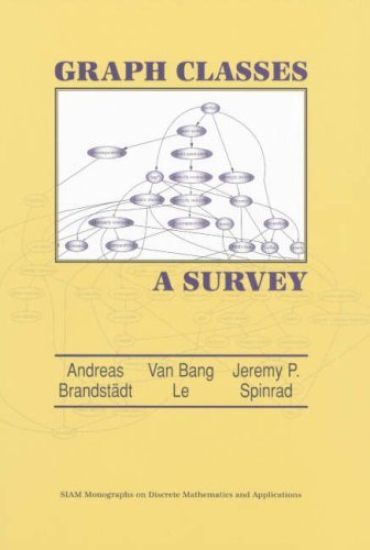
Graph Classes
Andreas Brandstadt; Van Bang Le; Jeremy P. Spinrad
Society for Industrial Applied Mathematics,U.S.
1999
pokkari
This well-organized reference is a definitive encyclopedia for the literature on graph classes. It contains a survey of more than 200 classes of graphs, organized by types of properties used to define and characterize the classes, citing key theorems and literature references for each. The authors state results without proof, providing readers with easy access to far more key theorems than are commonly found in other mathematical texts. Interconnections between graph classes are also provided to make the book useful to a variety of readers.
Evaluating Derivatives
Andreas Griewank; Andrea Walther
Society for Industrial Applied Mathematics,U.S.
2008
pokkari
Algorithmic, or automatic, differentiation (AD) is a growing area of theoretical research and software development concerned with the accurate and efficient evaluation of derivatives for function evaluations given as computer programs. The resulting derivative values are useful for all scientific computations that are based on linear, quadratic, or higher order approximations to nonlinear scalar or vector functions. AD has been applied in particular to optimization, parameter identification, nonlinear equation solving, the numerical integration of differential equations, and combinations of these. Apart from quantifying sensitivities numerically, AD also yields structural dependence information, such as the sparsity pattern and generic rank of Jacobian matrices. The field opens up an exciting opportunity to develop new algorithms that reflect the true cost of accurate derivatives and to use them for improvements in speed and reliability. This second edition has been updated and expanded to cover recent developments in applications and theory, including an elegant NP completeness argument by Uwe Naumann and a brief introduction to scarcity, a generalization of sparsity.There is also added material on checkpointing and iterative differentiation. To improve readability the more detailed analysis of memory and complexity bounds has been relegated to separate, optional chapters.The book consists of three parts: a stand-alone introduction to the fundamentals of AD and its software; a thorough treatment of methods for sparse problems; and final chapters on program-reversal schedules, higher derivatives, nonsmooth problems and iterative processes. Each of the 15 chapters concludes with examples and exercises.
Jean de Jullienne
Andreas Henning; Jennifer Tonkovich; Christoph Martin Vogtherr
Trustees of the Wallace Collection
2020
pokkari
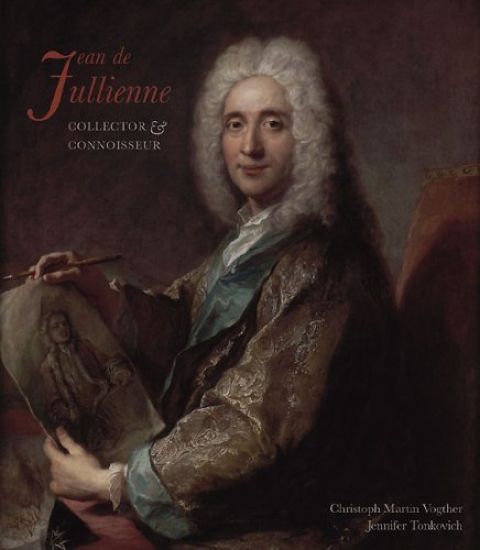
Jean de Jullienne (1686–1766) was one of the leading French amateurs and collectors of the eighteenth century. He played an important role as editor and dealer, most famously of Watteau’s œuvre, and held an influential position in the French art administration of his time, as director of the Gobelins factory until 1729. Jullienne’s collection epitomizes the most advanced taste of Parisian private collectors of the period. His strong interest in contemporary French art, Netherlandish painting, in sketches, pastels and drawings were all typical or even trendsetting for a new generation of rich Parisian collectors with only loose ties to the French court. The two sales of his collection were major events for the European art market. The watercolor views of his collection in the inventory from 1756, a unique document for the period, are here published in their entirety for the first time. This exhibition catalog will present masterworks from Jullienne’s collection, including Rubens, Rembrandt, Watteau, Wouwermans, Netscher, Bourdon, Vanloo, Greuze and Vernet. These are drawn from the Wallace Collection as well as museums in London, Edinburgh, Valenciennes, Berlin and from several important British private collections.
What Next for the European Parliament?
Andreas Maurer
Federal Trust for Education Research
1999
nidottu
What Next for the European Parliament? Suggests what the MEPs elected in June 1999 should be doing to strengthen the future of European parliamentary democracy. Drawing on his unique research into the parliament's use of its existing powers, Andreas maurer suggests a programme of reform to the working conditions, rules and procedures od the parliament as well as to the European Parliamet's conduct of the critical relationship withnthe Council and Commision. maurer's work is based on a detailed study of the co-decision, cooperation and consultation procedures in whch ithe parliament finds itself involved. The battle for control of executive authority ibn the European Union is highlighted. The author points out the deficiencies as well as strengths of the present set-up, and makes proposals about how the parliament's enhanced powers under the Treaty of Amsterdam can best be exploited. No parliamentarian, official or journalist can afford to be without this manual of good practice for the European Parliament.
Our understanding of life on earth is always developing. In this age of genetics and microbiology, Andreas Suchantke brings a lifetime of holistic biological research to the question of the development and evolution of plants and animals.Following Goethe's participatory method, and drawing on his observations from a number of continents, Suchantke presents evolution as an integrated dynamic process that unfolds on a far more fundamental level than Darwin's natural selection.Beautifully illustrated through the author?s own drawings and colour photographs, this masterly work offers a rich, dynamic and deeply meaningful understanding of organic life.