This book offers a reassessment of the international monetary problems that led to the global economic crisis of the 1930s. It explores the connections between the gold standard--the framework regulating international monetary affairs until 1931--and the Great Depression that broke out in 1929. Eichengreen shows how economic policies, in conjunction with the imbalances created by World War I, gave rise to the global crisis of the 1930s. He demonstrates that the gold standard fundamentally constrained the economic policies that were pursued and that it was largely responsible for creating the unstable economic environment on which those policies acted. The book also provides a valuable perspective on the economic policies of the post-World War II period and their consequences.
Over the past twenty years, controversy has raged over the greatly expanded role of Congress in the formulation of US national defence policy. Barry Blechman, who served as Assistant Director to the US Arms Control and Disarmament Agency and as a consultant to the Pentagon and numerous congressional committees, here analyses this fundamental shift in US policy-making. Based in part on interviews with Congress members and their staff, the book explains how and why these changes came about and what their consequences have been for the defence of American interests.
Written by a leading scholar of juvenile justice, this book examines the social and legal changes that have transformed the juvenile court in the last three decades from a nominally rehabilitative welfare agency into a scaled-down criminal court for young offenders. It explores the complex relationship between race and youth crime to explain both the Supreme Court decisions to provide delinquents with procedural justice and the more recent political impetus to "get tough" on young offenders. This provocative book will be necessary reading for criminal and juvenile justice scholars, sociologists, legislators, and juvenile justice personnel.
Within the past three decades, social and legal changes have transformed the juvenile court from a nominally rehabilitative welfare agency into a second-class criminal court for young offenders. Recent efforts to "toughen" juvenile justice policies have resulted in increasingly harsh sanctions that fall disproportionately on minority youths. In this provocative new book, Barry Feld examines what went wrong with the juvenile court and proposes an alternative model for youth crime control and child welfare. The Progressive reformers who created the juvenile court a century ago saw children as relatively blameless and innocent. But recent decades of rising crime rates associated with urban decay have strained this tolerant view of young offenders. Feld relates the 1967 Supreme Court decision In re Gault to the broader social and legal changes associated with the civil rights movement and the Warren Court's "Due Process Revolution." Although gault mandated more elaborate procedural safeguards in delinquency hearings, ironically, those protections legitimated the imposition of more punitive sanctions. Since Gault, Feld argues, three decades of judicial, legislative, and administrative reforms have conducted a form of "criminological triage." At the "soft end," reforms have shifted noncriminal status offenders, primarily female and white, out of the juvenile justice system into a "hidden system" made up of private sector mental health and chemical dependency facilities. At the "hard end," states transfer increasing numbers of young offenders, disproportionately minorities, to criminal court for prosecution as adults. Meanwhile, juvenile courts punish more severely those delinquents-again disproportionately minorities-who remain within the increasingly criminalized juvenile justice system. Feld attributes the current state of affairs to a conceptual flaw inherent in the juvenile court. The juvenile justice system attempts to combine social welfare and social control functions in one organization, but inevitably fulfills both missions badly because of the inherent and irreconcilable contradictions between them. Progressive reformers situated the juvenile court on a number of cultural, legal, and criminological fault lines, where the ideas of child and adult, determinism and free will, immature and responsible, treatment and punishment collide. The past three decades have witnessed a shift from the former to the latter of these binary pairs in response to the racial transformation of cities, the increase in serious youth crime, and the erosion of the rehabilitative assumptions of the juvenile court. The solution, Feld argues, is to uncouple social welfare from criminal social control. States could try all offenders in one integrated criminal justice system with appropriate modifications to accommodate the youthfulness of younger defendants: a graduated, age-culpability sentencing system, separate youth correctional facilities, and the like. Formally recognizing youthfulness as a mitigating factor would provide youths with greater protections and justice than they currently receive in either the juvenile or criminal justice systems. At the same time such a strategy would enable public policies to address directly the social welfare needs of all young people.
This book is a reassessment of the international monetary crises of the post-World War I period that led to the Great Depression of the 1930s. It also analyses the responses of the world economic powers to the Depression and how new monetary policies set the stage for the watershed post-World War II system established at Bretton Woods. It offers new theories of what effect the Great Depression had on the collapse of the world monetary system, and what effect the collapse had on deepening and prolonging the Depression, by exploring the link between global economic crisis and the the gold standard (the framework for international monetary affairs until 1931). The events described had a profound effect upon twentieth-century history: the Depression abetted the rise of Hitler and the demise of the gold standard is a historical cause of inflation.
Rethinking the New Deal Court challenges the prevailing account of the New Deal era Supreme Court, which holds that in the spring of 1937 the Court suddenly abandoned jurisprudential positions it had staked out in such areas as substantive due process and commerce clause doctrine. In this view, the impetus for such a dramatic reversal was provided by external political pressures manifested in FDR's landslide victory in the 1936 election, and by the subsequent Court-packing crisis. Author Barry Cushman, by contrast, discounts the role that political pressure played in securing this "constitutional revolution." Instead, he reorients study of the New Deal Court by focusing attention on the internal dynamics of doctrinal development and the role of New Dealers in seizing opportunities presented by doctrinal change. Recasting this central story in American constitutional development as a chapter in the history of ideas rather than simply an episode in the history of politics, Cushman offers a thoroughly researched and carefully argued study that recharacterizes the mechanics by which laissez-faire constitutionalism unraveled and finally collapsed during FDR's reign. Identifying previously unseen connections between various lines of doctrine, Cushman charts the manner in which Nebbia v. New York's abandonment of the distinction between public and private enterprise hastened the demise of the doctrinal structure in which that distinction had played a central role.
Rethinking the New Deal Court challenges the prevailing account of the New Deal era Supreme Court, which holds that in the spring of 1937 the Court suddenly abandoned jurisprudential positions it had staked out in such areas as substantive due process and commerce clause doctrine. In this view, the impetus for such a dramatic reversal was provided by external political pressures manifested in FDR's landslide victory in the 1936 election, and by the subsequent Court-packing crisis. Author Barry Cushman, by contrast, discounts the role that political pressure played in securing this "constitutional revolution." Instead, he reorients study of the New Deal Court by focusing attention on the internal dynamics of doctrinal development and the role of New Dealers in seizing opportunities presented by doctrinal change. Recasting this central story in American constitutional development as a chapter in the history of ideas rather than simply an episode in the history of politics, Cushman offers a thoroughly researched and carefully argued study that recharacterizes the mechanics by which laissez-faire constitutionalism unraveled and finally collapsed during FDR's reign. Identifying previously unseen connections between various lines of doctrine, Cushman charts the manner in which Nebbia v. New York's abandonment of the distinction between public and private enterprise hastened the demise of the doctrinal structure in which that distinction had played a central role.
We say "the grass is green" or "lemons are yellow" to state what everyone knows. But are the things we see around us really colored, or do they only look that way because of the effects of light rays on our eyes and brains? Is color somehow "unreal" or "subjective" and dependent on our human perceptions and the conditions under which we see things? Distinguished scholar Barry Stroud investigates these and related questions in The Quest for Reality. In this long-awaited book, he examines what a person would have to do and believe in order to reach the conclusion that everyone's perceptions and beliefs about the color of things are "illusions" and do not accurately represent the way things are in the world as it is independently of us. Arguing that no such conclusion could be consistently reached, Stroud finds that the conditions of a successful unmasking of color cannot all be fulfilled. The discussion extends beyond color to present a serious challenge to many other philosophical attempts to discover the way things really are. A model of subtle, elegant, and rigorous philosophical writing, this study will attract a wide audience from all areas of philosophy.
The most controversial musical figure of the 19th century, Wagner was a great literary, philosophical, and political activist whose contribution to the development of German Romanticism was unrivalled by any of his contemporaries. His life and works may be said to crown the musical achievements of German Romanticism but they arouse passions like no other composer's. His works are hated as much as they are worshipped, but no one denies their greatness. This biography of Richard Wagner is one in a new series of composer biographies, derived and adapted from the second edition of The New Grove Dictionary of Music and Musicians. These newly written biographies bring the best of the book-length pieces in The New Grove to a wider audience. Each title provides fresh new insights into the life and works of a major composer, derived from the most recent scholarship. In addition to a detailed and informative view of the subject's life and works, written by an expert in the field, each book includes comprehensive, tabular work-lists and a fully revised and updated bibliography.
In the early twenty-first century, the world has been seized by one of the most intense periods of anti-Americanism in history. Reviled as an imperialist power, an exporter of destructive capitalism, an arrogant crusader against Islam, and a rapacious over-consumer casually destroying the planet, it seems that the United States of America has rarely been less esteemed in the eyes of the world. In such an environment, one can easily overlook the fact that people from other countries have, in fact, been hating America for centuries. Going back to the day of Thomas Jefferson and Ben Franklin, Americans have long been on the defensive. Barry Rubin and Judith Colp Rubin here draw on sources from a wide range of countries to track the entire trajectory of anti-Americanism. Most significantly, they identify how anti-Americanism evolved over time. In the 18th century, the newfound land was considered too wild and barbaric to support human society. No one, the argument went, could actually live there. Animals brought from Europe, one French commentator claimed, shrunk in size and power. Native Americans too were "small and feeble," lacking "body hair, beard and ardor for his female." The very land itself was "permeated with moist and poisonous vapors, unable to give proper nourishment except to snakes and insects." This opinion prevailed through most of the 19th century, with Keats even invoking the lack of nightingales as symptomatic of just how unlovely and unlivable a place this America was. As the young nation came together at the beginning of the twentieth century and could no longer be easily dismissed as a failure, its very success became cause for suspicion. The American model of populist democracy, the rise of mass culture, the spread of industrialization-all confirmed that America was now a viral threat that could destabilize the established order in Europe. After the paroxysm of World War II, the worst fears of anti-Americanists were realized as the United States became one of the two most powerful nations in the world. Then, with the collapse of the Soviet Union, America became the sole superpower it is today, and the object of global suspicion and scorn. With this powerful work, the Rubins trace the paradox that is America, a country that is both the most reviled and most envied land on earth. In the end, they demonstrate, anti-Americanism has often been a visceral response to the very idea-as well as both the ideals and policies--of America itself, its aggressive innovation, its self-confidence, and the challenge it poses to alternative ideologies.
Interest in wine has steadily increased in recent years, with people far more sophisticated about wine than they used to be. And, inevitably, those who take a serious interest in wine find themselves asking questions about it that are at heart philosophical. Questions of Taste is the first book to tackle these questions, illuminating the philosophical issues surrounding our love of wine. Featuring lucid essays by top philosophers, a linguist, a biochemist, and a winemaker and wine critic, this book applies their critical and analytical skills to answer--or at least understand--many thorny questions. Does the experience of wine lie in the glass or in our minds? Does the elaborate language we use to describe wine--alluding to the flavors of cheese or fruit, or to a wine's "suppleness" or "brawniness"---really mean anything at all? Can two people taste one wine in the same way? Does a wine expert enjoy wine more than a novice? These questions and others are not just the concern of the wine lover, but go to the heart of how we think about the world around us--and are the province of the philosopher. With a foreword by leading wine authority Jancis Robinson (editor of the highly acclaimed Oxford Companion to Wine), this volume will be of interest to anyone who thinks seriously about the experience of enjoying wine, as well as those interested in seeing philosophy applied to the world of the everyday.
Metropolitan Detroit is America's most segregated metropolitan area, but amidst segregation, there is also growing diversity, including increasing populations of African, Asian, Middle Eastern, and Latin American descent in some of Detroit's suburbs. While metropolitan areas like Detroit would benefit from discussion of the causes and consequences of these changes, there are few policy, media, or governmental vehicles for this purpose. Young people, on the other hand, are strategically situated to address some of the issues arising in areas that combine segregation and diversity. More than adults, adolescents often hold positive attitudes toward social justice. They want to communicate with people who are different from themselves and collaborate on projects across the segregated boundaries that separate them, if there are opportunities to do so. What are some strategies for increasing youth dialogues on race and ethnicity in metropolitan areas that are becoming simultaneously more segregated and diverse? In Youth Dialogues on Race and Ethnicity, Barry Checkoway describes the work of a specific university-community partnership program: Youth Dialogues on Race and Ethnicity in Metropolitan Detroit. Including an analysis of the program's origins and objectives, activities and accomplishments, facilitating and limiting factors, and lessons learned from practice, Checkoway provides an unprecedented example of young people working together across segregated boundaries to transform their lives and communities. He also examines youth dialogues as a process, young people as change agents, adults as allies and partners, and the anchor institutions that support this work. Indeed, the story is about much more than a single place, and raises larger questions about racial segregation, social diversity, intergroup dialogue, community planning, and metropolitan areas in societies that are changing.
In this sweeping volume of comparative philosophy and intellectual history, Barry Allen reassesses the values of experience and experiment in European and world traditions. His work traces the history of empirical philosophy from its birth in Greek medicine to its emergence as a philosophy of modern science. He surveys medical empiricism, Aristotlean and Epicurean empiricism, the empiricism of Gassendi and Locke, logical empiricism, radical empiricism, transcendental empiricism, and varieties of anti-empiricism from Parmenides to Wilfrid Sellars. Throughout this extensive intellectual history, Allen builds an argument in three parts. A richly detailed account of history's empiricisms in Part One establishes a context in Part Two for reconsidering the work of the radical empiricists--William James, Henri Bergson, John Dewey, and Gilles Deleuze, each treated in a dedicated chapter. What is "radical" about them is their effort to return empiricism from epistemology to the ontology and natural philosophy where it began. In Part Three, Allen sets empirical philosophy in conversation with Chinese tradition, considering technological, scientific, medical, and alchemical sources, as well as selected Confucian, Daoist, and Mohist classics. The work shows how philosophical reflection on experience and a profound experimental practice coexist in traditional China with no interaction or even awareness of each other, slipping over each other instead of intertwining as they did in European history, a difference Allen attributes to a different understanding of the value of knowledge. Allen's book recovers empiricism's neglected, multi-textured contexts, and elucidates the enduring value of experience, to arrive at an idea of what is living and dead in philosophical empiricism.
The Urban Experience provides a fresh approach to the study of metropolitan areas by combining economic principles, social insight, and political realities with an appreciation of public policy to understand how U.S. cities and suburbs function in the 21st century. The new edition will feature a new cohesive framework called the Metropolitan Area Dynamic introduced in the first chapter of the book, then incorporated into every chapter, to demonstrate the demographic, economic, political, social, and public policy forces that impact metropolitan areas. The narrative of the book is grounded in the real life experiences of students and their families on the premise that there is a fascination about one's own surroundings to engage the students in their study. It uses a great deal of historical and comparative data to explore the wide variation in how we experience urban and suburban communities and will include greater discussion of cities worldwide to engage with large scale global issues like climate change, immigration/migration, and inequality. It addresses the changing role and function of U.S. metropolitan areas in an age of growing global competition and focuses on key contemporary problems facing cities and suburbs. Providing an interdisciplinary approach to the topic, the book introduces analyses from economics, sociology, and political science, urban studies, and public policy as useful tools to understand the evolution and current status of the nation's urban areas. The book will be a valuable text for urban scholars, public officials, and all those interested in understanding urban dynamics.
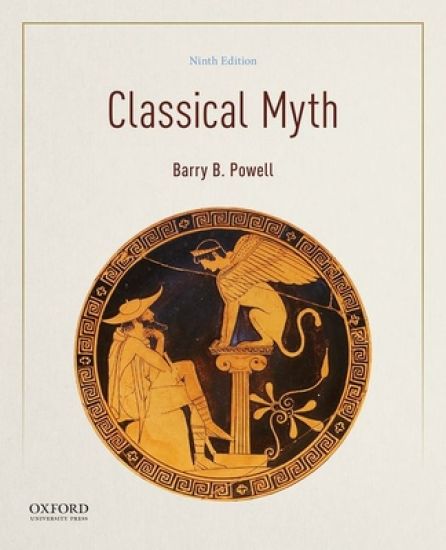
For decades, Classical Myth has been one of the most popular and best-selling texts for the study of classical myth. Oxford University Press is proud to publish this essential book in a vibrant new ninth edition, complemented by digital learning resources that further enhance the reader's engagement with the classical past. Visit www.oup.com/us/he/powell9e for a wealth of new digital teaching and learning resources. Package this text at a discount with one or more of the author's translations of the Iliad, the Odyssey, and the Aeneid--all pubished by Oxford University Press--or with any title in the Oxford World's Classics series. Please contact your OUP sales representative to set up a package.
War causes death, disability, and disease. It damages the health-supporting infrastructure, displaces populations, violates human rights, and diverts resources. And it subsequently leads to more violence. From Horror to Hope documents the health consequences of war, primarily for noncombatant civilians but also for military personnel and veterans, and outlines what can be done to minimize these consequences. Written by a public health physician engaged with this subject for decades, the book also describes positive developments in addressing the health impacts of war, including new initiatives to protect civilians during war, reduce gender-based violence and mental trauma, and control the international arms trade and nuclear weapons. In addition, From Horror to Hope profiles inspiring health professionals who are providing healthcare for war-affected populations and participating in education, research, and advocacy to reduce the health impacts of war. Finally, the book demonstrates how traditional public health frameworks and new paradigms can be applied to the prevention of war and the promotion of peace. Given the current peak in armed conflicts and the increasing threat of future wars, From Horror to Hope provides an extremely timely overview for anyone seeking to better understand and address the health consequences of war.
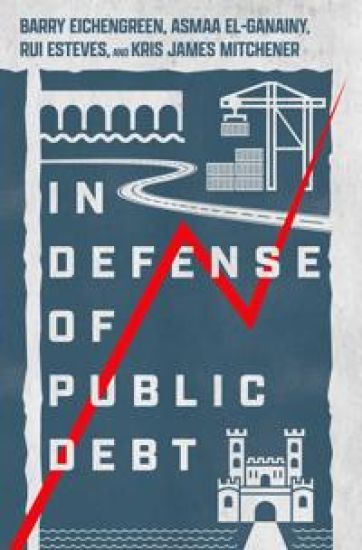
A dive into the origins, management, and uses and misuses of sovereign debt through the ages. Public debts have exploded to levels unprecedented in modern history as governments responded to the Covid-19 pandemic and ensuing economic crisis. Their dramatic rise has prompted apocalyptic warnings about the dangers of heavy debts—about the drag they will place on economic growth and the burden they represent for future generations. In Defense of Public Debt offers a sharp rejoinder to this view, marshaling the entire history of state-issued public debt to demonstrate its usefulness. Authors Barry Eichengreen, Asmaa El-Ganainy, Rui Esteves, and Kris James Mitchener argue that the ability of governments to issue debt has played a critical role in addressing emergencies—from wars and pandemics to economic and financial crises, as well as in funding essential public goods and services such as transportation, education, and healthcare. In these ways, the capacity to issue debt has been integral to state building and state survival. Transactions in public debt securities have also contributed to the development of private financial markets and, through this channel, to modern economic growth. None of this is to deny that debt problems, debt crises, and debt defaults occur. But these dramatic events, which attract much attention, are not the entire story. In Defense of Public Debt redresses the balance. The authors develop their arguments historically, recounting two millennia of public debt experience. They deploy a comprehensive database to identify the factors behind rising public debts and the circumstances under which high debts are successfully stabilized and brought down. Finally, they bring the story up to date, describing the role of public debt in managing the Covid-19 pandemic and recession, suggesting a way forward once governments—now more heavily indebted than before—finally emerge from the crisis.
War causes death, disability, and disease. It damages the health-supporting infrastructure, displaces populations, violates human rights, and diverts resources. And it subsequently leads to more violence. From Horror to Hope documents the health consequences of war, primarily for noncombatant civilians but also for military personnel and veterans, and outlines what can be done to minimize these consequences. Written by a public health physician engaged with this subject for decades, the book also describes positive developments in addressing the health impacts of war, including new initiatives to protect civilians during war, reduce gender-based violence and mental trauma, and control the international arms trade and nuclear weapons. In addition, From Horror to Hope profiles inspiring health professionals who are providing healthcare for war-affected populations and participating in education, research, and advocacy to reduce the health impacts of war. Finally, the book demonstrates how traditional public health frameworks and new paradigms can be applied to the prevention of war and the promotion of peace. Given the current peak in armed conflicts and the increasing threat of future wars, From Horror to Hope provides an extremely timely overview for anyone seeking to better understand and address the health consequences of war.
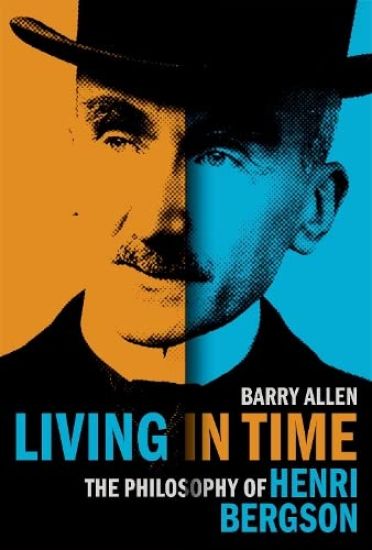
Henri Bergson (1859-1941) was once the most famous philosopher in the world, but his reputation waned in the latter half of the 20th century. Barry Allen here makes the case for Bergson as a great philosopher, one whose thought has much to contribute to contemporary philosophical questions. Living in Time presents chapters on each of Bergson's four major works, explaining his theories of time, perception, memory, and panpsychic consciousness, his innovative concept of virtual existence, his objection to Darwin, his controversy with Einstein, his philosophy of creative evolution, and his social philosophy of closed and open society. In particular Allen focusses on Bergson's powerful ideas on time. Classical arguments for determinism fallaciously apply spatial concepts to consciousness; once we take time seriously, which means acknowledging its reality as duration and its difference from space, Bergson showed that the arguments for determinism become insupportable. Bergson's ideas on time and evolution offer a comparison with Nietzsche, which Allen develops, exposing both philosophical concurrence and systematic difference. The book's conclusion discusses the question of Bergson and naturalism and summarizes the ontology of the virtual that emerges as a core part of Bergson's thought.