The reading scheme will be linked to Language Tree, so that topics and characters familiar to teachers and students can be used. The scheme can also be used independently with other Language Arts courses. Strong emphasis on phonics, repetition, alliteration, simple vocabulary at the lower levels. Focus on the Infant years where the need for reading practice is greatest. Contemporary stories and artwork Photographs will be included: they are essential to meet syllabus requirements of associating reading material with real life
The reading scheme will be linked to Language Tree, so that topics and characters familiar to teachers and students can be used. The scheme can also be used independently with other Language Arts courses. Strong emphasis on phonics, repetition, alliteration, simple vocabulary at the lower levels. Focus on the Infant years where the need for reading practice is greatest. Contemporary stories and artwork Photographs will be included: they are essential to meet syllabus requirements of associating reading material with real life
Key features:• Strong phonic element• Gentle start and gradual build-up of skills• Lots of extra reading and practice material provided in the Workbooks and online• Caribbean content, including traditional stories and rhymes• Material which appeals to boys• Contemporary design and high quality artwork• Variety of text types
The reading scheme will be linked to Language Tree, so that topics and characters familiar to teachers and students can be used. The scheme can also be used independently with other Language Arts courses. Strong emphasis on phonics, repetition, alliteration, simple vocabulary at the lower levels. Focus on the Infant years where the need for reading practice is greatest. Contemporary stories and artwork Photographs will be included: they are essential to meet syllabus requirements of associating reading material with real life
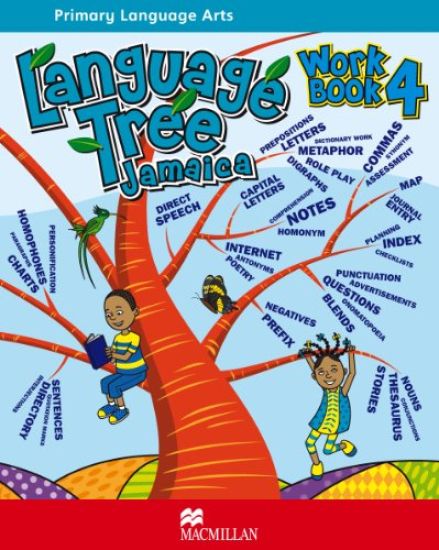
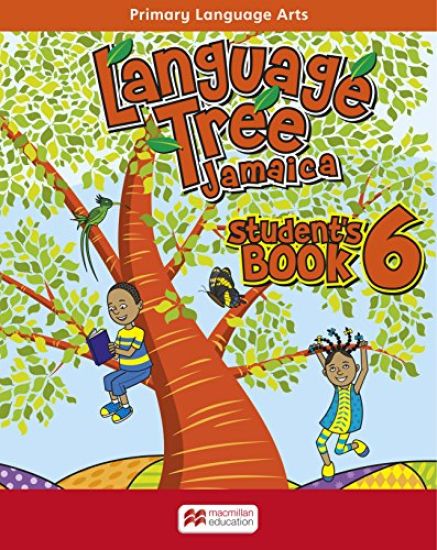
• Covers all aspects of the Jamaican primary curriculum • Thorough practice of each language point • Practice of listening, speaking, reading, writing, thinking and viewing skills • Plenty of reading and comprehension skills with many different types of texts • Regular assessment • A Workbook at each level to reinforce the work of the Student’s Book
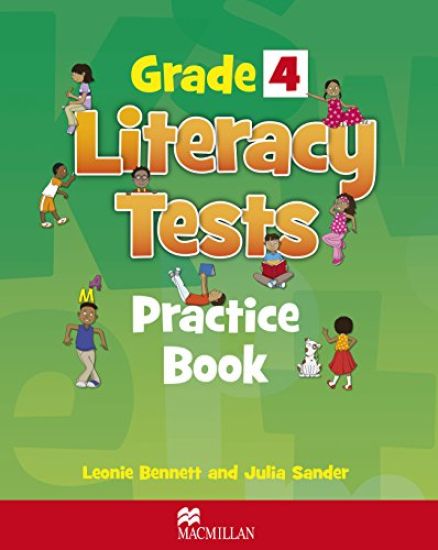
The Focus section:• highlights key concepts and topics covered in the syllabus• reinforces students’ thinking and learning skills• supports challenging areas with graphics, tables and charts• includes clear instructions for how to complete the test The Practice Papers section:• includes 70 questions per test with simple and clear instructions• reinforces literacy skills covered in the Focus section• tests students’ understanding of the topic using different types of questions• has answers to all questions provided in a pull-out section at the back of the book
• meets the literacy requirements of the Jamaica Primary Integrated Curriculum • places a strong focus on practising language skills, as requested by experienced teachers• delivers thorough explanation of key syllabus areas• features a variety of practice exercises that allow for critical thinking• includes practice questions in the style of Grade 4 examinations
• Covers all aspects of the Jamaican primary curriculum • Thorough practice of each language point • Practice of listening, speaking, reading, writing, thinking and viewing skills • Plenty of reading and comprehension skills with many different types of texts • Regular assessment • A Workbook at each level to reinforce the work of the Student’s Book
Bennett explores the relationship between theatre and museums, looking particularly at the collaborative processes that intertwine these two cultural practices. She argues that discourses of performance studies can open up new avenues of inquiry about the production and reception of the museum experience and its place in contemporary culture.
In Neuroscience and Philosophy three prominent philosophers and a leading neuroscientist clash over the conceptual presuppositions of cognitive neuroscience. The book begins with an excerpt from Maxwell Bennett and Peter Hacker's Philosophical Foundations of Neuroscience (Blackwell, 2003), which questions the conceptual commitments of cognitive neuroscientists. Their position is then criticized by Daniel Dennett and John Searle, two philosophers who have written extensively on the subject, and Bennett and Hacker in turn respond. Their impassioned debate encompasses a wide range of central themes: the nature of consciousness, the bearer and location of psychological attributes, the intelligibility of so-called brain maps and representations, the notion of qualia, the coherence of the notion of an intentional stance, and the relationships between mind, brain, and body. Clearly argued and thoroughly engaging, the authors present fundamentally different conceptions of philosophical method, cognitive-neuroscientific explanation, and human nature, and their exchange will appeal to anyone interested in the relation of mind to brain, of psychology to neuroscience, of causal to rational explanation, and of consciousness to self-consciousness. In his conclusion Daniel Robinson (member of the philosophy faculty at Oxford University and Distinguished Professor Emeritus at Georgetown University) explains why this confrontation is so crucial to the understanding of neuroscientific research. The project of cognitive neuroscience, he asserts, depends on the incorporation of human nature into the framework of science itself. In Robinson's estimation, Dennett and Searle fail to support this undertaking; Bennett and Hacker suggest that the project itself might be based on a conceptual mistake. Exciting and challenging, Neuroscience and Philosophy is an exceptional introduction to the philosophical problems raised by cognitive neuroscience.
In Neuroscience and Philosophy three prominent philosophers and a leading neuroscientist clash over the conceptual presuppositions of cognitive neuroscience. The book begins with an excerpt from Maxwell Bennett and Peter Hacker's Philosophical Foundations of Neuroscience (Blackwell, 2003), which questions the conceptual commitments of cognitive neuroscientists. Their position is then criticized by Daniel Dennett and John Searle, two philosophers who have written extensively on the subject, and Bennett and Hacker in turn respond. Their impassioned debate encompasses a wide range of central themes: the nature of consciousness, the bearer and location of psychological attributes, the intelligibility of so-called brain maps and representations, the notion of qualia, the coherence of the notion of an intentional stance, and the relationships between mind, brain, and body. Clearly argued and thoroughly engaging, the authors present fundamentally different conceptions of philosophical method, cognitive-neuroscientific explanation, and human nature, and their exchange will appeal to anyone interested in the relation of mind to brain, of psychology to neuroscience, of causal to rational explanation, and of consciousness to self-consciousness. In his conclusion Daniel Robinson (member of the philosophy faculty at Oxford University and Distinguished Professor Emeritus at Georgetown University) explains why this confrontation is so crucial to the understanding of neuroscientific research. The project of cognitive neuroscience, he asserts, depends on the incorporation of human nature into the framework of science itself. In Robinson's estimation, Dennett and Searle fail to support this undertaking; Bennett and Hacker suggest that the project itself might be based on a conceptual mistake. Exciting and challenging, Neuroscience and Philosophy is an exceptional introduction to the philosophical problems raised by cognitive neuroscience.
It is commonly assumed that if the Sun suddenly turned into a black hole, it would suck Earth and the rest of the planets into oblivion. Yet, as prominent author and astrophysicist Jeffrey Bennett points out, black holes don't suck. With that simple idea in mind, Bennett begins an entertaining introduction to Einstein's theories of relativity, describing the amazing phenomena readers would actually experience if they took a trip to a black hole. The theory of relativity reveals the speed of light as the cosmic speed limit, the mind-bending ideas of time dilation and curvature of spacetime, and what may be the most famous equation in history: E = mc2. Indeed, the theory of relativity shapes much of our modern understanding of the universe. It is not "just a theory"-every major prediction of relativity has been tested to exquisite precision, and its practical applications include the Global Positioning System (GPS). Amply illustrated and written in clear, accessible prose, Bennett's book proves anyone can grasp the basics of Einstein's ideas. His intuitive, nonmathematical approach gives a wide audience its first real taste of how relativity works and why it is so important to science and the way we view ourselves as human beings.
It is commonly assumed that if the Sun suddenly turned into a black hole, it would suck Earth and the rest of the planets into oblivion. Yet, as prominent author and astrophysicist Jeffrey Bennett points out, black holes don't suck. With that simple idea in mind, Bennett begins an entertaining introduction to Einstein's theories of relativity, describing the amazing phenomena readers would actually experience if they took a trip to a black hole. The theory of relativity reveals the speed of light as the cosmic speed limit, the mind-bending ideas of time dilation and curvature of spacetime, and what may be the most famous equation in history: E = mc2. Indeed, the theory of relativity shapes much of our modern understanding of the universe. It is not "just a theory"-every major prediction of relativity has been tested to exquisite precision, and its practical applications include the Global Positioning System (GPS). Amply illustrated and written in clear, accessible prose, Bennett's book proves anyone can grasp the basics of Einstein's ideas. His intuitive, nonmathematical approach gives a wide audience its first real taste of how relativity works and why it is so important to science and the way we view ourselves as human beings.
This comprehensive study of prolific British filmmaker Michael Winterbottom explores the thematic, stylistic, and intellectual consistencies running through his eclectic and controversial body of work. This volume undertakes a close analysis of a TV series directed by Winterbottom and sixteen of his films ranging from television dramas to transnational co-productions featuring Hollywood stars, and from documentaries to costume films. The critique is centered on Winterbottom's collaborative working practices, political and cultural contexts, and critical reception. Arguing that his work delineates a 'cinema of borders', this study examines Winterbottom's treatment of sexuality, class, ethnicity, and national and international politics, as well as his quest to adequately narrate inequality, injustice, and violence.
This comprehensive study of prolific British filmmaker Michael Winterbottom explores the thematic, stylistic, and intellectual consistencies running through his eclectic and controversial body of work. This volume undertakes a close analysis of a TV series directed by Winterbottom and sixteen of his films ranging from television dramas to transnational co-productions featuring Hollywood stars, and from documentaries to costume films. The critique is centered on Winterbottom's collaborative working practices, political and cultural contexts, and critical reception. Arguing that his work delineates a 'cinema of borders', this study examines Winterbottom's treatment of sexuality, class, ethnicity, and national and international politics, as well as his quest to adequately narrate inequality, injustice, and violence.
Former Green party leader, Natalie Bennett argues that immigration enriches communities everywhere (especially in the UK post-Brexit) and leads to societies where tolerance, mutual collaboration and prosperity (both intellectual, cultural and economic) results.
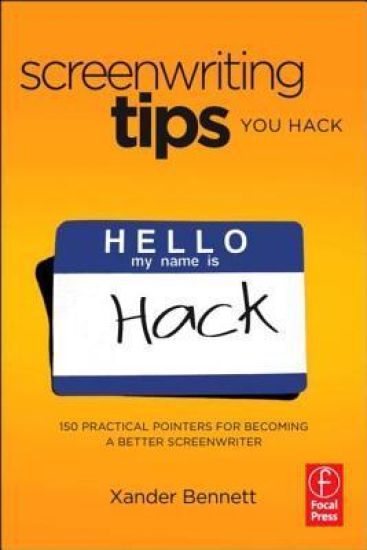
Screenwriting Tip #99Voice-over usually feels like scaffolding. You know-something you left in there when you were constructing the first draft, but really should have torn out after it served its purpose.Screenwriting Tip #120Always remember that funny trumps everything. Your script could be written in crayon with your name spelled wrong on the cover, but if it's genuinely funny, none of that matters.Screenwriting Tip #156The easiest way to write kick-ass protagonists is to make them incredibly good at what they do.Confused at the outline stage? Stuck in the swamp of Act Two? Don't know who your protagonist is or where she's going?You might feel like a hack. But don't worry-you're not alone. Even the most experienced writers feel like this at times. Sometimes we just need a few short pointers and reminders to set us on the path again.Xander Bennett worked as a script reader in the trenches of Hollywood, reading and covering hundreds of mediocre screenplays. After months of reading about heroic Sea World trainers, transgendered circus detectives and crime-fighting chupacabras, he couldn't take it any more. Xander started a blog called 'Screenwriting Tips, You Hack', a place designed to provide short, witty tips on screenwriting for amateur writers all the way up to journeymen scribes.This book is the evolution of that blog. Dozens of the best scripts (along with many brand-new ones) have been expanded into bite-sized chapters full of funny, insightful, highly usable advice. Let Xander's pain be your gain as you learn about the differences between film and television structure, how to force yourself to write when you really don't want to, and why you probably shouldn't base your first spec script around an alien invasion.
Are you aged zero to infinity? Finished with the sexist status quo? Ready to kick ass and take names? Welcome to the Feminist Fight Club. You have lifetime membership. Feminist Fight Club provides an arsenal of weapons for surviving in an unequal world. You will learn how to fight micro-aggressions, correct unconscious bias, deal with male colleagues who can't stop 'manterrupting' or 'bro-propriating' your ideas - and how to lean in without falling the f*ck over. Every woman needs this book - and they needed it yesterday. This is not a drill.
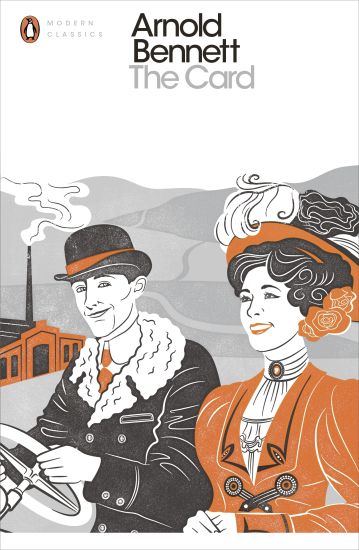
One of fiction's greatest chancers - the story of Denry Machin and his unceasing, ingenious efforts to become a great manSet in the raw, Victorian world of the 'Five Towns', The Card tells the extremely funny and tangled story of Denry Machin's rise from mediocrity to fame through a series of ludicrous and yet perversely successful schemes. He dances, pleads, cheats and inspires his way through life in a series of set-pieces which wonderfully evoke a now long-gone world of civic balls, seaside excursions, newspaper boys and patent chocolate remedies. As everybody said after one of his most stylish coups, Denry 'was not simply a card; he was the card.'
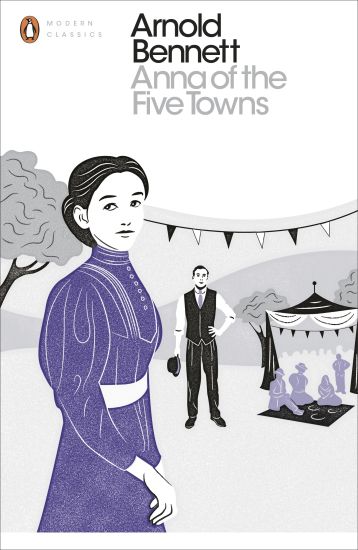
'Deeply moving, original, and dealing with material that I had never encountered in fiction, but only in life' Margaret DrabbleGrowing up in the world of the 'five towns' of industrial England, with their furnaces and chimneys, huddled red-brown streets, prayer meetings and small-minded bigotry, Anna is dominated by her miserly and tyrannical father. When she inherits a fortune and finds love, she struggles to break free from the constraints upon her, even though she is torn between duty and her deepest feelings. Arnold's novel of parental tyranny and rebellion is a portrayal of a woman of great spirit, complexity and integrity.