""The Mills Home: A History of the Baptist Orphanage Movement in North Carolina"" by Bernard Washington Spilman is a comprehensive account of the establishment and growth of the Baptist orphanage movement in North Carolina. The book traces the history of the Mills Home, which was founded in 1885 by the Baptist State Convention of North Carolina to provide a safe and nurturing environment for orphaned and neglected children.Spilman provides a detailed account of the origins of the Mills Home, its early years, and the challenges it faced in its early days. He also examines the role of the Baptist church in the orphanage movement, the contributions of key figures such as James L. Carroll and Thomas H. Pritchard, and the impact of the Mills Home on the lives of the children who lived there.Throughout the book, Spilman emphasizes the importance of the Mills Home in the broader context of the Baptist orphanage movement in North Carolina. He explores the growth of the movement over time, its impact on the state's social welfare system, and the challenges it faced in the face of changing social and economic conditions.""The Mills Home"" is a valuable resource for anyone interested in the history of the Baptist church in North Carolina, the history of social welfare in the state, or the history of orphanages in the United States. It is also a compelling and moving account of the lives of the children who lived at the Mills Home and the dedicated individuals who worked to provide them with a better future.This scarce antiquarian book is a facsimile reprint of the old original and may contain some imperfections such as library marks and notations. Because we believe this work is culturally important, we have made it available as part of our commitment for protecting, preserving, and promoting the world's literature in affordable, high quality, modern editions, that are true to their original work.
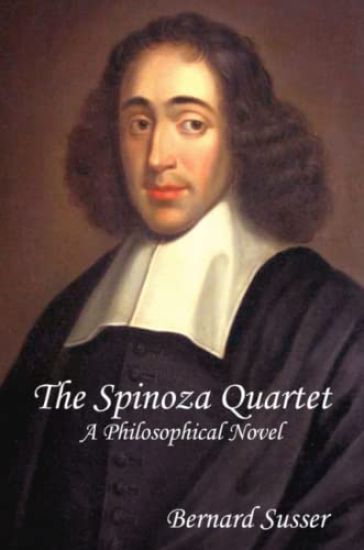
The Spinoza Quartet follows four distinguished contemporary scholars of Spinoza's thought as they meet in Amsterdam to receive the Spinoza Prize. The four come from Jerusalem, San Diego, Vienna and New York, each with a different take on Spinoza's thought and very different temperaments and worldviews, and almost immediately the sparks fly. At several luncheons hosted by the Regents each speaks about their relationship to Spinoza, the man and the thinker. For the next week, prior to the gala ceremony, the four prize recipients walk the streets of Amsterdam arguing heatedly, exposing their personal idiosyncrasies and sharing their fraught biographies. Spinoza is never far from their exchanges. In the course of the spirited discussions the characters' personal outlooks as well as their views of Spinoza merge dramatically into a tense but deeply humane tale.
This work has been selected by scholars as being culturally important, and is part of the knowledge base of civilization as we know it. This work was reproduced from the original artifact, and remains as true to the original work as possible. Therefore, you will see the original copyright references, library stamps (as most of these works have been housed in our most important libraries around the world), and other notations in the work.This work is in the public domain in the United States of America, and possibly other nations. Within the United States, you may freely copy and distribute this work, as no entity (individual or corporate) has a copyright on the body of the work.As a reproduction of a historical artifact, this work may contain missing or blurred pages, poor pictures, errant marks, etc. Scholars believe, and we concur, that this work is important enough to be preserved, reproduced, and made generally available to the public. We appreciate your support of the preservation process, and thank you for being an important part of keeping this knowledge alive and relevant.
The 18th century was a wealth of knowledge, exploration and rapidly growing technology and expanding record-keeping made possible by advances in the printing press. In its determination to preserve the century of revolution, Gale initiated a revolution of its own: digitization of epic proportions to preserve these invaluable works in the largest archive of its kind. Now for the first time these high-quality digital copies of original 18th century manuscripts are available in print, making them highly accessible to libraries, undergraduate students, and independent scholars.Rich in titles on English life and social history, this collection spans the world as it was known to eighteenth-century historians and explorers. Titles include a wealth of travel accounts and diaries, histories of nations from throughout the world, and maps and charts of a world that was still being discovered. Students of the War of American Independence will find fascinating accounts from the British side of conflict. ++++The below data was compiled from various identification fields in the bibliographic record of this title. This data is provided as an additional tool in helping to insure edition identification: ++++British LibraryT113282With a final advertisement leaf.London: printed for Olive Payne, 1740. viii,86, 2]p., plate: map; 8
If you are having no response to your job applications...If you are frustrated at being rejected time and time again...Then, this book will be the miracle in your life.Let me help you and show you a much better way to find a job.We are not going to be doing what every body else is doing to try to get a job.We are going on a very different route for you to get a job.If you follow the secrets in this book, you will succeed in finding a job quickly and easily.
Purchase one of 1st World Library's Classic Books and help support our free internet library of downloadable eBooks. Visit us online at www.1stWorldLibrary.ORG - - Childhood is a stage in the process of that continual remanufacture of the Life Stuff by which the human race is perpetuated. The Life Force either will not or cannot achieve immortality except in very low organisms: indeed it is by no means ascertained that even the amoeba is immortal. Human beings visibly wear out, though they last longer than their friends the dogs. Turtles, parrots, and elephants are believed to be capable of outliving the memory of the oldest human inhabitant. But the fact that new ones are born conclusively proves that they are not immortal. Do away with death and you do away with the need for birth: in fact if you went on breeding, you would finally have to kill old people to make room for young ones