
Kirjahaku
Etsi kirjoja tekijän nimen, kirjan nimen tai ISBN:n perusteella.
1000 tulosta hakusanalla Bill Saylor

A gifted chef, restaurateur, and writer working at a time when Americans were beginning to take a new interest in their culinary heritage, Bill Neal (1950-1991) helped raise Southern food to national prominence. Having rescued spattered and faded recipe cards from the Chapel Hill restaurant they founded together, Bill's former wife and business partner, Moreton Neal, has compiled a book that embodies the diversity and range of his cooking and illustrates the aesthetic that he applied to making meals. Remembering Bill Neal features more than 150 recipes--most of them never published before--from all stages of Bill's career: classic French dishes from La Residence, Southern traditional cooking from Crook's Corner, and fast and easy recipes from home. Moreton's introductory passages and headnotes introduce Bill to readers and put his recipes in the context of his career and his legacy as a chef.Part cookbook, part memoir, this volume both instructs and entertains, showing the lasting importance of Bill Neal's influence in the American regional cooking movement as well as being a muse and a mentor to a generation of Southern home and professional cooks.
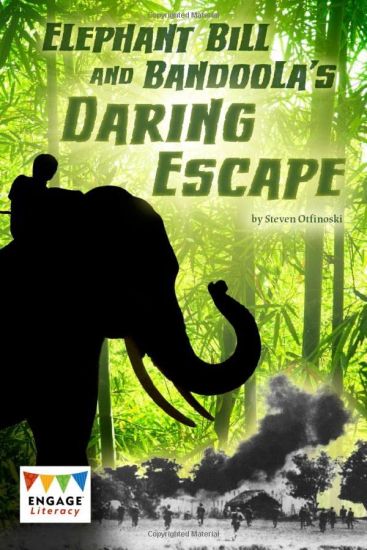
It's 1942 - the middle of World War II - and Elephant Bill, his Elephant Company, and a group of refugees are in danger of being captured by the invading Japanese. They must flee their work camp in Burma as soon as possible to keep ahead of the enemy. Bandoola, Elephant Bill's favourite elephant leads the way. On their way to safety in India, they face many dangers through the jungle and across five mountain ranges. Will Bandoola and Elephant Bill lead them to safety? Or will they be captured by the enemy?
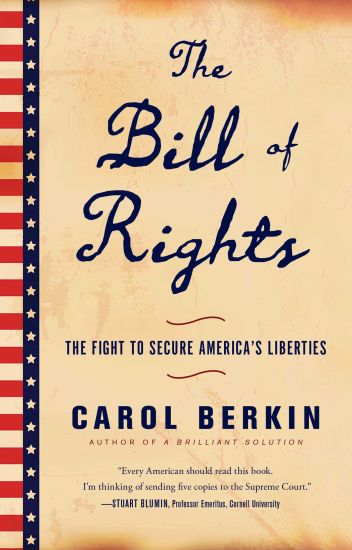
The Bill of Rights: The Fight to Secure America's Liberties
Carol Berkin
SIMON SCHUSTER
2016
nidottu
"Narrative, celebratory history at its purest" (Publishers Weekly)--the real story of how the Bill of Rights came to be: a vivid account of political strategy, big egos, and the partisan interests that set the terms of the ongoing contest between the federal government and the states. Those who argue that the Bill of Rights reflects the founding fathers' "original intent" are wrong. The Bill of Rights was actually a brilliant political act executed by James Madison to preserve the Constitution, the federal government, and the latter's authority over the states. In the skilled hands of award-winning historian Carol Berkin, the story of the founders' fight over the Bill of Rights comes alive in a drama full of partisanship, clashing egos, and cunning manipulation. In 1789, the nation faced a great divide around a question still unanswered today: should broad power and authority reside in the federal government or should it reside in state governments? The Bill of Rights, from protecting religious freedom to the people's right to bear arms, was a political ploy first and a matter of principle second. The truth of how and why Madison came to devise this plan, the debates it caused in the Congress, and its ultimate success is more engrossing than any of the myths that shroud our national beginnings. The debate over the Bill of Rights still continues through many Supreme Court decisions. By pulling back the curtain on the short-sighted and self-interested intentions of the founding fathers, Berkin reveals the anxiety many felt that the new federal government might not survive--and shows that the true "original intent" of the Bill of Rights was simply to oppose the Antifederalists who hoped to diminish the government's powers. This book is "a highly readable American history lesson that provides a deeper understanding of the Bill of Rights, the fears that generated it, and the miracle of the amendments" (Kirkus Reviews).


A Poetry Anthology: From Presenters at Uptown Bill's, The Spoken Word
Uptown Bill's
Createspace Independent Publishing Platform
2012
nidottu
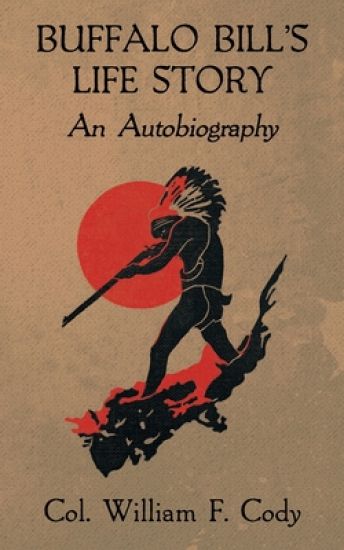
William Frederick "Buffalo Bill" Cody (1846- 1917) was an American soldier, bison hunter, and showman. Buffalo Bill started working at the age of eleven, after his father's death, and became a rider for the Pony Express at age 15. During the American Civil War, he served the Union from 1863 to the end of the war in 1865. Later he served as a civilian scout for the US Army during the Indian Wars, receiving the Medal of Honor in 1872.One of the most famous and well-known figures of the American Old West, Buffalo Bill's legend began to spread when he was only 23. Shortly thereafter he started performing in shows that displayed cowboy themes and episodes from the frontier and Indian Wars. He founded Buffalo Bill's Wild West in 1883, taking his large company on tours in the United States and, beginning in 1887, in Great Britain and continental Europe.


Pecos Bill is a cowboy who was raised by wild animals, once roped a whole heard of cattle at one time, and invented Texas chili. Learn more about this wild cowboy.
Buccaneer Bill and the Krakens Curse
C. L. Weightman
Createspace Independent Publishing Platform
2012
nidottu
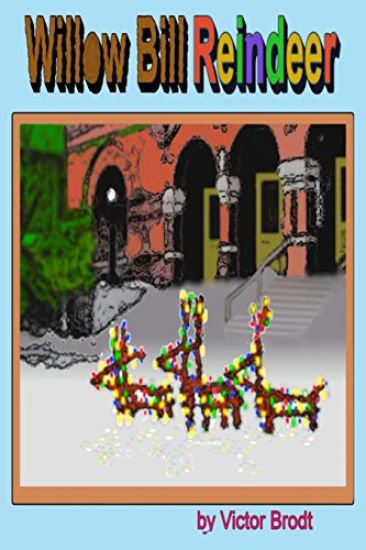
Willow Bill Reindeer: 30,000 Children participate in the Nation's largest art project.
Laura Main; Victor Brodt
Createspace Independent Publishing Platform
2013
nidottu

Dear Bill
UNIVERSITY OF TORONTO PRESS
1988
pokkari
In the four decades between 1920 and 1960, William Deacon, Canada's first full-time literary journalist, devoted his career to the twin goals of fostering a Canadian readership for Canadian writers and creating a sense of community among those writers. His reviews in Saturday Night, The Mail and Empire, and Globe and Mail were the most widely read literary commentary of his day. His vast correspondence with a wide range of writers, politicians, historians, cultural nationalists and a select number of eccentrics created a forty-year dialogue in which is ideas about writing, publishing culture, and politics were shared, formulated, and debated with a formidable array of personal and literary friends, among them E.J. Pratt, Laura Goodman Salverson, Duncan Campbell Scott, A.R.M. Lower, J.S. Woodsworth, Thomas Raddall, Hugh MacLennan, and Mazo de la Roche. The exchanges trade the ebullient cultural nationalism of the 1920s and Deacon's enthusiastic immersion in that climate, the hardships and readjustments of the 1930s, the consolidation and new discoveries of the 1940s, and the rounding-off of his career in the 1950s. A few exchanges from the 1960s reveal his continuing interest in the issues of the day and his support of young writers. Whether he was corresponding with Emily Murphy or Peter Newman, with Grey Owl or Gabrielle Roy, his goal was the same -- to encourage, celebrate, and support the literary and culture vitality of Canada. His correspondents responded with intimacy, candour, and warmth, expressing their concerns and rejoicing in their successes. Their combined voices within the Deacon correspondence still create an immediate sense of the unfolding of Canadian cultural history across four important decades.

Buffalo Bill: An autobiography
William F. Cody
Createspace Independent Publishing Platform
2014
nidottu
Farm Bill: Issues to Consider for Reauthorization
Government Accountability Office
Createspace Independent Publishing Platform
2013
nidottu

