Kirjahaku
Etsi kirjoja tekijän nimen, kirjan nimen tai ISBN:n perusteella.
1000 tulosta hakusanalla Bj Alpha

Documents Illustrative of the History of the Church Volume 1
B J 1863-1948 Kidd
Nabu Press
2010
pokkari



She’s looking for vengeance… After her double-crossing husband disappears, Geneva Carrington Beck recruits Calhoun St Pierre to track him down. But their mountain mission takes a dangerous turn when criminals searching for the missing man make his bride a target…and a widow. Now a reluctant hero and renegade wife must work together to protect each other. His secret could get him killed… After she testified against notorious killers, search and rescue volunteer Zach Gregory thought his sister had been killed years ago. But when she’s found murdered, FBI agent Shelby Dryden reveals Camille was in the witness protection programme. Shelby is convinced Zach is hiding something. And as threats against him escalate, Shelby must control her burning attraction to Zach while also protecting his life…



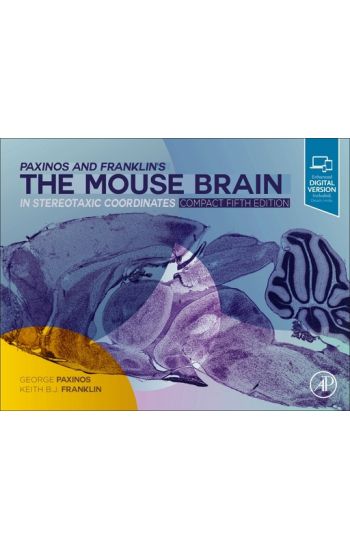
Paxinos and Franklin's the Mouse Brain in Stereotaxic Coordinates, Compact
Keith B.J. Franklin; George Paxinos
Academic Press Inc
2019
kierre
Paxinos and Franklin's The Mouse Brain in Stereotaxic Coordinates, Compact Fifth Edition, is the compact version of the most widely used and cited atlas of the mouse brain in print. It emulates in design and accuracy Paxinos and Watson’s The Rat Brain in Stereotaxic Coordinates, the most cited publication in neuroscience. The compact edition provides the coronal plates and diagrams of the full mouse atlas in a smaller, more convenient spiral format and at a student friendly price. High resolution digital photographs of the coronal plane of section from the full 5th edition complement the coronal drawings. Unique to the compact, it includes an introduction to the use of the atlas in stereotaxic surgery.

Contemporary discourse about human affairs is largely grounded in the specific historical experience and interests of a few dominant societies. This poses an important challenge to all those who urge that we need to adopt a global perspective on modern political life, whether in terms of international relations, comparative and developmental politi
Contemporary discourse about human affairs is largely grounded in the specific historical experience and interests of a few dominant societies. This poses an important challenge to all those who urge that we need to adopt a global perspective on modern political life, whether in terms of international relations, comparative and developmental politi
Practitioner's Guide to Quality and Process Improvement
A.B. Badiru; B.J. Ayeni
Chapman and Hall
1993
sidottu
Quality and process improvement is now a major concern of businesses of all types all over the world. Designed as a reference book for quality practitioners, this book meets the urgent need for a concise practical reference book on quality and process improvement.
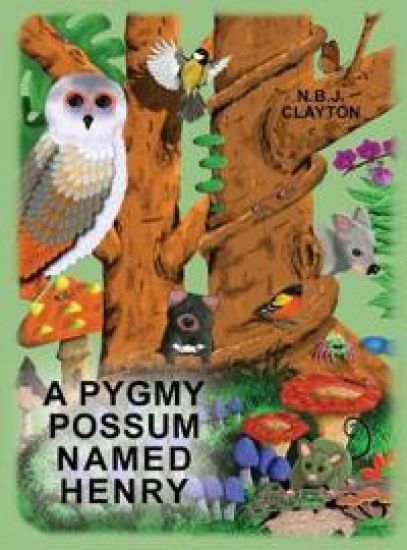
Henry is a pygmy possum who passes the day by helping the rainforest grow, by spreading the spores of mushrooms about the rainforest floor. One day he comes across some bad news; there is a cat on the loose and he is being a bully.With the help of some new friends, Henry saves the day by confronting the bullying cat and putting him in his place, serving him a good lesson about friendship and illuminating his poor behavior towards others.This all takes place in Tasmania, where Henry, Daisy the spider, Penelope the pademelon, Mr.White the owl, and Tassie the Tasmanian devil, all live in harmony and peace.In total there are 40 full-color pictures. The story is written in rhyme and told over 71 four-line] verses.
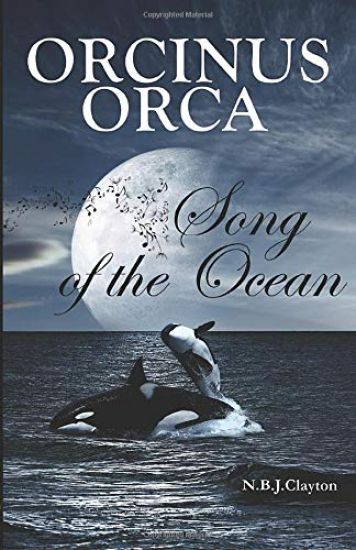
This is an epic poem.The orca: they are black and white dolphins, mammals of the sea, warm-blooded creatureswhich are at the top of the food chain for the territory that they hold within their power, manbeing their only predator.Tom is born in the Pacific Ocean, 1862; he is 2.5 metres long and weighs 200kg; a grandspecimen. George Davidson is born of Eden; May, 1863.This is the story of Tom, Killer whale of Twofold Bay, Eden, friend to George Davidson (baywhaler) and others like him: it is based upon a true story that will live in the memory of thecitizens of Eden for eternity, a museum being built in Tom's honour upon his death.For thousands of years, before man recorded such events, killer whales hunted all manner ofbaleen whale in every ocean on this planet, and only once in all that time has it beenwitnessed, and recorded for the prosperity of understanding and knowledge, that they cooperatedwith humans in their hunt for whales. It all took place on the east coast of Australia, Twofold Bay, Eden. And it is here that an extraordinary story unfolds of an unwrittencontract between man and beast, one of nature's most powerful and intelligent, one that ismisunderstood and labelled unkindly.
Emphasizes a Problem Solving ApproachA first course in combinatoricsCompletely revised, How to Count: An Introduction to Combinatorics, Second Edition shows how to solve numerous classic and other interesting combinatorial problems. The authors take an easily accessible approach that introduces problems before leading into the theory involved. Although the authors present most of the topics through concrete problems, they also emphasize the importance of proofs in mathematics.New to the Second EditionThis second edition incorporates 50 percent more material. It includes seven new chapters that cover occupancy problems, Stirling and Catalan numbers, graph theory, trees, Dirichlet’s pigeonhole principle, Ramsey theory, and rook polynomials. This edition also contains more than 450 exercises. Ideal for both classroom teaching and self-study, this text requires only a modest amount of mathematical background. In an engaging way, it covers many combinatorial tools, such as the inclusion-exclusion principle, generating functions, recurrence relations, and Pólya’s counting theorem.

A collection of essays on the politics of boundaries, this book addresses a broad range of cases, some geographical, some legal, and some involving less tangible practices of inclusion and exclusion. The book begins by exploring the boundary between modern Western forms of international relations and their constitutive outsides. Beyond this, the author engages with relations between subjectivity and security, security and nature, social movements and a world politics, as well as the politics of spatiotemporal dislocation. Two chapters address the work of Thomas Hobbes and Max Weber as exemplary accounts of the relationship between boundaries and the constitution of modern forms of politics. Each chapter speaks not only to the politics of specific boundary practices, but also to the limits within which modern politics has been shaped in relation to claims about spatiality, temporality, sovereignty and subjectivity. In this way, the book draws attention to a pervasive account of a scalar order of higher and lower that has shaped more familiar distinctions between internality and externality. Offering an analysis of the relation between concepts of internationalism, imperialism and exceptionalism, as well as the implications of spatiotemporal dislocation for claims about democracy, the book links contemporary claims about the transformation of boundaries to various ways in which political life is said to be in crisis and in need of novel forms of critique. Brought up to date by a new and extensive introductory essay and an assessment of the status of political judgement after 9/11, this book is essential reading for students and scholars of politics, international relations, political theory and political sociology.
A collection of essays on the politics of boundaries, this book addresses a broad range of cases, some geographical, some legal, and some involving less tangible practices of inclusion and exclusion. The book begins by exploring the boundary between modern Western forms of international relations and their constitutive outsides. Beyond this, the author engages with relations between subjectivity and security, security and nature, social movements and a world politics, as well as the politics of spatiotemporal dislocation. Two chapters address the work of Thomas Hobbes and Max Weber as exemplary accounts of the relationship between boundaries and the constitution of modern forms of politics. Each chapter speaks not only to the politics of specific boundary practices, but also to the limits within which modern politics has been shaped in relation to claims about spatiality, temporality, sovereignty and subjectivity. In this way, the book draws attention to a pervasive account of a scalar order of higher and lower that has shaped more familiar distinctions between internality and externality. Offering an analysis of the relation between concepts of internationalism, imperialism and exceptionalism, as well as the implications of spatiotemporal dislocation for claims about democracy, the book links contemporary claims about the transformation of boundaries to various ways in which political life is said to be in crisis and in need of novel forms of critique. Brought up to date by a new and extensive introductory essay and an assessment of the status of political judgement after 9/11, this book is essential reading for students and scholars of politics, international relations, political theory and political sociology.
Emphasizes a Problem Solving ApproachA first course in combinatoricsCompletely revised, How to Count: An Introduction to Combinatorics, Second Edition shows how to solve numerous classic and other interesting combinatorial problems. The authors take an easily accessible approach that introduces problems before leading into the theory involved. Although the authors present most of the topics through concrete problems, they also emphasize the importance of proofs in mathematics.New to the Second EditionThis second edition incorporates 50 percent more material. It includes seven new chapters that cover occupancy problems, Stirling and Catalan numbers, graph theory, trees, Dirichlet’s pigeonhole principle, Ramsey theory, and rook polynomials. This edition also contains more than 450 exercises. Ideal for both classroom teaching and self-study, this text requires only a modest amount of mathematical background. In an engaging way, it covers many combinatorial tools, such as the inclusion-exclusion principle, generating functions, recurrence relations, and Pólya’s counting theorem.