Kirjojen hintavertailu. Mukana 11 717 486 kirjaa ja 12 kauppaa.

Kirjahaku

Etsi kirjoja tekijän nimen, kirjan nimen tai ISBN:n perusteella.

1000 tulosta hakusanalla Brandon Mitchell

The Black Republic

The Black Republic

Brandon R. Byrd

UNIVERSITY OF PENNSYLVANIA PRESS
2022
pokkari
In The Black Republic, Brandon R. Byrd explores the ambivalent attitudes that African American leaders in the post-Civil War era held toward Haiti, the first and only black republic in the Western Hemisphere. Following emancipation, African American leaders of all kinds-politicians, journalists, ministers, writers, educators, artists, and diplomats-identified new and urgent connections with Haiti, a nation long understood as an example of black self-determination. They celebrated not only its diplomatic recognition by the United States but also the renewed relevance of the Haitian Revolution. While a number of African American leaders defended the sovereignty of a black republic whose fate they saw as intertwined with their own, others expressed concern over Haiti's fitness as a model black republic, scrutinizing whether the nation truly reflected the "civilized" progress of the black race. Influenced by the imperialist rhetoric of their day, many African Americans across the political spectrum espoused a politics of racial uplift, taking responsibility for the "improvement" of Haitian education, politics, culture, and society. They considered Haiti an uncertain experiment in black self-governance: it might succeed and vindicate the capabilities of African Americans demanding their own right to self-determination or it might fail and condemn the black diasporic population to second-class status for the foreseeable future. When the United States military occupied Haiti in 1915, it created a crisis for W. E. B. Du Bois and other black activists and intellectuals who had long grappled with the meaning of Haitian independence. The resulting demand for and idea of a liberated Haiti became a cornerstone of the anticapitalist, anticolonial, and antiracist radical black internationalism that flourished between World War I and World War II. Spanning the Reconstruction, post-Reconstruction, and Jim Crow eras, The Black Republic recovers a crucial and overlooked chapter of African American internationalism and political thought.
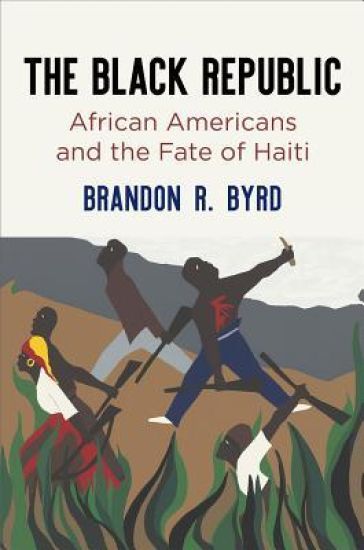
The Black Republic

The Black Republic

Brandon R. Byrd

University of Pennsylvania Press
2019
sidottu
In The Black Republic, Brandon R. Byrd explores the ambivalent attitudes that African American leaders in the post-Civil War era held toward Haiti, the first and only black republic in the Western Hemisphere. Following emancipation, African American leaders of all kinds-politicians, journalists, ministers, writers, educators, artists, and diplomats-identified new and urgent connections with Haiti, a nation long understood as an example of black self-determination. They celebrated not only its diplomatic recognition by the United States but also the renewed relevance of the Haitian Revolution. While a number of African American leaders defended the sovereignty of a black republic whose fate they saw as intertwined with their own, others expressed concern over Haiti's fitness as a model black republic, scrutinizing whether the nation truly reflected the "civilized" progress of the black race. Influenced by the imperialist rhetoric of their day, many African Americans across the political spectrum espoused a politics of racial uplift, taking responsibility for the "improvement" of Haitian education, politics, culture, and society. They considered Haiti an uncertain experiment in black self-governance: it might succeed and vindicate the capabilities of African Americans demanding their own right to self-determination or it might fail and condemn the black diasporic population to second-class status for the foreseeable future. When the United States military occupied Haiti in 1915, it created a crisis for W. E. B. Du Bois and other black activists and intellectuals who had long grappled with the meaning of Haitian independence. The resulting demand for and idea of a liberated Haiti became a cornerstone of the anticapitalist, anticolonial, and antiracist radical black internationalism that flourished between World War I and World War II. Spanning the Reconstruction, post-Reconstruction, and Jim Crow eras, The Black Republic recovers a crucial and overlooked chapter of African American internationalism and political thought.
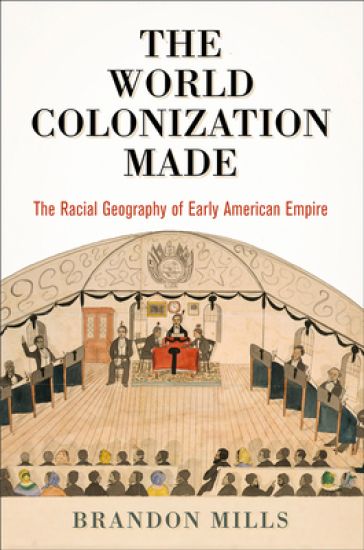
The World Colonization Made

The World Colonization Made

Brandon Mills

University of Pennsylvania Press
2020
sidottu
According to accepted historical wisdom, the goal of the African Colonization Society (ACS), founded in 1816 to return freed slaves to Africa, was borne of desperation and illustrated just how intractable the problems of race and slavery had become in the nineteenth-century United States. But for Brandon Mills, the ACS was part of a much wider pattern of national and international expansion. Similar efforts on the part of the young nation to create, in Thomas Jefferson's words, an "empire of liberty," spanned Native removal, the annexation of Texas and California, filibustering campaigns in Latin America, and American missionary efforts in Hawaii, as well as the founding of Liberia in 1821. Mills contends that these diverse currents of U.S. expansionism were ideologically linked and together comprised a capacious colonization movement that both reflected and shaped a wide range of debates over race, settlement, citizenship, and empire in the early republic. The World Colonization Made chronicles the rise and fall of the colonization movement as a political force within the United States-from its roots in the crises of the Revolutionary era, to its peak with the creation of the ACS, to its ultimate decline with emancipation and the Civil War. The book interrogates broader issues of U.S. expansion, including the progression of federal Indian policy, the foundations and effects of the Monroe Doctrine and Manifest Destiny, and the growth of U.S. commercial and military power throughout the Western hemisphere. By contextualizing the colonization movement in this way, Mills shows how it enabled Americans to envision a world of self-governing republics that harmonized with racial politics at home.
Going Ape

Going Ape

Brandon Haught

University Press of Florida
2014
sidottu
Before William Jennings Bryan successfully prosecuted John Scopes in the infamous Scopes ""Monkey Trial,” he was a prominent antievolution agitator in Florida.In Going Ape, Brandon Haught tells the riveting story of how the war over teaching evolution began and unfolded in Florida, one of the nation’s bell¬wether states. This conflict still simmers just below the surface, waiting for the right moment to engulf the state.The saga opens with the first shouts of religious persecution and child endangerment in 1923 Tallahassee and continues today with forced delays and extra public hearings in state-level textbook adoptions. These cease¬less battles feature some of the most colourful culture warriors imaginable: a real estate tycoon throwing his fortune into campaigns in Miami; lawmakers attempting to insert the mandatory teaching of creationism into bills; and pastors and school board members squabbling in front of the national media that descends into their small town. The majority of participants, however, have been, and still are, average people, and Haught expertly portrays these passionate citizens and the sense of moral duty that drives each of them.Given a social climate where the teaching of evolution continues to sharply divide neighbours and communities, Going Ape is a must-read for anyone con¬cerned with the future of public education.
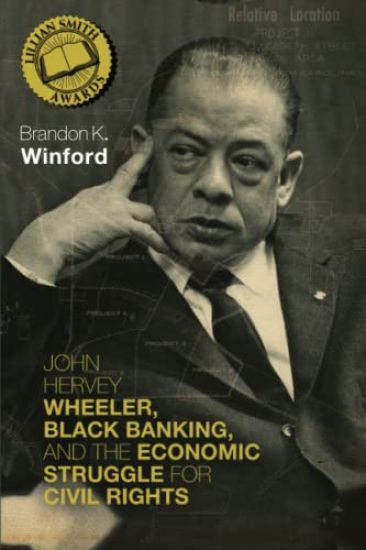
John Hervey Wheeler, Black Banking, and the Economic Struggle for Civil Rights
John Hervey Wheeler (1908–1978) was one of the civil rights movement's most influential leaders. In articulating a bold vision of regional prosperity grounded in full citizenship and economic power for African Americans, this banker, lawyer, and visionary would play a key role in the fight for racial and economic equality throughout North Carolina. Utilizing previously unexamined sources from the John Hervey Wheeler Collection at the Atlanta University Center Robert W. Woodruff Library, this biography explores the black freedom struggle through the life of North Carolina's most influential black power broker. After graduating from Morehouse College, Wheeler returned to Durham and began a decades-long career at Mechanics and Farmers (M&F) Bank. He started as a teller and rose to become bank president in 1952. In 1961, President Kennedy appointed Wheeler to the President's Committee on Equal Employment Opportunity, a position in which he championed equal rights for African Americans and worked with Vice President Johnson to draft civil rights legislation. One of the first blacks to attain a high position in the state's Democratic Party, Wheeler became the state party's treasurer in 1968, and then its financial director. Wheeler urged North Carolina's white financial advisors to steer the region toward the end of Jim Crow segregation for economic reasons. Straddling the line between confrontation and negotiation, Wheeler pushed for increased economic opportunity for African Americans while reminding the white South that its future was linked to the plight of black southerners.
Costs and Benefits of Preventing Crime

Costs and Benefits of Preventing Crime

Brandon Welsh; David Farrington; Lawrence Sherman

Westview Press Inc
2000
pokkari
What are the cost savings from preventing a typical burglary, robbery, assault, or even a criminal career? Who benefits from these savings? How often do the benefits from preventing crime or criminal behaviour exceed the resources spent on preventing or controlling crime? Is it more cost-effective to invest in early childhood programs or juvenile boot camps to reduce criminal offending? These are some of the important questions that face policymakers in crime and justice today. Answering them is no easy task. Nevertheless, it is important to provide answers in order to ensure that the dollars devoted to crime reduction are spent as efficiently as possible. The principle aim of Costs and Benefits of Preventing Crime is to report on and assess the present state of knowledge on the monetary costs and benefits of crime prevention programs. Remarkably, this crucial topic has rarely been studied up to the present time. This book examines key methodological issues, reports on the most up-to-date research findings, discusses international policy perspectives, and presents an agenda for future research and policy development on the economic analysis of crime prevention. Throughout, it addresses the important question of how governments should be allocating scarce resources to make crime prevention policy and practice more effective and to produce the greatest economic benefits to society. The book brings together research and perspectives from across North America, Europe, and Australia.
Tripas

Tripas

Brandon Som

UNIVERSITY OF GEORGIA PRESS
2023
pokkari
WINNER OF THE 2024 PULITZER PRIZE IN POETRYFinalist for the 2023 National Book Award for PoetryWith Tripas, Brandon Som follows up his award-winning debut with a book of poems built out of a multicultural, multigenerational childhood home, in which he celebrates his Chicana grandmother, who worked nights on the assembly line at Motorola, and his Chinese American father and grandparents, who ran the family corner store. Enacting a cómo se dice poetics, a dialogic poem-making that inventively listens to heritage languages and transcribes family memory, Som participates in a practice of mem(oir), placing each poem’s ear toward a confluence of history, labor, and languages, while also enacting a kind of “telephone” between cultures. Invested in the circuitry and circuitous routes of migration and labor, Som’s lyricism weaves together the narratives of his transnational communities, bringing to light what is overshadowed in the reckless transit of global capitalism and imagining a world otherwise—one attuned to the echo in the hecho, the oracle in the órale.
Tripas

Tripas

Brandon Som

UNIVERSITY OF GEORGIA PRESS
2024
sidottu
WINNER OF THE 2024 PULITZER PRIZE IN POETRYFinalist for the 2023 National Book Award for PoetryWith Tripas, Brandon Som follows up his award-winning debut with a book of poems built out of a multicultural, multigenerational childhood home, in which he celebrates his Chicana grandmother, who worked nights on the assembly line at Motorola, and his Chinese American father and grandparents, who ran the family corner store. Enacting a cómo se dice poetics, a dialogic poem-making that inventively listens to heritage languages and transcribes family memory, Som participates in a practice of mem(oir), placing each poem’s ear toward a confluence of history, labor, and languages, while also enacting a kind of “telephone” between cultures. Invested in the circuitry and circuitous routes of migration and labor, Som’s lyricism weaves together the narratives of his transnational communities, bringing to light what is overshadowed in the reckless transit of global capitalism and imagining a world otherwise—one attuned to the echo in the hecho, the oracle in the órale.
National Oil Companies and Value Creation

National Oil Companies and Value Creation

Brandon S. Tracy

World Bank Publications
2011
nidottu
Approximately two billion dollars a day of petroleum are traded worldwide, which makes petroleum the largest single item in the balance of payments and exchanges between nations. Petroleum represents the larger share in total energy use for most net exporters and net importers. While petroleum taxes are a major source of income for more than 90 countries in the world, poor countries net importers are more vulnerable to price increases than most industrialized economies. This paper has five chapters. Chapter one describes the key features of upstream, midstream, and downstream petroleum operations and how these may impact value creation and policy options. Chapter two draws on ample literature and discusses how changes in the geopolitical and global economic environment and in the host governments' political and economic priorities have affected the rationale for and behavior of National Oil Companies' (NOCs). Rather than providing an in-depth analysis of the philosophical reasons for creating aNOC, this chapter seeks to highlight the special nature of NOCs and how it may affect their existence, objectives, regulation, and behavior. Chapter three proposes a value creation index to measure the contribution of NOCs to social value creation. A conceptual model is also proposed to identify the factors that affect value creation. Chapter four presents the result of an exploratory statistical analysis aimed to determine the relative importance of the drivers of value creation. In addition, the experience of a selected sample of NOCs is analyzed in detail, and lessons of general applicability are derived. Finally, Chapter five summarizes the conclusions.
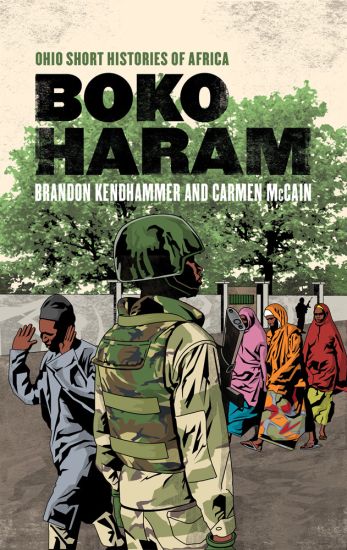
Boko Haram

Boko Haram

Brandon Kendhammer; Carmen McCain

Ohio University Press
2018
pokkari
From its small-time origins in the early 2000s to its transformation into one of the world's most-recognized terrorist groups, this remarkable short book tells the story of Boko Haram's bloody, decade-long war in northeastern Nigeria. Going beyond the headlines, including the group's 2014 abduction of 276 girls in Chibok and the international outrage it inspired, Boko Haram provides readers new to the conflict with a clearly written and comprehensive history of how the group came to be, the Nigerian government's failed efforts to end it, and its enormous impact on ordinary citizens. Drawing on years of research, Boko Haram is a timely addition to the acclaimed Ohio Short Histories of Africa. Brandon Kendhammer and Carmen McCain—two leading specialists on northern Nigeria—separate fact from fiction within one of the world's least-understood conflicts. Most distinctively, it is a social history, one that tells the story of Boko Haram's violence through the journalism, literature, film, and music made by people close to it.
Democracy Against Parties

Democracy Against Parties

Brandon Van Dyck

University of Pittsburgh Press
2021
sidottu
Around the world, established parties are weakening, and new parties are failing to take root. In many cases, outsiders have risen and filled the void, posing a threat to democracy. Why do most new parties fail? Under what conditions do they survive and become long-term electoral fixtures? Brandon Van Dyck investigates these questions in the context of the contemporary Latin American left. He argues that stable parties are not an outgrowth of democracy. On the contrary, contemporary democracy impedes successful party building. To construct a durable party, elites must invest time and labor, and they must share power with activists. Because today’s elites have access to party substitutes like mass media, they can win votes without making such sacrifices in time, labor, and autonomy. Only under conditions of soft authoritarianism do office-seeking elites have a strong electoral incentive to invest in party building. Van Dyck illustrates this argument through a comparative analysis of four new left parties in Latin America: two that collapsed and two that survived.
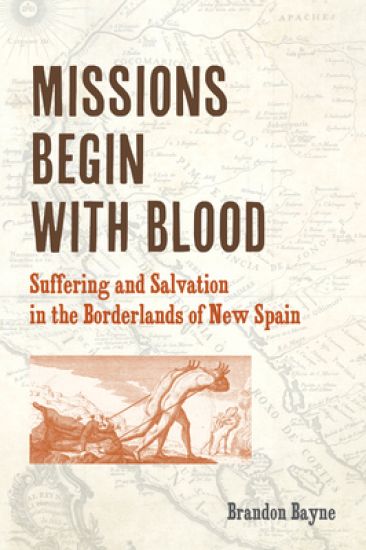
Missions Begin with Blood

Missions Begin with Blood

Brandon Bayne

Fordham University Press
2021
pokkari
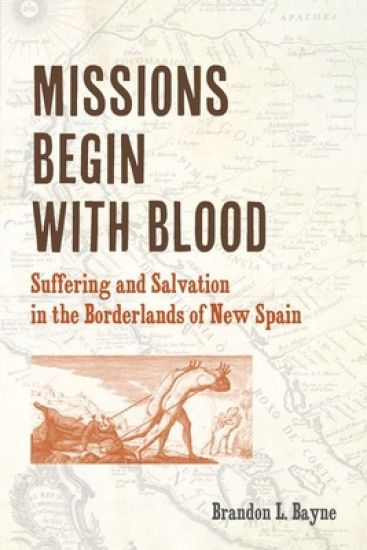
Winner, 2022 Frank S. and Elizabeth D. Brewer Prize While the idea that successful missions needed Indigenous revolts and missionary deaths seems counterintuitive, this book illustrates how it became a central logic of frontier colonization in Spanish North America. Missions Begin with Blood argues that martyrdom acted as a ceremony of possession that helped Jesuits understand violence, disease, and death as ways that God inevitably worked to advance Christendom. Whether petitioning superiors for support, preparing to extirpate Native "idolatries," or protecting their conversions from critics, Jesuits found power in their persecution and victory in their victimization. This book correlates these tales of sacrifice to deep genealogies of redemptive death in Catholic discourse and explains how martyrological idioms worked to rationalize early modern colonialism. Specifically, missionaries invoked an agricultural metaphor that reconfigured suffering into seed that, when watered by sweat and blood, would one day bring a rich harvest of Indigenous Christianity.
Missions Begin with Blood

Missions Begin with Blood

Brandon Bayne

Fordham University Press
2021
sidottu
Winner, 2022 Frank S. and Elizabeth D. Brewer Prize While the idea that successful missions needed Indigenous revolts and missionary deaths seems counterintuitive, this book illustrates how it became a central logic of frontier colonization in Spanish North America. Missions Begin with Blood argues that martyrdom acted as a ceremony of possession that helped Jesuits understand violence, disease, and death as ways that God inevitably worked to advance Christendom. Whether petitioning superiors for support, preparing to extirpate Native "idolatries," or protecting their conversions from critics, Jesuits found power in their persecution and victory in their victimization. This book correlates these tales of sacrifice to deep genealogies of redemptive death in Catholic discourse and explains how martyrological idioms worked to rationalize early modern colonialism. Specifically, missionaries invoked an agricultural metaphor that reconfigured suffering into seed that, when watered by sweat and blood, would one day bring a rich harvest of Indigenous Christianity.
Wisdom from the Five People You Meet in Heaven

Wisdom from the Five People You Meet in Heaven

Brandon Gilvin; Heather Godsey

Chalice Press
2005
pokkari
Mitch Albom's popular novel The Five People You Meet in Heaven (Hyperion 2003), is not just about what happens after we die. It also offers some pretty important insights into the lives we lead in the here and now. Using the Wisdom Traditions of the Bible as a backdrop, Wisdom from the Five People You Meet in Heaven brings us into a discussion of what might truly be important in life. Illustrating biblical concepts with examples from Albom's novel, this study guide for individuals or groups parallels the characters in The Five People You Meet in Heaven with the themes and insights from Wisdom Literature. Wisdom from the Five People You Meet in Heaven explores the orientation of Wisdom Literature toward life, sharing its teachings on issues of fairness, sacrifice, forgiveness, love, suffering, and what we can learn about our own character. From the Popular Insights series.
The Forgotten Teachings of Jesus

The Forgotten Teachings of Jesus

Brandon Robbins

DAVID C COOK PUBLISHING COMPANY
2025
nidottu
The Chosen brings Jesus' teachings to the screen. Now bring additional understanding of His teachings to your life. A captivating exploration of New Testament living and traditions, this immersive book from one of the most popular commentators on the beloved television series takes readers on a spiritual journey to see Jesus and comprehend the Bible like never before. With over 100 million viewers since its debut, the award-winning television show The Chosen continues to captivate people around the world. In this spiritually profound book, Pastor Brandon Robbins explores the nuances of the first eight episodes of The Chosen to help us understand the heart of season 1: what it means to be a disciple of Jesus. In The Forgotten Teachings of Jesus, Brandon provides: An in-depth look at The Chosen's first season with four short, accessible chapters per episode Fascinating historical and cultural details to enhance your appreciation for the show and your understanding of the Bible Fresh perspective on favorite Bible stories and insight into how events on The Chosen connect with biblical truths Whether you're a devoted fan or simply curious about the series, The Forgotten Teachings of Jesus will enrich your understanding of The Chosen but most importantly ignite your desire to know Jesus more. With over 100 million viewers since its debut, the award-winning television show The Chosen continues to captivate people around the world. This immersive book from one of the most popular commentators on the beloved television series helps us see the show as well as the Bible with new eyes.
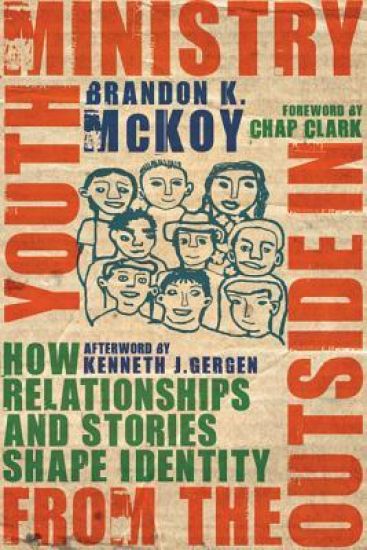
Youth Ministry from the Outside In

Youth Ministry from the Outside In

Brandon K. McKoy

Inter-Varsity Press,US
2013
nidottu
We tend to organize our youth ministry from the inside out. We give gathered groups of individual youth tools and teaching to form their souls around a Christian identity. So far, so good. But what if our identity is not merely or even primarily rooted and established somewhere inside ourselves? What if our identity is shaped and cultivated in the relationships we inhabit--each with their own distinctives and demands and in the overlapping stories we find ourselves in? Prefabricated approaches to ministry that focus on the interior makeup of our youth may make for good youth group members, but these limited approaches don't reach beyond the youth room into other corners of their lives. Rather than centering them on the faith, our inside-out approach may be pushing their faith to the margins of their life. Brandon McKoy mines the insights of social construction theory to help us locate Christ not in our hearts but in our midst. We learn to embrace him as our own and our students as whole people engaging in a life's worth of encounters. Approaching youth ministry from the outside in, we discover our students in a whole new light and with them, the fullness of our faith."
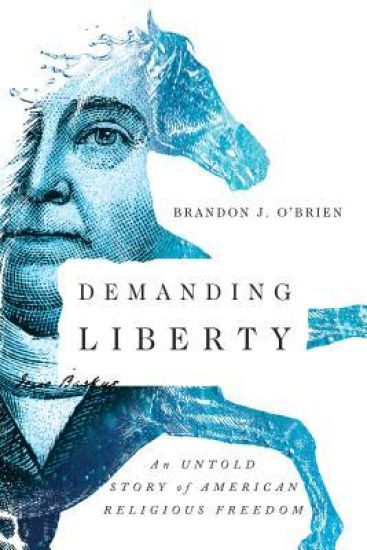
Demanding Liberty – An Untold Story of American Religious Freedom
Religious liberty is one of the most contentious political issues of our time. How should people of faith engage with the public square in a pluralist era? Some citizens hope to reclaim a more Christian vision of national identity, while others resist any religious presence at all. This dispute is not new, and it goes back to the founding era of American history. As the country was being formed, some envisioned a Christian nation where laws would require worship attendance and Sabbath observance. Others advocated for a thoroughly secular society where faith would have no place in public life. But neither extreme won the day, thanks to the unsung efforts of a Connecticut pastor who forged a middle way. Historian Brandon O'Brien unveils an untold story of how religious liberty came to be. Between the Scylla and Charybdis of theocracy and secularism, Baptist pastor Isaac Backus contended for a third way. He worked to secure religious liberty and freedom of conscience for all Americans, not just for one particular denomination or religious tradition. Backus's ideas give us insight into how people of faith navigate political debates and work for the common good. Backus lived in an age of both religious revival and growing secularism, competing forces much like those at work today. The past speaks into the present as we continue to demand liberty and justice for all.
The Path of Faith – A Biblical Theology of Covenant and Law

The Path of Faith – A Biblical Theology of Covenant and Law

Brandon D. Crowe; Benjamin L. Gladd

IVP Academic
2021
nidottu
Biblical Foundations Book Awards Finalist The closely related biblical themes of covenant and law have often been debated. Yet they are among the most important topics in Scripture—theologically and practically. They address how God graciously relates to us and how we ought to live on a daily basis. In this ESBT volume, Brandon Crowe builds on previous books in the series as he considers covenant and law throughout both Old and New Testaments. The Path of Faith lays out key principles such as the obligation of people to obey their Creator, how Jesus' perfect obedience to God's law opens the way to eternal life, and what the law means for us today as we continue walking by faith. The Path of Faith reveals the unity of the biblical witness and the consistent call for God's people to show him covenant loyalty, all while recognizing the unique saving work of Christ on our behalf. Essential Studies in Biblical Theology (ESBT), edited by Benjamin L. Gladd, explore the central or "essential" themes of the Bible's grand storyline. Taking cues from Genesis 1-3, authors explore the presence of these themes throughout the entire sweep of redemption history. Written for students, church leaders, and laypeople, the ESBT offers an introduction to biblical theology.
The Grave on the Wall

The Grave on the Wall

Brandon Shimoda

City Lights Books
2019
pokkari
Winner of the 2020 PEN Open Book AwardBest of 2019: Nonfiction - Entropy MagazineA memoir and book of mourning, a grandson’s attempt to reconcile his own uncontested citizenship with his grandfather’s lifelong struggle.Award-winning poet Brandon Shimoda has crafted a lyrical portrait of his paternal grandfather, Midori Shimoda, whose life—child migrant, talented photographer, suspected enemy alien and spy, desert wanderer, American citizen—mirrors the arc of Japanese America in the twentieth century. In a series of pilgrimages, Shimoda records the search to find his grandfather, and unfolds, in the process, a moving elegy on memory and forgetting.Praise for The Grave on the Wall:"Shimoda brings his poetic lyricism to this moving and elegant memoir, the structure of which reflects the fragmentation of memories. … It is at once wistful and devastating to see Midori's life come full circle … In between is a life with tragedy, love, and the horrors unleashed by the atomic bomb."—Booklist, starred review"In a weaving meditation, Brandon Shimoda pens an elegant eulogy for his grandfather Midori, yet also for the living, we who survive on the margins of graveyards and rituals of our own making."—Karen Tei Yamashita, author of Letters to Memory"Sometimes a work of art functions as a dream. At other times, a work of art functions as a conscience. In the tradition of Juan Rulfo’s Pedro Páramo, Brandon Shimoda's The Grave on the Wall is both. It is also the type of fragmented reckoning only America could instigate."—Myriam Gurba, author of Mean“Within this haunted sepulcher built out of silence, loss, and grief—its walls shadowed by the traumas of racial oppression and violence—a green river lined with peach trees flows beneath a bridge that leads back to the grandson."—Jeffrey Yang, author of Hey, Marfa: Poems"It is part dream, part memory, part forgetting, part identity. It is a remarkable exploration of how citizenship is forged by the brutal US imperial forces—through slave labor, forced detention, indiscriminate bombing, historical amnesia and wall. If someone asked me, Where are you from? I would answer, From The Grave on the Wall."—Don Mee Choi, author of Hardly War"Shimoda intercedes into the absences, gaps and interstices of the present and delves the presence of mystery. This mystery is part of each of us. Shimoda outlines that mystery in silence and silhouette, in objects left behind at site-specific travels to Japan and in the disparate facts of his grandpa’s FBI file. Gratitude to Brandon Shimoda for taking on the mystery which only literature accepts as the basic challenge."—Sesshu Foster, author of City of the Future"Shimoda is a mystic writer … He puts what breaches itself (always) onto the page, so that the act of writing becomes akin to paper-making: an attention to fibers, coagulation, texture and the water-fire mixtures that signal irreversible alteration or change. … he has written a book that touches the bottom of my own soul."—Bhanu Kapil, author of Ban en Banlieue"The Grave on the Wall is a passage of aching nostalgia and relentless assembly out of which something more important than objective truth is conjured—a ritual frisson, a veracity of spirit. I am grateful to have traveled along.”—Trisha Low, The Believer"It's not just a document from which Brandon Shimoda untangles the dead, but it's a portal through which the ghosts can show themselves to him. To exchange that kind of attention between the living and the dead is love."—Zachary Schomburg, Willamette Week