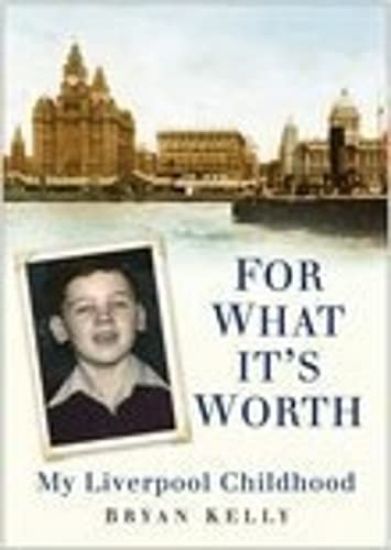
Bryan Kelly was born in Liverpool in 1931, one of eight children. His family lived in a small terraced house in Anfield, and his father was a docker. Bryan has worked as a labourer, a nightclub bouncer, a pipe-fitter's mate and a heating engineer. He now lives in Birmingham.
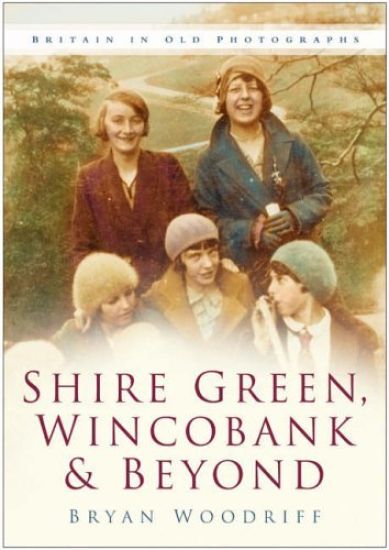
This third book continues the story of the many people who devoted so much of their lives to creating a wholesome environment in which to live and bring up their children. The background to this book is the development of the Methodist community, their chapels and churches, but particularly the one at Shire Green which is celebrating its sesquicentenary. The book is illustrated by a wealth of over 200 pictures, most previously unpublished, which handsomely portray the changing scene, how people lived their lives and passed their time, how they dressed, where they worked and shopped, and all at a time of rapid and irreversible change to their previous, much more pedestrian, way of life.
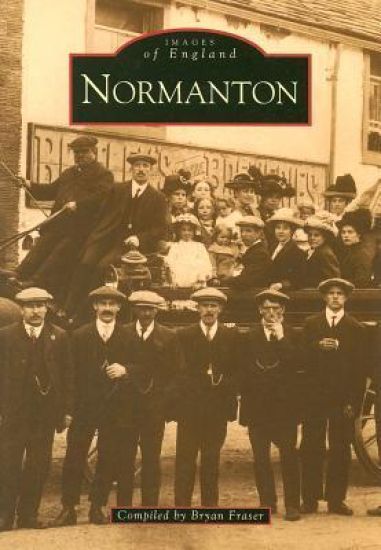
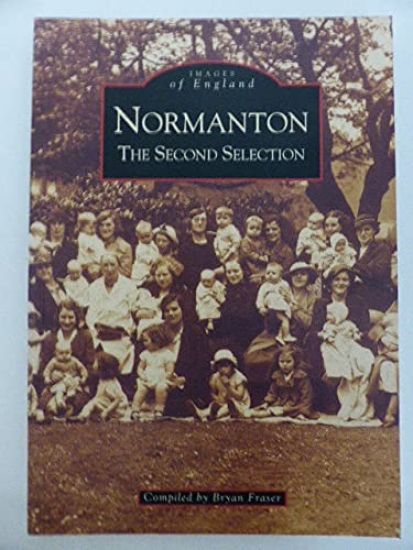
Bryan Fraser has used over 200 photographs, taken from his extensive archive, to compile this fascinating portrayal of the people of Normanton. Over a period from as early as 1860 stretching to the present day we see all aspects of the lives the people of Normanton once led. The arrival of the railway made a huge difference to the lives of these people. The railway provided employment both directly and by encouraging other industries to open and expand in the area. One of the main employers in the area were the collieries and we see many of the men and boys who worked down the pits. The many churches and chapels in the area played an important role in the community, with both a social and charitable aspect. Processions and parades are pictured, drawing people from all over the town together to enjoy the spectacle and to raise money for schools and hospitals among other good causes. As industry grew in the area so more people were in work and starting to earn better wages. We see families taking advantage of the new types of transport - the trams, buses and cars - to enjoy day trips to the seaside. Other entertainment is pictured; the Saturday night dance (where many a romance began), along with local bands and public houses. Additionally we see schoolchildren and sports teams over the years.
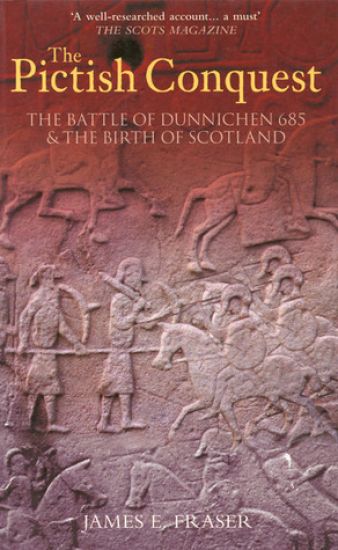
The Pictish defeat of the Northumbrians is arguably the most important turning point in Scottish history. Waged on Saturday 20 May 685, the battle of Dunnichen, fought near Forfar in north-eastern Scotland, is the best-documented event in the history of the Picts. This bloody engagement pitted the Pictish army of Bridei son of Beli, king of Fortriu, against that of his cousin Ecgfrith son of Oswig, king of the Northumbrian Angles. The Pictish victory was complete, Ecgfrith was killed 'along with the flower of his army' and the Pictish kingdom of Fortriu emerged from Dunnichen as the dominant kingdom in North Britain for generations to come, during which time its kings laid the foundations of the medieval kingdom of Scotland. It is for this reason that the battle of Dunnichen is mentioned in the same breath as the more famous battles of Stirling Bridge and Bannockburn, and has long been seen as a pivotal moment in the history of the Scottish nation.
Perhaps no comparable area of England was as intensively settled by the great monastic houses as the north-east of Yorkshire, which contained Whitby Abbey, Guisborough, Bridlington and Rievaulx. Including a set of maps, this work provides a comprehensive account of the monastic contribution to Yorkshire's development and landscape.
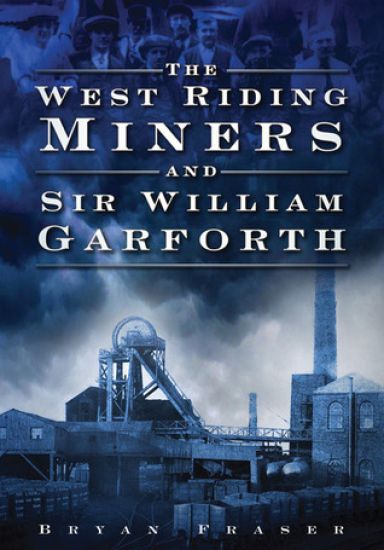
In 1909 over one million men and their families rejoiced. A solution - breathing apparatus - had been found by W.E. Garforth which would stop thousands of men and boys being killed by underground explosions annually. However, it was to be many years before he persuaded the mine management to introduce it. This book tells the story behind the determination of William Garforth and his family, not only to introduce that solution, but also to improve the working and social environment of the British working classes. Bryan Fraser is one of the last generation of miners. Here he tells the significant story of William Garforth, along with the West Riding miners' own memories of working down the pits. Complemented by original photographs and ephemera, this account records an important way of life, now gone, for future generations.
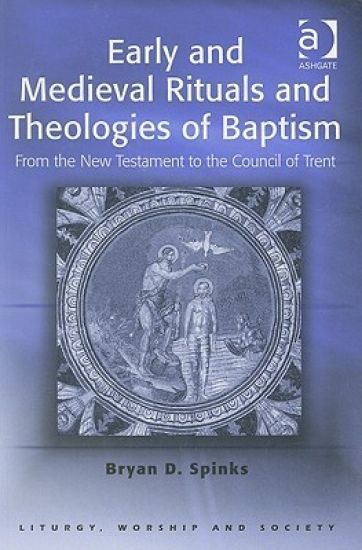
Presenting a comprehensive survey of the historical underpinnings of baptismal liturgies and theologies, Bryan Spinks presents an ecumenically and geographically wide-ranging survey and discussion of contemporary baptismal rites, practice and reflection, and sacramental theology. Writing within a clear chronological framework, Bryan Spinks presents two simultaneous volumes on Baptismal Liturgy and Theology. In the first volume, Early and Medieval Rituals and Theologies of Baptism, Bryan Spinks summarizes the understandings of baptism in the New Testament and the development of baptismal reflection and liturgical rites throughout Syrian, Egyptian, Roman and African regions. He focuses particularly on the Homilies of Chrysostom, Cyril of Jerusalem, Theodore and Ambrose, the post-nicene rites and commentaries, and the impact of medieval theologies of baptism and Augustinian theology with reference to Western understanding. In the second volume, Reformation and Modern Rituals and Theologies of Baptism, Spinks traces developments through the Reformation, liturgies in the eighteenth and nineteenth centuries, and explores important new ecumenical perspectives on developments of twentiethth-century sacramental discussion.
This book surveys developments in sacramental and liturgical discourse and discord, exploring the writings of English and Scottish divines, and focusing on baptism and the Lord's Supper. The reigns of James I and Charles I coincided with divergence and development in teaching on the sacraments in England and Scotland and with growing discord on liturgical texts and the ceremonial. Uniquely focusing on both nations in a single study, Bryan Spinks draws on theological treatises, sermons, catechisms, liturgical texts and writings by Scottish theologians hitherto neglected. Exploring the European roots of the churches of England and Scotland and how they became entwined in developments culminating in the Solemn League and Covenant and Westminster Directory, this book presents an authoritative study of sacramental and liturgical debate, developments, and experiments during the Stuart period.
Presenting a comprehensive survey of the historical underpinnings of baptismal liturgies and theologies, Bryan Spinks presents an ecumenically and geographically wide-ranging survey and discussion of contemporary baptismal rites, practice and reflection, and sacramental theology. Writing within a clear chronological framework, Bryan Spinks presents two simultaneous volumes on Baptismal Liturgy and Theology. Early and Medieval Rituals and Theologies of Baptism summarizes the understandings of baptism in the New Testament and the development of baptismal reflection and liturgical rites throughout Syrian, Egyptian, Roman and African regions. In this second volume, Reformation and Modern Rituals and Theologies of Baptism, Spinks traces developments through the Reformation, liturgies in the eighteenth and nineteenth centuries, and explores important new ecumenical perspectives on developments of twentieth-century sacramental discussion. Present practices of Baptist, Amish, as well as Methodist, Roman Catholic, Lutheran, Reformed and Anglican denominations are also examined.
Worship has always been affected by its surrounding culture. This book examines the changing perspectives in and discussions on worship styles and practices from the Restoration to the death of Wesley, in England and Scotland. Moving beyond the text, Spinks grounds the discussion within the changing cultural and intellectual framework of the period referred to as the Enlightenment. The focus is the end of the early modern period, when already the upheaval of the English Civil War, the methods of the Cambridge Platonists, and the thinking of Descartes and Spinoza were making the period one of transition, and Newtonian thought and the thought of John Locke impacted theological thought and worship forms. It is against this framework that the worship in England and Scotland will be described and assessed. As well as published and unpublished liturgical documents, this book draws on contemporary accounts and descriptions of worship, catechisms, sermons and theological works, and contemporary diaries. Musical and architectural changes are also noted, particularly the late seventeenth century hymns of Richard Davies of Rothwell, Joseph Stennett and Benjamin Keach. This book places worship in the society which it served, and from which changes sprang. It explores the interaction of cultural thought and worship, drawing parallels between the Enlightenment period and problems of late modernity and the worship wars of the late twentieth century.
American Christianity teaches the centrality of the individual-my will, my experiences, my decision, my heart, my work, and my dedication. Yet we couldn't be more unaware that Christ and His saving and comforting work are being lost. Our minds and hearts are captivated in some way by those who often preach the Christian instead of Christ.Wolfmueller sounds the alarm against the false teaching and dangerous practices of Christianity in America. He offers a beautiful alternative: the sweet savor of the Gospel, which brings us to the real comfort, joy, peace, freedom, and sure hope of Christ.And it's for you.
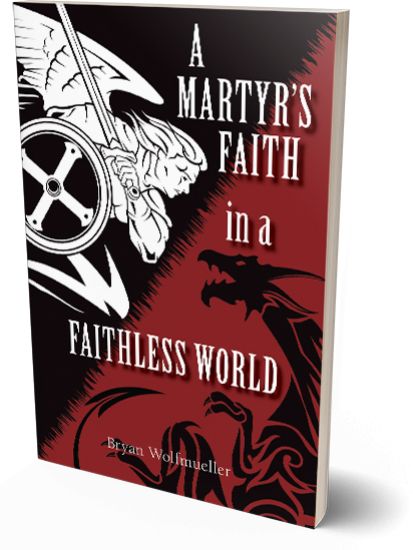
Who your heroes are says a lot about you. "We live in the shadows of our heroes. We look up to them. We try to live like them. Our heroes encourage and inspire us."In A Martyr's Faith in a Faithless World, Pastor Bryan Wolfmueller urges readers to consider not only who their heroes are, but how those heroes shape them.Wolfmueller shows that heroic martyrs St. Stephen, St. Perpetua, Polycarp, Romanus, and St. Agatha are not defined by their achievements, but by the power of faith that God worked within them. These martyrs demonstrate the heroism of following Christ with humble hearts in the face of affliction and death. Each martyr stands as a testament to the bold rejection of sin, patient endurance through affliction, and firm grounding in the ultimate joy of heaven. Wolfmueller expertly combines practical principles, Church history, and a rich use of Scripture to provideencouragement for the Christian's struggle against suffering and sin. Ultimately, the book directs readers to look to Christ, who completed the greatest act of heroism in his saving death and resurrection.
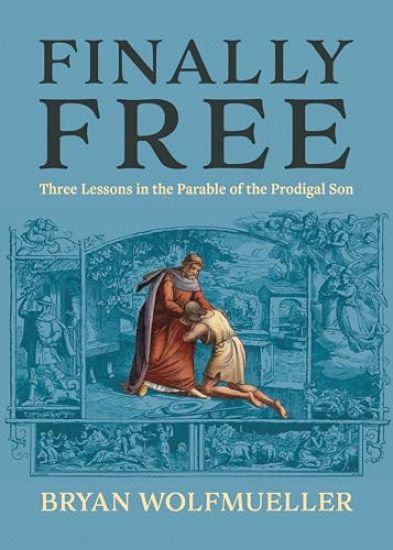
Recounting the parable of the prodigal son, author Bryan Wolfmueller discusses the biblical account in light of our culture today. The author focuses on "three slaveries" The Belly Slavery, which prioritizes our passions and desires; Despair, which causes us to feel trapped and unworthy of God's forgiveness and love; and Pride, which focuses on our self-centered nature. The conclusion points to the Gospel promises and freedom in Christ, emphasizing His forgiveness and love.
A powerful biography of the dedicated activist, multitalented musician, and influential civil rights leader Coretta Scott King, with illustrations by a Caldecott Honor winner. Young Coretta Scott was a gifted musician, mastering multiple instruments and breaking barriers to study music in college. Yet growing up in 1930s Alabama, she frequently felt the sting of racial injustice and even violence: when public school for Black children ended after sixth grade, when white neighbors burned down her father's house and lumber mill, and when Coretta was denied a student teaching job based on the color of her skin.She met a minister named Martin Luther King, Jr., and the two were drawn together by a shared commitment to serving others and fighting against inequality. Alongside her husband, Coretta became an influential voice in the Civil Rights Movement, holding Freedom Concerts to spread awareness and raise funds, and carrying on a message of peace and nonviolent protest after Martin's assassination. In this inspiring addition to the acclaimed Big Words series, award-winning author Doreen Rappaport masterfully blends narrative with Coretta's own words to share her remarkable story. With powerful illustrations by Caldecott Honoree Cozbi A. Cabrera, Coretta's Song is a superb portrait of a woman whose voice changed America, and the world, forever.Don't miss these other titles in the Big Words series!Beacon of Hope: The Life of Barack ObamaEllen Takes Flight: The Life of Astronaut Ellen OchoaRuth Objects: The Life of Ruth Bader GinsburgMartin's Big Words: The Life of Dr. Martin Luther King, Jr.
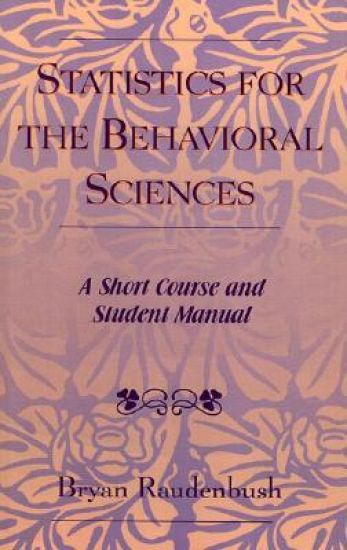
Statistics for the Behavioral Sciences is a short course and student manual in statistics for the behavioral sciences. It is comprehensive, in that it contains all information necessary to learn basic statistical analysis, with a focus on the use of statistics for behavioral sciences research. Emphasis is placed on a clear presentation of statistical formulas, appropriateness of particular tests, and outcome analysis. Author Bryan Raudenbush presents theory statistical procedures and practical application, using a module approach to provide a concise summary of the necessary data requirements, statistical procedures, and outcome interpretation. The workbook format of the text allow for students to complete examples and exercises within the pages of the textbook.