This book examines types of resistance in contemporary poetry to the authority of scientific knowledge, tracing the source of these resistances to both their literary precedents and the scientific zeitgeists that helped to produce them. Walpert argues that contemporary poetry offers a palimpsest of resistance, using as case studies the poets Alison Hawthorne Deming, Pattiann Rogers, Albert Goldbarth, and Joan Retallack to trace the recapitulation of romantic arguments (inherited from Keats, Shelly, and Coleridge, which in turn were produced in part in response to Newtonian physics), modernist arguments (inherited from Eliot and Pound, arguments influenced in part by relativity and quantum theory), and postmodernist arguments (arguments informed by post-structuralist theory, e.g. Barthes, Derrida, Foucault, with affinities to arguments for the limitations of science in the philosophy, sociology, and rhetoric of science). Some of these poems reveal the discursive ideologies of scientific language—reveal, in other words, the performativity of scientific language. In doing so, these poems themselves can also be read as performative acts and, therefore, as forms of intervention rather than representation. Reading Retallack alongside science studies scholar Karen Barad, the book concludes by proposing that viewing knowledge as a form of intervention, rather than representation, offers a bridge between contemporary poetry and science.
This book provides a thorough understanding of the general principles of measurement for taking off quantities. An essential guide to any quantity surveyor, architect or engineer. Taking off quantities: Civil Engineering demonstrates, through a series of detailed worked examples from a range of civil engineering projects, how the measurement techniques are actually used.
Spon's Construction Resource Handbook is the first book to present critical information about materials, labour and plant constants required for the estimating process under one cover. It covers all areas of the construction industry and will provide all those involved in the preparation of tenders, cost estimates and first-stage estimates with the information they need to work with greater confidence and prepare more accurate estimates and tenders. With a unique style of presentation, it includes thousands of item descriptions and a comprehensive collection of data, including labour and plant outputs, materials, elemental breakdowns and lists of relevant organizations.Up-to-date and comprehensive, Spon's Construction Resource Handbook will be an indispensable reference for estimators, quantity surveyors, engineers and architects working in local government and professional practices, government agencies, and contractors in all fields of construction. It will provide an invaluable reference base for negotiation of new rates where variations occur on a contract.
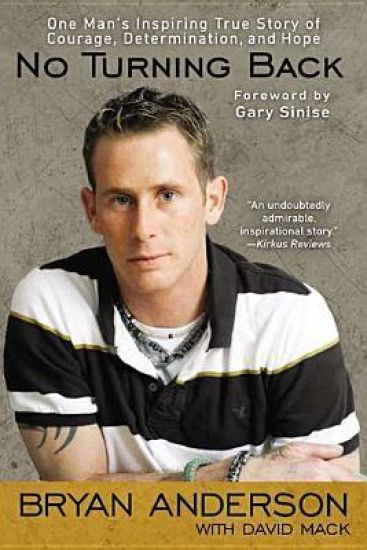
The word conquer has changed meaning for Bryan Anderson. As a U.S. Army Sergeant in Iraq, it meant taking down the enemy. After becoming Iraq’s fourth triple amputee from a roadside explosive, what he had to conquer got a bit more personal. On October 23, 2005, the moment Bryan looked down and realized he no longer had legs, he cracked a joke. It was a tragedy that could break many, but Bryan transformed it into something positive, something that propelled him forward. Despite grueling surgeries and rehabilitation, his goal has always been bigger than simply walking again. Making the most of life, he went for it, learning how to snowboard, water-ski, rock climb, and skateboard with his condition—even winning himself some gold medals to place next to his Purple Heart.In this inspiring memoir, Bryan shares his infectious love for life that touches anyone who’s faced hardship. Anyone, in any circumstance, can overcome the toughest challenges, by not just surviving, but thriving. No Turning Back is a testament to pure hard work, perseverance, and hope for a better life—no matter what shape it takes.
In Selfish Reasons to Have More Kids , contrarian economist Bryan Caplan argues that we've needlessly turned parenting into an unpleasant chore, and don't know the real plusses and minuses of having kids. Parents today spend more time investing in their kids than ever, but twin and adoption research shows that upbringing is much less important than we imagine, especially in the long-run. Kids aren't like clay that parents mould for life they're more like flexible plastic that pops back to its original shape once you relax your grip. These revelations are wonderful news for anyone with kids. Being a great parent is less work and more fun than you think,so instead of struggling to change your children, you can safely relax and enjoy your journey together. Raise your children in the way that feels right for you they'll still probably turn out just fine. Indeed, as Caplan strikingly argues, modern parents should have more kids. Parents who endure needless toil and sacrifice are overcharging themselves for every child. Once you escape the drudgery and worry that other parents take for granted, bringing another child into the world becomes a much better deal. You might want to stock up.
A plain-English guide to Britons in battle, from the Roman invasion to the ongoing Iraqi war Charging through the Britain's military past, this accessible guide brings to life the battles and wars that shaped the history of Britain-and the world. The book profiles commanders, explains strategies and tactics, and covers key developments in weaponry and technology.
In addition to the essential theoretical background and fundamental principles, this unique reference presents a detailed, step-by-step methodology for interpreting even electron mass spectrometry results. Specific chapters are devoted to: proteomics; biomolecule spectral interpretation of small molecules; biomolecule spectral interpretation of biological macromolecules; and MALDI-TOF-Postsource Decay (PSD). Chapters feature detailed examples, questions, and problems to help readers solidify their understanding of the concepts and techniques.
Why is the brain important in eating disorders? This ground-breaking new book describes how increasingly sophisticated neuroscientific approaches are revealing much about the role of the brain in eating disorders. Even more importantly, it discusses how underlying brain abnormalities and dysfunction may contribute to the development and help in the treatment of these serious disorders. Neuropsychological studies show impairments in specific cognitive functions, especially executive and visuo-spatial skills.Neuroimaging studies show structural and functional abnormalities, including cortical atrophy and neural circuit abnormalities, the latter appearing to be playing a major part in the development of anorexia nervosa.Neurochemistry studies show dysregulation within neurotransmitter systems, with effects upon the modulation of feeding, mood, anxiety, neuroendocrine control, metabolic rate, sympathetic tone and temperature. The first chapter, by an eating disorders clinician, explains the importance of a neuroscience perspective for clinicians. This is followed by an overview of the common eating disorders, then chapters on what we know of them from studies of neuroimaging, neuropsychology and neurochemistry. The mysterious phenomenon of body image disturbance is then described and explained from a neuroscience perspective. The next two chapters focus on neuroscience models of eating disorders, the first offering an overview and the second a new and comprehensive explanatory model of anorexia nervosa. The following two chapters offer a clinical perspective, with attention on the implications of a neuroscience perspective for patients and their families, the second providing details of clinical applications of neuroscience understanding. The final chapter looks to the future. This book succinctly reviews current knowledge about all these aspects of eating disorder neuroscience and explores the implications for treatment. It will be of great interest to all clinicians (psychiatrists, psychologists, nurses, dieticians, paediatricians, physicians, physiotherapists) working in eating disorders, as well as to neuroscience researchers.
“The biotech industry is a complex, rapidly evolving, and critical industry. The industry holds great commercial and societal promise, but it is also filled with hype, confusion, and risks. Bergeron and Chan do a remarkable job of providing a sweeping insightful, and probing assessment of the current state and likely evolution of this global industry. This book is essential reading for the executive who desires a thorough understanding of this business and its potential.”—John P. Glasser, Vice President and Chief Information Offers, Partners Healthcare System, Inc. “Bergeron and Chan have done a marvelous job integrating many different perspectives to give the reader a coherent road map of the biotech industry for the next decade. This powerful book is anchored by numerous relevant examples that create a framework which any life sciences professional needs to understand. Of particular note is the compelling assessment of the IT industry and its impact on the life sciences as these industries converge.”—Michael A. Greeley, Managing General Partner, IDG Ventures. An in-depth examination of the growth and financing of the biotechnology industry worldwide Biotech Industry: A Global, Economic, and Financing Overview provides a thorough look at the current state of the biotechnology industry, including where major research is being conducted, where it’s being applied, and where money and intellectual capital are flowing. Written by a renowned business columnist and an entrepreneurial scientist in the biotech area, this unique book gives Eos and other senior-level managers an understanding of Asia’s pivotal role in the worldwide success of biotechnology commercialization, as well as insight into the biotech market over the next decade.
Examines structural aspects of high rise buildings, particularly fundamental approaches to the analysis of the behavior of different forms of building structures including frame, shear wall, tubular, core and outrigger-braced systems. Introductory chapters discuss the forces to which the structure is subjected, design criteria which are of the greatest relevance to tall buildings, and various structural forms which have developed over the years since the first skyscrapers were built at the turn of the century. A major chapter is devoted to the modeling of real structures for both preliminary and final analyses. Considerable attention is devoted to the assessment of the stability of the structure, and the significance of creep and shrinkage is discussed. A final chapter is devoted to the dynamic response of structures subjected to wind and earthquake forces. Includes both accurate computer-based and approximate methods of analysis.
Praise for IT Portfolio Management Step-by-Step "Bryan Maizlish and Robert Handler bring their deep experience in IT 'value realization' to one of the most absent of all IT management practices--portfolio management. They capture the essence of universally proven investment practices and apply them to the most difficult of challenges--returning high strategic and dollar payoffs from an enterprise's IT department. The reader will find many new and rewarding insights to making their IT investments finally return market leading results." --John C. Reece, Chairman and CEO, John C. Reece & Associates, LLC Former deputy commissioner for modernization and CIO of the IRS "IT Portfolio Management describes in great detail the critical aspects, know-how, practical examples, key insights, and best practices to improve operational efficiency, corporate agility, and business competitiveness. It eloquently illustrates the methods of building and integrating a portfolio of IT investments to ensure the realization of maximum value and benefit, and to fully leverage the value of all IT assets. Whether you are getting started or building on your initial success in IT portfolio management, this book will provide you information on how to build and implement an effective IT portfolio management strategy." --David Mitchell, President and CEO, webMethods, Inc. "I found IT Portfolio Management very easy to read, and it highlights many of the seminal aspects and best practices from financial portfolio management. It is an important book for executive, business, and IT managers." --Michael J. Montgomery, President, Montgomery & Co. "IT Portfolio Management details a comprehensive framework and process showing how to align business and IT for superior value. Maizlish and Handler have the depth of experience, knowledge, and insight needed to tackle the challenges and opportunities companies face in optimizing their IT investment portfolios. This is an exceptionally important book for executive leadership and IT business managers, especially those wanting to build a process-managed enterprise." --Peter Fingar, Executive Partner Greystone Group, coauthor of The Real-Time Enterprise and Business Process Management (BPM): The Third Wave "A must-read for the non-IT manager who needs to understand the complexity and challenges of managing an IT portfolio. The portfolio management techniques, analysis tools, and planning can be applied to any project or function." --Richard "Max" Maksimoski, Senior Director R&D, The Scotts Company "This book provides an excellent framework and real-world based approach for implementing IT portfolio management. It is a must-read for every CIO staff considering how to strategically and operationally impact their company's bottom line." --Donavan R. Hardenbrook, New Product Development Professional, Intel Corporation
Pointing to the disparities between wealthy and impoverished school districts in areas where revenue depends primarily upon local taxes, reformers repeatedly call for the centralization of school funding. Their proposals meet resistance from citizens, elected officials, and school administrators who fear the loss of local autonomy. Bryan Shelly finds, however, that local autonomy has already been compromised by federal and state governments, which exercise a tremendous amount of control over public education despite their small contribution to a school system's funding. This disproportionate relationship between funding and control allows state and federal officials to pass education policy yet excuses them from supplying adequate funding for new programs. The resulting unfunded and underfunded mandates and regulations, Shelly insists, are the true cause of the loss of community control over public education. Shelly outlines the effects of the most infamous of underfunded federal mandates, the No Child Left Behind Act of 2001 (NCLB), and explores why schools implemented it despite its unpopularity and out-of-pocket costs. Shelly's findings hold significant implications for school finance reform, NCLB, and the future of intergovernmental relations.
For three years while serving as a senior adviser to Rep. Henry A. Waxman (D-CA), chairman of the House Committee on Energy and Commerce—one of the most powerful committees in Congress—Bruce C. Wolpe kept a diary, a senior staffer’s look at how committees develop and promote legislation. With its insider’s view of the rough-and-tumble politics of cap-and-trade, healthcare reform, tobacco, oversight, and the debt ceiling agreement, The Committee uniquely melds the art of politics and policymaking with the theory and literature of political science. The authors engage with the important questions that political science asks about committee power, partisanship, and the strategies used to build winning policy coalitions both in the Committee and on the floor of the House. In this new edition, the authors revisit the relationship between the executive and Congress in the wake of the sweeping changes wrought by the Trump administration, as well as thoughts about how that relationship will change again as President Biden faces a 117th Congress that is strikingly similar to Obama’s 111th. The insider politics and strategies about moving legislation in Congress, from internal and external coalition building to a chairman’s role in framing policy narratives, will captivate both novice and die-hard readers of politics.
For three years while serving as a senior adviser to Rep. Henry A. Waxman (D-CA), chairman of the House Committee on Energy and Commerce—one of the most powerful committees in Congress—Bruce C. Wolpe kept a diary, a senior staffer’s look at how committees develop and promote legislation. With its insider’s view of the rough-and-tumble politics of cap-and-trade, healthcare reform, tobacco, oversight, and the debt ceiling agreement, The Committee uniquely melds the art of politics and policymaking with the theory and literature of political science. The authors engage with the important questions that political science asks about committee power, partisanship, and the strategies used to build winning policy coalitions both in the Committee and on the floor of the House. The insider politics and strategies about moving legislation in Congress, from internal and external coalition building to a chairman’s role in framing policy narratives, will captivate both novice and die-hard readers of politics.
For three years while serving as a senior adviser to Rep. Henry A. Waxman (D-CA), chairman of the House Committee on Energy and Commerce—one of the most powerful committees in Congress—Bruce C. Wolpe kept a diary, a senior staffer’s look at how committees develop and promote legislation. With its insider’s view of the rough-and-tumble politics of cap-and-trade, healthcare reform, tobacco, oversight, and the debt ceiling agreement, The Committee uniquely melds the art of politics and policymaking with the theory and literature of political science. The authors engage with the important questions that political science asks about committee power, partisanship, and the strategies used to build winning policy coalitions both in the Committee and on the floor of the House. The insider politics and strategies about moving legislation in Congress, from internal and external coalition building to a chairman’s role in framing policy narratives, will captivate both novice and die-hard readers of politics.
Pointing to the disparities between wealthy and impoverished school districts in areas where revenue depends primarily upon local taxes, reformers repeatedly call for the centralization of school funding. Their proposals meet resistance from citizens, elected officials, and school administrators who fear the loss of local autonomy. Bryan Shelly finds, however, that local autonomy has already been compromised by federal and state governments, which exercise a tremendous amount of control over public education despite their small contribution to a school system's funding. This disproportionate relationship between funding and control allows state and federal officials to pass education policy yet excuses them from supplying adequate funding for new programs. The resulting unfunded and underfunded mandates and regulations, Shelly insists, are the true cause of the loss of community control over public education. Shelly outlines the effects of the most infamous of underfunded federal mandates, the No Child Left Behind Act of 2001 (NCLB), and explores why schools implemented it despite its unpopularity and out-of-pocket costs. Shelly's findings hold significant implications for school finance reform, NCLB, and the future of intergovernmental relations.
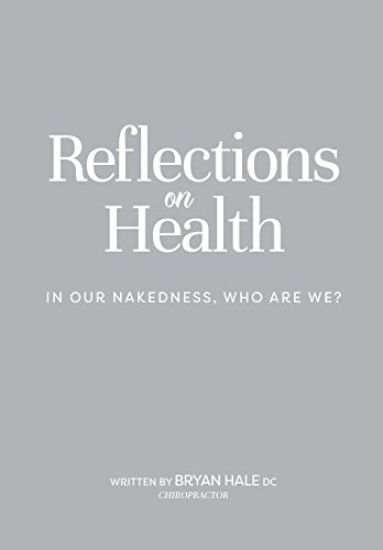
Twice during Bryan Hale's childhood, his mother spent several months in a plaster cast from her neck to her knees. As a young man, Bryan trained as a chiropractor and then embarked upon a lifelong journey of trying to understand what makes us who we are and why we suffer pain and illness. The book is written from a practitioner's viewpoint, with observations from treating patients over many years. Through fascinating case histories, insightful information, charts and diagrams, Bryan generously shares with us the technique he has developed to help balance our physical, emotional, mental, and spiritual energies and also to challenge us to find true purpose in our lives. This engaging book is divided into several sections for ease of reader-navigation. It is a book to be revisited again and again. Reading Reflections on Health will help you to understand and correct your own behaviour, which in turn changes the behaviour of those around you. It will make a real difference to your life.
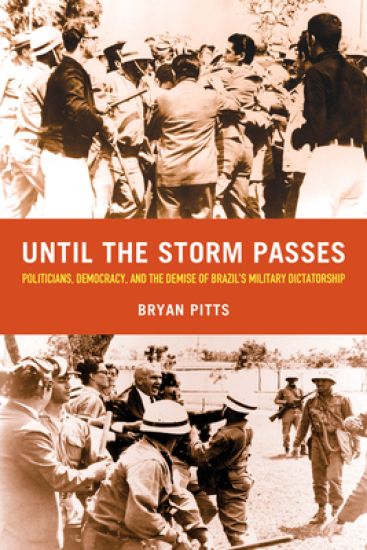
A free open access ebook is available upon publication. Learn more at www.luminosoa.org.Until the Storm Passes reveals how Brazil's 1964–1985 military dictatorship contributed to its own demise by alienating the civilian political elites who initially helped bring it to power. Based on exhaustive research conducted in nearly twenty archives in five countries, as well as on oral histories with surviving politicians from the period, this book tells the surprising story of how the alternatingly self-interested and heroic resistance of the political class contributed decisively to Brazil's democratization. As they gradually turned against military rule, politicians began to embrace a political role for the masses that most of them would never have accepted in 1964, thus setting the stage for the breathtaking expansion of democracy that Brazil enjoyed over the next three decades.
This book examines from a multidisciplinary viewpoint the question of what we mean - what we should mean - by setting sustainability as a goal for environmental management. The author, trained as a philosopher of science and language, explores ways to break down the disciplinary barriers to communication and deliberation about environment policy, and to integrate science and evaluations into a more comprehensive environmental policy. Choosing sustainability as the keystone concept of environmental policy, the author explores what we can learn about sustainable living from the philosophy of pragmatism, from ecology, from economics, from planning, from conservation biology and from related disciplines. The idea of adaptive, or experimental, management provides the context, while insights from various disciplines are integrated into a comprehensive philosophy of environmental management. The book will appeal to students and professionals in the fields of environmental policy and ethics, conservation biology, and philosophy of science.