

Kirjahaku
Etsi kirjoja tekijän nimen, kirjan nimen tai ISBN:n perusteella.
1000 tulosta hakusanalla Bryan Healey
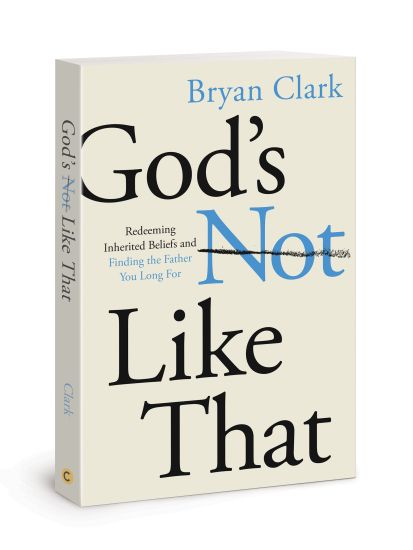
Many of us long for the abundant life Jesus promised, but instead we feel stagnant and frustrated in our faith. More of us cultivate our view of God from our family of origin than from the pages of the Bible--and a faulty view of God will always be a barrier to a satisfying spiritual life. In his unique and interactive book God Isn't Like That, author Bryan Clark returns us to Scripture on a step-by-step journey to identify and then correct our misconceptions about God. This highly practical book helps us understand: Specific ways our childhood influences our beliefs todayThe difference between a grace-based value system and a performance-based value systemHow to distinguish truth from fiction when it comes to personal beliefsWhy even a loving and faith-filled family can inadvertently pass on false representations of GodWhat the Bible says about how God intended Himself to be depicted in the home Abundant life has nothing to do with money or prosperity or health. Abundant life has everything to do with a right view of God that sustains us, comforts us, and satisfies us through every season.

Israel’s exodus from Egypt is the Bible’s enduring emblem of deliverance. It is the archetypal anvil on which the scriptural language of deliverance is shaped. More than just an epic moment, the exodus shapes the telling of Israel’s and the church’s gospel. From the blasting furnace of Egypt, imagery pours forth. In the Song of Moses Yahweh overcomes the Egyptian army, sending them plummeting to the bottom of the sea. But the exodus motif continues as God leads Israel through the wilderness, marches to Sinai and on the Zion. It fires the psalmist’s poetry and inspires Isaiah’s second-exodus rhapsodies. As it pulses through the veins of the New Testament, the Gospel writers hear exodus resonances from Jesus’ birth to the gates of Jerusalem. Paul casts Christ’s deliverance in exodus imagery, and the Apocalypse reverberates with exodus themes. In Echoes of Exodus, Bryan Estelle traces the motif as it weaves through the canon of Scripture. Wedding literary readings with biblical-theological insights, he helps us weigh again what we know and recognize anew what we have not seen. More than that, he introduces us to the study of quotation, allusion, and echo, providing a firm theoretical basis for hermeneutical practice and understanding. Echoes of Exodus is a guide for students and biblical theologians, and a resource for preachers and teachers of the Word.

Improving Soldier and Unit Effectiveness with the Stryker Brigade Combat Team Warfighters' Forum
Bryan W. Hallmark; S. Jamie Gayton
RAND
2011
pokkari

The Continued Evolution of U.S. Law of Armed Conflict Implementation
Bryan Frederick; David E. Johnson
RAND
2015
pokkari
In recent years, U.S. policies implementing the Law of Armed Conflict have increasingly restricted military activities. In this report, RAND researchers identify the ongoing or anticipated strategic, technological, and normative trends that could shift U.S. policies, how these trends might change battlefield and legal or normative dynamics, and the implications for the U.S. military that might result from these possible changes.

Assessing Russian Reactions to U.S. and NATO Posture Enhancements
Bryan Frederick; Matthew Povlock; Stephen Watts
RAND
2017
nidottu
Heightened tensions between Russia and NATO since 2014 have prompted the Alliance to take a fresh look at NATO's ability to deter potential Russian aggression. In this report, RAND researchers develop a framework that analysts can use to assess likely Russian reactions to ongoing and proposed NATO posture enhancements in Europe, which can help policymakers determine the utility and advisability of different options.
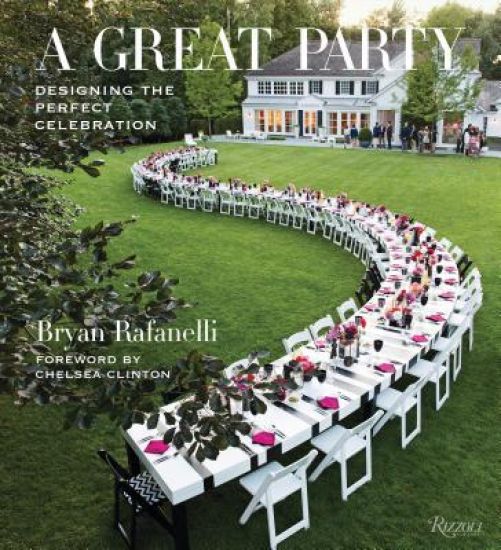
Voted one of the top wedding designers in the world by Vogue, Bryan Rafanelli has designed and produced some of the nation s most exclusive and high-profile events, including many for President Obama at the White House as well as Chelsea Clinton s wedding. In his first book, Rafanelli shares his philosophy for creating artful celebrations that convey beauty and elegance while telling a story unique to its hosts. From a seaside destination wedding to a stylish masquerade fete, Rafanelli s work is marked by stunning statements and clever everyday details. The book opens with key Rafanelli principles to hosting great celebrations, from considering a room s surfaces the floor, walls, and ceiling to how adding guests will change what you see. He shares his thoughts on the importance of enhancing what s already part of a space rather than obscuring it, as when he enclosed the gilded mirrors of the East Room in the White House in twelve-foot frames of fresh flowers for a state dinner under President Obama. Part two of the book explores dozens of events in greater detail. Rafanelli takes readers behind the scenes in such sections as Weddings, showcasing both the main event and the welcome and after parties; Charity Events, highlighting what makes one unique and successful; and the White House, featuring state dinners and holiday decor.

The infantry was Wellington's favoured tool, and he played a major role in raising its standards of excellence. He used it carefully, on ground which he selected to give it maximum advantage and protection; and he came to understand its capabilities and weaknesses exactly. In this worthy addition to Opsrey's Men-at-Arms series, Bryan Fosten examines all aspects of Wellington's infantry, including army life, organisation, uniforms, drill, regimental distinctions, weapons and equipment, in an engaging text well-illustrated throughout including eight full page colour plates by the author himself.

Wellington considered the British cavalry to be technically inferior to the French, although paradoxically he also said that one British squadron would be a match for two of the enemy. His main concern was that although the British cavalry lacked neither courage nor dash, they lacked discipline, in that they invariably failed to rally and re-form once they had charged home. At Waterloo, although the cavalry generally performed superbly well, the endemic faults which Wellington had already identified were repeated more than once, resulting in the decimation of several fine regiments. Bryan Fosten explores the history, organisation and uniforms of Wellington's Heavy Cavalry.



Of Men and Reindeer Herds in French Magdalenian Prehistory
Bryan C Gordon
BAR Publishing
1988
nidottu

Written in an informal and accessible style, Chromatin and Gene Regulation enables the reader to understand the science of this rapidly moving field. Chromatin is a fundamental component in the network of controls that regulates gene expression. Many human diseases have been linked to disruption of these control processes by genetic or environmental factors, and unravelling the mechanisms by which they operate is one of the most exciting and rapidly developing areas of modern biology. Chromatin is central both to the rapid changes in gene transcription by which cells respond to changes in their environment and also to the maintenance of gene expression patterns from one cell generation to the next. This book will be an invaluable guide to undergraduate and postgraduate students in the biological sciences and all those with an interest in the medical implications of aberrant gene expression.

This book is an explanation of topical and newsworthy law-and-justice dilemmas that most affect society and individuals, containing ideas and ideals of law in our lives and exposes the myths and enlivens law's contemporary issues and challenges.
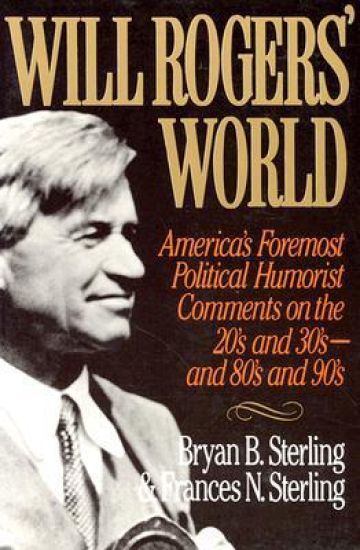
Will Rogers still touches us more than a hlf century after his death in this comprehensive collection of his pithy commentaries about goverment, presidents, business, and philosophy.
Will Rogers was quoted more often than any other source besides the Bible and Shakespeare. Now his insightful wit is brought together in a collection of sayings organized by topic.

Bryan Sykes, one of the world’s leading geneticists and best-selling author of The Seven Daughters of Eve, sets his sights on America, one of the most genetically variegated countries in the world. Sykes embarks on a road trip—DNA testing kit in tow—interviewing genealogists, anthropologists, and everyday Americans, tracing America’s history along a double helix that stretches from the last Ice Age to the present day. What emerges is an unprecedented look into America’s genetic mosaic that challenges the very notion of how we perceive race and what it means to be an American.
The best-selling author of The Seven Daughters of Eve now turns his sights on the United States, one of the most genetically variegated countries in the world. From the blue-blooded pockets of old-WASP New England to the vast tribal lands of the Navajo, Bryan Sykes takes us on a historical genetic tour, interviewing genealogists, geneticists, anthropologists, and everyday Americans with compelling ancestral stories. His findings suggest: • Of Americans whose ancestors came as slaves, virtually all have some European DNA. • Racial intermixing appears least common among descendants of early New England colonists. • There is clear evidence of Jewish genes among descendants of southwestern Spanish Catholics. • Among white Americans, evidence of African DNA is most common in the South. • European genes appeared among Native Americans as early as ten thousand years ago. An unprecedented look into America's genetic mosaic and how we perceive race, DNA USA challenges the very notion of what we think it means to be American.
The story of Sam Bass, both outlaw and romantic figure, has become a familiar part of Texas folldore and is well documented in nonfiction. But in this novel, Bryan Woolley creates a compelling story by giving the antihero fictional life. Woolley brings Bass alive through six alternating voices - Maude, the whore who was Bass's lover; Mary Matson; the African American who took him in and tended him as he lay dying; Dad Egan, the lawman who was once a father-figure to young Sam Bass but feels compelled to capture the outlaw, Frank Johnson, who rode with Bass but left the outlaw life to reappear as a small-town doctor; and Jim Murphy, the well-meaning saloonkeeper who makes a bargain with the law and brings down Sam Bass. In shaping the Bass story, Woolley explores the themes of youth and age, impulse and wisdom. An outlaw, for many of us, is not a villain or a criminal but someone who, by choice or circumstance, finds himself at odds with society. We see the outlaw life as one of carefree freedom without responsibilities and full of infinite possibilities. Frank Jackson says it best as he recalls riding with Sam Bass. ""I felt like an outlaw but not like a criminal, and the beauty of the day and its freedom filled me.