Kirjojen hintavertailu. Mukana 12 518 531 kirjaa ja 12 kauppaa.

Kirjahaku

Etsi kirjoja tekijän nimen, kirjan nimen tai ISBN:n perusteella.

1000 tulosta hakusanalla Carbone Gerald M.

Carbon Nanofibers

Carbon Nanofibers

John Wiley Sons Inc
2021
sidottu
This book covers the fundamentals and applications of Carbon Nanofiber (CNF). In the first section, the initial chapter on the fundamentals of CNF is by Professor Maheshwar Sharon, the recognized “Father of Carbon Nanotechnology in India”, which powerfully provides a succinct overview of CNFs. This is followed by a chapter on biogenics that have produced unique morphologies of CNF that makes them suitable to various applications. This is followed by a chapter that mainly focuses on nanocomposites, especially those involving nanocomposites of CNF. The role of nanocatalysts and composites in promoting and enhancing the synthesis and application of CNF is then covered, followed by an important chapter on the characterization of CNF. The second section of the book encompasses the various applications of CNF, such as its use as a possible superconductor to adsorb and store hydrogen, and as a microwave absorber. The application of CNF for environmental concerns is also detailed by assessing its usefulness in dye and heavy metal removal from polluted water. The applications that are addressed include lithium-ion battery, solar cell, antenna, cosmetics, usefulness in regenerative medicine, as well as various aspects of agrotechnology.
Carbon Monoxide in Drug Discovery
CARBON MONOXIDE IN DRUG DISCOVERY An insightful reference for the latest physiological and therapeutic studies of carbon monoxide In Carbon Monoxide in Drug Discovery: Basics, Pharmacology, and Therapeutic Potential, a team of distinguished authors delivers foundational knowledge, the latest research, and remaining challenges regarding the physiological roles and therapeutic efficacy of carbon monoxide (CO). The editors have included a broad selection of resources from leading experts in the field that discuss the background and physiological roles of CO, a variety of delivery forms including CO prodrugs using benign carriers, CO sensing, therapeutic applications, and clinical trials. Organized by topic to allow each chapter to be read individually, the book covers a wide range of topics, from physiological and patho-physiological mechanisms at the molecular level to clinical applications for multiple disease processes. The editors of Carbon Monoxide in Drug Discovery have created a compelling argument for shifting the accepted understanding of CO from poison to bioactive molecule with enormous clinical benefits. Readers will also benefit from: A thorough introduction to the background and physiological actions of carbon monoxide, including endogenous CO production in sickness and in healthComprehensive explorations of CO delivery forms, including non-carrier formulations, metal-carbonyl complexes, and organic CO donorsPractical discussions of carbon monoxide sensing and scavenging, including fluorescent probes for intracellular carbon monoxide detectionIn-depth examinations of the therapeutic applications of CO, including CO in solid organ transplantation Perfect for professors, graduate students, and postdocs in the fields of biology, pharmacology, immunology, medicinal chemistry, toxicology, and drug delivery, Carbon Monoxide in Drug Discovery: Basics, Pharmacology, and Therapeutic Potential is also an invaluable resource for industrial scientists in these areas.
Carbon Trading in China

Carbon Trading in China

Alex Lo

Palgrave Macmillan
2015
sidottu
This book explores the political aspects of China's climate change policy, focusing on the newly established carbon markets and carbon trading schemes. Lo makes a case for understanding the policy change in terms of discourse and in relation to narratives of national power and development.
Carbon Capture and Storage

Carbon Capture and Storage

King Abdullah Petroleum Studies; Saud M. Al-Fattah; Murad F. Barghouty; Bashir O. Dabbousi

CRC Press
2018
nidottu
This book focuses on issues related to a suite of technologies known as “Carbon Capture and Storage (CCS),” which can be used to capture and store underground large amounts of industrial CO2 emissions. It addresses how CCS should work, as well as where, why, and how these technologies should be deployed, emphasizing the gaps to be filled in terms of research and development, technology, regulations, economics, and public acceptance.The book is divided into three parts. The first part helps clarify the global context in which greenhouse gas (GHG) emissions can be analyzed, highlights the importance of fossil-fuel producing and consuming nations in positively driving clean fossil-fuel usage, and discusses the applicability of this technology on a global and regional level in a timely yet responsible manner. The second part provides a comprehensive overview of present and future technologies for the three elements of the CCS chain: CO2 capture, transport, and geological storage. The third part addresses the key drivers for CCS deployment worldwide. It provides analysis and assessment of the economic, regulatory, social, and environmental aspects associated with CCS development and deployment on a global scale. It offers a somewhat different perspective on CCS deployment by highlighting the environmental and socio-economic costs and benefits of CCS solutions compared to alternatives.The book concludes with potential options and guidelines for sustainable and responsible CCS scale-up as a way to address prevailing global energy, environment, and climate concerns.
Carbon Nanotubes for Polymer Reinforcement

Carbon Nanotubes for Polymer Reinforcement

Peng-Cheng Ma; Jang-Kyo Kim

CRC Press
2017
nidottu
Discovered in the twentieth century, carbon nanotubes (CNT) were an integral part of science and industry by the beginning of the twenty first century, revolutionizing chemistry, physics, and materials science. More recent advances in carbon nanotube production methods have resulted in a tremendous push to incorporate CNTs into polymer matrices. Although many advances have been made, two major obstacles continue unresolved: the enhancement of interfacial adhesion between CNTs and polymer matrix, and the improvement of dispersion of CNTs in polymers. Both substantial original contributors to the field, the authors present Carbon Nanotubes for Polymer Reinforcement, the first monograph on various conventional and innovative techniques to disperse and functionalize carbon nanotubes for polymer reinforcement, elegantly explaining the basic sciences and technologies involved in those processes. Topics covered include: Use of CNTs in fabricating novel polymer compositesPrinciples and mechanisms behind CNT dispersion and functionalizationMethods for the functionalization and dispersion of CNTs in polymer matricesEffects of CNTs on functional and mechanical properties of polymer compositesOptimization of CNT/polymer nanocomposite fabricationCarbon Nanotubes for Polymer Reinforcement is a comprehensive treatment and critical review of the new class of polymer nanocomposites, and points to areas of future developments. Composites engineers, scientists, researchers, and students will find the basic knowledge and technical results contained herein informative and useful references for their work, whether for advanced research or for design and manufacture of such composites.
Carbon-Neutral Fuels and Energy Carriers
Concerns over an unstable energy supply and the adverse environmental impact of carbonaceous fuels have triggered considerable efforts worldwide to find carbon-free or low-carbon alternatives to conventional fossil fuels. Carbon-Neutral Fuels and Energy Carriers emphasizes the vital role of carbon-neutral energy sources, transportation fuels, and associated technologies for establishing a sustainable energy future. Each chapter draws on the insight of world-renowned experts in such diverse fields as photochemistry and electrochemistry, solar and nuclear energy, biofuels and synthetic fuels, carbon sequestration, and alternative fuel vehicles.After an introductory chapter on different energy options in a carbon-constrained world and proposed measures to stabilize atmospheric CO2, the book analyzes the advantages and challenges facing the introduction of hydrogen fuel to the marketplace. It then examines the role of nuclear power in the production of carbon-free energy and fuels as well as the efficient use and storage of renewable energy resources, emphasizing the production of solar fuels from water and CO2. The book also discusses different aspects of bioenergy and biofuels production and use and the potential role of bio-inspired energy systems and industrial processes. The final chapters present a thorough overview and analysis of state-of-the-art fossil fuel decarbonization technologies and clean transportation options.This authoritative work provides the information needed to make more informed choices regarding available clean energy and fuel alternatives. It helps readers to better understand the interconnection between energy and the environment as well as the potential impact of human activities on climate.
Carbon Nanomaterials
This book provides information on synthesis, properties, and applications of carbon nanomaterials. With novel materials, such as graphene (atomically flat carbon) or carbon onions (carbon nanospheres), the family of carbon nanomaterials is rapidly growing. This book provides a state-of-the-art overview and in-depth analysis of the most important carbon nanomaterials. Each chapter is written by a leading expert in the field which ensures that both, a review on the subject along with emerging perspectives are provided to the reader.
Carbon Dioxide Reduction through Advanced Conversion and Utilization Technologies

Carbon Dioxide Reduction through Advanced Conversion and Utilization Technologies

Yun Zheng; Bo Yu; Jianchen Wang; Jiujun Zhang

CRC Press
2019
sidottu
Carbon Dioxide Reduction through Advanced Conversion and Utilization Technologies covers fundamentals, advanced conversion technologies, economic feasibility analysis, and future research directions in the field of CO2 conversion and utilization.This book emphasizes principles of various conversion technologies for CO2 reduction such as enzymatic conversion, mineralization, thermochemical, photochemical, and electrochemical processes. It addresses materials, components, assembly and manufacturing, degradation mechanisms, challenges, and development strategies. Applications of conversion technologies for CO2 reduction to produce useful fuels and chemicals in energy and industrial systems are discussed as solutions to reduce greenhouse effects and energy shortages. Particularly, the advanced materials and technology of high temperature co-electrolysis of H2O and CO2 to produce sustainable fuels using solid oxide cells (SOCs) are reviewed and the introduction, fundamentals, and some significant topics regarding this CO2 conversion process are discussed. This book provides a comprehensive and clear picture of advanced technologies in CO2 conversion and utilization. Written in a clear and detailed manner, it is suitable for students as well as industry professionals, researchers, and academics.
Carbon Governance, Climate Change and Business Transformation
Transformation to a low carbon economy is a central tenet to any discussion on the solutions to the complex challenges of climate change and energy security. Despite advances in policy, carbon management and continuing development of clean technology, fundamental business transformation has not occurred because of multiple political, economic, social and organisational issues. Carbon Governance, Climate Change and Business Transformation is based on leading academic and industry input, and three international workshops focused on low carbon transformation in leading climate policy jurisdictions (Canada, USA and the UK) under the international Carbon Governance Project (CGP) banner. The book pulls insights from this innovative collaborative network to identify the policy combinations needed to create transformative change. It explores fundamental questions about how governments and the private sector conceptualize the problem of climate change, the conditions under which business transformation can genuinely take place and key policy and business innovations needed. Broadly, the book is based on emerging theories of multi-levelled, multi-actor carbon governance, and applies these ideas to the real world implications for tackling climate change through business transformation. Conceptually and empirically, this book stimulates both academic discussion and practical business models for low carbon transformation.
Carbon Capture and its Storage

Carbon Capture and its Storage

Clair Gough

Routledge
2016
nidottu
Climate change is arguably the most important environmental issue that the world currently faces. Carbon Capture and Storage (CCS) offers the possibility of significant reductions in the volume of CO2 released into the atmosphere in the near to medium term. As a fairly new technology that has not been widely adopted, there remain some uncertainties related to both viability and desirability. This book discusses the key issues with regard to technical and legal feasibility, economic viability and public and stakeholder perceptions. It also provides recommendations for policy and future research.
Carbon Membrane Technology
Carbon membranes have great advantages of strong mechanical strength and high chemical stabilities, as well as high separation performance to reach the industrial attractive region. Further improvement on membrane performance can potentially offset the relatively high production cost compared to polymeric membranes. However, there are still some challenges related to fabrication of asymmetric carbon membranes, the controlling of structure and pore-size and module up-scaling for commercial application. The aim of this book is to provide the fundamentals on carbon membrane materials for the young researchers and engineers to develop frontier membrane materials for energy efficient separation process.This book describes the status and perspectives of both self-supported and supported carbon membranes from fundamentals to applications. The key steps on the development of high performance carbon membranes including precursor selection, tuning carbon membrane structure and regeneration are discussed. In the end, different potential applications both in gas and liquids separation are well described, and the future directions for carbon membrane development were pointed out. To this end, membrane science and engineering are set to play crucial roles as enabling technologies to provide energy efficient and cost-effective future solutions for energy and environment related processes. Based on this approach the research projects which are trying to find attractive carbon materials in our days are many. The published papers, per year, in the topic of carbon membranes, especially for biogas upgrading, natural gas sweetening and hydrogen purification, are numerous with very high impact. However, only few are the books which include relevant to the topic of carbon membrane technology. This book offers the condensed and interdisciplinary knowledge on carbon membranes, and provides the opportunity to the scientists who are working in the field of carbon membrane technology for gas and liquid separations to present, share, and discuss their contributions within the membrane community.
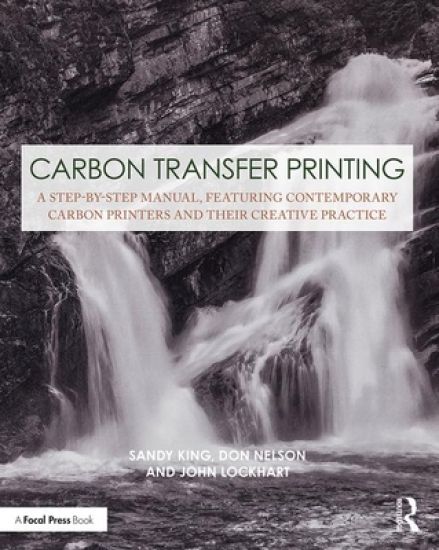
Carbon Transfer Printing

Carbon Transfer Printing

Sandy King; Don Nelson; John Lockhart

CRC Press
2019
nidottu
Carbon Transfer Printing is a book about one of the earliest photographic processes that provided the first permanent printing methods, available in one form or another for over 150 years. This book reviews the extensive history of carbon transfer and related pigment processes in both monochrome and color, to serve as point source for a new carbon printer to begin to master the craft of carbon printing, as well as provide new material for experienced carbon printers so they can expand their techniques. The book includes never-before-published information on pre-sensitizing carbon tissue with newly identified compounds, information on the safe use and disposal of hexavalent chromium compounds, and simplified methods of producing 3-color carbon prints. Carbon Transfer Printing is divided into two parts, illustrated with 175 photographs. Part One is a complete how-to on the carbon transfer process, from simple to complex, with a troubleshooting guide and an extensive chapter on digital negatives. Part Two is devoted to contemporary carbon printers who share their methods and secrets to creating their beautiful carbon prints.Topics that the book covers are: Key events in carbon’s history How to organize the carbon workplace Sections on necessary supplies and equipment A step-by-step digital method of making high quality digital negatives Simple and advanced methods of carbon printing How to make carbon tissue, including several methods of pre-sensitizing How to choose UV light sources for printing in carbon Step-by-step processing directions How to prepare final support papers Troubleshooting carbon Multi-layer printing to add tone, or make a full color carbon print Finishing and final presentation of carbon prints A gallery of images and advice from contemporary carbon printersCarbon Transfer Printing is designed for both the beginning carbon enthusiast as well as for the advanced practitioner. Backed with extensive research on carbon printing from books, journals, and magazine articles from the 1800s to present day, and the extensive personal experience in carbon printing of the authors, there is enough information in this book to provide inspiration and proof of both the glorious past of carbon printmaking and its enduring importance to a new generation of image makers who value the handmade print.
Carbon Transfer Printing

Carbon Transfer Printing

Sandy King; Don Nelson; John Lockhart

CRC Press
2019
sidottu
Carbon Transfer Printing is a book about one of the earliest photographic processes that provided the first permanent printing methods, available in one form or another for over 150 years. This book reviews the extensive history of carbon transfer and related pigment processes in both monochrome and color, to serve as point source for a new carbon printer to begin to master the craft of carbon printing, as well as provide new material for experienced carbon printers so they can expand their techniques. The book includes never-before-published information on pre-sensitizing carbon tissue with newly identified compounds, information on the safe use and disposal of hexavalent chromium compounds, and simplified methods of producing 3-color carbon prints. Carbon Transfer Printing is divided into two parts, illustrated with 175 photographs. Part One is a complete how-to on the carbon transfer process, from simple to complex, with a troubleshooting guide and an extensive chapter on digital negatives. Part Two is devoted to contemporary carbon printers who share their methods and secrets to creating their beautiful carbon prints.Topics that the book covers are: Key events in carbon’s history How to organize the carbon workplace Sections on necessary supplies and equipment A step-by-step digital method of making high quality digital negatives Simple and advanced methods of carbon printing How to make carbon tissue, including several methods of pre-sensitizing How to choose UV light sources for printing in carbon Step-by-step processing directions How to prepare final support papers Troubleshooting carbon Multi-layer printing to add tone, or make a full color carbon print Finishing and final presentation of carbon prints A gallery of images and advice from contemporary carbon printersCarbon Transfer Printing is designed for both the beginning carbon enthusiast as well as for the advanced practitioner. Backed with extensive research on carbon printing from books, journals, and magazine articles from the 1800s to present day, and the extensive personal experience in carbon printing of the authors, there is enough information in this book to provide inspiration and proof of both the glorious past of carbon printmaking and its enduring importance to a new generation of image makers who value the handmade print.
Carbon Dioxide Equilibria and Their Applications
Carbon dioxide, bicarbonate ion, and carbonate ion comprise the most important acid-base system in natural waters, and the equilibria between them regulate the pH of seawater, as well as most rainwater, stream water, river water, and groundwater. Carbon Dioxide Equilibria and Their Applications provides a clear, compact presentation of this topic, which is central to geochemistry and environmental engineering. It emphasizes a rigorous mathematical and thermodynamic basis for calculations and their application to realistic problems. The book's first four chapters present the basic equations, mathematical techniques for visualizing and manipulating them, and data on equilibrium constants and activity coefficients. These are presented in the general context of acid-base titration and solubility of CaCO3. The remaining chapters show how these concepts and techniques are applied to geochemistry and oceanography, in addition to their applications to water conditioning. Specific topics discussed include acid rain, freshwater, seawater, carbonate sediments in the deep oceans, the effects of increased atmospheric CO2 on the oceans, estuarine waters, brines, hydrothermal solutions, pH adjustment, prediction of calcium carbonate saturation, corrosion inhibition, and water softening.
Carbon Footprints as Cultural-Ecological Metaphors
Through an examination of carbon footprint metaphors, this books demonstrates the ways in which climate change and other ecological issues are culturally and materially constituted through metaphor.The carbon footprint metaphor has achieved a ubiquitous presence in Anglo-North American public contexts since the turn of the millennium, yet this metaphor remains under-examined as a crucial mediator of political responses to the urgent crisis of climate change. Existing books and articles on the carbon footprint typically treat this metaphor as a quantifying metric, with little attention to the shifting mediations and practices of the carbon footprint as a metaphor. This gap echoes a wider gap in understanding metaphors as key figures in mediating more-than-human relations at a time when such relations profoundly matter. As a timely intervention, this book addresses this gap by using insights from environmental humanities and political ecology to discuss carbon footprint metaphors in popular and public texts. This book will be of great interest to researchers and students of environmental humanities, political ecology, environmental communication, and metaphor studies.
Carbon Nanotube and Graphene Nanoribbon Interconnects

Carbon Nanotube and Graphene Nanoribbon Interconnects

Debaprasad Das; Hafizur Rahaman

CRC Press
2017
nidottu
An Alternative to Copper-Based Interconnect TechnologyWith an increase in demand for more circuit components on a single chip, there is a growing need for nanoelectronic devices and their interconnects (a physical connecting medium made of thin metal films between several electrical nodes in a semiconducting chip that transmit signals from one point to another without any distortion). Carbon Nanotube and Graphene Nanoribbon Interconnects explores two new important carbon nanomaterials, carbon nanotube (CNT) and graphene nanoribbon (GNR), and compares them with that of copper-based interconnects. These nanomaterials show almost 1,000 times more current-carrying capacity and significantly higher mean free path than copper. Due to their remarkable properties, CNT and GNR could soon replace traditional copper interconnects. Dedicated to proving their benefits, this book covers the basic theory of CNT and GNR, and provides a comprehensive analysis of the CNT- and GNR-based VLSI interconnects at nanometric dimensions. Explore the Potential Applications of CNT and Graphene for VLSI CircuitsThe book starts off with a brief introduction of carbon nanomaterials, discusses the latest research, and details the modeling and analysis of CNT and GNR interconnects. It also describes the electrical, thermal, and mechanical properties, and structural behavior of these materials. In addition, it chronicles the progression of these fundamental properties, explores possible engineering applications and growth technologies, and considers applications for CNT and GNR apart from their use in VLSI circuits.Comprising eight chapters this text: Covers the basics of carbon nanotube and graphene nanoribbonDiscusses the growth and characterization of carbon nanotube and graphene nanoribbonPresents the modeling of CNT and GNR as future VLSI interconnectsExamines the applicability of CNT and GNR in terms of several analysis worksAddresses the timing and frequency response of the CNT and GNR interconnectsExplores the signal integrity analysis for CNT and GNR interconnects Models and analyzes the applicability of CNT and GNR as power interconnectsConsiders the future scope of CNT and GNRBeneficial to VLSI designers working in this area, Carbon Nanotube and Graphene Nanoribbon Interconnects provides a complete understanding of carbon-based materials and interconnect technology, and equips the reader with sufficient knowledge about the future scope of research and development for this emerging topic.
Carbon Conflicts and Forest Landscapes in Africa
Amidst the pressing challenges of global climate change, the last decade has seen a wave of forest carbon projects across the world, designed to conserve and enhance forest carbon stocks in order to reduce carbon emissions from deforestation and offset emissions elsewhere. Exploring a set of new empirical case studies, Carbon Conflicts and Forest Landscapes in Africa examines how these projects are unfolding, their effects, and who is gaining and losing. Situating forest carbon approaches as part of more general moves to address environmental problems by attaching market values to nature and ecosystems, it examines how new projects interact with forest landscapes and their longer histories of intervention. The book asks: what difference does carbon make? What political and ecological dynamics are unleashed by these new commodified, marketized approaches, and how are local forest users experiencing and responding to them? The book’s case studies cover a wide range of African ecologies, project types and national political-economic contexts. By examining these cases in a comparative framework and within an understanding of the national, regional and global institutional arrangements shaping forest carbon commoditisation, the book provides a rich and compelling account of how and why carbon conflicts are emerging, and how they might be avoided in future. This book will be of interest to students of development studies, environmental sciences, geography, economics, development studies and anthropology, as well as practitioners and policy makers.
Carbon Conflicts and Forest Landscapes in Africa
Amidst the pressing challenges of global climate change, the last decade has seen a wave of forest carbon projects across the world, designed to conserve and enhance forest carbon stocks in order to reduce carbon emissions from deforestation and offset emissions elsewhere. Exploring a set of new empirical case studies, Carbon Conflicts and Forest Landscapes in Africa examines how these projects are unfolding, their effects, and who is gaining and losing. Situating forest carbon approaches as part of more general moves to address environmental problems by attaching market values to nature and ecosystems, it examines how new projects interact with forest landscapes and their longer histories of intervention. The book asks: what difference does carbon make? What political and ecological dynamics are unleashed by these new commodified, marketized approaches, and how are local forest users experiencing and responding to them? The book’s case studies cover a wide range of African ecologies, project types and national political-economic contexts. By examining these cases in a comparative framework and within an understanding of the national, regional and global institutional arrangements shaping forest carbon commoditisation, the book provides a rich and compelling account of how and why carbon conflicts are emerging, and how they might be avoided in future. This book will be of interest to students of development studies, environmental sciences, geography, economics, development studies and anthropology, as well as practitioners and policy makers.
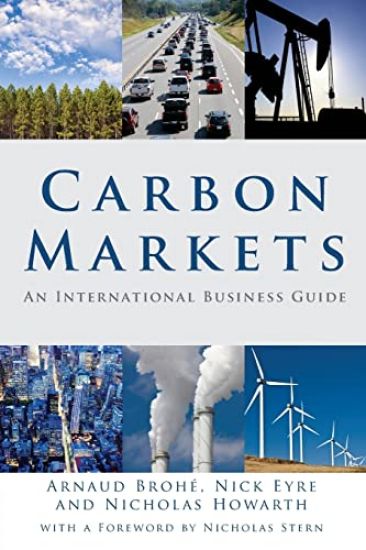
Carbon Markets

Carbon Markets

Arnauld Brohe; Nick Eyre; Nicholas Howarth

Routledge
2015
nidottu
Winner of the Choice Outstanding Academic Titles of 2010 award. This book is a comprehensive and accessible guide to understanding the opportunities offered by regulated and voluntary carbon markets for tackling climate change. Coverage includes: - An overview of the problem of climate change, with a concise review of the most recent scientific evidence in different fields - A highly accessible introduction to the economic theory and different constitutive elements of a carbon allowances market - Explanation of the Kyoto Protocol and its flexibility mechanisms - Explanation of how the EU Emissions Trading Scheme works in practice - Ongoing developments in regulated carbon markets in the US - Up-to-the-minute coverage of regulated carbon markets in Australia - Developments in New Zealand and Japan - Carbon offsetting and voluntary carbon markets. Combining theoretical aspects with practical applications, this book is for business leaders, financiers, carbon traders, lawyers, bankers, researchers, policy makers and anyone interested in market mechanisms to mitigate climate change. The carbon emissions resulting from the production of this book have been calculated, reduced and offset to render the bookcarbon neutral. Published with CO2 Neutral