Kirjojen hintavertailu. Mukana 11 534 816 kirjaa ja 12 kauppaa.

Kirjahaku

Etsi kirjoja tekijän nimen, kirjan nimen tai ISBN:n perusteella.

1000 tulosta hakusanalla Chartier-E

Charter Schools

Charter Schools

Jack Buckley; Mark Schneider

Princeton University Press
2009
pokkari
Over the past several years, privately run, publicly funded charter schools have been sold to the American public as an education alternative promising better student achievement, greater parent satisfaction, and more vibrant school communities. But are charter schools delivering on their promise? Or are they just hype as critics contend, a costly experiment that is bleeding tax dollars from public schools? In this book, Jack Buckley and Mark Schneider tackle these questions about one of the thorniest policy reforms in the nation today. Using an exceptionally rigorous research approach, the authors investigate charter schools in Washington, D.C., carefully examining school data going back more than a decade, interpreting scores of interviews with parents, students, and teachers, and meticulously measuring how charter schools perform compared to traditional public schools. Their conclusions are sobering. Buckley and Schneider show that charter-school students are not outperforming students in traditional public schools, that the quality of charter-school education varies widely from school to school, and that parent enthusiasm for charter schools starts out strong but fades over time. And they argue that while charter schools may meet the most basic test of sound public policy--they do no harm--the evidence suggests they all too often fall short of advocates' claims. With the future of charter schools--and perhaps public education as a whole--hanging in the balance, this book supports the case for holding charter schools more accountable and brings us considerably nearer to resolving this contentious debate.

Charter Schools

Charter Schools

Greenhaven Publishing
2007
nidottu
Editor Diane Andrews Henningfeld has assembled fifteen essays that provide varying perspectives on issues regarding charter schools. Readers will learn whether charter schools threaten the public education system, whether charter schools need more regulation, whether student achievement is actually enhanced, and whether the charter movement is a broken promise. Essay sources include the Education Week Research Center, the New York State PTA, and the New York State United Teachers organization.
Charter Schools

Charter Schools

University Press of America
2011
nidottu
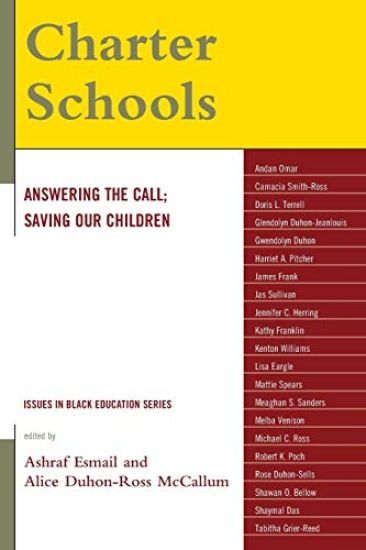
Charter Schools will stimulate the thinking of educators, professionals, and the general public who are concerned about the educational experience of our nation’s children. The chapters in this book are designed by a group of academic researchers, scholars in higher education, and leaders in academic arenas. The major thrust of this book is to appeal to individuals of this nation to join forces and save our children from inadequate academic experiences that will serve as a damaging element to their growth, development, and success in life. This book articulates the essential elements of effective charter schools. It establishes a blueprint for the infrastructure and staffing of a charter school that will successfully instill passion and purpose in its students. Charter Schools is a must-read for those endeavoring to save the children from our failing school systems and the bleak path set before them.
Charter versus Federalism

Charter versus Federalism

Alan C. Cairns

McGill-Queen's University Press
1992
nidottu
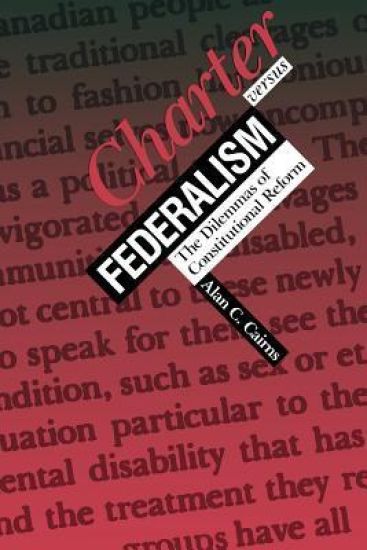
Responding to the increasing diversity of the Canadian population -- and to an increasing sensitivity to historical diversities -- the 1982 Constitution Act amended the British North America Act and introduced the Charter of Rights and Freedoms, giving new powers to heterogeneous groups within the Canadian polity. These changes disturbed the equilibrium of an older, federalist Canada whose constitutional concerns were limited to the relative powers of federal and provincial governments and to French-English ethnic/linguistic questions. Cairns underlines the significance of international influences on the development of Canada's constitution, in particular the adoption of the Charter, and examines the constitution's role in shaping Canadians' civic identities and community conceptions. He argues that the constitution is a powerful mobilizing instrument that shapes the people subject to its authority. Canada is now populated by what Cairns calls "Charter Canadians," who see themselves as rights-bearers and tend to look to the federal government as the effective focus of political community. During the Meech Lake affair, the demands of Charter Canadians and politicized aboriginal peoples clashed with Quebec's constitutional aspirations as well as older elite accommodation politics. In addition to the Charter, the 1982 Constitution Act contained a new amending formula that contradicted the Charter's message that the rights of individuals precede those of governments. This formula gave a collective of federal and provincial governments a formal monopoly on constitutional change and encouraged the belief, refuted by the Meech Lake experience, that they could amend the constitution in terms of their own self-interest and announce the results as a fait accompli. The clash between the Charter and the amending formula is constitutionally destabilizing, Cairns argues, because these two parts of the same constitution are based on different understandings of the fundamental purpose of the constitution and for whose benefit it exists. The Meech Lake fiasco, having brought Canada to the brink of disaster, clearly indicates that Canada's future constitutional health depends not only on the reconciliation of Quebec with the rest of Canada but -- respectful of the Charter's message -- on a simultaneous constitutional rapprochement between citizens and governments in the process of constitutional reform.
Charter Conflicts

Charter Conflicts

Janet L. Hiebert

McGill-Queen's University Press
2002
sidottu
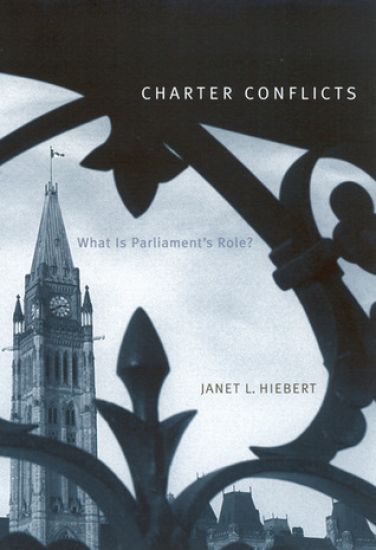
Although the Canadian Charter of Rights and Freedoms is twenty years old, little is known about how it affects those who wield power, what influence it has on legislative decisions, or to what extent the government believes it should be constrained by Charter concerns. For most laws Parliament has the final word on how social policy is balanced against protected rights. Thus the extent to which legislation is sensitive towards rights depends on how those who develop, propose, and assess policy view the Charter. How influential are governmental legal advisors? How risk averse or risk tolerant are government ministers when pursuing legislative goals that may result in Charter challenges? How capable is Parliament in requiring government to justify and explain legislative choices that may impair rights? In Charter Conflicts Janet Hiebert examines these questions while analyzing the Charter's influence on controversial legislative decisions such as social benefits for lesbians and gay men, the regulation of tobacco advertising, the rules of evidence for sexual assault trials, the use of DNA for law enforcement purposes, and the rules for police searches of private residences. She questions the broadly held assumption that only courts are capable of respecting rights, arguing that Parliament shares responsibility with the judiciary for resolving Charter conflicts. She views the Charter's significance less in terms of the judiciary overruling Parliament than in the incentives and pressures it provides for public and political officials to satisfy themselves that legislation is consistent with protected rights.
Charter Conflicts

Charter Conflicts

Janet L. Hiebert

McGill-Queen's University Press
2002
nidottu
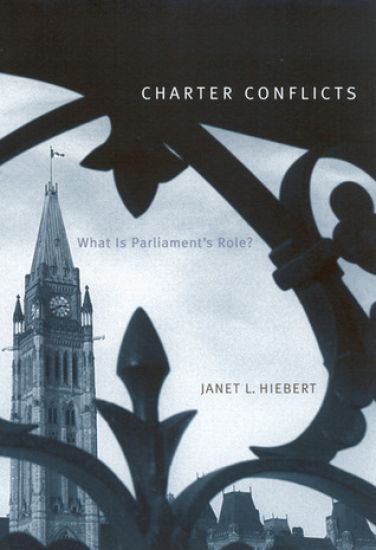
Although the Canadian Charter of Rights and Freedoms is twenty years old, little is known about how it affects those who wield power, what influence it has on legislative decisions, or to what extent the government believes it should be constrained by Charter concerns. For most laws Parliament has the final word on how social policy is balanced against protected rights. Thus the extent to which legislation is sensitive towards rights depends on how those who develop, propose, and assess policy view the Charter. How influential are governmental legal advisors? How risk averse or risk tolerant are government ministers when pursuing legislative goals that may result in Charter challenges? How capable is Parliament in requiring government to justify and explain legislative choices that may impair rights? In Charter Conflicts Janet Hiebert examines these questions while analyzing the Charter's influence on controversial legislative decisions such as social benefits for lesbians and gay men, the regulation of tobacco advertising, the rules of evidence for sexual assault trials, the use of DNA for law enforcement purposes, and the rules for police searches of private residences. She questions the broadly held assumption that only courts are capable of respecting rights, arguing that Parliament shares responsibility with the judiciary for resolving Charter conflicts. She views the Charter's significance less in terms of the judiciary overruling Parliament than in the incentives and pressures it provides for public and political officials to satisfy themselves that legislation is consistent with protected rights.
Charter Schools

Charter Schools

Joe Nathan

Jossey-Bass Inc.,U.S.
1998
nidottu
"[One of] the best books on schools and schooling to cross our editors' desks this year."--The American School Board Journal, August 1997Award-winning former public school educator Joe Nathan draws from nationwide surveys, research, and visits to dozens of charter schools to address key questions about charter schools. Who starts these schools? What kinds of students attAnd? Are charter schools using ideas and techniques from which other schools can learn? Are these schools actually helping students? Are charter schools making an impact on the larger educational system?
Charter Schools

Charter Schools

Liane Brouillette

Routledge Member of the Taylor and Francis Group
2002
sidottu
This book takes the reader inside the charter school movement, answering such questions as: *What is a charter school? *How are charter schools different from other public schools? *What does it take to create a charter school? *What motivates the people who initiate such schools? *What lessons can be learned from the experiences of those who have founded charter schools? *What does the growth of the charter school movement mean for society at large? Using detailed case studies of seven schools in three states, this book explores the challenges faced by the founders of these schools and develops guidelines for creating a successful school. Seymour Sarason's work on the creation of settings is used as a basis for examining the complex human interactions that contributed to formation of a unique culture at each school, as well as to establish guidelines for setting up a successful school. Introductory and concluding chapters place the charter school movement within a broader social and historical context. Tensions between the American tradition of local control of schools and the centralized tradition of schooling imported from Europe in the late 19th century are discussed. The gradual bureaucratization of U.S. public schools during the 20th century is described, along with problems that have been associated with the increasingly hierarchical and impersonal nature of educational institutions.
Charter School Outcomes

Charter School Outcomes

Routledge Member of the Taylor and Francis Group
2007
sidottu
Sponsored by the National Center on School Choice, a research consortium headed by Vanderbilt University, this volume examines the growth and outcomes of the charter school movement. Starting in 1992-93 when the nation’s first charter school was opened in Minneapolis, the movement has now spread to 40 states and the District of Columbia and by 2005-06 enrolled 1,040,536 students in 3,613 charter schools. The purpose of this volume is to help monitor this fast-growing movement by compiling, organizing and making available some of the most rigorous and policy-relevant research on K-12 charter schools. Key features of this important new book include: Expertise – The National Center on School Choice includes internationally known scholars from the following institutions: Harvard University, Brown University, Stanford University, Brookings Institution, National Bureau of Economic Research and Northwest Evaluation Association. Cross-Disciplinary – The volume brings together material from related disciplines and methodologies that are associated with the individual and systemic effects of charter schools. Coherent Structure – Each section begins with a lengthy introduction that summarizes the themes and major findings of that section. A summarizing chapter by Mark Schneider, the Commissioner of the National Center on Educational Statistics, concludes the book. This volume is appropriate for researchers, instructors and graduate students in education policy programs and in political science and economics, as well as in-service administrators, policy makers, and providers.
Charter School Outcomes

Charter School Outcomes

Routledge Member of the Taylor and Francis Group
2007
nidottu
Sponsored by the National Center on School Choice, a research consortium headed by Vanderbilt University, this volume examines the growth and outcomes of the charter school movement. Starting in 1992-93 when the nation’s first charter school was opened in Minneapolis, the movement has now spread to 40 states and the District of Columbia and by 2005-06 enrolled 1,040,536 students in 3,613 charter schools. The purpose of this volume is to help monitor this fast-growing movement by compiling, organizing and making available some of the most rigorous and policy-relevant research on K-12 charter schools. Key features of this important new book include: Expertise – The National Center on School Choice includes internationally known scholars from the following institutions: Harvard University, Brown University, Stanford University, Brookings Institution, National Bureau of Economic Research and Northwest Evaluation Association. Cross-Disciplinary – The volume brings together material from related disciplines and methodologies that are associated with the individual and systemic effects of charter schools. Coherent Structure – Each section begins with a lengthy introduction that summarizes the themes and major findings of that section. A summarizing chapter by Mark Schneider, the Commissioner of the National Center on Educational Statistics, concludes the book. This volume is appropriate for researchers, instructors and graduate students in education policy programs and in political science and economics, as well as in-service administrators, policy makers, and providers.
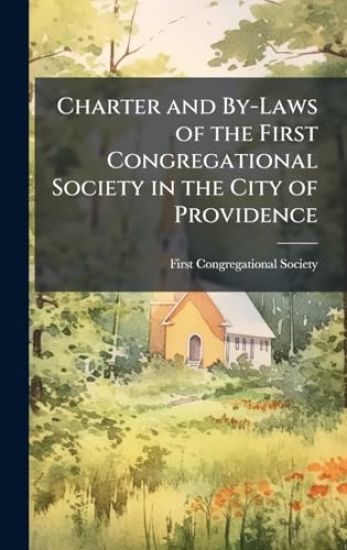
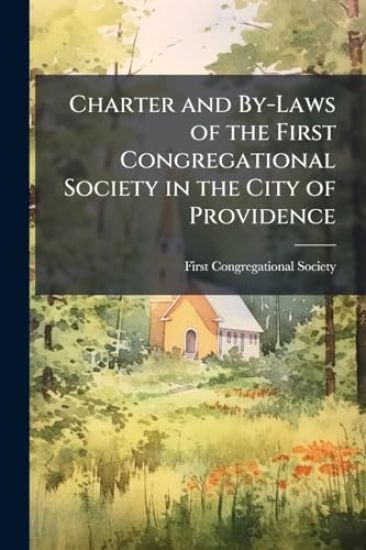
Charter and By-Laws of the First Congregational Society in the City of Providence

Charter and By-Laws of the First Congregational Society in the City of Providence

First Congregational Society (Provide

Hutson Street Press
2025
nidottu
This volume contains the "Charter and By-Laws of the First Congregational Society in the City of Providence" as they existed in 1866. It provides insight into the organizational structure and governance of a prominent Congregational church during the mid-19th century. A valuable resource for researchers interested in American religious history, the evolution of church law, and the social dynamics of religious institutions in urban settings. The document offers a detailed look at the rules, regulations, and foundational principles that guided the First Congregational Society in Providence. This work has been selected by scholars as being culturally important, and is part of the knowledge base of civilization as we know it. This work was reproduced from the original artifact, and remains as true to the original work as possible. Therefore, you will see the original copyright references, library stamps (as most of these works have been housed in our most important libraries around the world), and other notations in the work. This work is in the public domain in the United States of America, and possibly other nations. Within the United States, you may freely copy and distribute this work, as no entity (individual or corporate) has a copyright on the body of the work. As a reproduction of a historical artifact, this work may contain missing or blurred pages, poor pictures, errant marks, etc. Scholars believe, and we concur, that this work is important enough to be preserved, reproduced, and made generally available to the public. We appreciate your support of the preservation process, and thank you for being an important part of keeping this knowledge alive and relevant.